The only home Queen Elizabeth the Queen Mother ever owned outright, rescued from near-ruin in 1952 and still kept in family use by King Charles III each summer.
A three-sided courtyard opens toward the sea at the Castle of Mey, its tower and ranges turned north across the water so that, on a clear day, Orkney is visible from the walls. The castle stands on the north coast of Caithness, a few miles west of John o’ Groats, built between 1566 and 1572 by George Sinclair, 4th Earl of Caithness, as a Z-plan tower house of three storeys with a projecting wing and a square corner tower.
For three centuries the building passed through Sinclair hands, gaining the name Barrogill and successive rounds of extension, before decline set in: farms were sold off in 1950 and only the tower itself remained fit to live in. It was in this semi-derelict state that Queen Elizabeth the Queen Mother bought the estate in 1952, newly widowed, and set about restoring it as a private holiday home.
She reinstated its older name, brought in electricity and water for the first time, and returned each August and October until her death in 2002. Since 1996 the castle and its garden have belonged to a charitable trust, now stewarded through the Prince’s Foundation, and are open to visitors for five months of the year.
What follows is drawn from published sources, with each claim labelled by how firmly it is established.
History
Between 1566 and 1572 George Sinclair, the 4th Earl of Caithness, built the castle on Scotland's north coast, possibly reusing the site of an earlier fortification held by the Bishops of Caithness. The result was a Z-plan tower house of three storeys, with a projecting wing to the south-east and a square tower to the north-west enclosing a three-sided courtyard open to the sea.
The castle passed to Lord Caithness's younger son William, who founded the Sinclairs of Mey, though it later became the seat of the earls themselves. Its name changed to Barrogill, and the building was extended repeatedly through the 17th and 18th centuries. In 1821 it was remodelled again in the Tudor Gothic style, to designs by the architect William Burn.
Barrogill passed out of the Sinclair family in 1889, on the death of the 15th Earl of Caithness, when it went to F. G. Heathcote, who later took the Sinclair name himself. In 1929 Captain Frederic Bouhier Imbert-Terry bought the estate. During the Second World War the castle served as an officers' rest home, and by 1950, when the estate farms were sold off, only the tower remained habitable.
The estate was in a semi-derelict state in 1952 when it was bought by Queen Elizabeth the Queen Mother, recently widowed by the death of King George VI. She restored it as a holiday home, reinstating the original name of Castle of Mey and installing electricity and water for the first time. Further work through 1953 and 1954 made the building weathertight, and the west wing was not finished until 1960.
The Queen Mother hung portraits of the former owners, the Earls of Caithness, throughout the castle and visited regularly each August and October from 1955 until her death in March 2002, last returning in October 2001. In July 1996 she transferred the property, its grounds and farm to the Queen Elizabeth Castle of Mey Trust, established under a Deed of Trust dated 11 June 1996, opening the castle and garden to the public each summer after her death.
The Trust opened the castle for five months each year to fund its upkeep, recording nearly 30,000 visits in 2018, the same year it completed roof repairs, rewiring and lime harling of the exterior. On 1 January 2019 stewardship passed to the Prince's Foundation, whose president, Charles III, became the Trust's sole trustee while pledging to continue his grandmother's aims for the property.
In May 2019 the Prince of Wales, later Charles III, opened Granary Lodge, a ten-bedroom bed and breakfast created from the castle's former stables and granary using eco-heating and local materials and craftsmen. Its profits go towards maintaining the estate. In January 2023 the castle tearoom began opening to the public every Tuesday through March as a warming centre under the King's Foundation.
People
-
George Sinclair, 4th Earl of Caithness
Built the castle between 1566 and 1572.
-
William Sinclair
Younger son of the 4th Earl who inherited the castle and founded the Sinclairs of Mey.
-
William Burn
Architect who carried out the 1821 Tudor Gothic alterations to the castle, then known as Barrogill.
-
Frederic Bouhier Imbert-Terry
Bought the estate in 1929.
-
Queen Elizabeth the Queen Mother
Bought the semi-derelict castle in 1952 and restored it as a private holiday home until her death in 2002.
-
Charles III
President and, since 2019, sole trustee of the Castle of Mey Trust through the Prince's Foundation.
-
Ashe Windham
Chairman of the Castle of Mey Trust's trustees as of 2014.
Cultural influences
-
Z-plan and Tudor-Gothic architecture
The sixteenth-century Z-plan tower house was remodelled in Tudor-Gothic style in 1821, leaving a building whose defensive core sits beneath later romantic detailing.
Connections
-
Sinclairs of Mey
The family line founded by William, younger son of the castle's builder, took its name from the property and later inherited the earldom of Caithness.
-
Earls of Caithness
The castle served for generations as a seat of the Earls of Caithness before passing out of the family on the 15th Earl's death in 1889.
-
The Prince's Foundation
Took over stewardship of the Castle of Mey Trust on 1 January 2019, with Charles III as its president and sole trustee.
-
Granary Lodge
A bed and breakfast built from the former stables and granary on the castle grounds, opened in 2019 as one of the Prince's Foundation's first ventures on the estate.
In culture
-
Spy Castle (1966)
The ruined Barrogill Castle is the setting for a black mass in this Nick Carter-Killmaster spy novel.
-
The Crown (Netflix)
The Queen Mother's purchase of the castle is dramatised in the first season's eighth episode, "Pride & Joy".
What to look for
-
The Z-plan tower house
The 16th-century core of the castle, with its dominating tower, side ranges and three-sided courtyard left open to the north and the sea.
-
The 1821 Tudor Gothic additions
Alterations made to designs by William Burn during the building's long spell as Barrogill Castle.
-
Portraits of the Earls of Caithness
Hung throughout the castle by the Queen Mother during her restoration, honouring the family who had owned it for centuries.
-
Granary Lodge
The former stables and granary, converted in 2019 into a ten-bedroom bed and breakfast on the castle grounds.
Plan your visit
- Location
- 58.6470°N · 3.2245°W
- Nearest settlement
- Mey
- Time needed
- About 90 minutes
- Best time
- During the May–September visitor season, when the castle, gardens and grounds are open.
- What survives
- A restored and occupied historic house, retaining its sixteenth-century tower-house core and later Tudor-Gothic work.
- Facilities
- The visitor site includes gardens and grounds, an animal centre, tearoom and shop.
Opening & admission
- Open Wednesday to Sunday from 1 May to 30 September; castle last admission at 15:00, with gardens and visitor facilities open 10:30–16:00. Closed for the last week in July and first week in August; check the official site before travel.
Nearby places

Sacred place · Prehistoric
Stone Lud
Highland
Its scale rivals the Ring of Brodgar, yet a fallen twin thirty metres off suggests it once anchored a deliberate sightline to the summer solstice s…
- Near Bower
- Easy path
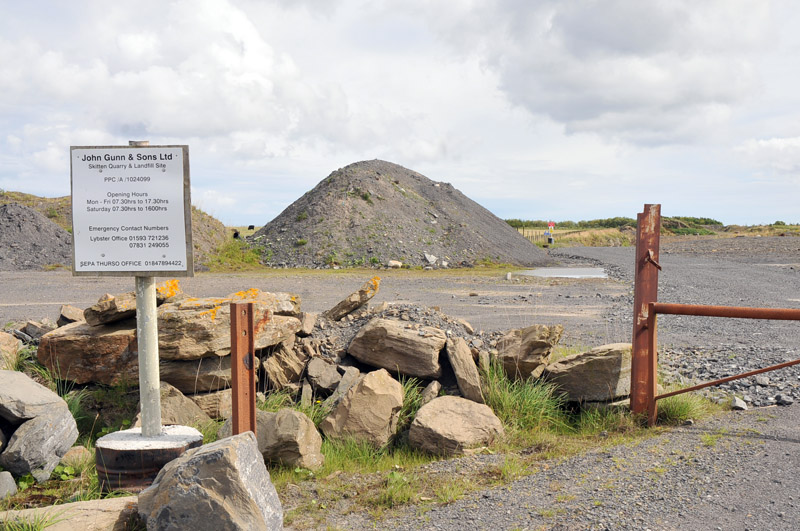
Fortified place · Iron Age
Skitten Broch
Highland
A broch excavated twice within four decades of Highland archaeology before being levelled entirely for a wartime runway: its erasure is now the cle…
- Near Killimster
- Easy path

Tomb or burial place · Prehistoric
Tomb of the Eagles
Orkney Islands
Tomb of the Eagles is a late Stone Age burial chamber on South Ronaldsay, where human remains and eagle bones reveal changing funerary practices.
- Near South Ronaldsay
- Some walking

Ancient place · Prehistoric
Liddle Burnt Mound
Orkney Islands
An excavated cooking complex where a huge watertight tank, heated stones and animal bones make an otherwise disputed type of Bronze Age site unusua…
- Easy path
The setting
Near Castle of Mey, about 37 metres away.
Photo: Riversiderouge / Wikimedia Commons / CC BY-SA 4.0
Questions people ask
- When was the Castle of Mey built?
- It was built between 1566 and 1572 by George Sinclair, 4th Earl of Caithness, possibly on the site of an earlier fortification.
- Why was it also known as Barrogill Castle?
- Later owners renamed it Barrogill; the Queen Mother reinstated the original name, Castle of Mey, during her 1950s restoration.
- Why did the Queen Mother buy the castle?
- In 1952, recently widowed, she bought the semi-derelict estate and restored it as a private holiday home, visiting most years until 2001.
- Can the public visit the Castle of Mey?
- Yes. It opens seven days a week from 1 May to 30 September, with a ten-day closure in late July and early August.
- What is Granary Lodge?
- A ten-bedroom bed and breakfast opened in 2019 on the castle grounds, converted from the former stables and granary.
Sources
- Wikipedia: Castle of Mey
- McCann, N., The Castle and Gardens of Mey (2008)
Explore more: Fortified places · Medieval · Highland
The Ancient Codex, in your pocket
Get the Pocket Codex app
Carry the directory with you — Castle of Mey and thousands of ancient places across Britain and Ireland, offline, wherever you roam.