
A chamber tomb carved out of a single glacial erratic of Old Red Sandstone, in a steep valley on Hoy.
Somebody hollowed a tomb out of a single boulder here. The Dwarfie Stane is a chamber cut into a large block of Devonian Old Red Sandstone lying in a steep-sided valley on Hoy, in Orkney. The stone is a glacial erratic, a rock carried and left by moving ice, set in peatland. Historic Environment Scotland manages the site.
What follows is drawn from published sources, with each claim labelled by how firmly it is established.
The name
The name comes from a local legend that a dwarf named Trollid lived in the tomb.
History
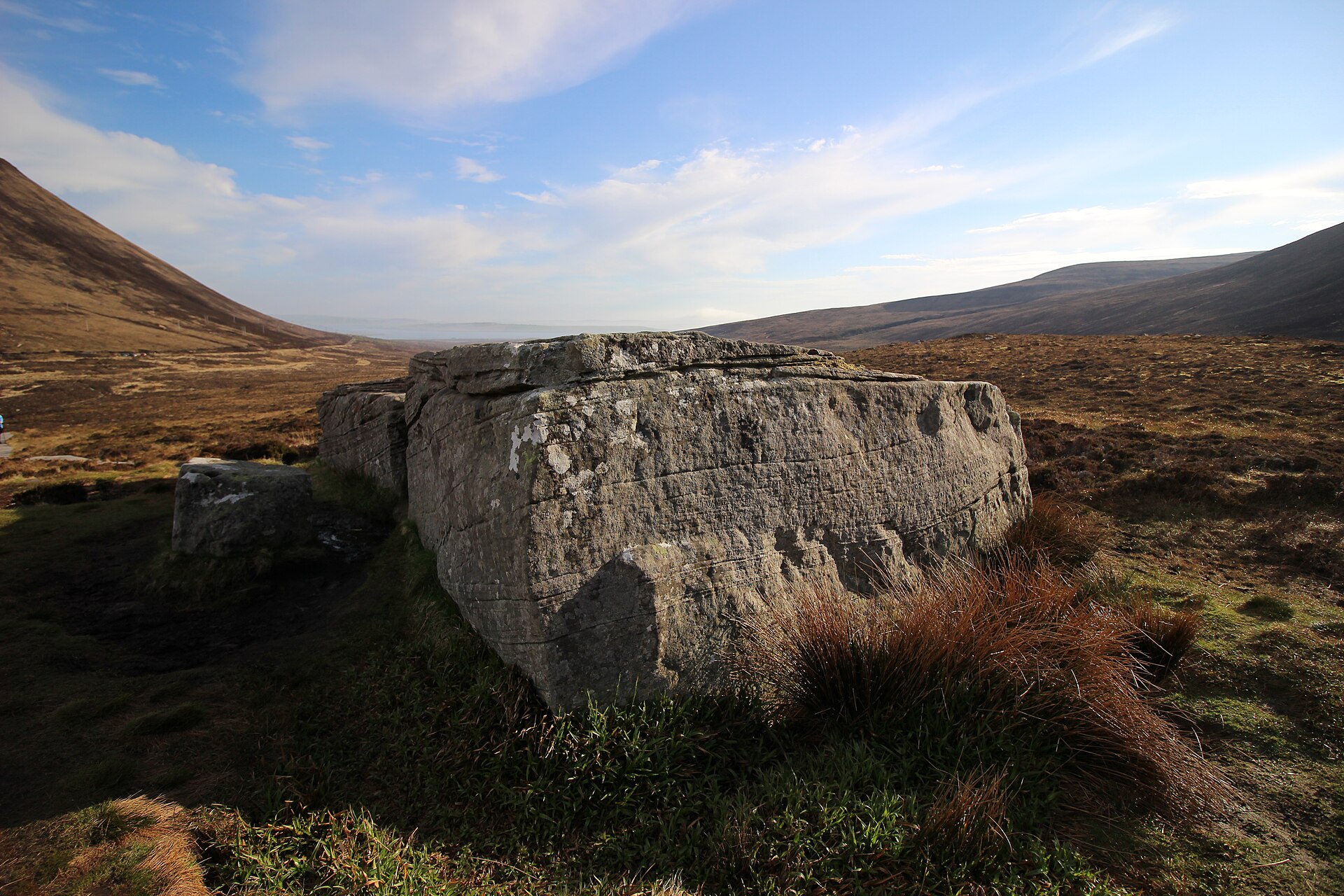
The Dwarfie Stane is a chambered tomb cut out of a single vast block of Devonian Old Red Sandstone, a glacial erratic left in a steep-sided valley between Quoys and Rackwick on the Orkney island of Hoy. It stands in open, desolate peatland. It is the only chambered tomb in Orkney carved from stone rather than built out of stones, and may be the only Neolithic rock-cut tomb anywhere in Britain. Its plan nonetheless matches the Orkney–Cromarty class of chambered tomb found across the islands, sometimes called Bookan-class after a cairn on Mainland.
The block measures 8.6 metres long by 4 wide and up to 2.5 high. The entrance is a metre square, cut into the west face, and inside is a passage 2.2 metres long with two side cells, each 1.7 metres by 1 and a metre high. The southern cell has a pillow of uncut rock left at its inner end. A stone slab originally closed the entrance on the west side. It now lies on the ground in front of the opening, which is how the tomb is almost always photographed and the first thing a visitor sees.
R. Castleden reads the monument as an imported idea — the rock-cut tomb, tried once here and found unsatisfactory. The stone itself may explain that. The folklorist Hugh Miller, a stonemason by trade, described the block as extremely compact Old Red Sandstone, which is a considerable thing to hollow out by hand. It is unique in northern Europe, and it resembles Neolithic and Bronze Age tombs found around the Mediterranean, though there is no direct evidence of any link between this tomb and the people who cut those.
The tomb was plundered at some point by breaking an opening straight through the roof of the chamber. Nobody knows when it happened — the hole had already been noted by the sixteenth century — and it was finally repaired with concrete in the 1950s or 1960s. The name comes from a local legend that a dwarf called Trollid lived inside it, though the tomb has also been claimed as the work of giants. Walter Scott popularised its existence in his novel The Pirate, published in 1821.
Eighteenth and nineteenth-century graffiti covers the rock. The most remarkable is an inscription in Persian calligraphy reading that the writer has sat two nights and so learnt patience, cut by Captain William Mounsey, who camped here in 1850 and wrote his own name above it backwards in Latin.
People
-
Walter Scott
Author whose 1821 novel The Pirate popularised the monument.
-
Captain William Mounsey
Visitor who camped at the stone in 1850 and left a Persian-calligraphy inscription and reversed Latin name.
-
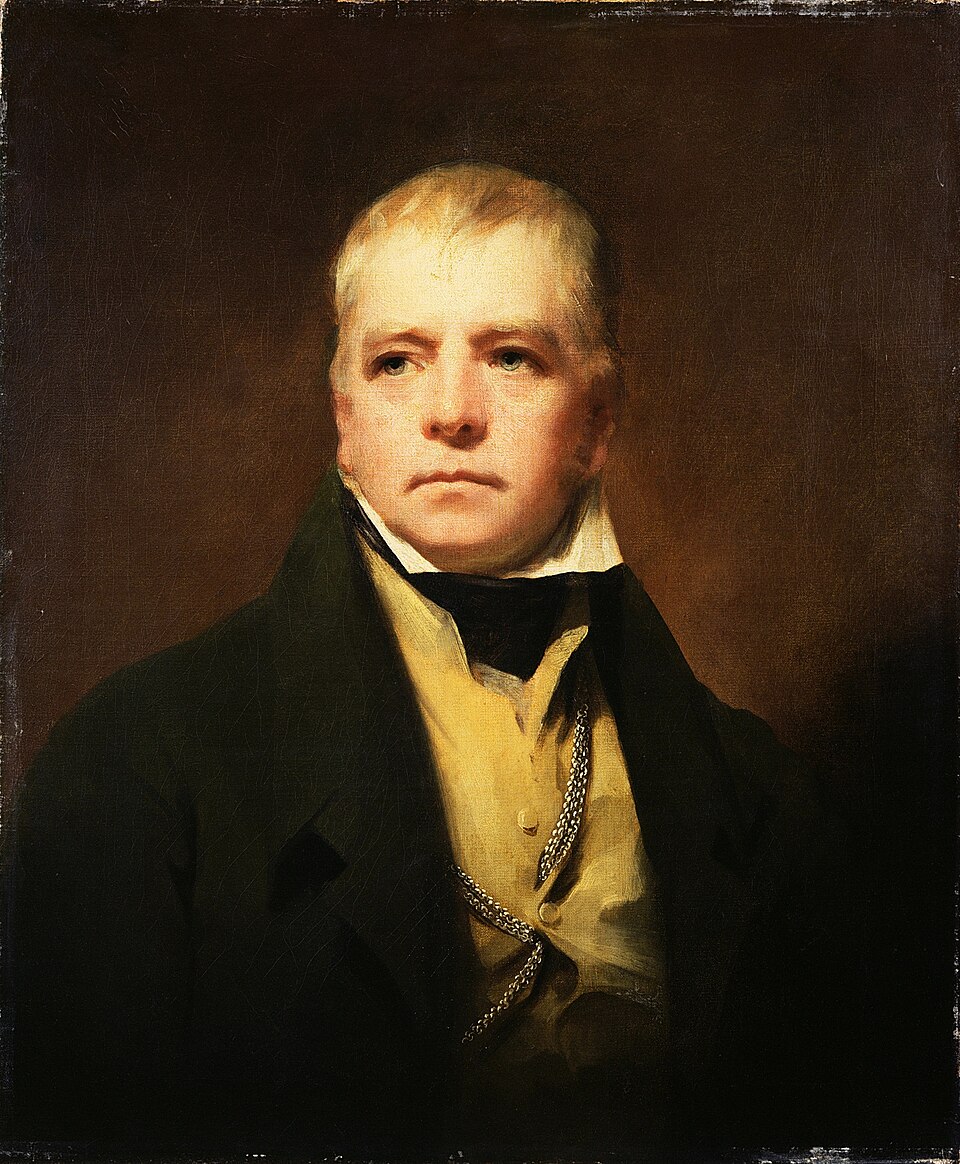
Portrait: Henry Raeburn / Wikimedia Commons / Public domain Sir Walter Scott
Scott’s 1821 novel The Pirate brought the Dwarfie Stane to a far wider audience. Its dwarf-and-giant traditions became part of the monument’s enduring literary afterlife.
-
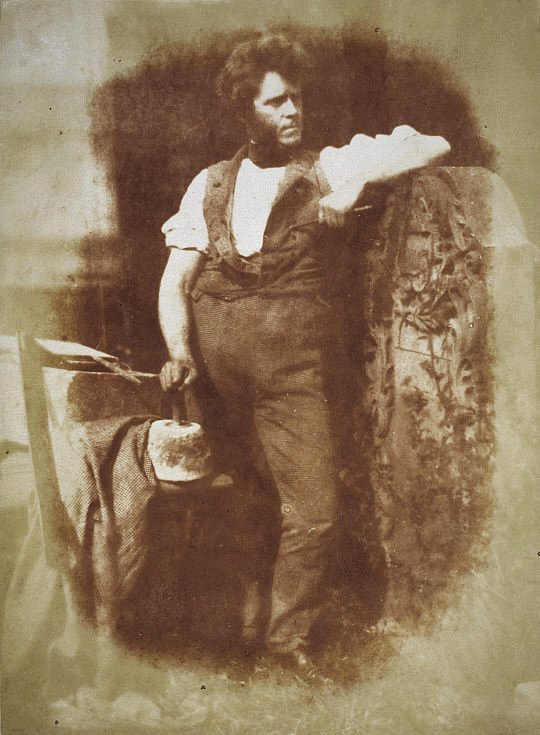
Portrait: Hill & Adamson / Wikimedia Commons / Public domain Hugh Miller
The folklorist and stonemason Hugh Miller described the Dwarfie Stane’s exceptionally compact Old Red Sandstone. His observation underscores the remarkable labour required to hollow the tomb from one single block.
Cultural influences
-
Its exceptional rock-cut form links Orkney’s chambered-tomb tradition to wider Mediterranean parallels, although no direct connection with southern tomb builders is evidenced.
Connections
-
Hoy
Dwarfie Stane is located on Hoy in Orkney.
-
Quoys
Dwarfie Stane lies between the settlements of Quoys and Rackwick.
Discovery & excavation
The tomb had been broken into through its roof by an unknown date; the opening was already noted in the 16th century and was repaired with concrete in the 1950s or 1960s.
In culture
-
Walter Scott popularised the Dwarfie Stane in his 1821 novel The Pirate.
What to look for
-
A tomb cut, not built
This is the only chambered tomb in Orkney carved from a single block rather than built from stones, and may be the only Neolithic rock-cut tomb in Britain.
-
The blocking slab on the ground
A stone slab originally closed the entrance on the west side. It now lies on the ground in front of the opening.
-
A glacial erratic in peatland
The block is Devonian Old Red Sandstone, carried here by ice and left in a steep-sided glaciated valley between Quoys and Rackwick on Hoy.
What is said
Folklore and tradition, recorded as what is said — not as established fact.
-
Local legend says a dwarf called Trollid lived inside the stone; other traditions attribute the tomb to giants.
Plan your visit
- Location
- 58.8847°N · 3.3128°W
- Nearest settlement
- Rackwick
- Access
- Open access
- Terrain
- Easy going
- Parking
- Parking available nearby — see the official getting-here page.
- Start point
- DwarfieStane · Towards the north end of Hoy, 3.5m from Rackwick. Reached via Orkney Ferries Ltd from Houton Terminal.
- Time needed
- About 30 minutes
- Best time
- Open year-round.
- What survives
- The single Old Red Sandstone block and its rock-cut passage and two side cells survive, but the chamber roof was breached in the past and the opening repaired with concrete in the mid-20th century.
- Facilities
- No dedicated visitor facilities are documented at the stone; plan to use facilities in nearby settlements.
- Start point
- Dwarfie Stane roadside parking (B9047, Hoy) — Small off-road parking area beside the B9047 on Hoy, towards the north end of the island about 3.5 miles from Rackwick. Hoy is reached by Orkney Ferries from Houton; no postcode available for this remote layby.
Opening & admission
Free entry
- Open year-round.
Nearby places

Sacred place · Prehistoric
Orphir Round Church
Orkney Islands
Orphir Round Church preserves the remains of a circular medieval church dedicated to Saint Nicholas.
- Easy path

Tomb or burial place · Prehistoric
Unstan Chambered Cairn
Orkney Islands
Twenty to thirty bowls were put in here, most of them already broken and already used: one sherd carried the impression of a barley grain.
- Near Stenness
- 2 min walk from car park
- Easy path
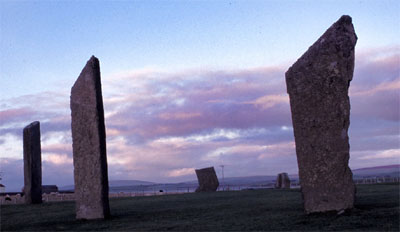
Sacred place · Prehistoric
Stones of Stenness Circle and Henge
Orkney Islands
An ancient monument five miles north-east of Stromness that may be the oldest circular enclosure in the British Isles.
- Near Stenness
- 2 min walk from car park
- Easy path
Questions people ask
- What makes the Dwarfie Stane unusual?
- It is the only chambered tomb in Orkney cut from a single block of stone rather than built from many, and may be the only Neolithic rock-cut tomb in Britain.
- What is the block?
- A glacial erratic of Devonian Old Red Sandstone, left by ice in a steep-sided valley between Quoys and Rackwick on Hoy, in open peatland.
- Is the entrance still sealed?
- No. A stone slab originally blocked the entrance on the west side; it now lies on the ground in front of it.
- Why is it called a tomb?
- The attribution rests originally on its resemblance to recognised tombs in southern Europe, though its plan is consistent with the Orkney–Cromarty class of chambered tomb found across Orkney.
Sources
The Ancient Codex, in your pocket
Get the Pocket Codex app
Carry the directory with you — Dwarfie Stane and thousands of ancient places across Britain and Ireland, offline, wherever you roam.