Twenty to thirty bowls were put in here, most of them already broken and already used — one sherd carried the impression of a barley grain.
Parts of twenty to thirty bowls were placed in this tomb, and most of them were already broken when they went in. That is common in chambered cairns and is taken to mean the vessels were smashed deliberately for burial with the dead. What is more telling is that they were not made for the occasion at all — they had clearly been used before, and one sherd carries the impression of barley grains.
The pottery gave its name to a whole class. The first discovery of the style was made here in 1884, and Unstan ware is now the type name for it: elegant shallow bowls with a band of grooved patterning below the rim, cut by a technique called stab-and-drag, alongside a plainer undecorated round-bottomed form. Some had fragments of volcanic rock worked into the clay for strength, and after firing their surfaces were burnished with bone tools until they were shiny and impermeable. Several of the reconstructed vessels are in the National Museum of Scotland.
The tomb itself is an Orkney-Cromarty chambered cairn of the stalled type — a central passage flanked by paired upright stones dividing the sides into compartments, which reminded early investigators of horse stalls. The earliest such tombs, in Caithness, have four at most; in Orkney the form grew until the Knowe of Ramsay on Rousay reached fourteen. Unstan has five, along a passage 6.4 metres long.
It is unusual in three respects, and all three point the same way. Its barrow is circular, thirteen metres across, where stalled cairns are usually oblong. It has a side chamber. And its main chamber opens along one long side of the passage rather than at the end. Side chambers and side-opening chambers are characteristic of Maeshowe-type tombs, not of this class — so Unstan sits between the two traditions.
The dead were laid here in more than one manner. Two crouched skeletons were found in the side cell, several more bodies in the main compartment, and scattered bones through the rest of the tomb, with animal bones and charcoal among them. Crouched burial was not a Neolithic practice, and an arrowhead of the kind associated with the Beaker People was found here too, so the tomb was probably still in use well into the second millennium BC — perhaps a thousand years after it was built.
The walls stand almost two metres high, built of thin stacked slabs of local Old Red Sandstone flagstone. The roof is gone, as it is from most Orkney tombs; the concrete dome protecting the site dates from the 1930s.
What follows is drawn from published sources, with each claim labelled by how firmly it is established.
History
Unstan is a particularly well preserved and somewhat unusual example of an Orkney-Cromarty chambered cairn. Tombs of this type are often called stalled cairns, because a central passageway is flanked by paired transverse stones dividing the side spaces into compartments that reminded early investigators of horse stalls.
The earliest tombs of this kind are found in Caithness and typically have no more than four stalled compartments. In Orkney the form became increasingly elaborate, reaching a maximum of fourteen compartments at the Knowe of Ramsay on Rousay. Unstan is a more modest example, with five chambers flanking a passageway 6.4 metres long.
Unstan departs from the standard form in three ways. Its covering barrow is circular, 13 metres across, rather than the usual oblong or rectangular shape; the tomb contains a side chamber, which is a feature more common in Maeshowe-type tombs; and the main chamber opens along one long side of the passage rather than at its end, which again is characteristic of Maeshowe rather than of stalled cairns. The barrow is built of two or three concentric rows of stonework. Evidence from nearby tombs suggests that Unstan and its neighbours were built at some point between 3400 and 2800 BC.
The original roof is gone, as it is from most Orkney tombs, and has been replaced by a concrete dome dating to the 1930s that protects the site. The remaining walls stand almost 2 metres high and are built chiefly of thin stacked slabs of local flagstone from the Devonian Old Red Sandstone. The first discovery of a distinctive style of pottery was made here in 1884, and the vessels are the type examples of what is now called Unstan ware. It typically consists of elegant shallow bowls with a band of grooved patterning below the rim, made using a technique known as stab-and-drag, alongside a plainer version of undecorated round-bottomed bowls.
Some of the bowls had fragments of volcanic rock worked into the clay to strengthen them, and after firing their surfaces were burnished with bone tools to make them shiny and impermeable. Parts of twenty to thirty bowls were found in the tomb, many of them Unstan ware. Most of the vessels were shattered or incomplete, which is common in chambered cairns and suggests they were deliberately broken to be placed with the dead. They were not made for the purpose either — they had clearly seen prior use, and one sherd carried the impression of barley grains.
A number of fragments were found in a shallow hollow in the clay floor, a pattern seen in other tombs. Several of the reconstructed vessels are now in the National Museum of Scotland. Human remains were found in the tomb — two crouched skeletons in the side cell, several more in the main compartment, and scattered bones throughout the rest, along with animal bones and charcoal. An arrowhead characteristic of the Beaker People suggests use continuing well into the second millennium BC, and crouched burial was not a Neolithic practice.
Cultural influences
-
Orkney chambered-cairn tradition
Unstan is part of Orkney’s Neolithic chambered-cairn tradition, preserving a communal burial monument with its distinctive architectural plan.
Connections
-

Photo: N Chadwick / Wikimedia Commons / CC BY-SA 2.0 Knowe of Ramsay
The most elaborate stalled cairn in Orkney, with fourteen compartments against Unstan's five.
-
Maeshowe
The type site for the tomb form whose side chamber and side-opening main chamber Unstan unexpectedly shares.
What to look for
-
The stalls
Paired transverse stones dividing the side spaces into five compartments along a passage 6.4 metres long.
-
The 1930s concrete dome
A modern roof protecting the site, the original having gone as it has from most Orkney tombs.
-
The circular barrow
13 metres across and built of two or three concentric rows of stonework, where stalled cairns are usually oblong.
Plan your visit
- Location
- 58.9867°N · 3.2494°W
- Nearest settlement
- Stenness
- Access
- Open access
- Terrain
- Easy going
- Parking
- Parking available nearby — see the official getting-here page.
- Start point
- About 3.5m North East of Stromness on the A965. · This site is not suitable for visitors arriving by coach. There is no coach parking and it is not possible to turn coaches once you enter the road.
- Time needed
- About 45 minutes
- Best time
- Daylight, when the cairn and its setting can be understood safely.
- What survives
- A surviving Neolithic chambered cairn with accessible architectural remains.
- Facilities
- No dedicated visitor facilities are documented at the cairn; plan to use facilities in nearby settlements.
- Start point
- Unstan Chambered Cairn car park — Small free visitor car park (about 5 spaces) with an interpretation board beside it, off the minor road from the A965. Not suitable for coaches. Chamber entry is via a low, confined passage.
Opening & admission
Free entry
Nearby places
Sacred place · Prehistoric
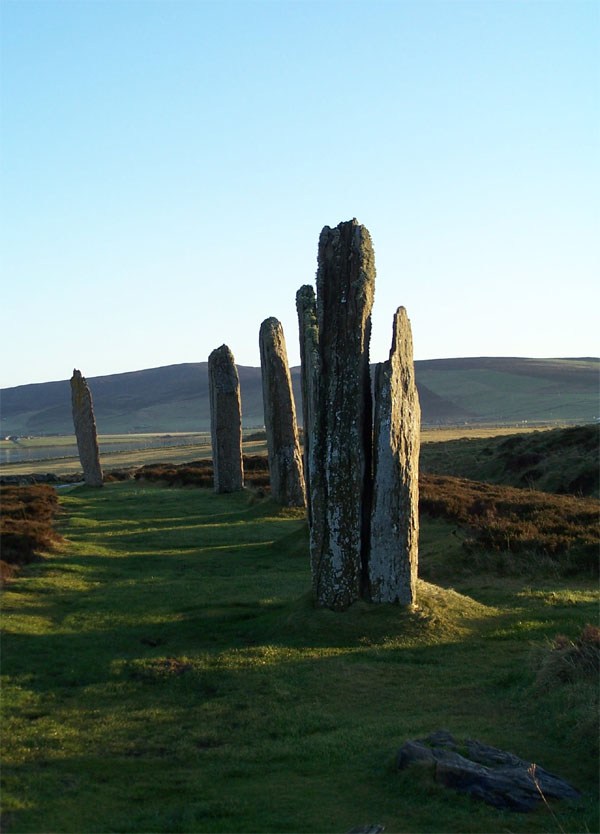
Ring of Brodgar
Orkney Islands
The Ring of Brodgar is a stone circle on the narrow isthmus between the Lochs of Stenness and Harray on Mainland, Orkney.
- Near Stenness
- 5 min walk from car park
- Easy path
Sacred place · Prehistoric
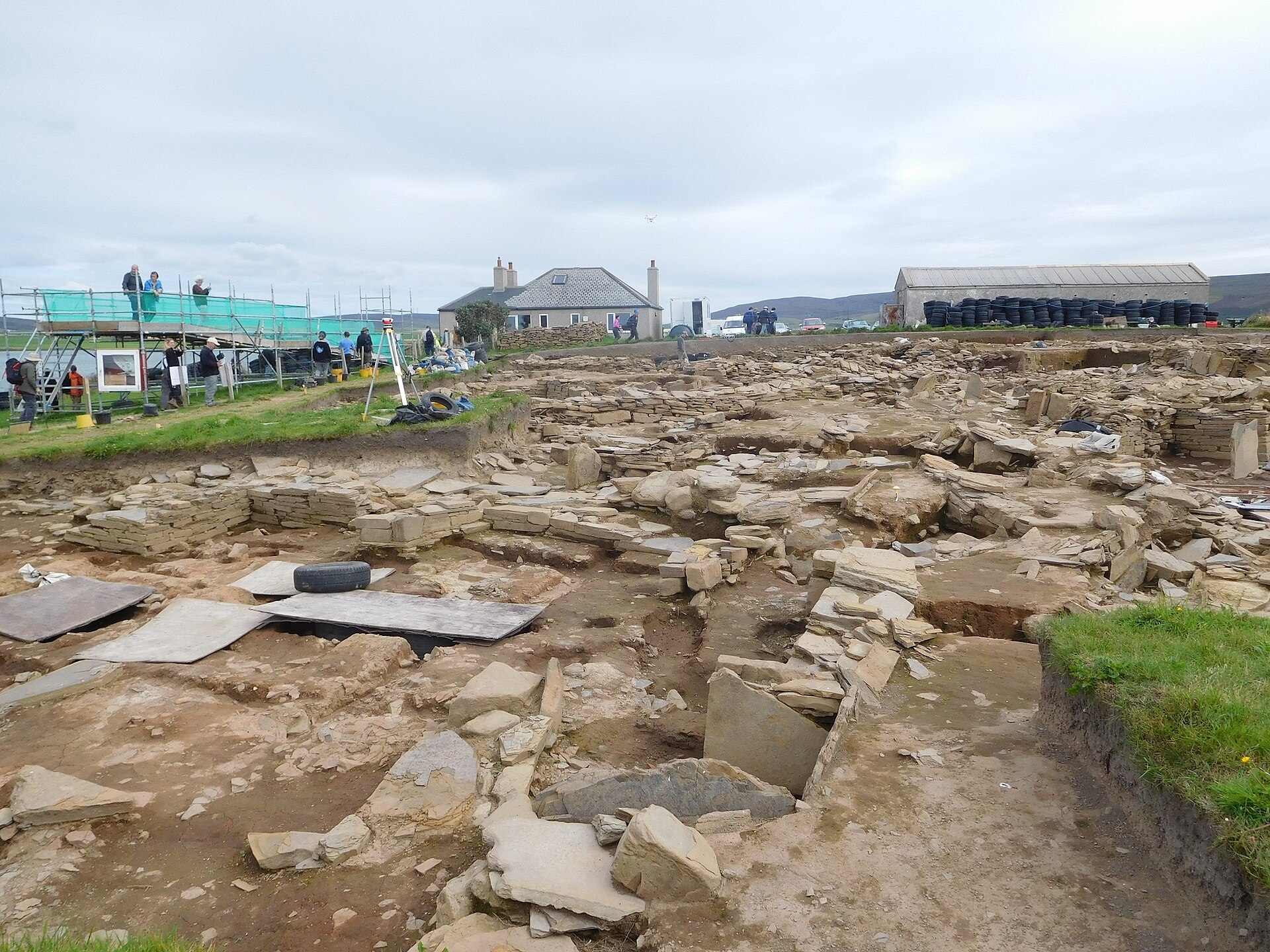
Ness of Brodgar
Orkney Islands
Ness of Brodgar preserves an archaeological site between the Ring of Brodgar and the Stones of Stenness.
- Near Stenness
- Easy path
Sacred place · Prehistoric
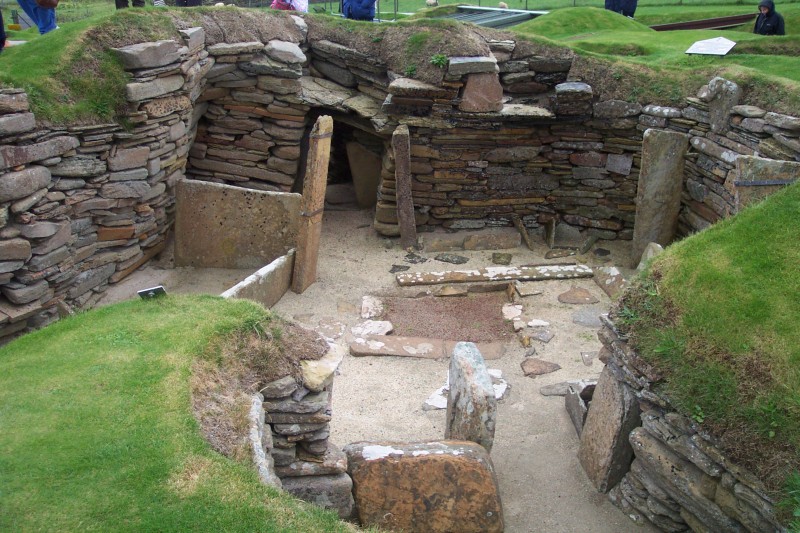
Heart of Neolithic Orkney
Orkney Islands
The Orkney World Heritage group is made up of monuments from the closing Stone Age, roughly 4000–2500 BC, whose remains illuminate the islands’ cha…
- Some walking
Sacred place · Prehistoric
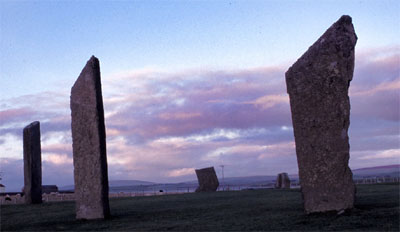
Stones of Stenness Circle and Henge
Orkney Islands
An ancient monument five miles north-east of Stromness that may be the oldest circular enclosure in the British Isles.
- Near Stenness
- 2 min walk from car park
- Easy path
The setting
Near Unstan Chambered Cairn, about 10 metres away.
Photo: N Chadwick / Wikimedia Commons / CC BY-SA 2.0
Near Unstan Chambered Cairn, about 10 metres away.
Photo: Derek Mayes / Wikimedia Commons / CC BY-SA 2.0
Near Unstan Chambered Cairn, about 11 metres away.
Photo: David Purchase / Wikimedia Commons / CC BY-SA 2.0
Near Unstan Chambered Cairn, about 14 metres away.
Photo: N Chadwick / Wikimedia Commons / CC BY-SA 2.0
The setting near Unstan Chambered Cairn.
Photo: Otter at Dutch Wikipedia (Original text: Hopmans) / Wikimedia Commons / CC BY-SA 3.0
The setting near Unstan Chambered Cairn.
Photo: No machine-readable author provided. Maccoinnich~commonswiki assumed ( / Wikimedia Commons / CC BY-SA 3.0
The setting near Unstan Chambered Cairn.
Photo: John Ireland / Wikimedia Commons / CC BY-SA 2.0
Questions people ask
- What is a stalled cairn?
- A tomb with a central passageway flanked by paired transverse stones, dividing the side spaces into compartments that reminded early investigators of horse stalls. Unstan has five.
- What is Unstan ware?
- A distinctive pottery style first identified here in 1884 — shallow bowls with a band of grooved stab-and-drag patterning below the rim, and a plainer undecorated round-bottomed form.
- How old is the tomb?
- Evidence from nearby tombs suggests it was built between 3400 and 2800 BC, though an arrowhead of Beaker type indicates use continuing into the second millennium BC.
- What human remains were found?
- Two crouched skeletons in the side cell, several more in the main compartment, and scattered bones throughout the tomb, with animal bones and charcoal.
Sources
The Ancient Codex, in your pocket
Get the Pocket Codex app
Carry the directory with you — Unstan Chambered Cairn and thousands of ancient places across Britain and Ireland, offline, wherever you roam.