The Orkney World Heritage group is made up of monuments from the closing Stone Age, roughly 4000–2500 BC, whose remains illuminate the islands’ changing communities and landscapes.
This is a designation rather than a place. The Heart of Neolithic Orkney takes in four separate monuments of the Neolithic — the late Stone Age, when farming first reached these islands — spread across the Mainland, inscribed together by UNESCO on 2 December 1999 on the grounds that they belong to one another.
Maeshowe is a chambered cairn built so that the setting sun of midwinter reaches down its passage and lights the chamber at the centre. Vikings broke into it and carved their names and their opinions on the walls, leaving one of the largest bodies of runic inscription anywhere in the world — a monument robbed and thereby made into a second kind of document.
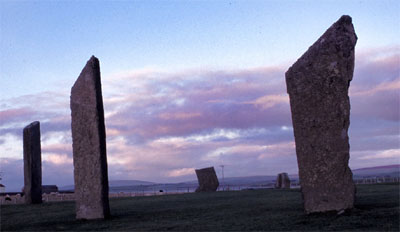
The Standing Stones of Stenness are what is left of a henge: four megaliths, the tallest six metres. The Ring of Brodgar is a circle 104 metres across, once sixty stones inside a ditch three metres deep and ten wide, and has been costed at some eighty thousand hours of labour. Skara Brae is eight houses, the best-preserved Neolithic village in northern Europe, and the reason the domestic detail of these people can be described rather than guessed at.
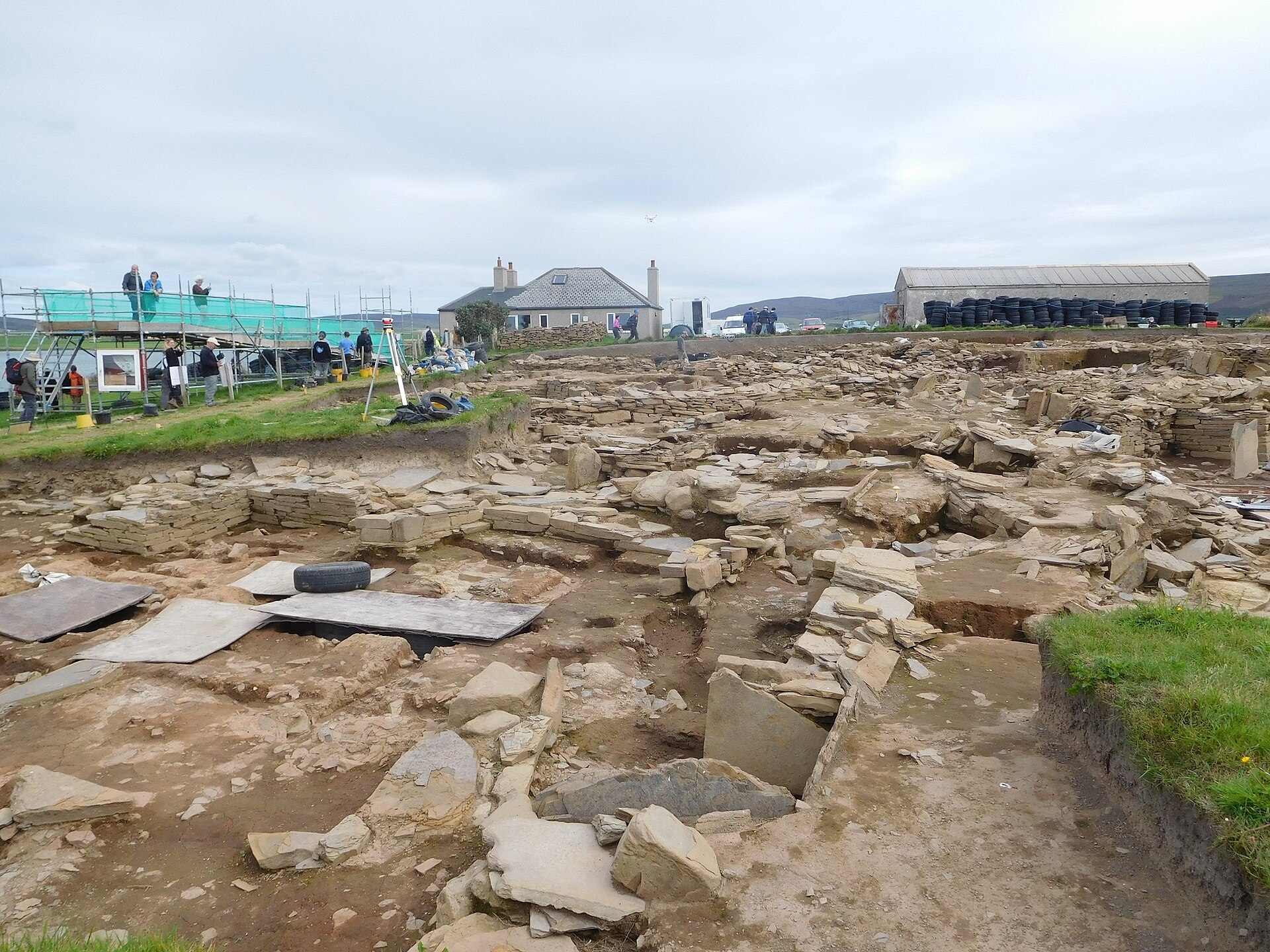
Between the Ring and the Stones lies the Ness of Brodgar, which is not part of the inscription. Excavation there has turned up houses, decorated slabs, a massive walled foundation and a structure large enough to have been called a Neolithic cathedral. Historic Scotland, which manages most of the World Heritage Site, says plainly that the Ness contributes greatly to understanding it — a site outside the boundary doing a great deal to explain what is inside it.
What follows is drawn from published sources, with each claim labelled by how firmly it is established.
History
UNESCO inscribed the Heart of Neolithic Orkney as a World Heritage Site on 2 December 1999. The designation covers four separate monuments on the Mainland of Orkney rather than a single place, and the name was adopted at inscription. Maeshowe is a chambered cairn and passage grave, aligned so that its central chamber is lit at the winter solstice. It was broken into by Vikings, who left inside it one of the largest collections of runic inscriptions anywhere in the world — graffiti that is now a primary source in its own right.
The Standing Stones of Stenness are the four surviving megaliths of a henge, the tallest of them six metres high. What remains is a fragment of the original setting, but the scale of the individual stones is undiminished. The Ring of Brodgar is a stone circle 104 metres across, originally of sixty stones, set within a circular ditch up to three metres deep and ten metres wide to form a henge. The construction has been estimated at 80,000 man-hours — a figure that gives some sense of the organised labour available to a Neolithic community here.
Skara Brae is a cluster of eight houses, the best-preserved Neolithic village in northern Europe. Its survival is what allows the domestic life of the period to be discussed in detail rather than inferred. The Ness of Brodgar, between the Ring and the Stones, is not part of the inscribed site but bears directly on it. Excavation there has produced housing, decorated stone slabs, a massive walled foundation and a large building described as a Neolithic cathedral. Historic Scotland, which manages most of the World Heritage Site, considers that the Ness contributes greatly to understanding it.
Cultural influences
-
Maeshowe, Stenness, Brodgar and Skara Brae form a connected group of burial, ceremonial and domestic monuments on the Mainland.
-
The excavated buildings and decorated stone at the Ness help explain the landscape between the Ring of Brodgar and the Stones of Stenness.
Connections
-
Maeshowe
Maeshowe is one of the four sites in the Heart of Neolithic Orkney World Heritage Site.
-
Standing Stones of Stenness
The Standing Stones of Stenness are one of the four sites in the Heart of Neolithic Orkney World Heritage Site.
-
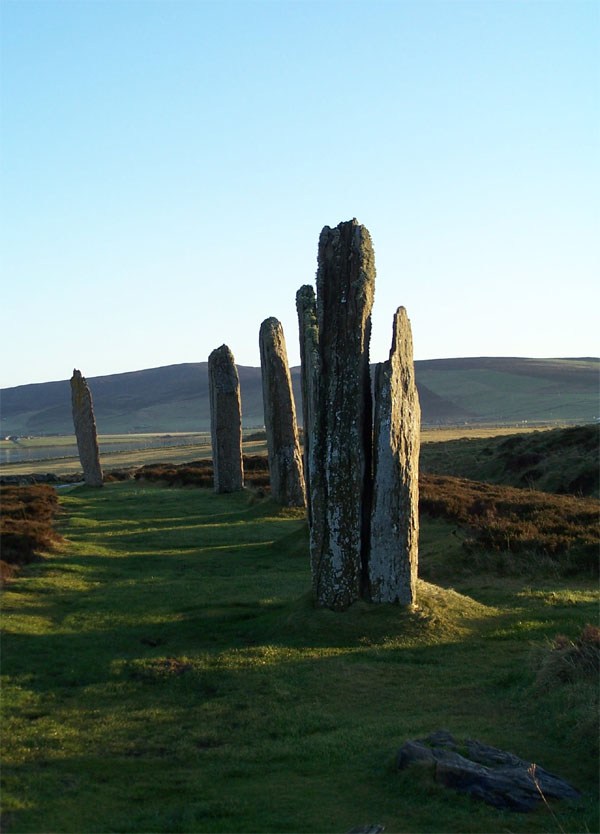
Photo: Original uploader was Otter at nl.wikipedia (Original text : Hopmans) / Wikimedia Commons / CC BY-SA 3.0 The Ring of Brodgar is one of the four sites in the Heart of Neolithic Orkney World Heritage Site.
-
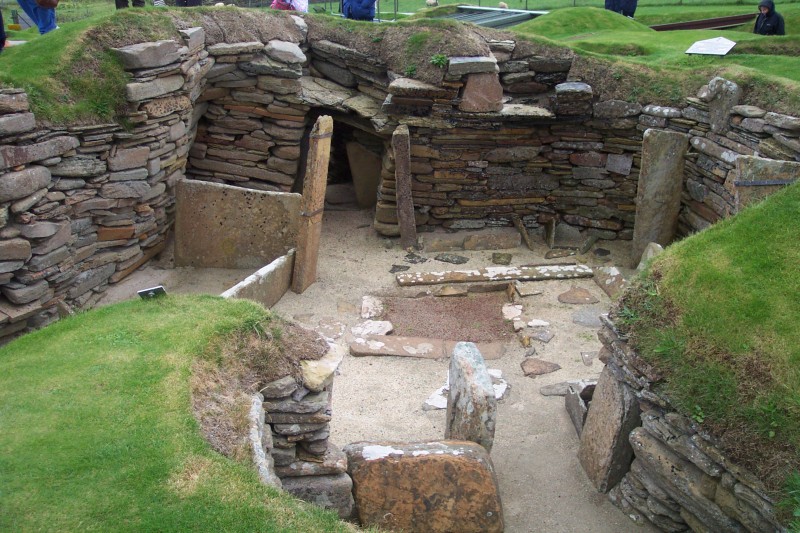
Photo: Dr. John F. Burka / Wikimedia Commons / CC BY-SA 3.0 Skara Brae is one of the four sites in the Heart of Neolithic Orkney World Heritage Site.
What to look for
-
Maeshowe passage
The passage is aligned so the midwinter setting sun reaches Maeshowe’s central chamber, linking tomb architecture to the solstice.
-
Stenness megaliths
Four surviving henge stones stand up to six metres high, fragments that still convey the scale of the original ceremonial setting.
-
Ring of Brodgar ditch
The 104-metre circle sits within a ditch up to three metres deep and ten metres wide, a vast excavated henge enclosure.
-
Skara Brae houses
Eight preserved stone houses reveal the domestic side of Neolithic Orkney, making this the best-preserved village of its date in northern Europe.
Plan your visit
- Location
- 58.9975°N · 3.2150°W
- Access
- Open access
- Terrain
- Moderate walking
- Time needed
- About 180 minutes
- Best time
- Daylight hours
- What survives
- The four monuments survive as separate but connected Neolithic places: tomb, stone settings, henge and village.
Opening & admission
No reliable current admission details are recorded; verify before travelling.
- The World Heritage Site comprises Maeshowe, the Standing Stones of Stenness, the Ring of Brodgar and Skara Brae; access arrangements vary by component site.
Nearby places
Sacred place · Prehistoric
Ness of Brodgar
Orkney Islands
Ness of Brodgar preserves an archaeological site between the Ring of Brodgar and the Stones of Stenness.
- Near Stenness
- Easy path

Settlement · Prehistoric
Barnhouse Settlement
Orkney Islands
A settlement of the first farming age on the shore of the Loch of Harray, close to the Standing Stones of Stenness.
- Easy path
Sacred place · Prehistoric
Stones of Stenness Circle and Henge
Orkney Islands
An ancient monument five miles north-east of Stromness that may be the oldest circular enclosure in the British Isles.
- Near Stenness
- 2 min walk from car park
- Easy path
Sacred place · Prehistoric
Ring of Brodgar
Orkney Islands
The Ring of Brodgar is a stone circle on the narrow isthmus between the Lochs of Stenness and Harray on Mainland, Orkney.
- Near Stenness
- 5 min walk from car park
- Easy path
Questions people ask
- What does the inscription cover?
- Four separate monuments on the Orkney Mainland rather than one place — Maeshowe, the Standing Stones of Stenness, the Ring of Brodgar and Skara Brae. UNESCO inscribed them on 2 December 1999.
- What is inside Maeshowe?
- A chambered tomb aligned so the central chamber is lit at the winter solstice, and one of the largest collections of runic inscriptions anywhere — graffiti cut by Vikings who broke into it.
- How much labour did the Ring of Brodgar take?
- The construction has been estimated at 80,000 man-hours. The circle is 104 metres across, originally of sixty stones, set inside a ditch up to three metres deep.
- Why does Skara Brae matter?
- It is the best-preserved Neolithic village in northern Europe — complete enough that furniture, hearths and drains can be described rather than reconstructed.
- What is the Ness of Brodgar?
- A site between the Ring and the Stones that is not part of the inscription, though Historic Scotland states it contributes greatly to understanding the World Heritage Site. It has produced decorated slabs and a building large enough to be called a cathedral.
Sources
The Ancient Codex, in your pocket
Get the Pocket Codex app
Carry the directory with you — Heart of Neolithic Orkney and thousands of ancient places across Britain and Ireland, offline, wherever you roam.