
A settlement of the first farming age on the shore of the Loch of Harray, close to the Standing Stones of Stenness.
The houses at Barnhouse stood apart from one another, and that is what separates the place from Skara Brae. The two settlements share almost everything else — central hearths, beds built into the walls, stone dressers, drains running under the floors — but the Skara Brae houses are packed into a single connected mass and these were free-standing.
Colin Richards found the site in 1984 on the shore of the Loch of Harray, a short way from the Standing Stones of Stenness. Excavation between 1986 and 1991 exposed the base courses of at least fifteen houses, dating from about 3000 BC. The pottery is grooved ware, the same as at Stenness and Skara Brae; among the flint and stone tools was a piece of pitchstone that can only have come from Arran.
House 2 was different from the rest. It was double-sized, better built, and rebuilt up to five times while the others were not rebuilt at all, and it stayed in use as long as the settlement did. The houses stood around a central open space that was itself divided up by work — pottery in one part, flint and bone and hides in others.
Barnhouse was abandoned around 2600 BC, and then somebody built Structure 8 partly on top of it: a room seven metres square inside walls three metres thick, its entrance facing north-west so that the midsummer sunset runs up the passage. A clay platform surrounded it, and the way through that platform was aligned on Maeshowe. It is the sort of arrangement found in chambered cairns rather than in houses.
What follows is drawn from published sources, with each claim labelled by how firmly it is established.
History
Colin Richards discovered the settlement in 1984 on the shore of the Loch of Harray, not far from the Standing Stones of Stenness and about five miles north-east of Stromness. Excavation between 1986 and 1991 uncovered the base courses of at least fifteen houses. The buildings resemble the early phase of Skara Brae — central hearths, beds built against the walls, stone dressers and internal drains — but differ in one important respect. The houses here appear to have been free-standing rather than packed together into a single connected mass.
The settlement dates from around 3000 BC. Grooved ware pottery was found, the same type recovered from the Stones of Stenness and Skara Brae, along with flint and stone tools and a piece of pitchstone that must have come from the Isle of Arran. House 2 was the largest of the original buildings, double-sized and built to a higher standard than the rest, and unlike the others it was rebuilt as many as five times. It seems to have stayed in use for the whole life of the settlement.
The houses clustered around a central open area, and that space was itself divided up by activity — one part given over to making pottery, others to working flint, bone and hides. Barnhouse appears to have been abandoned around 2600 BC, after four centuries of use. Something was built here afterwards. Structure 8 went up partly on top of the earlier house sites, with a room about seven metres square inside walls three metres thick, and its entrance faces north-west so the midsummer sunset shines along the passage — an arrangement found in some chambered cairns.
That structure was surrounded by a clay platform, and the entrance through the platform was aligned on Maeshowe. Whatever Structure 8 was for, it was built to look at things, and one of those things was a tomb two miles away.
People
-
Colin Richards
Discovered Barnhouse Settlement in 1984 and led excavation from 1986 to 1991.
Cultural influences
-
Barnhouse shared Grooved Ware, domestic fittings and connections with the Stones of Stenness and Skara Brae.
-
A piece of pitchstone found at the settlement came from the Isle of Arran.
Connections
-
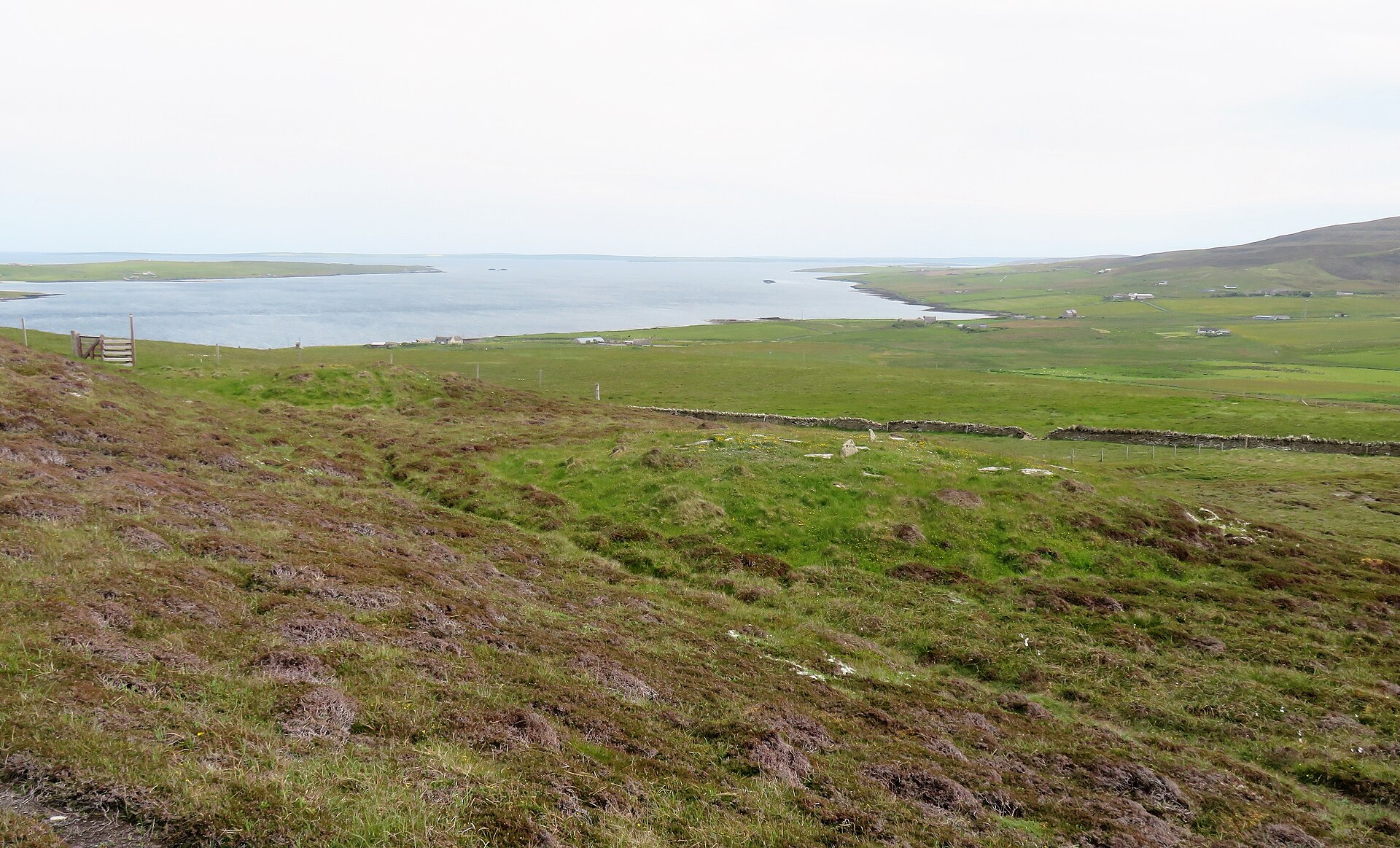
Photo: Gordon Hatton / Wikimedia Commons / CC BY-SA 2.0 Barnhouse and Rinyo are Neolithic settlement sites in Orkney, offering a comparison between domestic communities from the same broad prehistoric world rather than an isolated monument.
-
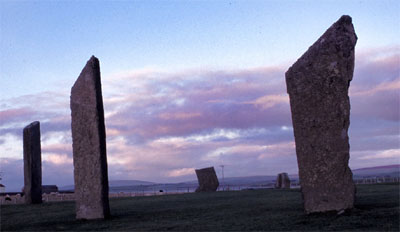
Photo: Otter at Dutch Wikipedia (Original text: Hopmans) / Wikimedia Commons / CC BY-SA 3.0 Stones of Stenness Circle and Henge
Historic Environment Scotland identifies a close relationship between Barnhouse and the Stones of Stenness: similarities in their interior layouts link the settlement’s domestic architecture with the nearby ceremonial monument.
-
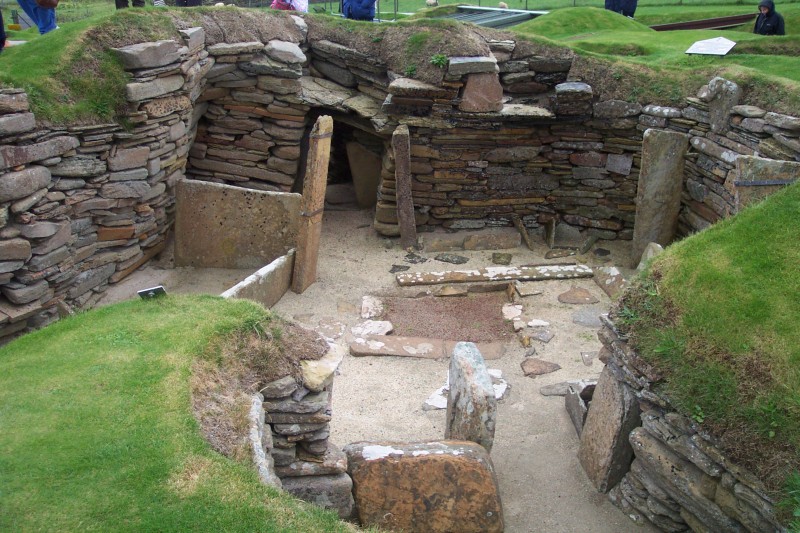
Photo: Dr. John F. Burka / Wikimedia Commons / CC BY-SA 3.0 Barnhouse forms part of the wider Neolithic landscape around the Heart of Neolithic Orkney, where domestic settlements and ritual monuments together reveal the society that built them.
Discovery & excavation
Excavation between 1986 and 1991 exposed the base courses of at least fifteen free-standing Neolithic houses.
What to look for
-
Free-standing houses
At least fifteen houses were separate buildings rather than joined together as at Skara Brae.
-
House 2
The largest house was double-sized, rebuilt up to five times and used throughout the settlement’s life.
-
Structure 8
The later seven-metre square structure has three-metre walls and a north-west entrance aligned on the midsummer sunset.
-
Maeshowe alignment
The entrance through Structure 8’s clay platform aligns on Maeshowe.
Plan your visit
- Location
- 58.9958°N · 3.2068°W
- Access
- Reached on a public path
- Terrain
- Easy going
- Time needed
- About 45 minutes
- Best time
- Daylight hours
- What survives
- Excavated house bases and the later Structure 8 remain on the shore of the Loch of Harray.
Opening & admission
No reliable current admission details are recorded; verify before travelling.
- Accessible to the public via a footpath from the Standing Stones of Stenness.
Nearby places
Sacred place · Prehistoric
Stones of Stenness Circle and Henge
Orkney Islands
An ancient monument five miles north-east of Stromness that may be the oldest circular enclosure in the British Isles.
- Near Stenness
- 2 min walk from car park
- Easy path
Sacred place · Prehistoric
Heart of Neolithic Orkney
Orkney Islands
The Orkney World Heritage group is made up of monuments from the closing Stone Age, roughly 4000–2500 BC, whose remains illuminate the islands’ cha…
- Some walking
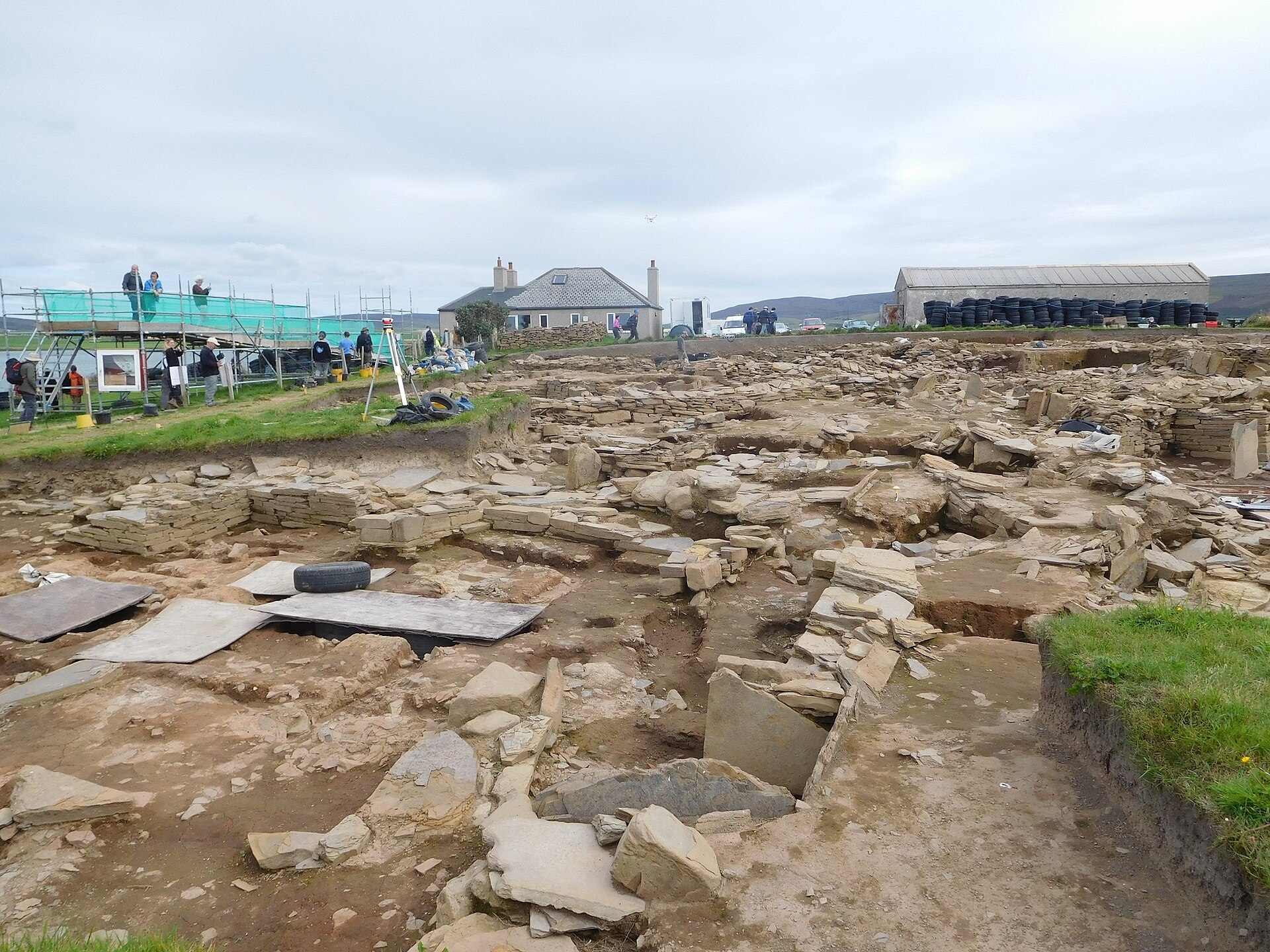
Sacred place · Prehistoric
Ness of Brodgar
Orkney Islands
Ness of Brodgar preserves an archaeological site between the Ring of Brodgar and the Stones of Stenness.
- Near Stenness
- Easy path
Tomb or burial place · Prehistoric
Maeshowe Chambered Cairn
Orkney Islands
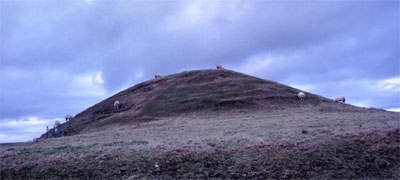
The burial mound was built around 2800 BC by farming communities of central Orkney and contains a stone chamber associated with the Grooved Ware po…
- Near Stenness
- 1.6 km from car park
- Easy path
The setting
Near Barnhouse Settlement, about 4 metres away.
Photo: Ymblanter / Wikimedia Commons / CC BY-SA 4.0
Near Barnhouse Settlement, about 6 metres away.
Photo: Ymblanter / Wikimedia Commons / CC BY-SA 4.0
Near Barnhouse Settlement, about 6 metres away.
Photo: N Chadwick / Wikimedia Commons / CC BY-SA 2.0
Questions people ask
- How does Barnhouse differ from Skara Brae?
- The houses were free-standing rather than joined into a single mass, though they share the central hearths, wall-built beds, stone dressers and internal drains of Skara Brae's early phase.
- How old is the settlement?
- Around 3000 BC. It appears to have been abandoned about 2600 BC.
- What was House 2?
- The largest of the original buildings — double-sized, built to a higher standard than the others, rebuilt up to five times, and in use throughout the settlement's life.
- What is Structure 8?
- A later building put up partly on top of the abandoned houses, with a room seven metres square inside three-metre walls. Its entrance faces the midsummer sunset, and the way through its surrounding clay platform is aligned on Maeshowe.
Sources
- Historic Environment Scotland scheduled monument SM90352 — Watch Stone, stone settings, Barnhouse settlement and related remains
- Wikipedia: Barnhouse Settlement
- Wikidata: Q808495
- Historic Environment Scotland — Heart of Neolithic Orkney (accessed 2026-08-30)
Explore more: Settlements · Prehistoric · Orkney Islands
The Ancient Codex, in your pocket
Get the Pocket Codex app
Carry the directory with you — Barnhouse Settlement and thousands of ancient places across Britain and Ireland, offline, wherever you roam.