
An elm that outlived both the forest around it and the disease that took most of its kind, saved by standing somewhere nothing would sensibly have planted it.
Nothing would choose to grow here. The elm stands on the stony outflow of a mountain stream in Gleann na Cìche, a side spur off Glen Affric, where moss lies over bare rock and there is hardly any soil to speak of underneath. That is the argument for its age. No forester planted a tree on a streambed of loose stone, so it must have seeded itself when this glen still carried woodland, and then outlasted every other tree in it.
It is a wych elm, and it is big. The trunk measures 3.80 metres round at a height of 1.50 metres above the ground, the standard point for such a measurement, and a girth like that on an elm means centuries. Nobody has put a firm figure on its age. A burl and a hollow high on the trunk make a shape that reads as a face, and it is that, together with the tree’s solitude above the young woodland climbing the slopes below, that got it named after the walking trees of Tolkien.
Its isolation has done more than furnish a metaphor. Dutch elm disease travels by beetle and by infected timber, and it has stripped mature elms out of the British landscape almost completely. A single tree with no elm neighbours is hard for the beetles to find. The same emptiness that makes the Last Ent look like a survivor of an older forest is the reason it survived the newer catastrophe as well.
Giles Brockman of Forestry and Land Scotland put the elm forward for Scotland’s Tree of the Year in 2019, calling it a hidden mystery of Glen Affric. It was one of six finalists picked from public nominations and won the public vote outright. Afterwards it stopped being simply a notable tree and became a piece of evidence, taken up by researchers at Inverness College UHI to make the point that healthy elms have not disappeared and can still regenerate. The Woodland Trust carries it on its Ancient Tree Inventory as a Tree of National Special Interest.
The elm is also lived in. Owl pellets have been found among its roots, which puts a roost in the one substantial tree for some distance around.
What follows is drawn from published sources, with each claim labelled by how firmly it is established.
The name
The name is borrowed, and knowingly so. Ents are the walking, speaking tree-creatures of J.R.R. Tolkien's The Lord of the Rings, and the elm acquired the title because a burl and hollow on its trunk read at a glance as a face. Giles Brockman of Forestry and Land Scotland, who put the tree forward for the 2019 award, said its location, its isolation and that peculiar face made it easy to imagine as one of Tolkien's Ents standing sentinel over the rebirth of a new native woodland in Affric.
History
The tree is a wych elm, Ulmus glabra, growing in Gleann na Cìche, a side spur running off Glen Affric in the Scottish Highlands. Its exact age has not been established, but its girth measures 3.80 metres at a height of 1.50 metres, and a trunk of that diameter puts it at many centuries rather than many decades. On any reading of that figure the elm was already growing here in the early modern period, which is the band this record is filed under.
Where it grows is the whole argument for what it is. The elm has rooted on the rocky outflow of a mountain stream, where moss covers the stones and there is very little soil beneath. Brockman's point was that nobody would choose to plant a tree there, so it cannot be a planted tree. It must instead have come up when the glen still carried woodland, and outlasted all of it.
That isolation has also kept it alive. Dutch elm disease is carried by beetles and spread further by the movement of infected timber, and it has taken the great majority of Britain's mature elms. A single tree standing well away from any other elm is a poor target, and the Last Ent has come through untouched while the species collapsed around it.
In 2019 the elm was named Scotland's Tree of the Year. Giles Brockman of Forestry and Land Scotland nominated it and ran a campaign for it, describing the elm as a hidden mystery of Glen Affric. It was one of six finalists drawn from public nominations and won the online public vote that decided the award. The Woodland Trust has also designated it a Tree of National Special Interest.
Winning the award turned the tree into an argument. It was adopted as a figurehead for work against Dutch elm disease, and Euan Bowditch of the Wooded Landscapes Research Group at Inverness College UHI used it to push back on what he called a defeatist public perception of elm. Many people, he noted, do not realise that healthy elms still exist, grow and regenerate, and he thought it important to stress that elms are not lost to the landscape. The tree is not only a monument. Owl pellets found among its roots indicate that it holds a roost, which for a solitary tree in an otherwise open glen makes it a piece of habitat as well as a survivor.
People
-
Giles Brockman
Forestry and Land Scotland officer who nominated the elm for the 2019 award, campaigned for it, and gave the reading of its position that explains why it is thought to be a relic rather than a planted tree.
-
Euan Bowditch
Researcher in the Wooded Landscapes Research Group at Inverness College UHI, who used the tree's win to argue publicly that healthy elms survive and can regenerate.
Cultural influences
-
The Last Ent of Affric stands within the cultural and ecological memory of the Caledonian pinewood, a landscape central to Highland conservation.
Connections
-
Glen Affric
The glen the tree's side valley opens off, and the native woodland restoration the elm has become the emblem of.
-
Gleann na Cìche
The side spur the elm actually stands in, off the main line of Glen Affric.
-
Forestry and Land Scotland
The agency whose officer nominated the tree for Scotland's Tree of the Year and manages the surrounding ground.
-
Woodland Trust
Holds the elm on its Ancient Tree Inventory and has designated it a Tree of National Special Interest.
-
Inverness College UHI
Base of the Wooded Landscapes Research Group, which took up the tree as a public argument for the survival of healthy elms.
In culture
-
Tolkien's Ents
The tree is named for the Ents of The Lord of the Rings, the tree-creatures who march on Isengard. The borrowing was deliberate and is the reason a wych elm in a Highland side glen carries a name from fiction rather than from the map.
What to look for
-
The face
A burl and hollow in the trunk read from a distance as a face, and that resemblance is what earned the tree its name. It is the first thing most people look for.
-
The rocky outflow it grows on
The elm is rooted on the stony outwash of a mountain stream, with moss over the rocks and almost no soil beneath. This is the evidence for its age, since it is not ground anyone would have planted into.
-
The girth
Measured at 3.80 metres round, taken at 1.50 metres from the ground, which is the standard height for recording a tree. The figure is the nearest thing to a date the elm has.
-
The absence of other elms
What is not there matters as much as what is. No neighbouring elms means no easy route for the beetles that carry Dutch elm disease, and that emptiness is why this tree is still standing.
-
Owl pellets among the roots
The undigested remains that owls cough up, found at the base of the trunk, showing the tree is used as a roost.
-
The young woodland below
New native trees are coming up on the slopes beneath the elm, part of the Affric restoration. The Last Ent is positioned above them, which is what gave rise to the sentinel description.
Plan your visit
- Location
- General area near Highland, Highland
- Nearest settlement
- Highland
- Access
- Reached on a public path
- What survives
- Living-tree condition and access should be checked against current local guidance before any visit copy is expanded.
This is a sensitive or fragile site, so we show only its general area. Please check official heritage sources for access before visiting, and take care not to disturb it.
Nearby places

Building or ruin · Medieval
Eilean Donan Castle
Highland
The castle photographed on countless shortbread tins is barely a century old: a 1930s recreation of a stronghold the Royal Navy blew apart in 1719.
- Near Inverness

Fortified place · Iron Age
Caisteal Grugaig
Highland
A drystone tower still rising over its own five-step internal stair and a triangular lintel massive enough to have never needed a keystone.
- Near Shiel Bridge
- Some walking

Fortified place · Iron Age
Dun Grugaig
Highland
A rare surviving 'semi-broch': the transitional D-shaped form that shows how the great circular broch towers of the Highlands may have evolved.
- Near Glenelg
- Rough ground
Tomb or burial place · Prehistoric
Corrimony chambered cairn
Highland
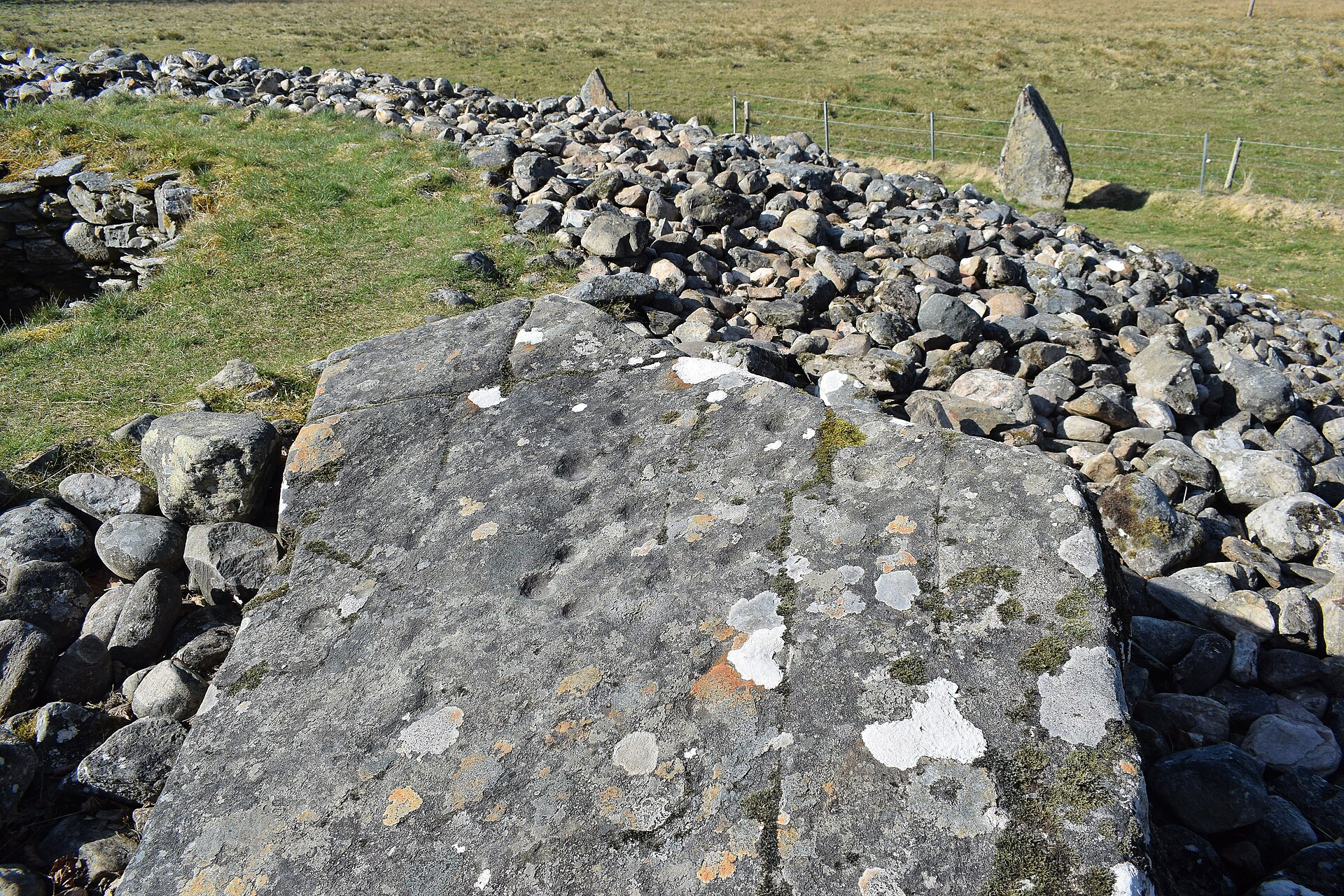
One of the best-preserved Clava cairns in the Highlands, its passage still roofed by the original cup-marked capstone and its burial chamber found…
- Near Drumnadrochit
- Easy path
The setting
Near The Last Ent of Affric, about 62 metres away.
Photo: Craig Wallace / Wikimedia Commons / CC BY-SA 2.0
Near The Last Ent of Affric, about 67 metres away.
Photo: Craig Wallace / Wikimedia Commons / CC BY-SA 2.0
Near The Last Ent of Affric, about 395 metres away.
Photo: Craig Wallace / Wikimedia Commons / CC BY-SA 2.0
Near The Last Ent of Affric, about 399 metres away.
Photo: Craig Wallace / Wikimedia Commons / CC BY-SA 2.0
Questions people ask
- What kind of tree is the Last Ent of Affric?
- A wych elm, Ulmus glabra. Its exact age is not known, but a girth of 3.80 metres measured at 1.50 metres above the ground indicates a tree many centuries old.
- Why is it called an Ent?
- After the tree-creatures in J.R.R. Tolkien's The Lord of the Rings. A burl and hollow on the trunk look like a face, and Giles Brockman of Forestry and Land Scotland, who nominated it for the 2019 award, said its isolation and that face made it easy to imagine as one of Tolkien's Ents.
- How did it escape Dutch elm disease?
- By standing alone. The disease is carried by beetles and by the movement of infected wood, and an elm with no other elms near it is difficult to reach. Its isolation, which is also the reason it is thought to be a relic of older woodland, is what has kept it healthy.
- What did it win in 2019?
- Scotland's Tree of the Year. It was one of six finalists chosen from public nominations and took the award on an online public vote, following a campaign by Giles Brockman of Forestry and Land Scotland. The Woodland Trust separately lists it as a Tree of National Special Interest.
- Why is it thought to be the last tree of an old forest?
- Because of where it grows. The elm sits on the rocky outflow of a stream, on moss-covered stone with barely any soil, which is not ground anyone would plant into. That argues it seeded naturally when the glen still held woodland, and has simply outlived it.
Sources
- Wikipedia article
- Wikidata
- Ancient Tree Inventory, Woodland Trust
- Forestry and Land Scotland — nomination statement by Giles Brockman
Explore more: Ancient trees · Medieval · Highland
The Ancient Codex, in your pocket
Get the Pocket Codex app
Carry the directory with you — The Last Ent of Affric and thousands of ancient places across Britain and Ireland, offline, wherever you roam.