
One of the best-preserved brochs on the Caithness coast, with its entrance passage still roofed by its original stone lintels after more than two thousand years.
A drystone tower stands on a narrow shelf of ground between two ravines, the Ousdale Burn cutting past on one side and the Allt a’ Bhurg on the other, both streams dropping toward the sea within sight of the A9. Walk the entrance passage today and the roof overhead is still made of its original stone lintels, laid when the broch (a tall circular tower of unmortared stone, found only in Scotland) was built more than two thousand years ago, and the doorway still carries the door-checks that once held a heavy timber door shut against the weather and whatever else the builders feared.
For much of the twentieth century the tower stood quietly collapsing, its walls bulging and a tree growing up through the middle of the structure, until a local charity took on the job of putting it back together stone by stone. The broch’s story runs from an Iron Age farming and defensive tradition, through a Norse-named landscape and a recorded medieval stand-off, to a Victorian dig that nearly finished off what two thousand years of weather had not, and finally to a modern conservation effort that has made the site walkable again.
What follows is drawn from published sources, with each claim labelled by how firmly it is established.
The name
The name Ousdale comes from Old Norse, and it sits among a cluster of similarly Norse-derived place names along this stretch of coast, including Helmsdale and Berriedale, pointing to a substantial Norse presence in the area during the early medieval period. The nearby ruined settlement of Borg takes its name from the Old Norse word for 'fort' or 'burg', almost certainly a direct reference to the broch itself.
History
Sometime during the 3rd to 2nd century BC, builders raised Ousdale Broch on a narrow terrace between two ravines, giving it a solid stone base and an external diameter of around 16 metres. It belongs to what archaeologists call a 'second-phase' broch, a later style of the tower-building tradition, and its walls still stand over 3 metres high in places, with an internal court roughly 7 metres across at the centre.
The main entrance, built into the southwest side of the wall, was fitted with two sets of door-checks and a guard cell just inside, while a doorway off the central court led to an intramural stairway, a stone staircase built within the thickness of the wall itself, of the same kind that still survives at Mousa in Shetland and at Dun Telve near Glenelg. A ditch may once have surrounded the structure, and traces suggest further outbuildings once stood nearby.
In the centuries that followed, Norse settlers left their mark on the surrounding landscape so thoroughly that the name Ousdale itself, along with those of neighbouring Helmsdale and Berriedale, derives from Old Norse rather than Gaelic or Scots, evidence of a substantial Norse presence along this part of the Caithness coast.
In 1201 Ousdale, recorded as Eyesteindal in the Orkneyinga Saga, became the site of a tense confrontation between William the Lion, king of Scotland, and Harald Maddadsson, the Norse jarl who ruled both Caithness and Orkney. William had sent an army north after hearing of Harald's cruelty towards the people of Thurso, and when the two forces met at Ousdale, Harald found himself heavily outnumbered and sued for peace, so that the standoff ended without a battle being fought.
At some point after the medieval period, a small clearance settlement grew up roughly 100 metres northwest of the broch, later known as Borg, its name recalling the ruined fort beside it. The remains of its traditional longhouses and enclosures are still visible on the ground today, a reminder that this stretch of coast was farmed and lived in long after the broch itself had fallen out of use.
In 1891 the antiquarian James Mackay excavated the interior of the broch, though he left much of the outer wall still buried. His workers found layers of ash and charcoal on the floor together with broken animal bones, large quantities of periwinkle and limpet shells, and wild hazelnuts, alongside artefacts including pottery, polished lignite, quern-stones, whetstones, a metalworking crucible, mica schist discs, part of a jet armlet, and a fragment of a wooden dish. A human skeleton, buried face-down by the entrance to the stairs, was also uncovered and dated at the time to the post-medieval period, though the remains have since been lost and cannot now be reassessed; Mackay's intrusive dig left the structure unstable enough that he built an internal buttress to shore it up.
Between 2015 and 2020 the Caithness Broch Project, a charity set up to promote the region through its archaeological heritage, oversaw a full conservation programme after Mackay's old buttress collapsed, a large tree took root inside the broch, and sections of stonework began bulging inward. Working with Historic Environment Scotland and archaeologists from Clyde Archaeology, the team cleared vegetation, stabilised the walls and cells using hardwood pinnings, reconstructed a stone recess known as an aumbry, and laid geotextile and gravel inside for safe access, before building a new car park, access path, and interpretation panels that turned the site into a short heritage trail.
People
-
James Mackay
Antiquarian who excavated the broch's interior in 1891, recovering its principal collection of artefacts but also destabilising the structure in the process.
-
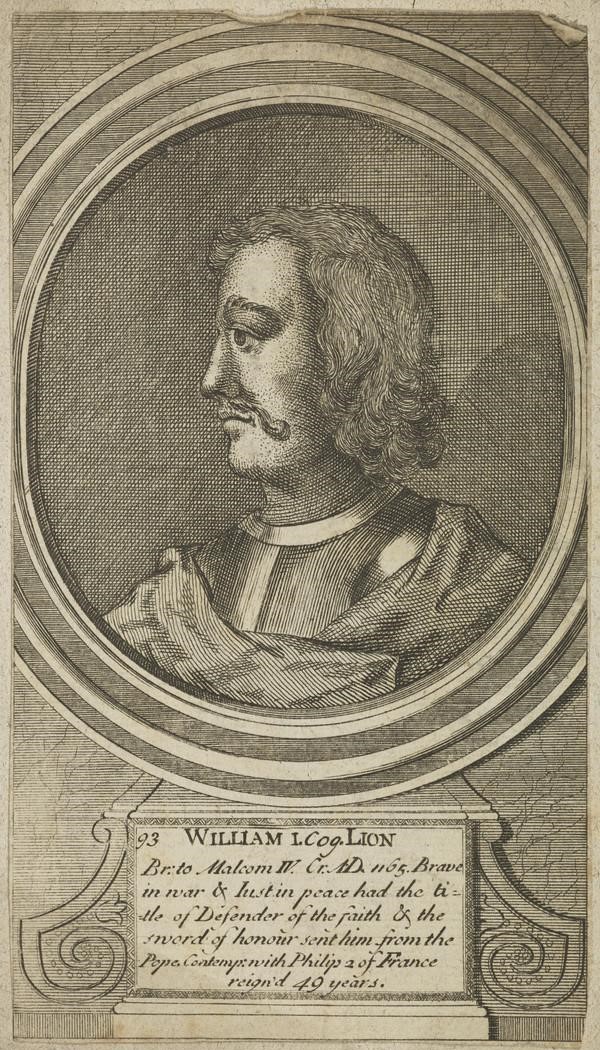
Photo: Richard Cooper, the elder / Wikimedia Commons / Public domain William the Lion
King of Scotland who, according to the Orkneyinga Saga, sent an army north to confront Jarl Harald Maddadsson at Ousdale in 1201.
-
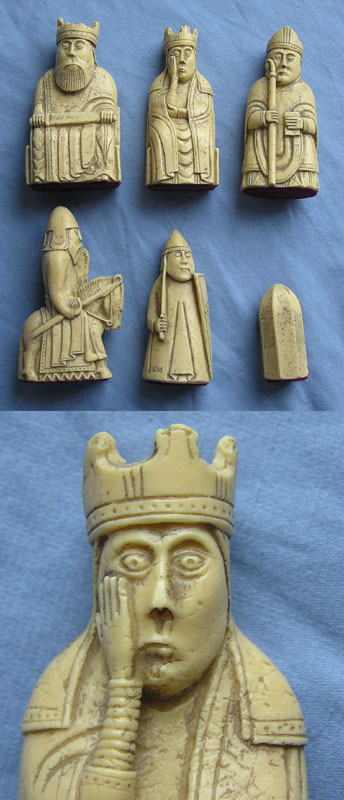
Photo: Unknown / Wikimedia Commons / CC BY-SA 3.0 Harald Maddadsson
Norse jarl of Caithness and Orkney who was forced to sue for peace when outnumbered by William the Lion's forces at Ousdale in 1201.
Cultural influences
-
Ousdale belongs to the broch tradition of northern Scotland, where stone round towers served as prominent defended residences.
Connections
-
Mousa Broch, Shetland
Shares the same style of intramural stairway found at Ousdale, one of the clearest surviving examples of the broch-building tradition.
-
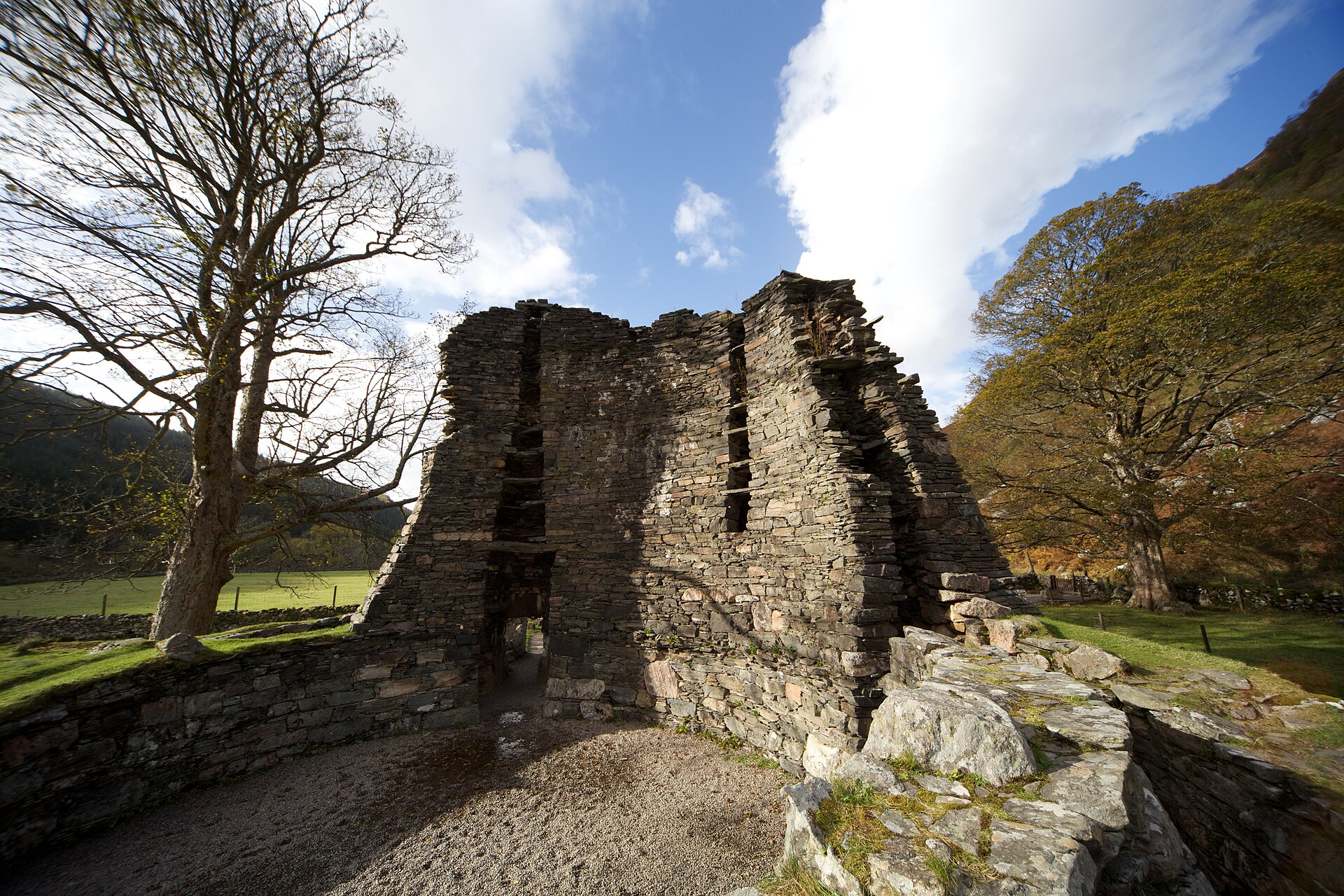
Photo: Tom Parnell from Scottish Borders, Scotland / Wikimedia Commons / CC BY-SA 2.0 Preserves an intramural stairway of the same type built into Ousdale's wall.
-
Achvarasdal Broch
The geotextile-and-gravel access technique used to stabilise Ousdale's interior in 2019 had previously been trialled during conservation work at Achvarasdal.
-
Borg clearance village
A post-medieval settlement roughly 100 metres from the broch, named after the Old Norse word for fort in apparent reference to Ousdale Broch itself.
-
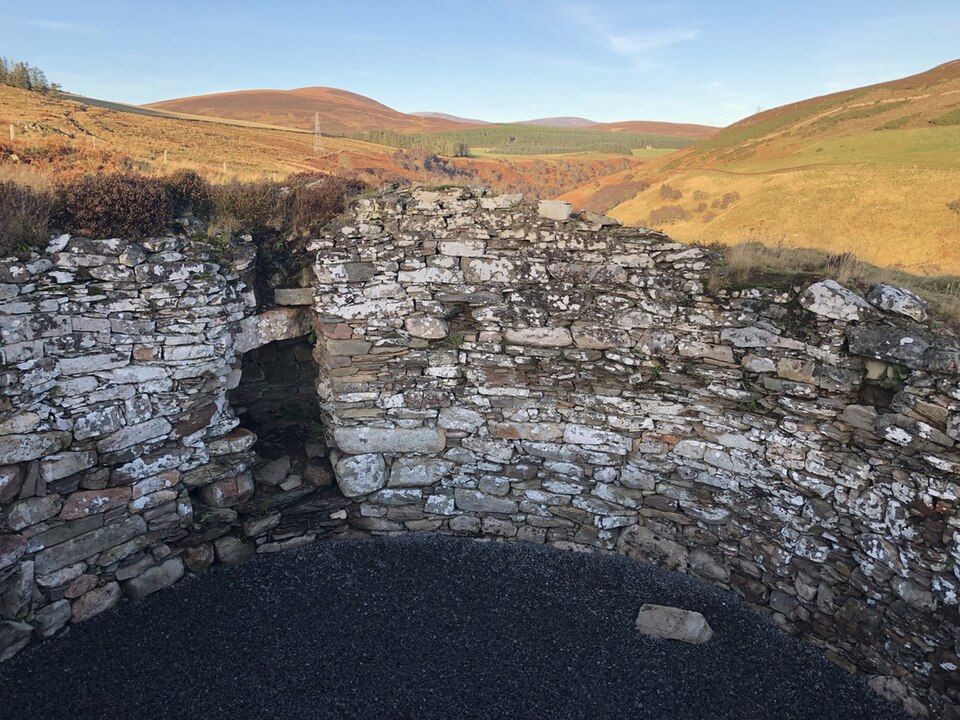
Photo: KMLilley / Wikimedia Commons / CC BY-SA 4.0 Caithness Broch Project
The charity that initiated and oversaw the 2015-2020 consolidation of the broch, working with Historic Environment Scotland on the repair plan.
Discovery & excavation
The broch was excavated in 1891 by James Mackay, whose work concentrated on the interior and uncovered ash and charcoal deposits, animal bone, shellfish remains, wild hazelnuts, and a range of artefacts including pottery, polished lignite, quern-stones, whetstones, a metalworking crucible, mica schist discs, a jet armlet fragment, and part of a wooden dish. A face-down human skeleton was also found buried by the stair entrance; it was dated at the time to the post-medieval period, but the remains have since been lost, so that dating cannot now be verified.
What to look for
-
The lintelled entrance passage
The southwest entrance passage retains almost all of its original roofing lintels and measures 4.3 metres long, 1.78 metres high, and 75 centimetres wide, with two sets of door-checks and a guard cell built into its side.
-
The intramural stairway
A doorway off the central court leads to a staircase built within the thickness of the broch wall, of the same type that survives at Mousa in Shetland and Dun Telve near Glenelg.
-
The reconstructed aumbry
A stone recess known as an aumbry was reconstructed during the 2015-2020 conservation programme and can be seen within the broch's interior.
-
The surviving wall height
Sections of the broch's solid-based wall still stand over 3 metres high, giving a sense of the tower's original scale despite centuries of collapse.
What is said
Folklore and tradition, recorded as what is said — not as established fact.
-
The buried skeleton
The skeleton found face-down by the stair entrance was dated in 1891 to the post-medieval period, and some have suggested it may represent a deviant burial, a culturally atypical burial often given to those excluded from society, or the victim of a more recent clan feud, though an association with the broch's original Iron Age use cannot be ruled out either.
Plan your visit
- Location
- 58.1484°N · 3.5793°W
- Access
- Open access
- Terrain
- Easy going
- Time needed
- About 90 minutes
Opening & admission
- Modern car park, gravel path and interpretation signs were added during conservation.
Nearby places
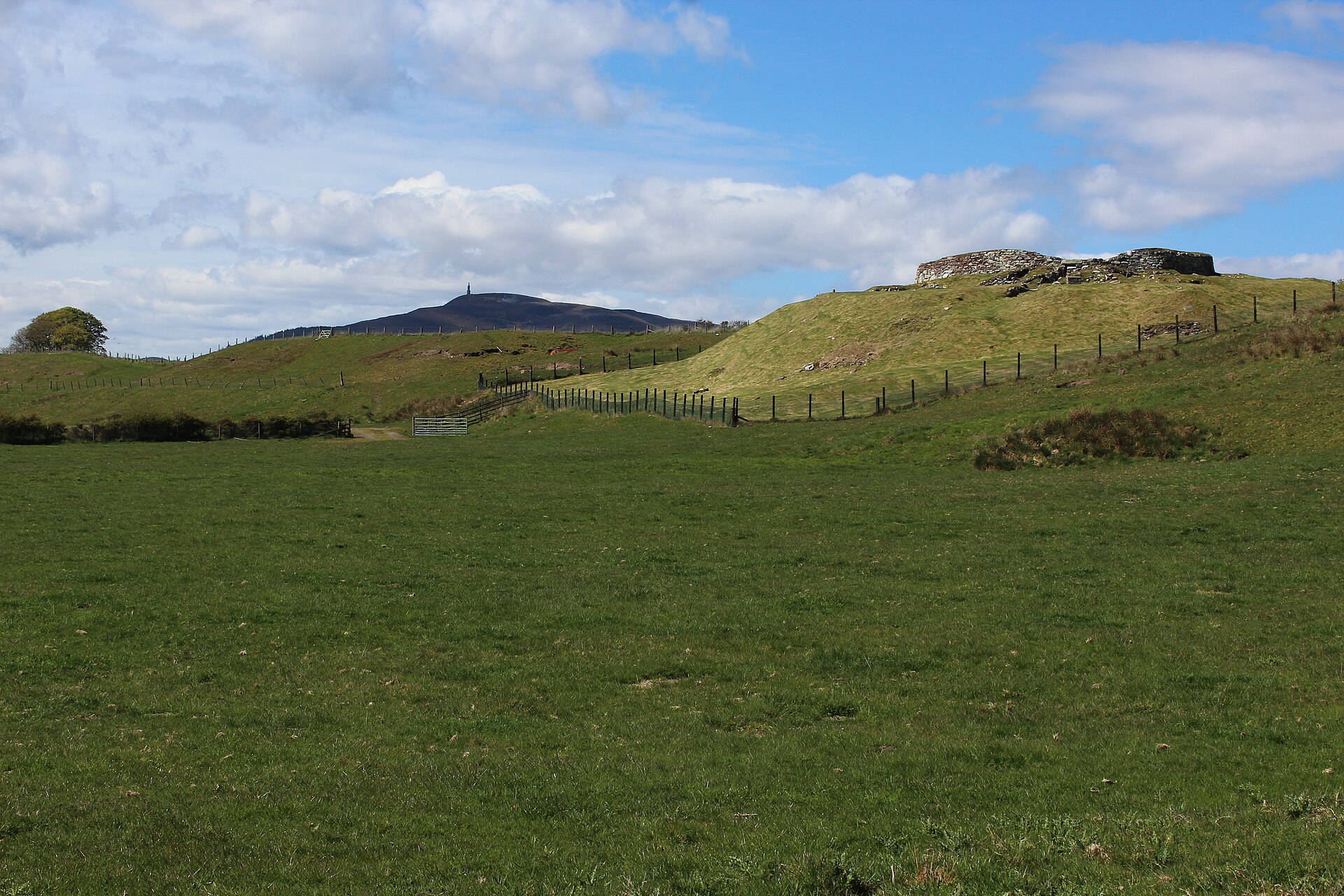
Fortified place · Iron Age
Carn Liath (broch)
Highland
Excavated twice a century apart, its walls conceal a Bronze Age burial that predates the broch by centuries: the tower was built over an older grav…
- Easy path

Fortified place · Medieval
Dunrobin Castle
Highland
A fourteenth-century keep with six-foot walls and stone-vaulted ceilings still survives at the core of the building Charles Barry expanded into the…
- Near Inverness
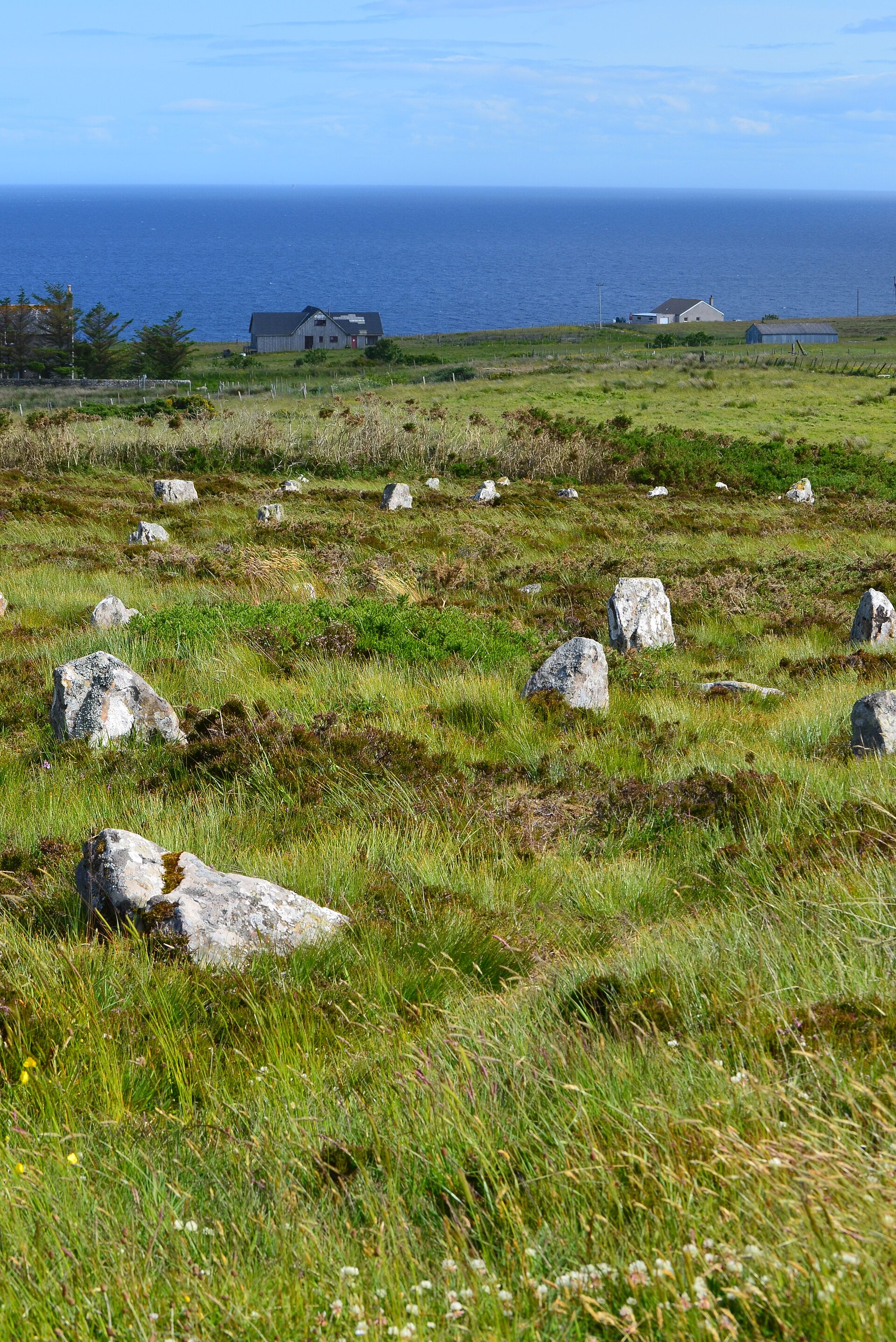
Carved stone · Prehistoric
Hill o' Many Stanes
Highland
Alexander Thom argued these modest stones once tracked the moon's 18.6-year cycle: a claim no other Caithness stone row has earned.
- Near Lybster
- Easy path
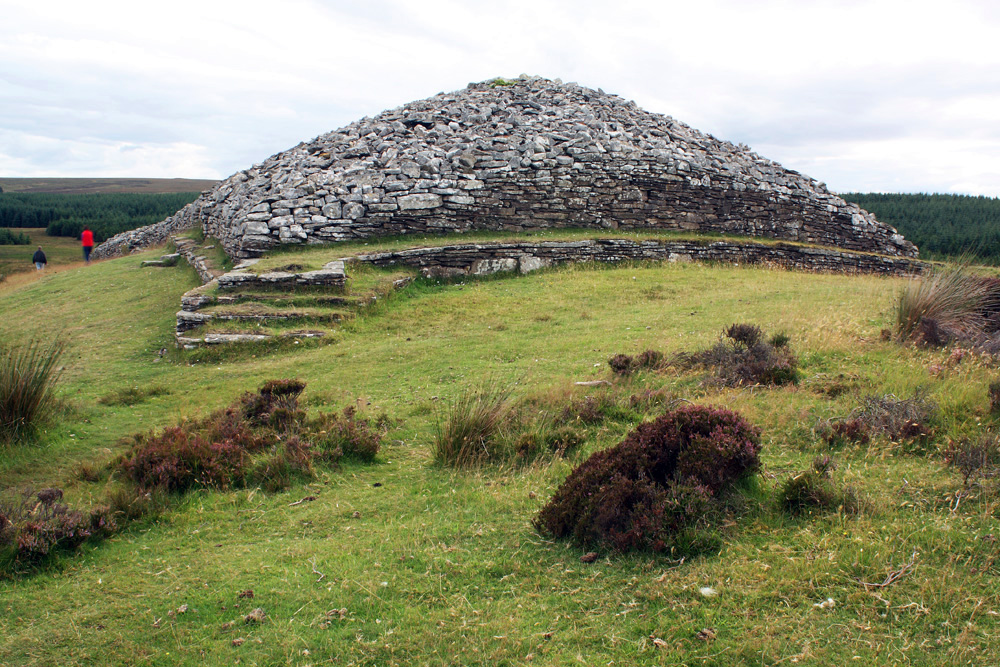
Tomb or burial place · Prehistoric
Grey Cairns of Camster
Highland
Two Neolithic tombs raised on land so fertile that people farmed it: before the Bronze Age (roughly 2500–800 BC, when metal tools first spread) bur…
- Near Lybster
- 120 metres from car park
- Easy path
Questions people ask
- How old is Ousdale Broch?
- It dates to the 3rd to 2nd century BC, making it a later, 'second-phase' broch of the Iron Age tower-building tradition.
- Why is Ousdale Broch significant?
- Its entrance passage still retains almost all of its original stone roofing lintels, an unusually complete survival for a broch of this age.
- What happened at Ousdale in 1201?
- The Orkneyinga Saga records a standoff there between King William the Lion and Jarl Harald Maddadsson, resolved without battle when Harald found himself outnumbered.
- Who excavated Ousdale Broch?
- James Mackay excavated the interior in 1891, recovering pottery, tools, and a buried skeleton, though his dig also destabilised the structure.
- Has the broch been restored?
- Yes, the Caithness Broch Project consolidated the structure between 2015 and 2020, adding an access path and interpretation panels.
Sources
- Wikipedia: Ousdale Broch
- Wikidata: Ousdale Broch
- Caithness Broch Project
Explore more: Fortified places · Iron Age · Highland
The Ancient Codex, in your pocket
Get the Pocket Codex app
Carry the directory with you — Ousdale Broch and thousands of ancient places across Britain and Ireland, offline, wherever you roam.