
Two Neolithic tombs raised on land so fertile that people farmed it — before the Bronze Age (roughly 2500–800 BC, when metal tools first spread) buried the whole landscape under peat that still surrounds them today.
Reaching the burial chamber inside Camster Round means dropping to hands and knees. The entrance passage is scarcely 80 centimetres high, forcing anyone who enters to crawl along six metres of stone before the space finally opens upward into a corbelled chamber tall enough to stand in — a deliberate narrowing that Neolithic builders repeated, in one form or another, across the two cairns nearby.
The two structures, known as Camster Round and Camster Long, stand 180 metres apart on a bleak stretch of moorland in Caithness, part of what is now called the Flow Country. They were raised in the third or fourth millennium BC as chambered tombs of the Orkney–Cromarty type, a design shared with other cairns across northern Scotland and Orkney. What looks today like an inhospitable, sparsely peopled bog was, when the cairns were built, dry and fertile farmland; the peat that now blankets the moor did not begin forming until the Bronze Age, long after the tombs had done their work.
Camster Long is the larger and stranger of the two: a 60-metre horned cairn containing two separate burial chambers that appear to have started life as distinct round cairns before being absorbed into a single long mound for reasons no one has recovered. Camster Round, by contrast, is a compact, near-intact circular cairn whose entrance passage was deliberately blocked with stacked stone in antiquity. Both were excavated and later restored by Historic Environment Scotland, and both are open to the public today.
What follows is drawn from published sources, with each claim labelled by how firmly it is established.
History
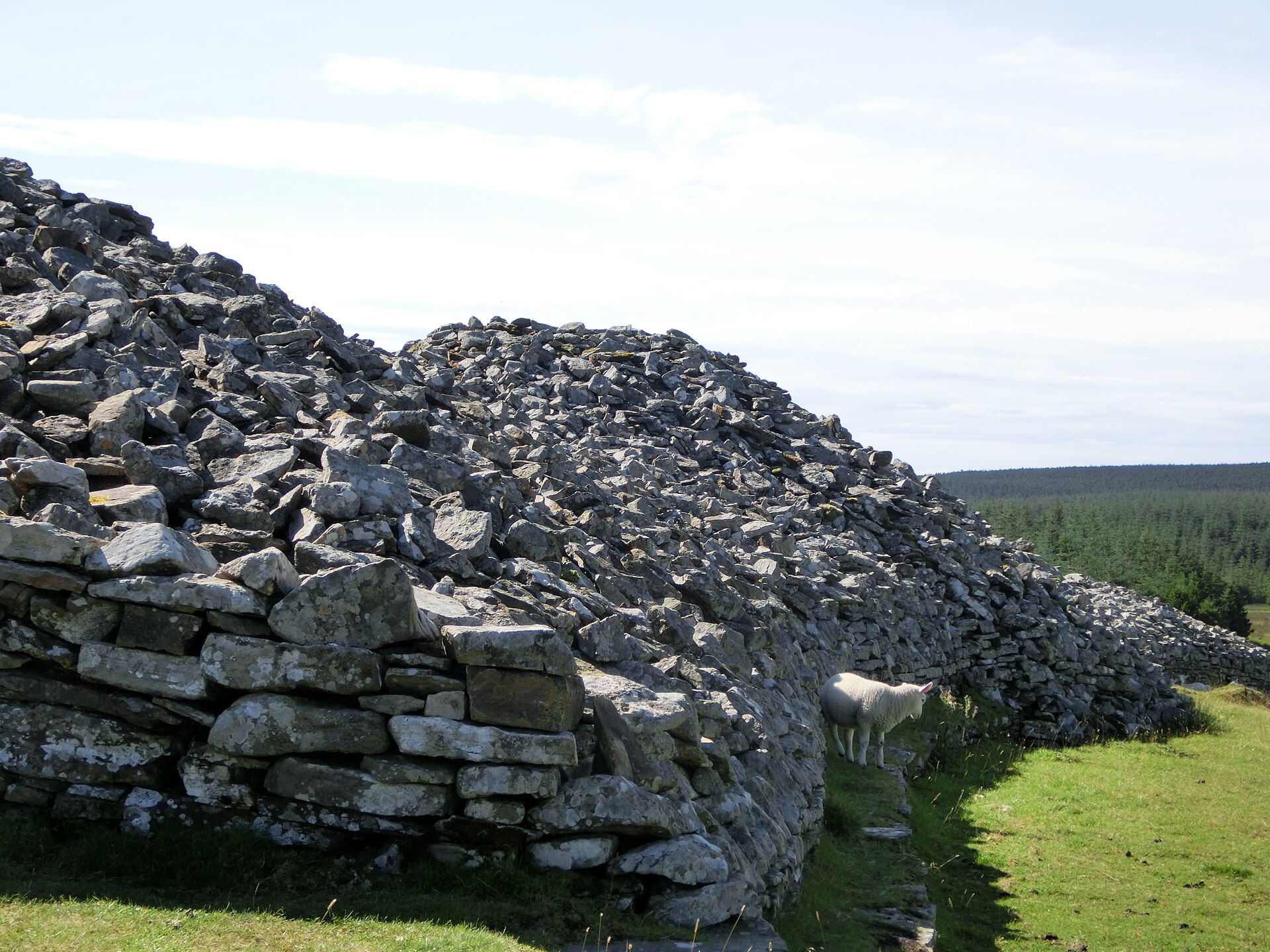
In the third or fourth millennium BC, Neolithic farmers built both cairns on ground that was then dry and fertile, long before it turned to bog. Camster Round took shape as a compact circular tomb some 18 metres across, while Camster Long grew into a 60-metre horned cairn containing two burial chambers that may originally have been separate round cairns in their own right.
During the Bronze Age, centuries after the cairns were completed, peat began spreading across the surrounding moorland and eventually buried the once-productive farmland under the boggy ground that still surrounds the tombs today. The transformation left the cairns stranded in what now reads as a remote and inhospitable stretch of the Flow Country, far removed from the fertile landscape their builders had known.
In 1865 and 1866, antiquarians Joseph Anderson and Robert Shearer carried out the first archaeological investigations of the cairns, examining Camster Round in 1865 and Camster Long the following year as part of a wider survey of seven chambered tombs across Caithness. Their work opened the tombs to scientific record for the first time since their construction some four and a half thousand years earlier.
Between 1966 and 1968, P. R. Ritchie carried out limited conservation studies at the site, clearing some debris and preparing the ground for more substantial work to come. The investigation was modest in scope but set the stage for the large-scale excavation and restoration project that followed in the subsequent decade.
Large-scale excavation began in 1971 under John Corcoran, whose research was cut short by his illness and death during the project between 1971 and 1973, leaving his findings unpublished. The interrupted work meant that a full record of his excavation was lost to later researchers, even as the physical investigation of the cairns continued under new direction.
Lionel Masters took over the excavation and conservation programme between 1976 and 1980, completing the archaeological research that Corcoran had begun and carrying out the restoration work needed to stabilise the cairns. His findings on the Camster Long chambered cairn were eventually published in 1997 in the Proceedings of the Society of Antiquaries of Scotland.
The consolidation and restoration of both cairns was finally completed in 1981, and the site subsequently opened to the public under Historic Environment Scotland's care. Visitors can now crawl into the restored chambers much as the Neolithic dead were once carried into them, one of the few places in Scotland where that passage remains physically walkable.
People
-
Joseph Anderson
Antiquarian who, with Robert Shearer, carried out the first excavation of the cairns in 1865–66.
-
Robert Shearer
Excavator who worked alongside Joseph Anderson on the first investigation of the cairns in 1865–66.
-
P. R. Ritchie
Archaeologist who carried out limited conservation studies at the site between 1966 and 1968.
-
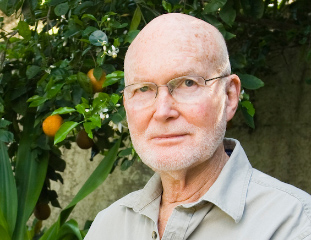
Portrait: Klaus Glashoff / Wikimedia Commons / CC BY-SA 3.0 John Corcoran
Archaeologist who led large-scale excavation of the cairns between 1971 and 1973, until his death interrupted the work.
-
Lionel Masters
Archaeologist who completed the excavation and led the restoration of the cairns between 1976 and 1980.
Cultural influences
-
The Grey Cairns are part of Caithness’s distinctive Neolithic long-cairn landscape, built for collective burial and ceremony.
Connections
-
Orkney-Cromarty type chambered cairns
Camster Round and Camster Long are classified as examples of this cairn type, shared with other Neolithic tombs across northern Scotland and Orkney.
-
Caithness chambered tombs surveyed by Anderson and Shearer
The Camster cairns were two of seven chambered tombs across Caithness examined in the same 1865–66 antiquarian survey.
Discovery & excavation
Excavation of Camster Round found the chamber floor covered by a 30-centimetre layer of black earth, ash and burnt bone, with bodies apparently placed in a sitting position but missing their leg bones, which seem to have been removed or to have rotted away before burial. In the west chamber of Camster Long, excavators found human bones mixed with broken and unburnt animal bone from horses, oxen, pigs and deer.
What to look for
-
The horned facade of Camster Long
The long cairn's two tapering 'horns' flank its ends, wider at the north-east (20 metres) than the south-west (10 metres), a hallmark of this cairn type.
-
The low entrance passage
Visitors can crawl along the restored entrance passages into both cairns, including a stretch as low as 0.6 metres in Camster Long's east chamber.
-
The corbelled chamber of Camster Round
The intact circular cairn preserves a high vaulted chamber at its centre, roofed in corbelled stone and reached along a passage that was once deliberately blocked.
-
Two chambers within one long cairn
Camster Long contains two separate burial chambers roughly 15 metres apart, evidence that the mound may have grown from two earlier, distinct round cairns.
Plan your visit
- Location
- 58.3793°N · 3.2662°W
- Nearest settlement
- Lybster
- Access
- Open access
- Terrain
- Easy going
- Parking
- Parking available nearby — see the official getting-here page.
- Start point
- 5m north of Lybster on the A99. Monument situated 5m along unclassified road.
- Time needed
- About 45 minutes
- Best time
- Open year-round.
- What survives
- Two Neolithic chambered cairns survive as stone-built burial monuments in open countryside.
- Facilities
- No dedicated visitor facilities are documented at the cairns; plan to use facilities in nearby settlements.
- Start point
- Grey Cairns of Camster car park — Small car park on the unclassified Camster road; a boardwalk leads to the round and long cairns.
- Sat-nav
- ND 260 441
Opening & admission
Free entry
- Open year-round.
Nearby places
Carved stone · Prehistoric
Hill o' Many Stanes
Highland
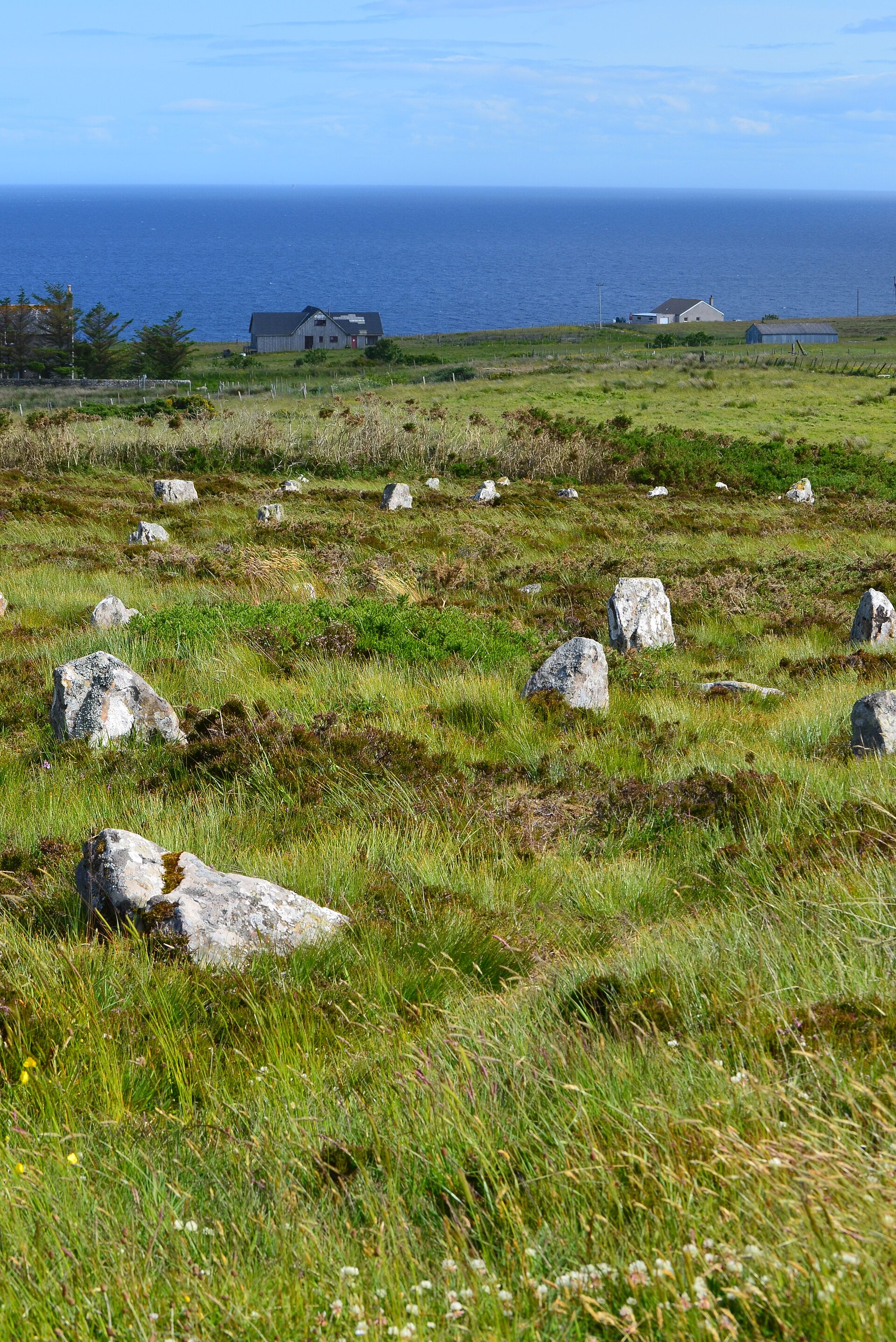
Alexander Thom argued these modest stones once tracked the moon's 18.6-year cycle: a claim no other Caithness stone row has earned.
- Near Lybster
- Easy path
Fortified place · Iron Age
Skitten Broch
Highland
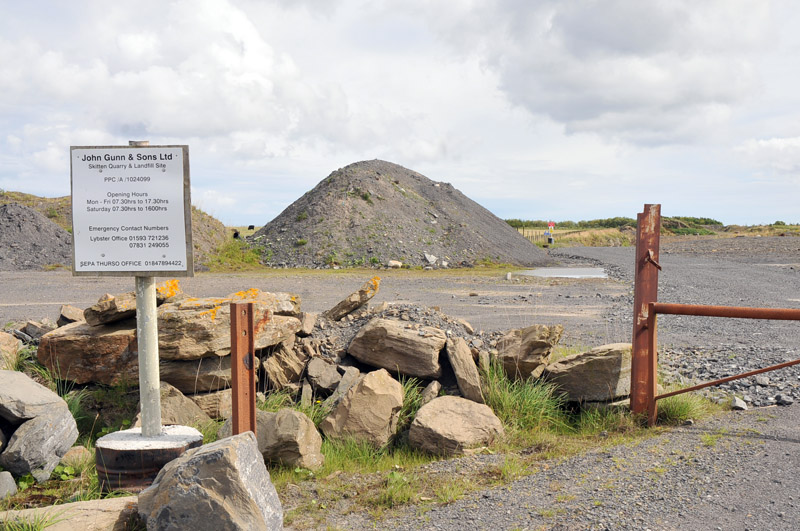
A broch excavated twice within four decades of Highland archaeology before being levelled entirely for a wartime runway: its erasure is now the cle…
- Near Killimster
- Easy path

Sacred place · Prehistoric
Stone Lud
Highland
Its scale rivals the Ring of Brodgar, yet a fallen twin thirty metres off suggests it once anchored a deliberate sightline to the summer solstice s…
- Near Bower
- Easy path
Tomb or burial place · Prehistoric
Tulach an t-Sionnaich
Highland
Excavation found the earliest known heel-shaped cairn (a mound of piled stones, often covering a burial) on the Scottish mainland folded inside two…
- Near Watten
- Some walking
Questions people ask
- How old are the Grey Cairns of Camster?
- The cairns date to around 3,000 BC, built in the third or fourth millennium BC, making them among the oldest surviving structures in Scotland.
- What is the difference between Camster Round and Camster Long?
- Camster Round is a compact, near-intact circular cairn 18 metres across; Camster Long is a 60-metre horned cairn containing two separate burial chambers.
- Can visitors go inside the cairns?
- Yes. Restored entrance passages allow visitors to crawl into both chambers, though the passages are low — as little as 0.6 metres high in places.
- What did archaeologists find inside the cairns?
- Excavators found human and animal bone, including bodies placed sitting but without leg bones in Camster Round, and mixed human and animal remains in Camster Long.
- Why is the site now surrounded by bog?
- The land was fertile farmland when the cairns were built, but peat spread across the moorland during the Bronze Age, long after construction.
Sources
- Wikipedia: Grey Cairns of Camster
- Masters, Lionel (1997)
- Castleden, Rodney (1992), Neolithic Britain
- Phillips, Tim (2002), Landscapes of the Living, Landscapes of the Dead
- Historic Environment Scotland
Explore more: Tomb or burial places · Prehistoric · Highland
The Ancient Codex, in your pocket
Get the Pocket Codex app
Carry the directory with you — Grey Cairns of Camster and thousands of ancient places across Britain and Ireland, offline, wherever you roam.