
Above its blocked doorway, Dun Dornaigil's wall still climbs to nearly seven metres — among the tallest surviving drystone tower stonework anywhere in Scotland.
A single triangular stone, more than a metre wide, spans the entrance to this drystone tower on the bank of the Strathmore River — a lintel so large that it has held the doorway open through millennia of collapse around it. The tower itself, dating from the centuries before Rome arrived, is some 14.5 metres across and stands in a remote stretch of Strathmore in Sutherland, with the bulk of Ben Hope rising to the north.
Most of the circular wall survives only to shoulder height, two to three metres of drystone walling curving away on either side. But directly above the doorway, where the builders needed the extra strength to carry the weight of the stone above, the wall still stands close to seven metres tall — a rare survival that lets a visitor see, in one place, how tall these towers originally reached.
The inside of the broch tells a different story. Centuries of collapse from the upper levels have left the interior packed with rubble, and the entrance passage itself is now choked with debris, so nothing of the internal chambers can be seen or entered today. What remains visible is the shell: a thick ring of stone, one soaring fragment of wall, and the great lintel stone that has outlasted almost everything it was built to support.
What follows is drawn from published sources, with each claim labelled by how firmly it is established.
History
During the Iron Age, a community in this part of Sutherland raised a broch on the eastern bank of the Strathmore River, choosing a site overlooked by Ben Hope and close to the water. The builders gave the tower an external diameter of roughly 14.5 metres and set a single entrance into its northeast side, capping it with a massive triangular lintel measuring 1.4 metres along its base and 0.9 metres in height — a feat of engineering that required moving and positioning an enormous slab of stone.
Over the long span of time since the broch went out of use, its upper levels collapsed inward, filling the interior with fallen rubble and eventually blocking the entrance passage itself with debris. This collapse has left most of the circular wall standing only two to three metres high around its circumference, while, unusually, the stonework directly above the doorway survived to a height of nearly seven metres, preserving a rare glimpse of how tall the tower's walls originally rose.
In more recent times the broch passed into the care of Historic Environment Scotland, which now manages the site for public visiting. A parking area, though limited in size, and an information board have been provided for those who make the journey into this remote part of Strathmore, while the collapsed interior remains inaccessible and is left undisturbed.
Cultural influences
-
Broch dry-stone engineering
The huge triangular lintel and exceptionally tall wall above the entrance show the precision and strength of the broch’s dry-stone construction.
Connections
-
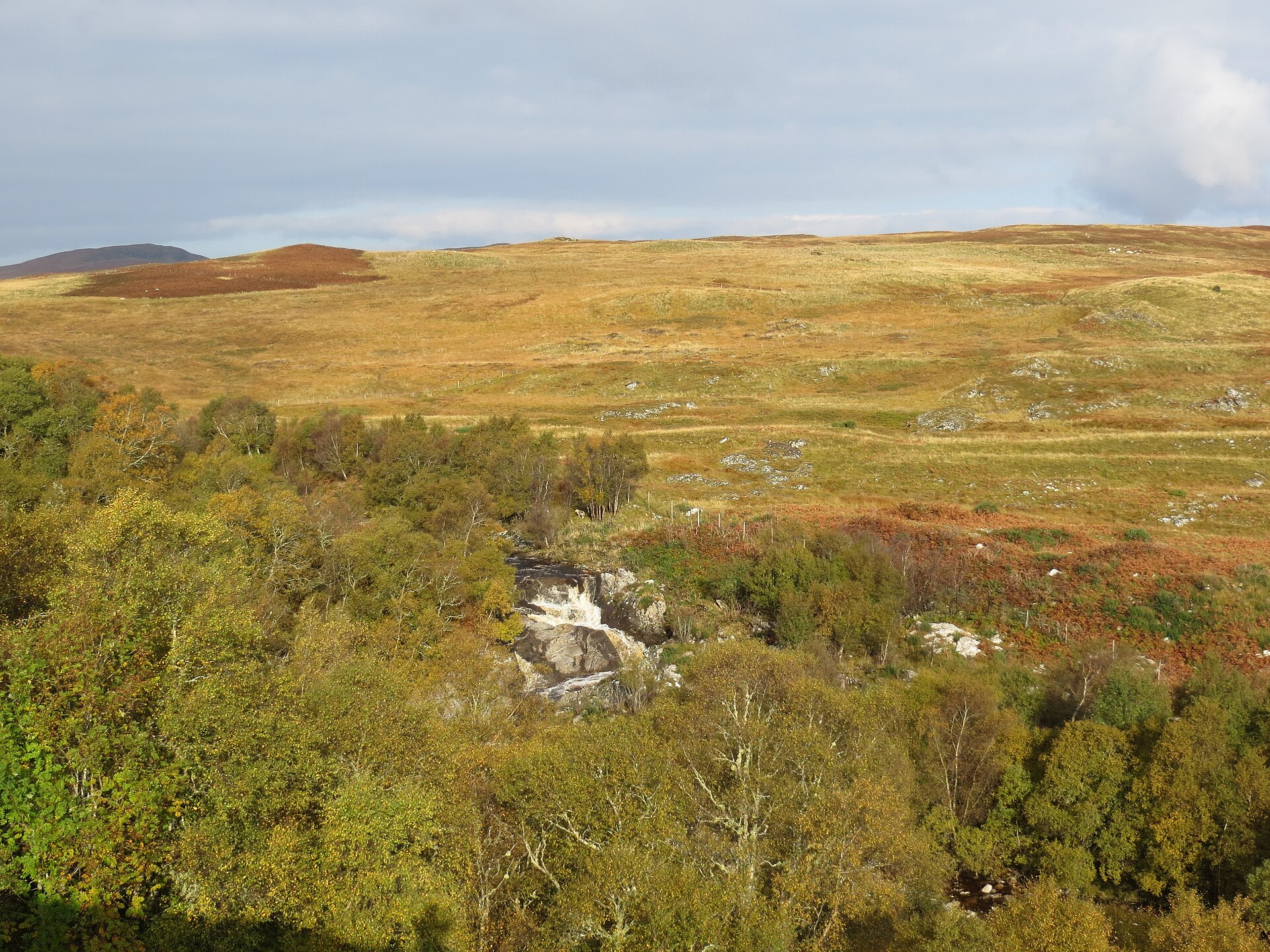
Photo: John Ferguson / Wikimedia Commons / CC BY-SA 2.0 Both are Iron Age brochs in the northern Highland landscape, preserving the regional tradition of stone-built round towers.
What to look for
-
The triangular entrance lintel
A single massive stone spans the northeast doorway, 1.4 metres along its base and 0.9 metres high, though the passage beneath it is now blocked with debris.
-
The tall stretch of wall above the doorway
While most of the wall survives only two to three metres high, the stonework directly above the entrance rises to nearly seven metres, one of the tallest surviving sections of broch wall in Scotland.
-
The broch's circular footprint
The outer wall traces a circle about 14.5 metres across, set on the eastern bank of the Strathmore River with Ben Hope rising beyond.
-
The rubble-filled interior
Collapsed stone from the upper levels fills the interior of the broch, which is closed to entry, so the structure is best appreciated from outside.
Plan your visit
- Location
- 58.3667°N · 4.6386°W
- Nearest settlement
- Altnaharra
- Access
- Open access
- Terrain
- Easy going
- Parking
- A limited parking area is provided at the site.
- Time needed
- About 30 minutes
- Best time
- Daylight, for the entrance lintel and the unusually tall wall above it.
- What survives
- Most walling survives two to three metres high, while a nearly seven-metre stretch above the blocked entrance remains standing; the rubble-filled interior is inaccessible.
Opening & admission
- Historic Environment Scotland care with limited parking and information board; interior inaccessible.
Nearby places
Fortified place · Iron Age
Langdale Broch
Highland
The rock knoll the tower crowns may itself be an older monument: quite possibly the buried remains of a chambered burial mound built around a stone…
- Near Altnaharra
- Easy path
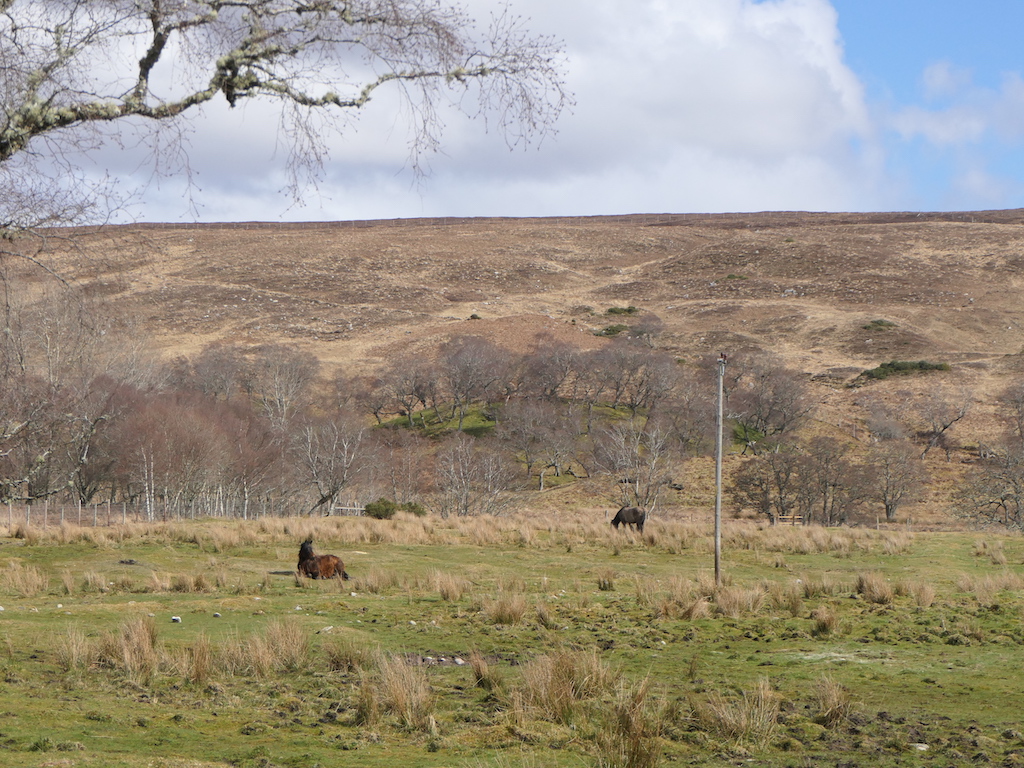
Fortified place · Iron Age
Inshlampie Broch
Highland
A drystone tower mound perched between two ravines above the river Naver, ringed by cairns, hut circles and settlement traces that together form on…
- Near Bettyhill
- Rough ground

Fortified place · Iron Age
Baile Mhargaite (Sandy Dun)
Highland
Never excavated and only waist-high in places, its walls, annexe, ditch and outer defence still trace a complete Iron Age (roughly 800 BC until the…
- Near Bettyhill
- Rough ground

Fortified place · Medieval
Ardvreck Castle
Highland
A broken keep on a spit of rock in Loch Assynt where a fugitive royalist commander was handed to his enemies in 1650, under circumstances still dis…
Questions people ask
- Can visitors go inside Dun Dornaigil?
- No. The interior is filled with collapsed rubble from the broch's upper levels and the entrance passage is blocked with debris, so it cannot be entered.
- How tall are the walls of Dun Dornaigil?
- Most of the wall stands two to three metres high, but the section directly above the doorway survives to nearly seven metres, among the tallest broch walls left standing in Scotland.
- Where is Dun Dornaigil located?
- It stands in Strathmore, Sutherland, on the eastern bank of the Strathmore River, south of Ben Hope, in the Scottish Highlands.
- What is the entrance lintel made of and how big is it?
- A single triangular stone slab spans the entrance, measuring 1.4 metres along its base and 0.9 metres in height.
- Who looks after Dun Dornaigil today?
- Historic Environment Scotland cares for the site, which has limited parking and an information board for visitors.
Sources
- Wikipedia: Dun Dornaigil
- Historic Environment Scotland
- Wikidata: Dun Dornaigil
Explore more: Fortified places · Iron Age · Highland
The Ancient Codex, in your pocket
Get the Pocket Codex app
Carry the directory with you — Dun Dornaigil and thousands of ancient places across Britain and Ireland, offline, wherever you roam.