
A broken keep on a spit of rock in Loch Assynt where a fugitive royalist commander was handed to his enemies in 1650, under circumstances still disputed.
A jagged stump of walling stands out on a narrow rocky spit reaching into Loch Assynt, all that survives of a keep raised by the MacLeods of Assynt around 1490. Seen across the water with the surrounding hills behind it, the ruin looks almost too small for the events attached to it — a single tower house, roofless and broken, rather than a great fortress.
It was here, in 1650, that James Graham, 1st Marquess of Montrose, the Royalist general fleeing after his defeat at the Battle of Carbisdale, was taken into MacLeod custody and then handed over to the Covenanter government that would execute him. Exactly what happened at Ardvreck in those days is still argued over: whether Montrose was seized as a hostile prisoner or given shelter before being betrayed for a bounty. Two centuries of use as a Highland stronghold ended with the castle’s capture and abandonment, and its neighbour, the later Calda House, adds a second, sadder ruin to the same shoreline.
What follows is drawn from published sources, with each claim labelled by how firmly it is established.
History
Around 1490 the MacLeods of Assynt built Ardvreck Castle on its rocky promontory above Loch Assynt, replacing an older stronghold, Assynt Castle, which had stood some four miles north-west near Inchnadamph. The move brought the clan's seat down to the loch shore itself, on a site that was easier to defend and to reach by water.
In 1650 the castle became notorious as the place where James Graham, 1st Marquess of Montrose, was handed over to Covenanter forces after his defeat at the Battle of Carbisdale. Exhausted and fleeing, Montrose was taken by MacLeod, the Laird of Assynt, and delivered into custody that led to his execution soon afterwards.
The circumstances of that handover have never been settled. One account holds that MacLeod, a committed Covenanter, arrested Montrose as a hostile combatant on capture. Another holds that MacLeod first gave the weary general comfortable shelter at Ardvreck before betraying him to the government for a reward reported as £25,000, turning an act of hospitality into one of the most discussed betrayals in Highland history.
In 1672 Clan Mackenzie attacked and captured Ardvreck Castle, ending MacLeod control of Assynt and bringing the lands under Mackenzie lordship. The castle's fall marked the effective end of its working life as a residence and seat of power. In 1726 the Mackenzies built a more modern manor house nearby, Calda House, named after the Calda burn running beside it, choosing to abandon the old tower house in favour of a more comfortable and fashionable residence within sight of the original stronghold.
A fire in 1737 destroyed Calda House barely a decade after it was built, leaving both it and Ardvreck Castle as ruins on the same stretch of shoreline. Today both are designated scheduled monuments, protected as a paired record of the site's shift from medieval keep to Georgian mansion and back to ruin.
People
-
MacLeod, Laird of Assynt
Held Ardvreck Castle in 1650 and took custody of the fleeing Montrose after Carbisdale, in circumstances that remain disputed.
-
James Graham, 1st Marquess of Montrose
Royalist commander delivered to Covenanter forces from Ardvreck Castle in 1650 following his defeat at the Battle of Carbisdale.
Cultural influences
-
Ardvreck was the MacLeods of Assynt’s stronghold until its capture by Clan Mackenzie in 1672, and its role in the handover of Montrose connects the ruin to the competing royalist and Covenanter loyalties of the Highlands.
Connections
-
Clan Mackenzie
Attacked and captured Ardvreck Castle in 1672, taking control of the Assynt lands from the MacLeods and later building Calda House nearby.
-
Calda House
Built in 1726 by the Mackenzies beside the Calda burn as a more modern replacement residence close to Ardvreck; it burned down in 1737 and stands as a second ruin on the same shore.
-
Battle of Carbisdale
Montrose's defeat at this battle in 1650 sent him fleeing to Assynt, where he was taken into custody at Ardvreck Castle.
What to look for
-
Round staircase tower
A round tower at the south-east angle of the keep held the main stair, later carrying a smaller stair turret up to the corbelled upper rooms.
-
Corbelled upper floors
The upper storeys were corbelled outward from the wall below to create square rooms wider than the floor plan beneath them, a common way of gaining space in a tower house.
-
Vaulted ground floor
Three separate compartments on the ground floor were built with stone vaulting for strength and fire resistance, along with the vaulted first floor above; the remaining floors used simple timber joists.
-
Gunports
Several gunports are built into the walls, evidence that the castle was designed to withstand or repel firearms rather than only bows or hand weapons.
-
Calda House ruins
The roofless walls of the 1726 Mackenzie manor house stand nearby beside the Calda burn, burned out in 1737 and never rebuilt.
Plan your visit
- Location
- 58.1670°N · 4.9956°W
- Time needed
- About 90 minutes
Nearby places

Fortified place · Iron Age
An Dun
Highland
A drystone tower on a tidal islet, reachable only by a boulder causeway at low water: and still argued over as broch, a round, hollow-walled tower…
- Near Ardvar
- Rough ground
Fortified place · Iron Age
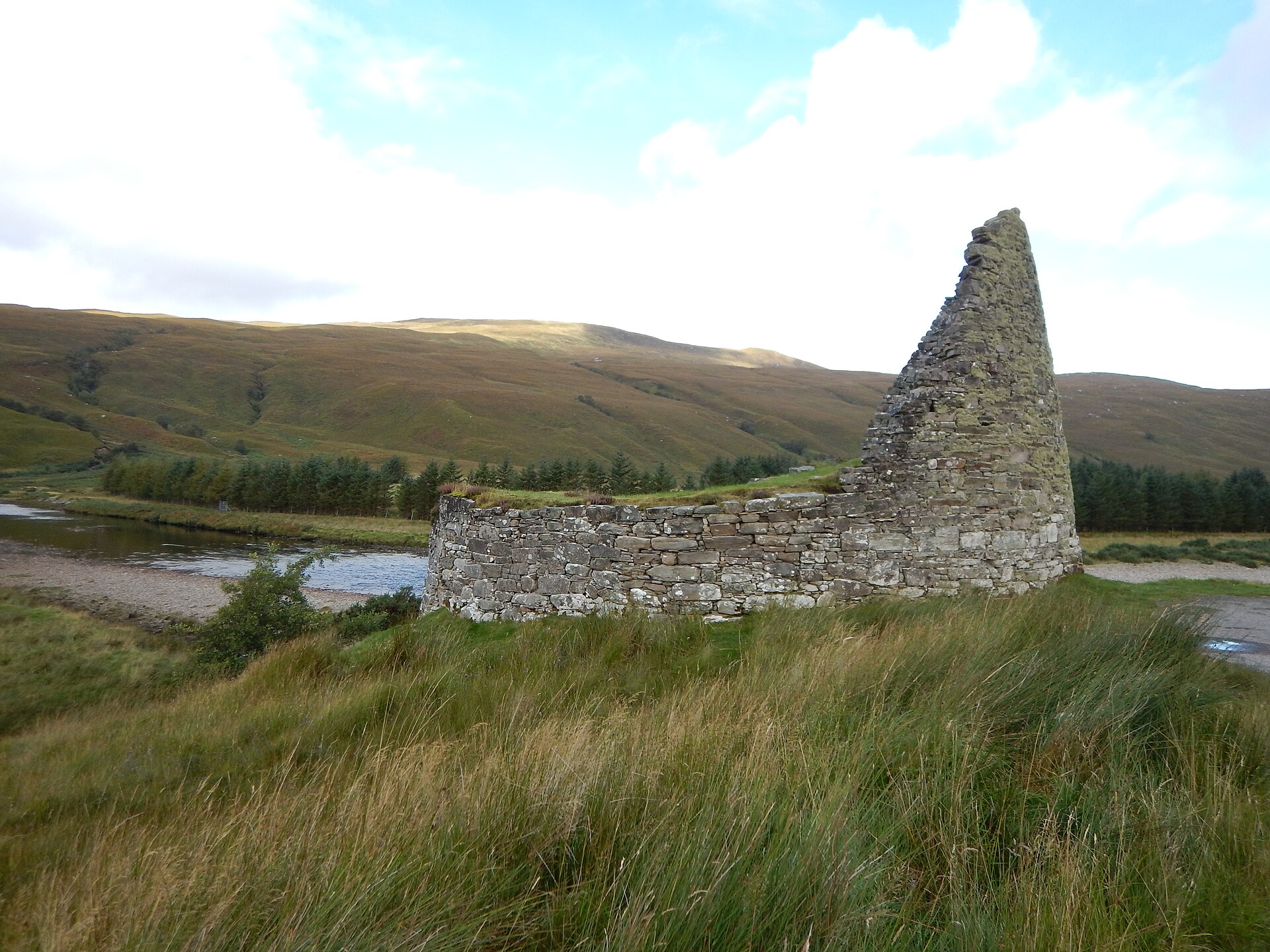
Dun Dornaigil
Highland
Above its blocked doorway, Dun Dornaigil's wall still climbs to nearly seven metres: among the tallest surviving drystone tower stonework anywhere…
- Near Altnaharra
- Easy path
Tomb or burial place · Prehistoric
Carn Ban
Highland
A 30-metre chamber cut into compartments by upright stone slabs: one of the largest and best-preserved Clyde cairns in south-west Scotland, reached…
- Rough ground
Fortified place · Iron Age
Langdale Broch
Highland
The rock knoll the tower crowns may itself be an older monument: quite possibly the buried remains of a chambered burial mound built around a stone…
- Near Altnaharra
- Easy path
Questions people ask
- When was Ardvreck Castle built?
- It dates from around 1490, built by the MacLeods of Assynt to replace their earlier stronghold, Assynt Castle, near Inchnadamph.
- Why is Ardvreck Castle historically significant?
- In 1650 the Royalist commander Montrose was taken here after his defeat at Carbisdale and handed over to Covenanter forces, leading to his execution.
- Did MacLeod betray Montrose?
- Accounts differ: one says MacLeod arrested Montrose as a hostile prisoner, another that he sheltered him before betraying him for a reward.
- Who captured Ardvreck Castle from the MacLeods?
- Clan Mackenzie attacked and captured the castle in 1672, taking control of the Assynt lands.
- What is Calda House?
- A manor house the Mackenzies built nearby in 1726, burned down in 1737; its ruins stand beside Ardvreck Castle's.
Sources
- Wikipedia: Ardvreck Castle
- Historic Environment Scotland — Canmore (Ardvreck Castle, Site no. NC22SW 27)
- Historic Environment Scotland — Canmore (Calda House, Site no. NC22SW 3)
Explore more: Fortified places · Medieval · Highland
The Ancient Codex, in your pocket
Get the Pocket Codex app
Carry the directory with you — Ardvreck Castle and thousands of ancient places across Britain and Ireland, offline, wherever you roam.