
A cliff-edge Skye fort twice built and twice destroyed by fire — one of the clearest examples anywhere of the transitional "semi-broch (a tall circular tower of unmortared stone, found only in Scotland)" step towards the true broch tower.
On a rocky knoll above the sea on the west coast of Skye, a run of drystone wall barely six inches high at the cliff edge climbs to several feet where it turns inland to frame a passage guarded by projecting stone door-checks. This is Dun Ardtreck, a D-shaped dun (a small drystone fort) built with its straight side set flush against a sheer drop, so that the cliff itself did the work of one whole wall.
The fort was raised in two stages. Builders first levelled a rubble platform on the rock sloping down from the cliff edge, then set a thick hollow wall on top of it, complete with an internal gallery, an opening where a stone stair once may have risen, and a guard cell tucked behind the entrance. That hollow-wall technique, with its narrow door-checks and galleried construction, is the hallmark of a broch tower — which is why archaeologists describe Dun Ardtreck as a “semi-broch”, a building partway towards the fully developed broch form.
Its interior tells a story of destruction and return. The earliest floor layer was found scorched, the debris of a settlement that burned down not long after it was built. People came back, though: pottery recovered from the rubble above the fire shows the dun was lived in again by the middle of the second century AD, its later occupants owning iron tools, bronze ornaments and even fragments of Roman pottery and glasswork carried up from far to the south.
What follows is drawn from published sources, with each claim labelled by how firmly it is established.
History
Around 115 BC, according to a radiocarbon date taken from charcoal in the foundation platform, builders levelled a base of rubble on the rock sloping down from the cliff edge, and onto this they raised the thick, hollow drystone wall of the dun. Excavation later showed this two-stage sequence clearly: platform first, then the galleried wall set upon it, giving the D-shaped fort its final form.
The first phase of occupation proved brief. A thin floor deposit inside the wall, overlaid with burnt material, points to the settlement ending suddenly and violently: the structure was set alight, its earliest inhabitants driven out, leaving only scorched debris on the original floor for excavators to uncover roughly two thousand years later.
Rebuilding followed, and by the middle of the 2nd century AD, a date reached from pottery recovered in the layers above the fire debris, people were once again living inside the dun. This second phase saw the entrance passage and its guard cell brought back into use, with door-checks of the kind found in true broch towers still controlling access through the narrow gallery wall.
Among the debris of this later occupation lay iron tools, bronze ornaments and glass ring-headed pins, alongside sherds of Roman Samian ware pottery and a fragment of a Roman bead — modest but telling evidence that a household on this remote Skye headland had access, whether through trade or gift, to goods carried up from far beyond the Highlands.
In 1964 and 1965 the archaeologist Euan W. MacKie excavated Dun Ardtreck as part of a wider effort to work out how broch towers developed. His findings — a short-lived first settlement destroyed by fire, followed by reoccupation some two centuries later — helped establish Dun Ardtreck as a key reference site for the sequence of broch and semi-broch building in the Hebrides.
People
-
Euan W. MacKie
Archaeologist who excavated Dun Ardtreck in 1964–5 as part of research into the development of broch towers.
Cultural influences
-
Broch architecture
The thick hollow wall, internal gallery, stair opening and door-checked entrance all echo the design of fully developed broch towers, even though Dun Ardtreck never rose to their circular, multi-storey height — placing it among the buildings that show how the broch form emerged.
Connections
-
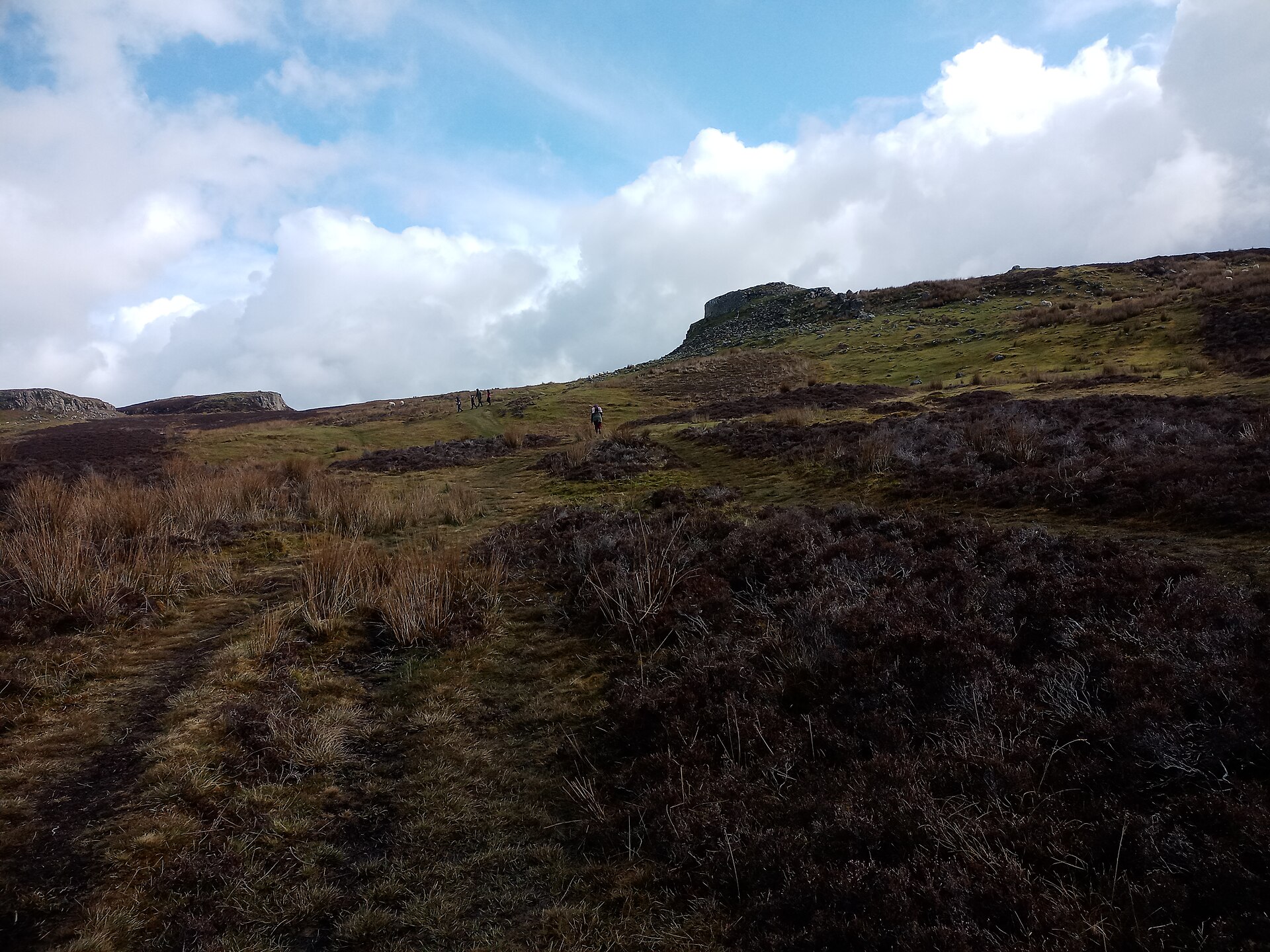
Photo: Victuallers / Wikimedia Commons / CC BY-SA 4.0 A nearby Skye broch 2.9 km away, useful for comparing Dun Ardtreck’s gallery wall and entrance details with a more fully circular tower.
Discovery & excavation
Euan W. MacKie's 1964–5 excavation established that Dun Ardtreck had been built in two stages on a prepared rubble platform, radiocarbon dated to around 115 BC. It showed a brief first occupation ending in fire, followed by a second phase of habitation dated by pottery to the mid-2nd century AD, which yielded iron tools, bronze ornaments, glass ring-heads, Roman Samian ware sherds and a piece of Roman bead.
What to look for
-
Door-checked entrance and guard cell
The entrance passage is unusually well preserved, with stone door-checks of the kind seen in broch towers, and an opening to a guard cell leading off to the right just behind them.
-
Cliff-edge straight wall
The D-shape's straight side runs directly along the top of the sea cliff, where the wall survives at little more than six inches high — the cliff itself substituting for a built wall.
-
Gallery and stair opening
Two doorways lead into the hollow wall's internal gallery; at one point the gallery widens as though to hold a stone stair, though no trace of steps survives.
-
Outer wall on the knoll edge
A secondary wall runs along much of the landward edge of the knoll, reinforcing the natural rock faces that protect the site on every side except the south-east cleft used as an outer gateway.
Plan your visit
- Location
- 57.3347°N · 6.4301°W
- Nearest settlement
- Tokavaig
- Access
- Open access
- Terrain
- Rough ground — reasonable boots advised
- Time needed
- About 45 minutes
- Best time
- Daylight and calm weather, when the cliff-edge walls and entrance can be examined safely.
- What survives
- The entrance, guard cell and parts of the internal gallery survive, but the straight cliff-edge wall is reduced to very low remains.
Opening & admission
- Cliff-edge semi-broch on rocky knoll; access not established.
Nearby places
Fortified place · Iron Age
Dun Beag
Highland
A countess spent six years hand-sifting its spoil heaps, and coins running from Henry II to George III show this Skye tower stayed in use long afte…
- Near Inverness
- Some walking

Fortified place · Iron Age
Dun Cruinn
Highland
A smaller broch or dun was built inside the ruins of an earlier hillfort on the same rocky knoll: two separate strongholds, one after the other, on…
- Near Dunvegan
- Rough ground

Fortified place · Iron Age
Dun Fiadhairt
Highland
A double-walled stone tower dating the period from roughly 800 BC to the Roman conquest stands on a loch-side knoll near Dunvegan, excavated in 189…
- Near Dunvegan
- Rough ground
Tomb or burial place · Prehistoric
Rubha an Dùnain
Highland
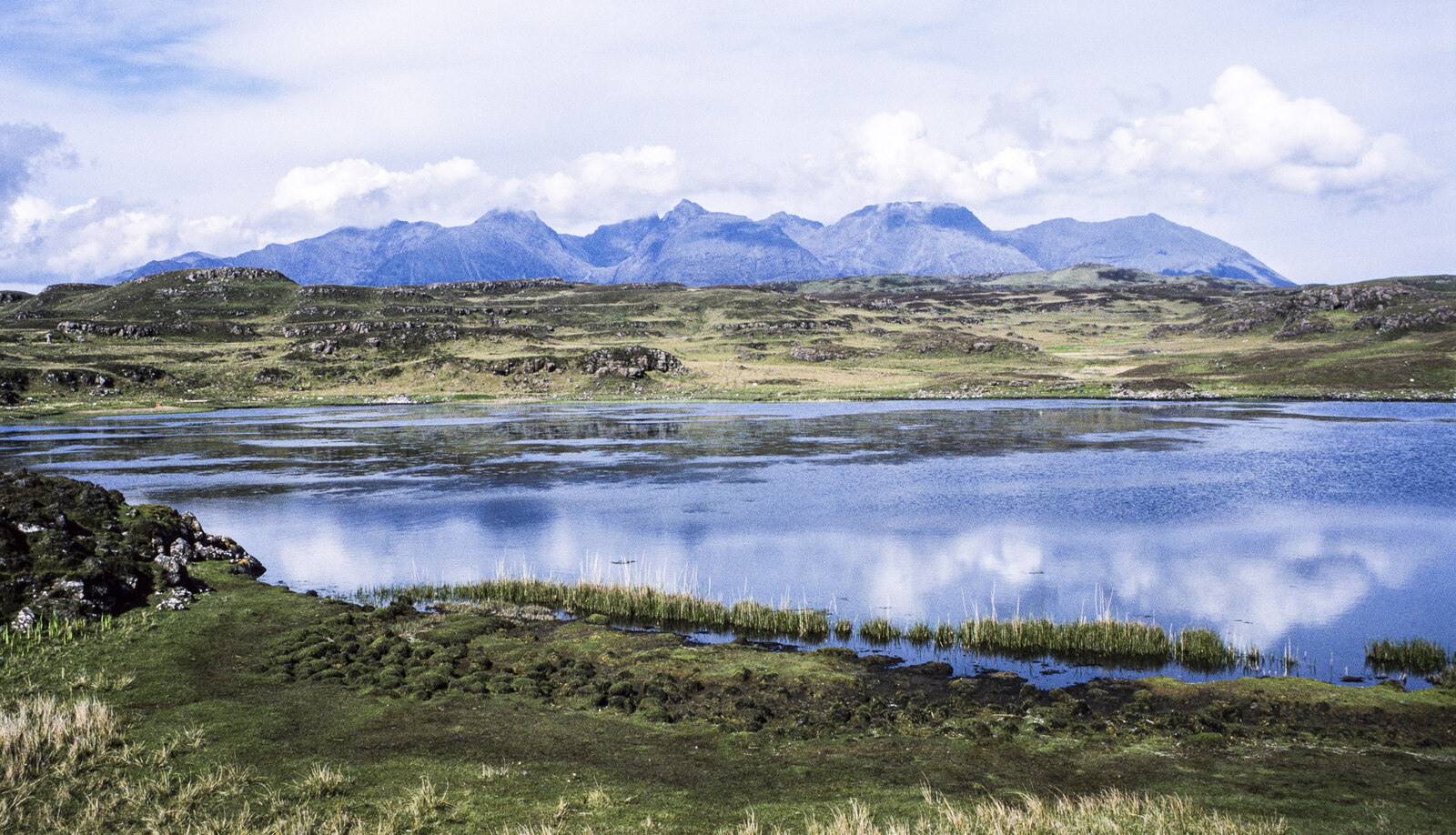
A Neolithic chambered cairn shares this remote headland with an Iron Age dun and a rare medieval boat harbour: one of Skye's most densely layered a…
- Rough ground
Questions people ask
- What is Dun Ardtreck?
- A D-shaped drystone dun (fort) on a cliff-edge knoll on Skye's Minginish peninsula, classed as a "semi-broch" — a transitional form on the way to the fully developed broch tower.
- When was Dun Ardtreck built and occupied?
- Radiocarbon dating places the foundation platform around 115 BC. A short first occupation ended in fire, and a second phase, dated by pottery, ran through the mid-2nd century AD.
- Who excavated the site?
- The archaeologist Euan W. MacKie excavated Dun Ardtreck in 1964–5, as part of research into how broch towers developed.
- What finds came from the excavation?
- Iron tools, bronze ornaments, glass ring-headed pins, Roman Samian ware pottery sherds and a fragment of Roman bead, mostly from the second occupation phase.
- Why is it called a "semi-broch"?
- It has a hollow wall, gallery, stair opening and door-checked entrance like a true broch tower, but never reached a broch's full circular, multi-storey height.
Sources
The Ancient Codex, in your pocket
Get the Pocket Codex app
Carry the directory with you — Dun Ardtreck and thousands of ancient places across Britain and Ireland, offline, wherever you roam.