
Burned by feuding clansmen in 1570 and rebuilt on a narrower plan in the 1830s, it still holds the graves of earls, dukes and the bishop-saint who founded it.
Marble memorials to the Dukes and Duchesses of Sutherland cluster around a raised platform at the east end, a burial arrangement introduced only in the 1920s when workmen stripped away Victorian plasterwork to expose the bare stone beneath. It marks the spot where the medieval high altar once stood, but almost nothing else about the building looks as old as its thirteenth-century origins suggest.
The church serving the small Sutherland town of Dornoch is still known as a cathedral, though it has not held that status for centuries. The title survives from its founding in 1224 as the seat of the Bishop of Caithness, dedicated to Gilbert de Moravia, the bishop later venerated as Saint Gilbert of Dornoch. Bishops disappeared from the Church of Scotland in the seventeenth century, but the name stuck.
Fire, feud and restoration have all left their mark on the fabric. The Mackays of Strathnaver burned the building down in 1570, and its ruined medieval nave stood only partly repaired for more than two and a half centuries before a full Victorian rebuild replaced it with a narrower, pillar-less nave in the 1830s. Next door, in the same churchyard, the reconstructed remains of Dornoch Castle, once the bishops’ palace, still stand.
What follows is drawn from published sources, with each claim labelled by how firmly it is established.
The name
The building is no longer a cathedral in any formal sense, since Church of Scotland congregations have had no bishops since the office was abolished in the seventeenth century. It keeps the title purely because Dornoch was historically the seat of the Bishop of Caithness, and the name has simply never been dropped.
History
Dornoch Cathedral was built in 1224, during the reign of King Alexander II and the episcopate of Gilbert de Moravia, who founded it as the cathedral church of the diocese of Caithness. The diocesan seat was transferred here from Halkirk, and the building was dedicated to its founder, later venerated as Saint Gilbert of Dornoch, giving the small Sutherland town an ecclesiastical standing far beyond its size.
The cathedral quickly became a burial place for the region's ruling families. Adam of Melrose was reburied here in 1239 after his body was brought from the church of Skinnet, Richard de Moravia was interred in 1245 following his death at the Battle of Embo, and William de Moravia, 1st Earl of Sutherland, was buried here in 1248, binding the building to Sutherland's dynasty from its earliest decades.
In 1570 the cathedral was burnt down by the Mackays of Strathnaver during a period of local feuding, an act of destruction that left the medieval church badly damaged. Only partial repairs were attempted for generations afterwards, and the building stood as a scarred remnant of its thirteenth-century form for more than two hundred and fifty years.
During the seventeenth century the abolition of the episcopate within the Church of Scotland ended Dornoch's formal role as the seat of the Bishops of Caithness, stripping the building of its cathedral status in practice. The name endured regardless, retained purely through historical association even as the church settled into life as an ordinary Highland parish church.
Between 1835 and 1837 the architect William Burn carried out a full renovation funded by Elizabeth, Countess of Sutherland, at a cost of £15,000, equivalent to roughly £1.45 million in 2025. The ruined but still largely intact aisled medieval nave was demolished during the work and replaced with a new, narrower nave built without pillars, permanently altering the church's medieval footprint.
On 30 September 1866 the Duke and Duchess of Sutherland welcomed the Prince and Princess of Wales, together with the Duke of Edinburgh, who attended morning service at the cathedral. The visit marked one of the most prominent public occasions associated with the building since its Victorian restoration three decades earlier.
The cathedral's first organ, built by Eustace Ingram and paid for by Andrew Carnegie, was installed in 1893 and opened in January 1894, the first organ in the county of Sutherland; Carnegie later funded a £200 enlargement with hydraulic power in 1909. Between 1924 and 1926 the interior was reordered under the Rev. Charles Donald Bentinck, who removed Victorian plasterwork to expose the stonework beneath, revealing the medieval fabric for the first time in generations.
People
-
Gilbert de Moravia (Saint Gilbert of Dornoch)
Bishop of Caithness who founded the cathedral in 1224 and was later venerated as a saint.
-
William Burn
Architect who carried out the 1835-37 restoration, funded by Elizabeth, Countess of Sutherland.
-
Andrew Carnegie
Industrialist and philanthropist who funded the cathedral's first organ in 1893 and its 1909 enlargement.
-
Rev. Charles Donald Bentinck
Minister who oversaw the 1924-1926 reordering of the interior, exposing the stonework beneath the plasterwork.
-
Very Rev Dr James Simpson
Previous minister of the cathedral, who served as Moderator of the General Assembly of the Church of Scotland in 1994.
-
Rev. Susan Brown
Minister of Dornoch Cathedral from 1998, who took up the post of Moderator of the General Assembly of the Church of Scotland in May 2018.
Cultural influences
-
Victorian restoration
William Burn’s 1835–37 restoration replaced the ruined medieval nave with a narrower pillar-less one, so the present interior combines thirteenth-century fabric and Victorian rebuilding.
Connections
-
Dornoch Castle
The cathedral's churchyard adjoins Dornoch Castle, the reconstructed remains of the medieval palace of the Bishops of Caithness.
-
Church of Skinnet
The body of Adam of Melrose was brought to Dornoch from the church of Skinnet for reburial in 1239.
-
Mackays of Strathnaver
This clan burned the cathedral down in 1570 during a period of local feuding.
-
House of Sutherland (Leveson-Gower family)
The cathedral holds the burials of Earls and Dukes of Sutherland, including George and Elizabeth Leveson-Gower, and the 1835-37 restoration was funded by Elizabeth, Countess of Sutherland.
What to look for
-
The Victorian nave
The nave seen today is not medieval but a narrower, pillar-less rebuild from the 1835-37 restoration, replacing the ruined aisled nave that had stood since the 13th century.
-
Exposed stonework
Victorian plasterwork was stripped from the interior during the 1924-26 reordering to reveal the stone beneath, although the medieval church would originally have been plastered throughout.
-
Sutherland family burial area
The site of the medieval high altar was raised and converted into a burial area for the Sutherland family, marked by large marble memorials.
-
Dornoch Castle next door
The churchyard adjoins the reconstructed remains of the medieval palace of the Bishops of Caithness.
Plan your visit
- Location
- 57.8804°N · 4.0299°W
- Nearest settlement
- Dornoch
- Time needed
- About 60 minutes
- Best time
- In daylight, allowing time for the restored interior, memorials and adjoining Dornoch Castle.
- What survives
- The cathedral remains a functioning church, with medieval stonework visible beside the nineteenth-century nave and later interior restoration.
- Facilities
- Visitor facilities depend on the current cathedral operation; check the official information before travelling.
Opening & admission
The cathedral is open to visitors during daylight hours in winter, with summer visitor welcome volunteers and guided tours advertised by the cathedral.
- Services, concerts and events may affect access; check the cathedral’s current calendar before travelling.
Nearby places

Carved stone · Pictish & early medieval
Ardjachie Stone
Highland
A single red sandstone boulder carries two carving traditions centuries apart: Bronze Age (roughly 2500–800 BC) cup-and-ring marks beneath a Pictis…
- Near Tain
- Easy path
%2C_Edderton_-_geograph.org.uk_-_915406.jpg?width=800)
Carved stone · Pictish & early medieval
Clach Biorach
Highland
A Bronze Age pillar over three metres tall was reused two thousand years later as a canvas for Pictish carving: a salmon, a double-disc and a Z-rod…
- Near Edderton
- Easy path
Carved stone · Pictish & early medieval
Edderton Cross Slab
Highland
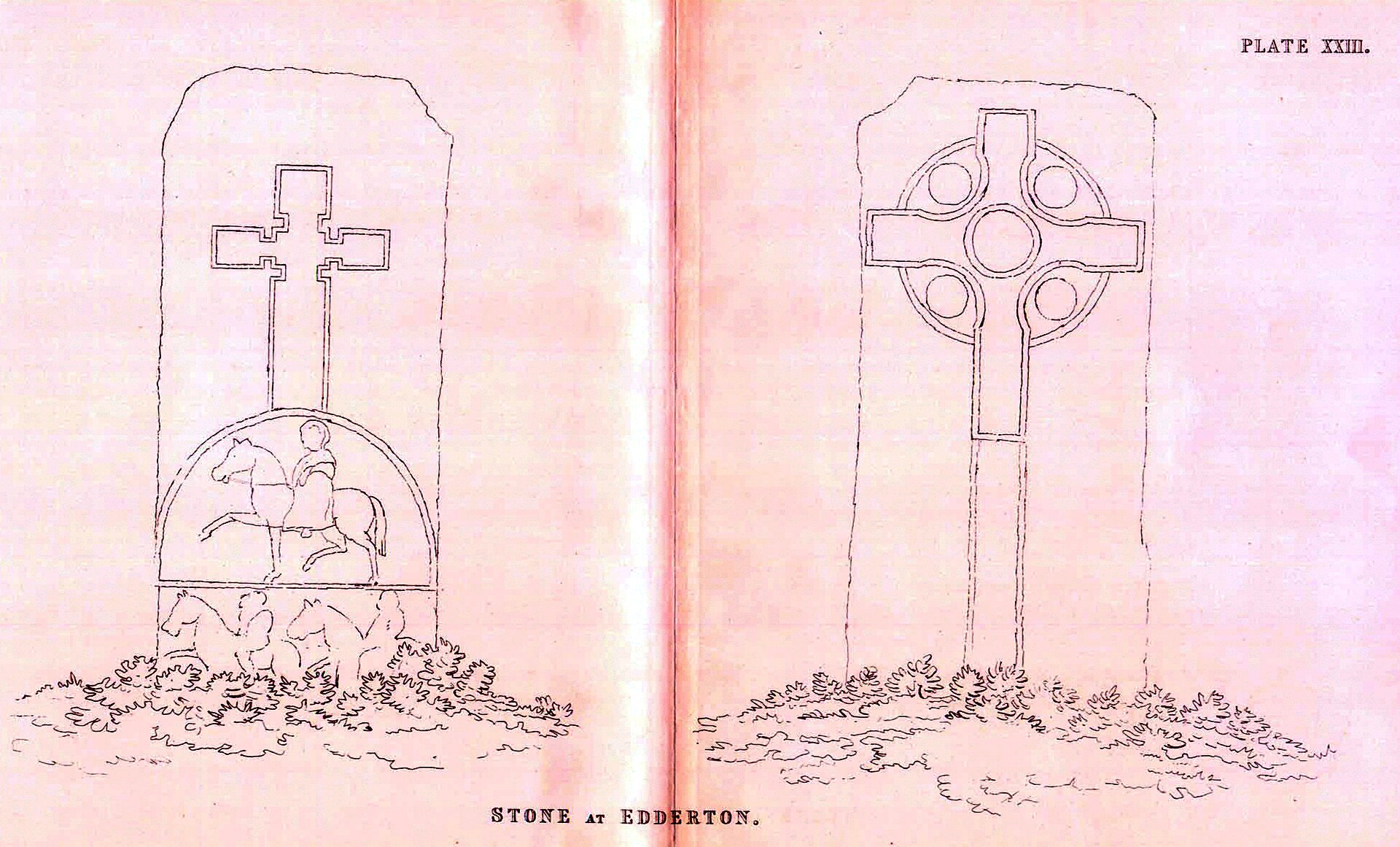
One slab, two scenes: a plain ringed cross on one face, three processing horsemen beneath a cross on the other, recently raised to reveal riders bu…
- Near Edderton
- Easy path

Fortified place · Medieval
Dunrobin Castle
Highland
A fourteenth-century keep with six-foot walls and stone-vaulted ceilings still survives at the core of the building Charles Barry expanded into the…
- Near Inverness
Questions people ask
- Why is it called a cathedral if it's a parish church?
- It kept the name because Dornoch was historically the seat of the Bishop of Caithness, even though the Church of Scotland has had no bishops since the office was abolished in the 17th century.
- When was Dornoch Cathedral built?
- It was built in 1224, during the reign of King Alexander II, founded by Bishop Gilbert de Moravia as the cathedral church of the diocese of Caithness.
- What happened to the cathedral in 1570?
- It was burnt down by the Mackays of Strathnaver during local feuding, leaving it a damaged ruin until a major restoration nearly three centuries later.
- Who restored the cathedral in the 19th century?
- Architect William Burn rebuilt it between 1835 and 1837, funded by Elizabeth, Countess of Sutherland, at a cost of £15,000.
- Who is buried at Dornoch Cathedral?
- Burials include founder Saint Gilbert of Dornoch, several Earls and Dukes of Sutherland, and Adam of Melrose, whose remains were moved there in 1239.
Sources
- Wikipedia: Dornoch Cathedral
- National Pipe Organ Register
Explore more: Sacred places · Medieval · Highland
The Ancient Codex, in your pocket
Get the Pocket Codex app
Carry the directory with you — Dornoch Cathedral and thousands of ancient places across Britain and Ireland, offline, wherever you roam.