
A single red sandstone boulder carries two carving traditions centuries apart — Bronze Age (roughly 2500–800 BC) cup-and-ring marks beneath a Pictish (of the Picts, the people of northern and eastern Scotland from about AD 300 to 900) symbol pair, rare layering for a Class I stone.
A red sandstone boulder, its surface never dressed or shaped by a mason, lay in the ground on Ardjachie Farm on the Tarbat peninsula for centuries before anyone noticed what was cut into it. When farmers uncovered it in 1960, they found not one but two layers of carving: several dozen cup marks and rings, small round hollows pecked into the stone in the Bronze Age, and, added long afterwards, an inverted-L shape with a wheel-like symbol above it, of probable Pictish origin.
That combination is what makes the stone unusual. Most Class I Pictish stones — the term for undressed boulders carved only with incised symbols, without a cross or any later relief carving — carry Pictish symbols alone. Here the Pictish carvers appear to have chosen a stone that already bore older, prehistoric marks, whether by accident of what lay to hand or by some deliberate reuse of a site or object already marked as significant.
The boulder no longer stands where it was found. It was moved from the farm and now stands outside the museum in Tain, where both layers of carving can still be read on its weathered face.
What follows is drawn from published sources, with each claim labelled by how firmly it is established.
History
During the Bronze Age, a period spanning roughly the third to second millennium BC, several dozen cup and ring marks were pecked into the surface of a red sandstone boulder on what would later become Ardjachie Farm, on the Tarbat peninsula in Easter Ross, small circular hollows, some encircled by carved rings, whose original purpose remains unclear.
Centuries later, in the early medieval period, the Picts added their own marks to the same boulder: an inverted-L shape with a wheel-like image carved above it, symbols belonging to the same tradition seen on other undressed stones across north-east Scotland. The layering of Bronze Age and Pictish carving on one stone is unusual among Class I Pictish stones, most of which carry symbols alone with no earlier prehistoric marking beneath them.
In 1960, farmers working Ardjachie Farm on the Tarbat peninsula uncovered the boulder, bringing to light a stone that had lain unnoticed in the ground while carrying evidence of two entirely separate periods of carving, one prehistoric and one early medieval, cut many centuries apart. The stone was subsequently moved from the farm and now stands outside the museum in Tain, where it remains on public display as one of the recorded Class I Pictish stones of Easter Ross.
Cultural influences
-
Pictish reuse of an older carved stone
Early-medieval Pictish symbols were added beside Bronze Age cup-and-ring marks, putting two very different carving traditions on the same sandstone boulder.
Connections
-
Tain and District Museum
The stone was moved from Ardjachie Farm and now stands outside this museum, where it remains on public display.
-
Pictish Stones Search Facility, University of Strathclyde
Holds a photographic record of the Ardjachie Stone as part of its digital gazetteer of Pictish symbol stones.
Discovery & excavation
The stone was found in 1960 by farmers working Ardjachie Farm on the Tarbat peninsula in Easter Ross. Its cup-and-ring marks and Pictish symbols had lain undocumented until that discovery brought the boulder to wider attention.
Finds now held at: Tain and District Museum.
What to look for
-
Cup and ring marks
Several dozen small circular hollows, some encircled by carved rings, cover part of the boulder's surface — a form of prehistoric rock art usually dated to the Bronze Age.
-
The inverted-L symbol
A carved shape resembling an upside-down letter L, of probable Pictish origin, set apart from the older cup-and-ring marks.
-
The wheel image
A circular, wheel-like design carved directly above the inverted-L symbol, together forming the stone's likely Pictish symbol pair.
Plan your visit
- Location
- 57.8319°N · 4.0986°W
- Nearest settlement
- Tain
- Access
- Open access
- Terrain
- Easy going
- Time needed
- About 15 minutes
- Best time
- Daylight, when the shallow carvings are easiest to pick out.
- What survives
- The boulder survives intact and is displayed outside Tain and District Museum; its shallow symbols need close viewing.
Opening & admission
- Stone stands outside the museum of Tain.
Nearby places
Carved stone · Pictish & early medieval
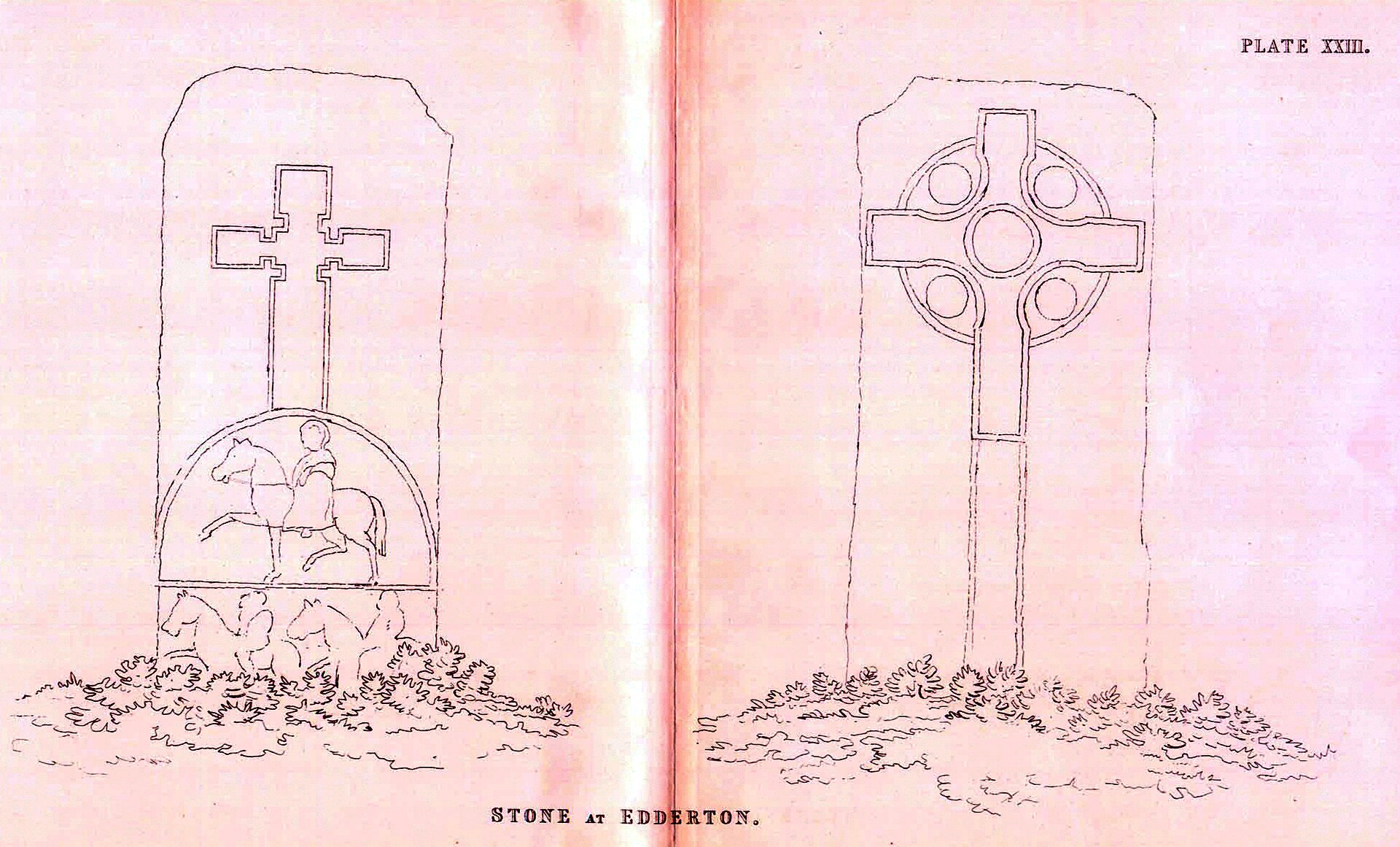
Edderton Cross Slab
Highland
One slab, two scenes: a plain ringed cross on one face, three processing horsemen beneath a cross on the other, recently raised to reveal riders bu…
- Near Edderton
- Easy path
%2C_Edderton_-_geograph.org.uk_-_915406.jpg?width=800)
Carved stone · Pictish & early medieval
Clach Biorach
Highland
A Bronze Age pillar over three metres tall was reused two thousand years later as a canvas for Pictish carving: a salmon, a double-disc and a Z-rod…
- Near Edderton
- Easy path

Sacred place · Medieval
Dornoch Cathedral
Highland
Burned by feuding clansmen in 1570 and rebuilt on a narrower plan in the 1830s, it still holds the graves of earls, dukes and the bishop-saint who…
- Near Dornoch
.jpg?width=800)
Carved stone · Pictish & early medieval
Nigg Stone
Highland
A shattered, staple-mended slab carries the oldest known depiction of a European triangular harp alongside carving so fine it is thought to share c…
- Near Nigg
- Easy path
The setting
Near Ardjachie Stone, about 164 metres away.
Photo: Richard Webb / Wikimedia Commons / CC BY-SA 2.0
Near Ardjachie Stone, about 223 metres away.
Photo: David Dixon / Wikimedia Commons / CC BY-SA 2.0
Near Ardjachie Stone, about 334 metres away.
Photo: Alpin Stewart / Wikimedia Commons / CC BY-SA 2.0
Questions people ask
- What is the Ardjachie Stone made of?
- It is an uncut, undressed boulder of red sandstone, carved on its natural surface rather than shaped by a mason.
- When and where was the Ardjachie Stone found?
- Farmers discovered it in 1960 on Ardjachie Farm in the Tarbat peninsula, Easter Ross.
- What carvings appear on the stone?
- Several dozen Bronze Age cup and ring marks, plus a probable Pictish inverted-L symbol with a wheel image carved above it.
- What is a Class I Pictish stone?
- An undressed stone carved only with incised symbols, with no cross or relief sculpture — the earliest recognised category of Pictish carved stone.
- Where can the Ardjachie Stone be seen today?
- It stands outside the museum in Tain, Easter Ross.
Sources
- Wikipedia: Ardjachie Stone
- Wikidata: Q1811060
- Fraser & Ritchie, Pictish Symbol Stones: An Illustrated Gazetteer (RCAHMS, 1999)
- MacNamara, The Pictish Stones of Easter Ross (Tain, 2003)
- Scott, The Stones of the Pictish Peninsulas (Hilton Trust, 2004)
- Pictish Stones Search Facility, University of Strathclyde
Explore more: Carved stones · Pictish & early medieval · Highland
The Ancient Codex, in your pocket
Get the Pocket Codex app
Carry the directory with you — Ardjachie Stone and thousands of ancient places across Britain and Ireland, offline, wherever you roam.