
A stronghold whose Gaelic name means "dry castle" sits on an island that vanishes under the tide twice a day — and served as Clanranald's seat for some five centuries before its own chief burned it.
A narrow causeway of shingle links the mainland to a small tidal island in Loch Moidart, passable on foot only when the tide has drawn back. At its centre stands a roofless stone stronghold, walls still rising two and three storeys in places, its curtain wall following the rocky edge of the island so closely that the fortification and the ground it stands on seem to have grown together. The Gaelic name, Caisteal Tioram, means “dry castle” — a description that holds only for a few hours around low water, after which the approach disappears beneath the sea loch.
The castle commands no view of the open sea; it is tucked behind higher ground. What it does control is the narrow water route into Loch Shiel, the kind of chokepoint a medieval lord needed to hold if he wanted to tax, watch, or block anyone moving through the sound. For centuries it was the seat of a single family line, passed down through a branch of Clan Donald, before ending its working life not through siege but through its own chief’s torch.
Today the interior is closed to visitors because sections of masonry remain at risk of collapse, so the castle is seen from outside — across the causeway, from the shore, or from a boat on the loch. It survives as a scheduled monument, its future the subject of a long-running and so far unresolved argument between its private owners and the heritage authorities responsible for what may, or may not, be done to it.
What follows is drawn from published sources, with each claim labelled by how firmly it is established.
The name
The name Caisteal Tioram translates from Scottish Gaelic as "dry castle", a reference to the tidal causeway that connects the island to the mainland only when the water has receded. Locally the site is also known as Dorlin Castle, after the shingle spit (An Doirlinn) that forms the crossing.
History
Tradition places Castle Tioram among the strongholds associated with Somerled, the twelfth-century lord whose descendants founded Clan Donald, though the surviving stonework is generally thought to date from the thirteenth or fourteenth century instead. The island it stands on, Eilean Tioram, is first recorded in a charter granted by Cairistíona Nic Ruaidhrí, daughter of Ailéan mac Ruaidhrí, tying the site firmly to the ruling family of the western seaboard from an early date.
According to the Sleat History, a manuscript account compiled in the seventeenth century, the castle itself was built by Áine Nic Ruaidhrí, granddaughter of the Ailéan named in the earlier charter. Whether or not this specific attribution is accurate, her descendants — the Clanranald branch of Clan Donald, known in Gaelic as Clann Raghnaill — held the castle as their principal seat for several centuries afterwards, making it the traditional heart of their lordship on this stretch of coast.
In around 1692 Government forces seized the castle after its clan chief, Allan Macdonald of Clanranald, joined the exiled court of James VII and II in France, breaking the allegiance he had sworn to William III and Mary II. A small garrison held the site for the crown in the years that followed, keeping it out of Jacobite hands during a period when loyalties across the Highlands remained sharply and dangerously divided.
That garrison ended in 1715, when the Jacobite rising gave Allan Macdonald the chance to recapture his own castle. Rather than leave it standing for use by Hanoverian forces, he had it torched — deliberately destroying the stronghold his family had held for generations to keep it from becoming a government asset. The castle has stood unoccupied and roofless ever since that fire.
Despite the 1715 burning, later accounts suggest the ruin was not entirely abandoned. Records point to its use for storing firearms brought in during the 1745 Jacobite uprising, and Lady Grange's own account of her kidnapping mentions the castle, suggesting at least occasional practical use of the shell long after it ceased to be a habitable residence.
In 1997 the castle's owners, Anta Estates, put forward proposals to restore the building, including a clan centre and museum, domestic apartments, and public access, and won planning consent from Highland Council. Historic Scotland refused Scheduled Monument Consent for the scheme, a refusal upheld after a local public inquiry, and in 1998 the council issued a Dangerous Buildings Order closing the site to visitors because of its poor structural condition.
A 2000 survey found the main structure "inherently strong" but warned that without major consolidation the risk of further collapse within five to ten years was significant — a warning borne out later that year when several square metres of the outer face of the northwest curtain wall came down. The owners repaired the breach, and a condition report in September 2014 recorded no significant further change in the stonework since.
People
-
Somerled
Twelfth-century lord whose castles are traditionally associated with the site, and whose descendants founded Clan Donald.
-
Cairistíona Nic Ruaidhrí
Daughter of Ailéan mac Ruaidhrí; her charter provides the earliest documentary record of Eilean Tioram.
-
Áine Nic Ruaidhrí
Granddaughter of Ailéan mac Ruaidhrí, credited by the seventeenth-century Sleat History with building the castle.
-
Allan Macdonald of Clanranald
Clan chief who lost the castle to Government forces around 1692, then recaptured and burned it himself during the 1715 Jacobite rising.
Cultural influences
-
As the traditional seat of Clanranald, Castle Tioram controlled access into Loch Shiel and later became entangled in Jacobite conflict, when Allan Macdonald recaptured and burned it in 1715.
Connections
-
Clan Donald / Clanranald (Clann Raghnaill)
Castle Tioram was the traditional seat of the Clanranald branch of Clan Donald for several centuries, following its construction by Áine Nic Ruaidhrí.
-
Anta Estates
The current private owners, who proposed a 1997 restoration scheme including a clan centre and museum, and who carried out repairs after the 2000 wall collapse.
Discovery & excavation
No archaeological excavation is recorded at the site; what survives instead is a documentary and condition-survey record. The Royal Commission on the Ancient and Historical Monuments of Scotland, now absorbed into Historic Environment Scotland, holds a substantial archive of research material, drawings and photographs lodged by the owners, alongside structural condition reports from 1999, 2000 and September 2014 tracking the state of the stonework over time.
In culture
-
Highlander: The Series
The castle appears in an opening aerial montage of the fourth-season episode "Homeland".
What to look for
-
The tidal causeway
A shingle spit, An Doirlinn, connects Eilean Tioram to the mainland but is submerged at high tide, so the crossing must be timed against the tide tables.
-
The northwest curtain wall
A visible repaired section marks where several square metres of the outer wall face collapsed in 2000, since consolidated by the owners.
-
The standing shell
Roofless walls rising two to three storeys trace the outline of the medieval stronghold, though the interior remains closed to visitors due to the risk of falling masonry.
What is said
Folklore and tradition, recorded as what is said — not as established fact.
-
Lady Grange's kidnapping
Accounts of the eighteenth-century kidnapping of Lady Grange are said to reference Castle Tioram, suggesting the ruin saw at least occasional use decades after it was burned in 1715.
-
The 1715 burning
The destruction of the castle by its own chief is traditionally explained as a deliberate act to keep it out of Hanoverian hands, though the fire's precise circumstances rest on later tradition rather than a contemporary eyewitness record.
Plan your visit
- Location
- 56.7846°N · 5.8291°W
- Time needed
- About 90 minutes
- Best time
- Visit in daylight and dry conditions, checking tide, access and current conservation guidance before travelling.
- What survives
- The roofless castle shell remains standing, but the courtyard is heavily overgrown and its walls carry vegetation; a condition survey reported little structural change since the late 1990s.
- Facilities
- No dedicated visitor facilities are documented at the castle; plan for a remote setting and use facilities in nearby settlements.
Opening & admission
The castle has been closed to public access since 1998; do not enter the fenced interior.
- The Caisteal Tioram Trust continues to advocate for restoration of public access.
Nearby places
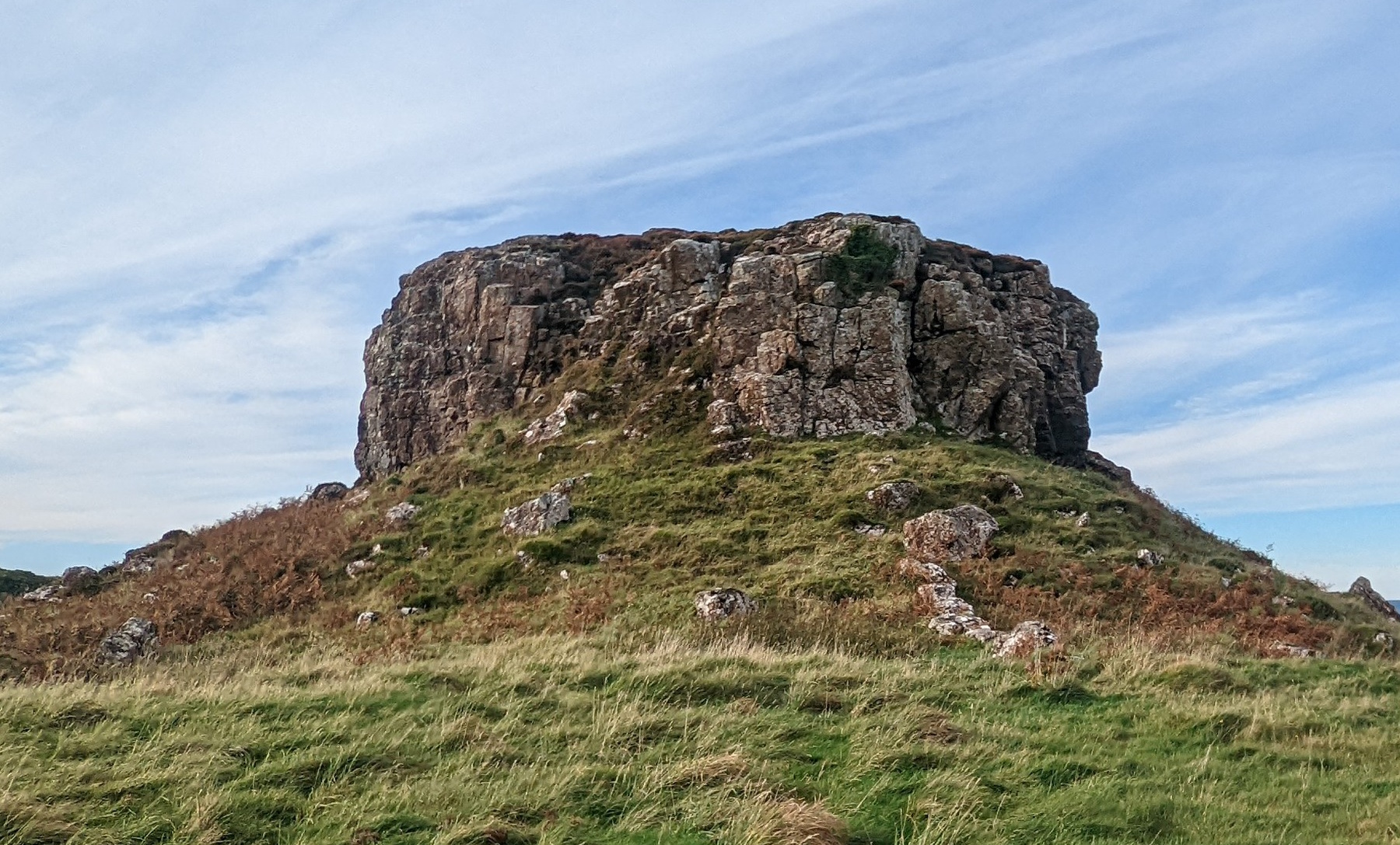
Fortified place · Medieval
Dùn Ara
Argyll and Bute
Reachable only by boat or cliff path, this ruined castle stands atop an earlier Gaelic fort and may have guarded a harbour built for Norse-age ships.
- Near Tobermory
- Rough ground
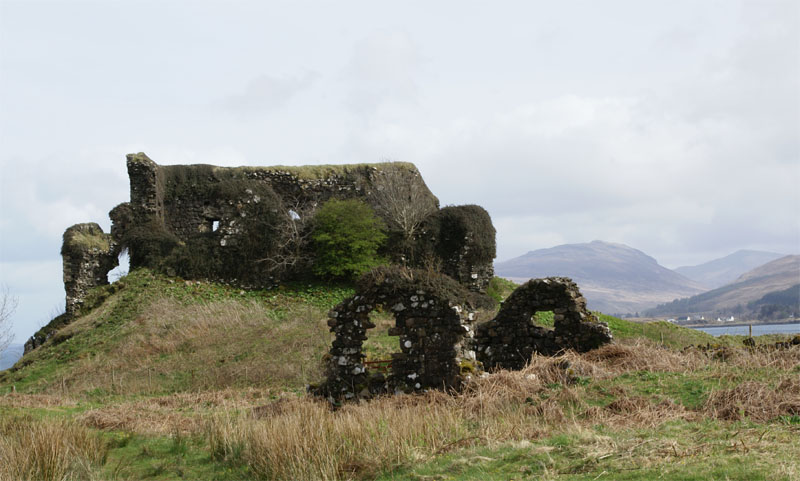
Building or ruin · Medieval
Aros Castle
Argyll and Bute
A single stronghold changed hands between three of the West Highlands' great dynasties in turn: MacDougall, MacDonald and Maclean: each forfeiture…
- Near Salen
- Rough ground

Fortified place · Medieval
Armadale Castle
Highland
A Tudor-Gothic mock-castle built purely for show now stands roofless and abandoned, and in 2025 its entire estate went up for private sale.
- Near Armadale
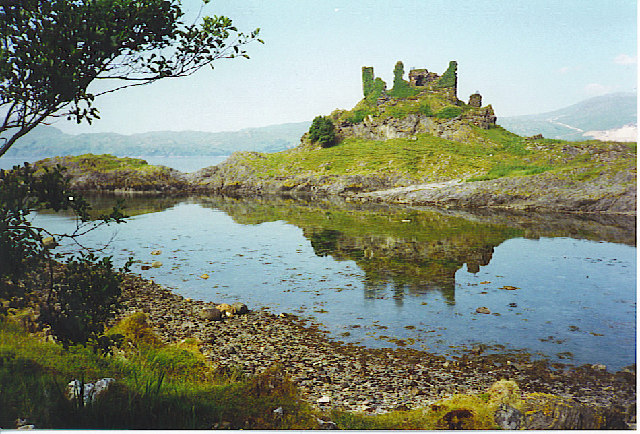
Fortified place · Medieval
Castle Coeffin
Argyll and Bute
A 13th-century hall-castle on a Lismore promontory, raised on the site of an earlier Viking stronghold and named for a Danish prince said to haunt…
- Rough ground
The setting
Near Castle Tioram, about 1 metres away.
Photo: Alan Reid / Wikimedia Commons / CC BY-SA 2.0
Questions people ask
- What does the name Castle Tioram mean?
- It comes from Scottish Gaelic Caisteal Tioram, meaning "dry castle", a reference to the tidal causeway that only clears the water at low tide.
- Who built Castle Tioram?
- Tradition, recorded in the seventeenth-century Sleat History, credits Áine Nic Ruaidhrí, granddaughter of Ailéan mac Ruaidhrí, though the exact date of construction is uncertain.
- Why was the castle burned in 1715?
- Its own chief, Allan Macdonald of Clanranald, recaptured it from a Government garrison during the Jacobite rising and torched it, reportedly to deny it to Hanoverian forces.
- Can visitors go inside Castle Tioram?
- No. The interior has been closed since 1998 under a Dangerous Buildings Order because of the risk of falling masonry, though the exterior can be reached across the tidal causeway.
- Why did restoration plans fail?
- Owners Anta Estates won council planning consent in 1997, but Historic Scotland refused Scheduled Monument Consent, a refusal upheld after a public inquiry.
Sources
- Wikipedia: Castle Tioram
- Historic Environment Scotland — Canmore
- Stell, G. (2014), "Castle Tioram and the MacDonalds of Clanranald: A Western Seaboard Castle in Context", in The Lordship of the Isles
- McDonald, R.A. (1997), The Kingdom of the Isles: Scotland's Western Seaboard, c. 1100–c. 1336
Explore more: Fortified places · Medieval · Highland
The Ancient Codex, in your pocket
Get the Pocket Codex app
Carry the directory with you — Castle Tioram and thousands of ancient places across Britain and Ireland, offline, wherever you roam.