A single stronghold changed hands between three of the West Highlands' great dynasties in turn — MacDougall, MacDonald and Maclean — each forfeiture redrawing who controlled Mull.
Galleys once used the surviving stone landing east of Aros Castle at Salen. Above the Sound of Mull, the broken hall-house (a fortified great hall) and its bailey, the defended yard attached to the castle mound, watched a sea passage rather than a road.
Also recorded as Dounarwyse Castle in later medieval documents, it was raised in the 13th century, most likely by one of the MacDougall lords of Lorn, and changed hands more than once as power in the Hebrides shifted beneath it. When the MacDougalls backed Edward I of England against Robert de Bruys and lost, their lands were forfeited, and King Robert handed the castle to Angus Og of Islay, Lord of the Isles and head of Clan Donald. It served as a working base of that Lordship for over a century, before Clan Maclean in turn took it when the Lordship itself fell from royal favour.
By the 17th century its military importance was fading, though it still had one dramatic episode left: in 1608 Lord Ochiltree used it as the setting to entertain, then arrest, the chiefs of the western clans. Within a century a survey dismissed it as a ruin of no strength at all, and no record of anyone living there survives from the 1700s onward.
What follows is drawn from published sources, with each claim labelled by how firmly it is established.
History
In the 13th century one of the MacDougall lords of Lorn raised a stronghold above the Sound of Mull, choosing a site where a small galley landing could serve the castle directly from the sea below. The result was a hall-house set within a walled bailey (an enclosed defensive yard) built to hold a garrison rather than a household, guarding the narrow water between Mull and the mainland shore.
That command did not last. When the MacDougalls sided with Edward I of England against Robert de Bruys in the Wars of Independence, they backed the losing cause, and their lands, including the castle, were declared forfeit. King Robert then granted it to Angus Og of Islay, Lord of the Isles and head of Clan Donald, folding the stronghold into the growing territory of the Lordship of the Isles.
Documentary evidence from the late 14th century names the castle Dounarwyse and records it in the hands of the Lords of the Isles. Through the late 14th and into the 15th century it served as an occasional base for the Lordship, one of the strongholds the MacDonald lords used as they moved between their island and mainland territories rather than governing from any single fixed seat.
The Lordship of the Isles eventually moved against the crown in its own turn, and when it too had its lands declared forfeit, Clan Maclean gained the castle at Clan Donald's expense. The change of ownership mirrored a wider realignment of power in the Hebrides, as the Macleans emerged as a dominant clan on Mull in place of the MacDonalds who had held the site for so long.
In 1608 Lord Ochiltree used Aros as the setting to entertain the Hebridean island chiefs before turning host into captor and taking them prisoner there, an episode carried out as part of a drive to bring the western chiefs under closer royal control. It marked one of the castle's last recorded moments of real political weight. By 1688 the castle was described as ruinous, old, useless and never of any strength, yet Argyll's troops still seem to have garrisoned it in 1690 during the unrest of that period. No evidence of any occupation survives from the 18th century onward, and the castle was left to decay into the ruin that stands today.
People
-
Angus Og of Islay
Lord of the Isles and head of Clan Donald who received the castle from Robert the Bruce after the MacDougalls' forfeiture.
-
Lord Ochiltree
Entertained the Hebridean island chiefs at Aros in 1608 before taking them prisoner.
Cultural influences
-
Hebridean lordship
Aros formed part of the network of island and coastal strongholds through which medieval Gaelic lordship was exercised in the Hebrides.
Connections
-
Clan MacDougall of Lorn
Built and originally held the castle in the 13th century, before losing it to forfeiture after the Wars of Independence.
-
Clan Donald / Lordship of the Isles
Received the castle from Robert the Bruce and used it as an occasional base for over a century.
-
Clan Maclean
Gained the castle at Clan Donald's expense once the Lordship of the Isles was itself forfeited.
-
Sound of Mull
Aros Castle stands on a headland above the Sound of Mull near Salen, where its galley landing and walls watched a principal sea route.
What to look for
-
The hall-house and bailey
The remains of a 13th-century hall-house and its walled bailey are still traceable at Aros, with traces of other buildings on the site that may date from a later period.
-
The galley landing
East of the bailey a small stone-built landing survives, built to let boats reach the castle directly from the water below.
Plan your visit
- Location
- 56.5321°N · 5.9649°W
- Nearest settlement
- Salen
- Terrain
- Rough ground — reasonable boots advised
- Time needed
- About 45 minutes
- Best time
- Dry, clear daylight, when the coastal setting and ruins can be read safely.
- What survives
- A ruined medieval coastal castle survives above the Sound of Mull.
- Facilities
- No dedicated visitor facilities are recorded.
Opening & admission
No current admission or access details are recorded — check locally or with Historic Environment Scotland before visiting.
- Ruined 13th-century castle on a headland above the Sound of Mull, near Salen
- A scheduled monument comprising a hall-house, bailey and stone galley landing
Nearby places
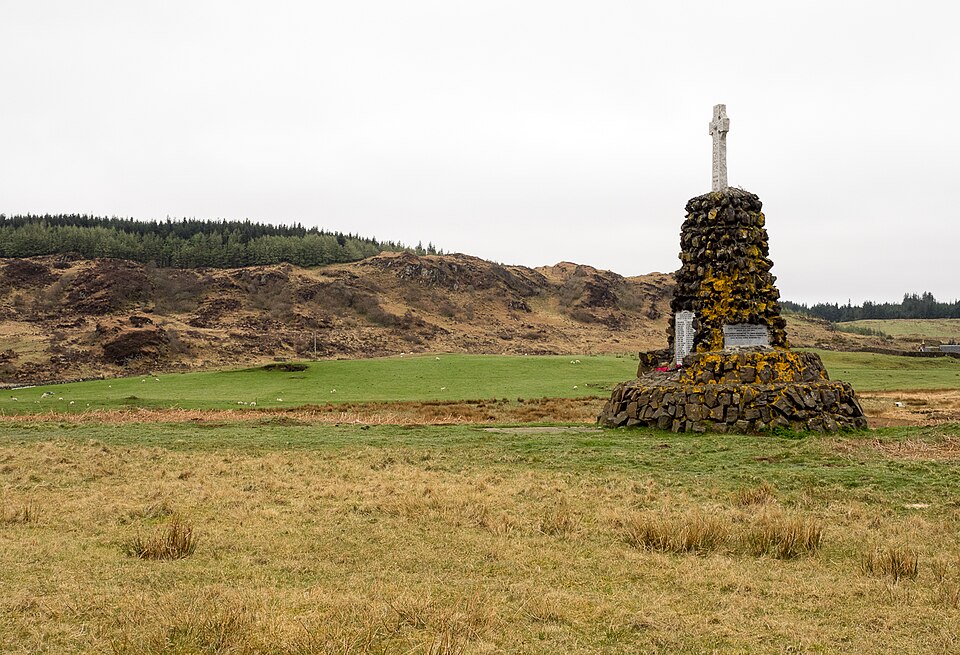
Sacred place · Medieval
St Kenneth's Chapel
Argyll and Bute
Eight medieval cross slabs and a sixteenth-century high cross survive inside its walls, set within an island cemetery still used for burials today.
- Rough ground
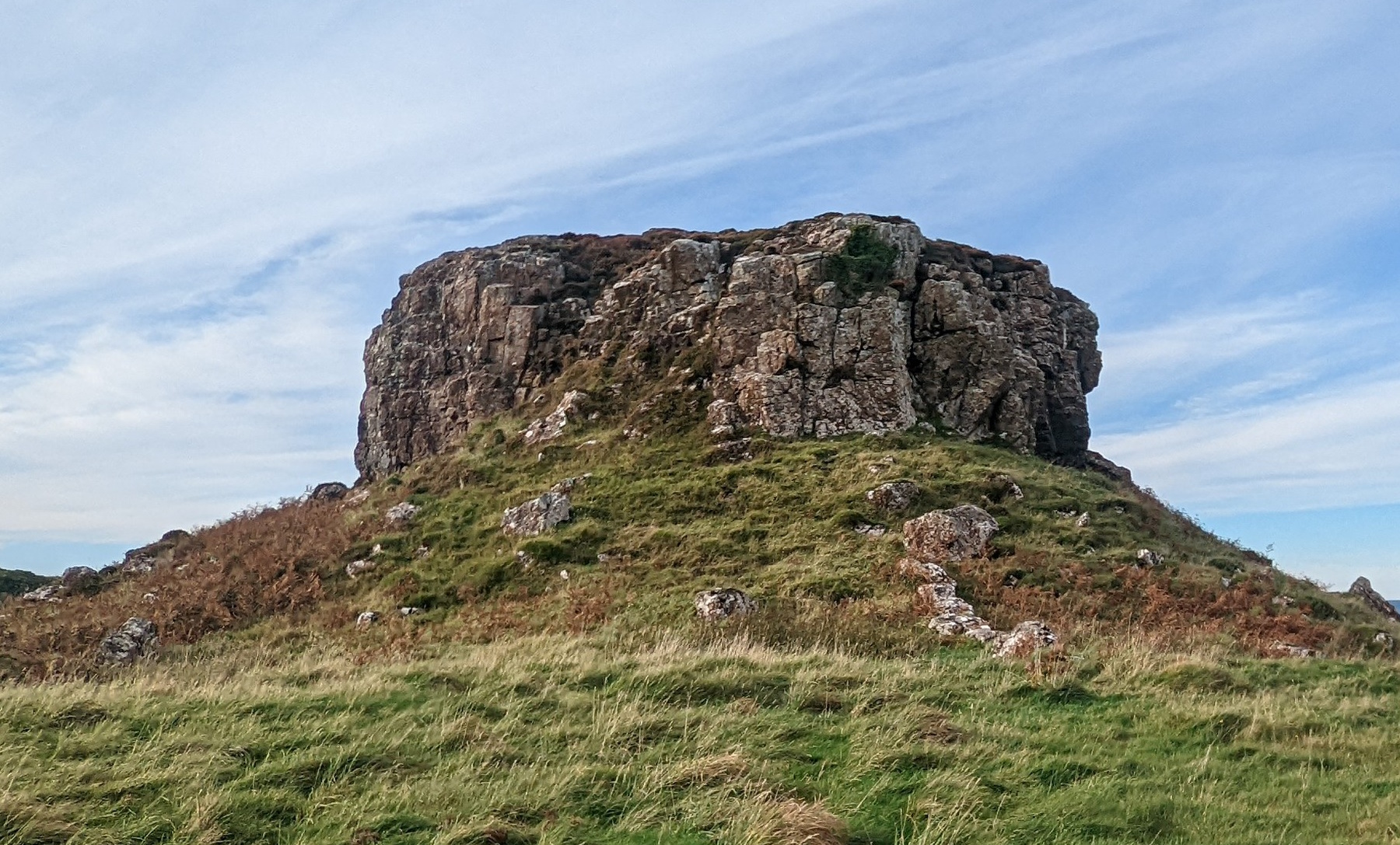
Fortified place · Medieval
Dùn Ara
Argyll and Bute
Reachable only by boat or cliff path, this ruined castle stands atop an earlier Gaelic fort and may have guarded a harbour built for Norse-age ships.
- Near Tobermory
- Rough ground
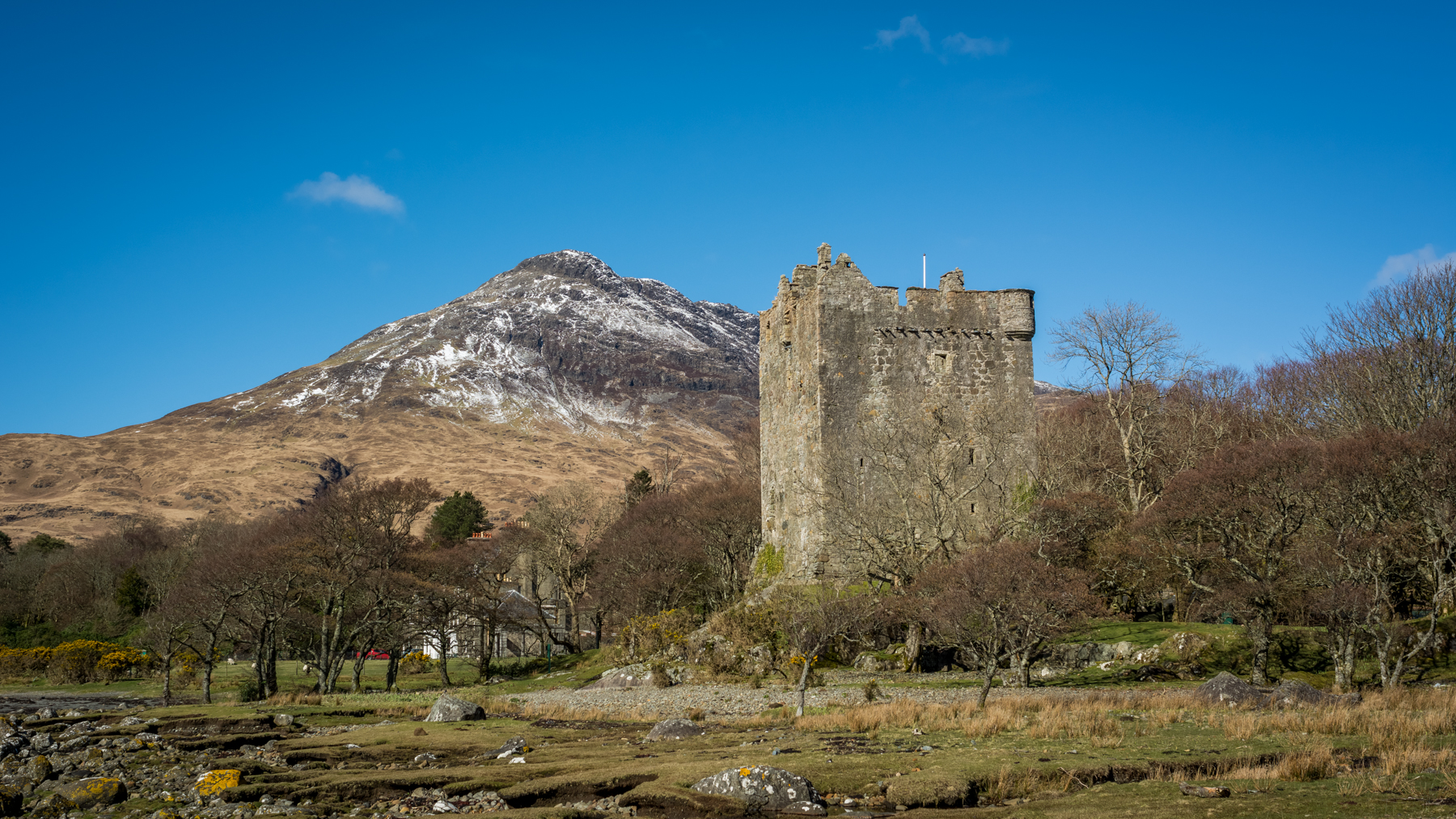
Fortified place · Medieval
Moy Castle
Argyll and Bute
Its walls still stand almost to the parapet, with a working well surviving on the ground floor and a Powell and Pressburger film crew's footprints…
- Near Lochbuie
- Some walking
Fortified place · Medieval
Duart Castle
Argyll and Bute
A ruin stripped to its foundations after 1691 and rebuilt two centuries later by the very chief's descendant who lost it: a rare case of a clan sea…
Questions people ask
- What is Aros Castle also known as?
- It is also recorded as Dounarwyse Castle, the name used in documents from the late 14th century onward.
- Who built Aros Castle?
- It was probably built in the 13th century by one of the MacDougall lords of Lorn.
- Why did the MacDougalls lose the castle?
- They backed Edward I against Robert de Bruys, and after their defeat their lands, including the castle, were forfeited to the crown.
- What happened at Aros Castle in 1608?
- Lord Ochiltree entertained the Hebridean island chiefs there before taking them prisoner on the crown's behalf.
- What can be seen at Aros Castle today?
- A ruined 13th-century hall-house and bailey survive, along with a small stone galley landing east of the bailey; it is a scheduled monument.
Sources
- Wikipedia: Aros Castle
- Royal Commission on the Ancient and Historical Monuments of Scotland — Canmore
- Mike Salter, Castles of Western and Northern Scotland (1995)
Explore more: Building or ruins · Medieval · Argyll and Bute
The Ancient Codex, in your pocket
Get the Pocket Codex app
Carry the directory with you — Aros Castle and thousands of ancient places across Britain and Ireland, offline, wherever you roam.