
Eight medieval cross slabs and a sixteenth-century high cross survive inside its walls, set within an island cemetery still used for burials today.
Eight carved cross slabs remain inside the roofless church on Inch Kenneth, beside a cemetery still occasionally used for burials. Heavy corner buttresses brace the leaning walls, while four pointed windows pierce the medieval structure. A step marks the division between the chancel, the priest’s part of the church, and the nave, where the congregation gathered.
Architectural details date the building to the 13th century, though no record of its construction survives. The earliest written mention comes from 1380, when it is named as the parish church of the district, a role it is still recorded holding in 1549. By then the chapel had come under the authority of Iona Nunnery on the neighbouring island, and when that Augustinian house was abolished in 1547 the chapel appears to have lost the support that kept it in use, beginning its long decline into ruin.
What survives inside the walls is unusually rich for so small a building: eight carved cross slabs likely made between the 14th and 16th centuries, later graves from the 17th and 18th centuries, and a slate high cross probably carved between 1500 and 1560 though only set in its present spot in 1926. The chapel was formally protected as a Scheduled Monument in 1928.
What follows is drawn from published sources, with each claim labelled by how firmly it is established.
History
Architectural details point to the 13th century as the period when St Kenneth's Chapel was built on Inch Kenneth, a small island off the coast of Mull, though no documentary record survives to fix an exact date. The church was raised to a modest scale, its walls reinforced with heavy corner buttresses and lit by four pointed windows, a design typical of small medieval parish churches serving scattered island congregations.
The earliest written trace of the chapel dates from 1380, when it is recorded as functioning as the parish church for the district. A further reference from 1549 confirms that it continued to serve this role for at least a further century and a half, anchoring the religious life of the community on Mull and the surrounding coast through the later medieval period.
By the 16th century at the latest, St Kenneth's Chapel had come under the authority of Iona Nunnery, a house of Augustinian canonesses based on the neighbouring island of Iona. This placed the chapel within the orbit of one of the most significant religious foundations in the Hebrides, linking a small island church to the wider monastic network centred on Iona.
The Reformation brought the Nunnery's suppression in 1547, and the loss of its institutional support is thought to have led directly to the chapel falling out of use. Deprived of the community that had maintained it, the building was left to decay, beginning a slow slide into ruin that would continue for centuries. At some point during the 16th or 17th century, reinforcements were added to counter a pronounced tilt that had developed in the east wall, evidence that even after regular worship had ceased, someone judged the surviving structure worth shoring up rather than leaving it to collapse entirely.
As late as 1815 the chapel's outer walls were probably still standing largely intact, but they have since collapsed, leaving the building in the heavily ruined state seen today, with the south side in particular reduced to fragmentary remains. The chapel was formally recognised as a Scheduled Monument on 27 March 1928, giving it legal protection. In 1926 a slate high cross was placed in the southwest corner of the burial enclosure beside the chapel; though erected in the twentieth century, the cross itself is thought to have been carved between 1500 and 1560, making it centuries older than its present position suggests.
Cultural influences
-
By the sixteenth century the chapel was under the authority of Iona Nunnery, linking it to the Augustinian religious network centred on Iona.
Connections
-
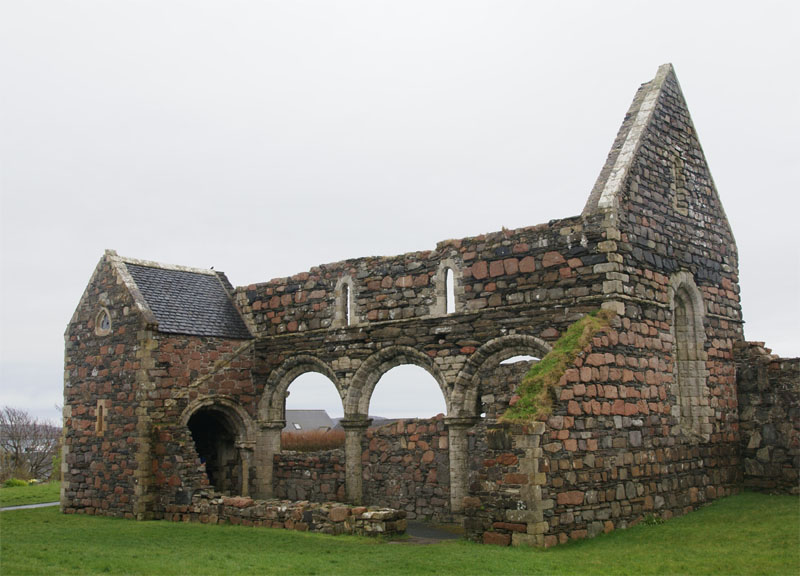
Photo: Otter / Wikimedia Commons / CC BY-SA 3.0 This Augustinian house on the neighbouring island held authority over St Kenneth's Chapel by the 16th century, and its abolition in 1547 is linked to the chapel falling out of use.
-
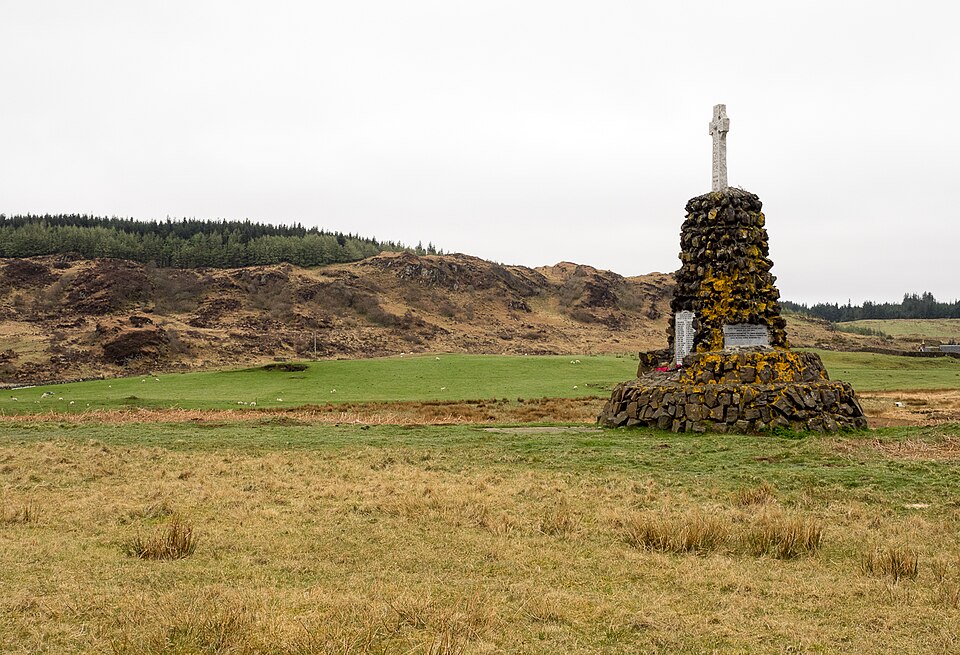
Photo: Trevor Littlewood / Wikimedia Commons / CC BY-SA 2.0 Parish of Kilfinichen and Kilvickeon
St Kenneth's Chapel served as the parish church for this district, recorded in documents from 1380 and again in 1549.
What to look for
-
Corner buttresses
Heavy buttresses reinforce the front corners of the church, a structural response to the building's exposed island setting.
-
Pointed windows
Four pointed windows survive, including two lancet windows on the east wall and two smaller windows lighting the north and south sides of the chancel.
-
Chancel step
A single step marks the division between the chancel and the nave, still visible in the ruined floor plan.
-
Eight cross slabs
Eight carved cross slabs lie inside the church, thought to date between the 14th and 16th centuries.
-
Slate high cross
A slate high cross stands in the southwest corner of the burial enclosure; set there in 1926, it was probably carved between 1500 and 1560.
-
Burial enclosure and cemetery
A burial enclosure lies south of the chancel, and the wider cemetery beyond holds graves from the 17th and 18th centuries and remains in occasional use.
-
The extent of the scheduling
Historic Environment Scotland scheduled the site on 27 March 1928 and amended the entry on 30 July 1998, listing it as "Inch Kenneth Chapel, chapel, cross and tombstones, Loch na Keal" under two classes at once — ecclesiastical church, and free-standing carved cross. The protected area covers roughly 2,000 square metres, so the cross and the tombstones are protected alongside the building rather than as loose contents of it.
Plan your visit
- Location
- 56.4414°N · 6.1592°W
- Terrain
- Rough ground — reasonable boots advised
- Time needed
- About 30 minutes
- Best time
- Daylight, within the current access arrangements for Inch Kenneth.
- What survives
- The chapel survives as heavily ruined walls with cross slabs and a burial enclosure on Inch Kenneth.
- Facilities
- Check the official visitor or heritage page for current facilities and access arrangements.
Opening & admission
No current visitor or admission details are recorded — check locally before planning a visit.
- Located on Inch Kenneth, a small island off Mull, so reaching it requires arranging a boat crossing
- The chapel is ruined and stands beside an old graveyard still occasionally used today
Nearby places
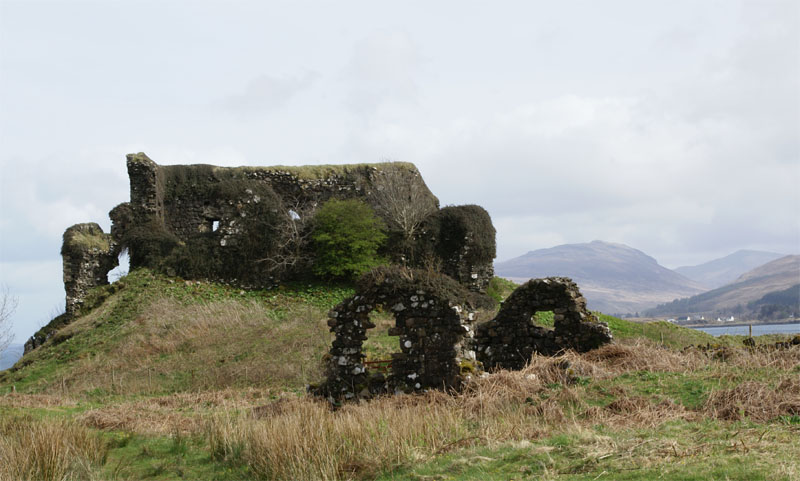
Building or ruin · Medieval
Aros Castle
Argyll and Bute
A single stronghold changed hands between three of the West Highlands' great dynasties in turn: MacDougall, MacDonald and Maclean: each forfeiture…
- Near Salen
- Rough ground
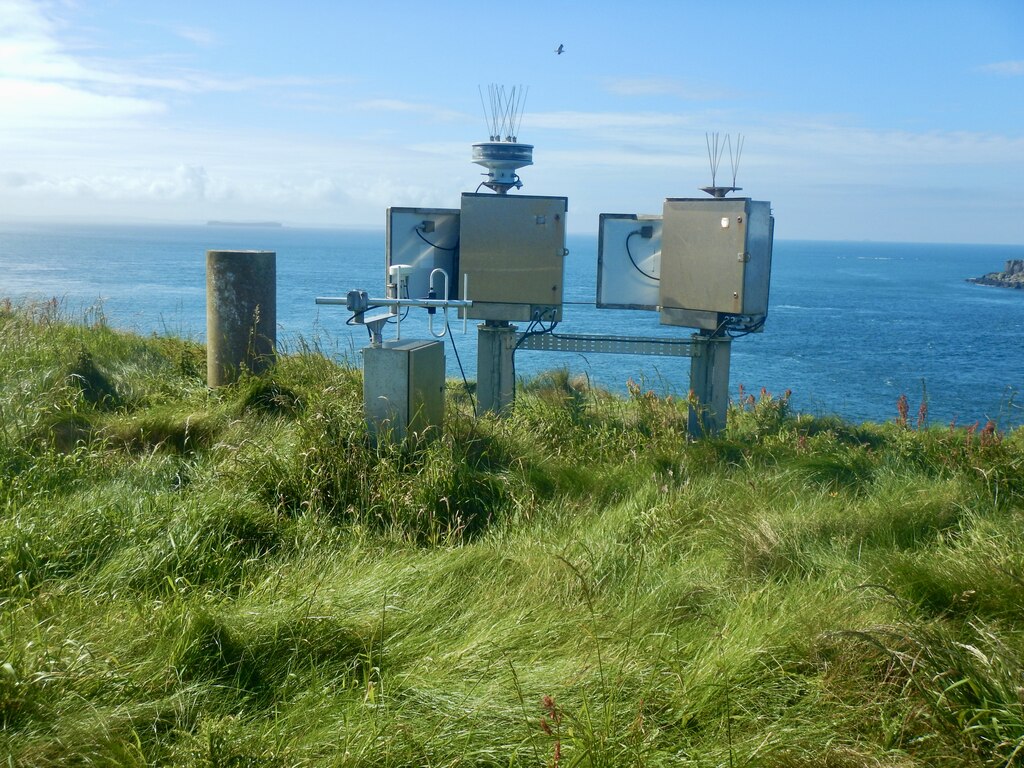
Fortified place · Medieval
Cairnburgh Castle
Argyll and Bute
A single fortress split across two separate islets in the Treshnish Isles, held in turn by the heirs of Somerled and the Macleans of Duart for over…
- Near Tobermory
- Rough ground
Building or ruin · Medieval
Shiaba
Argyll and Bute
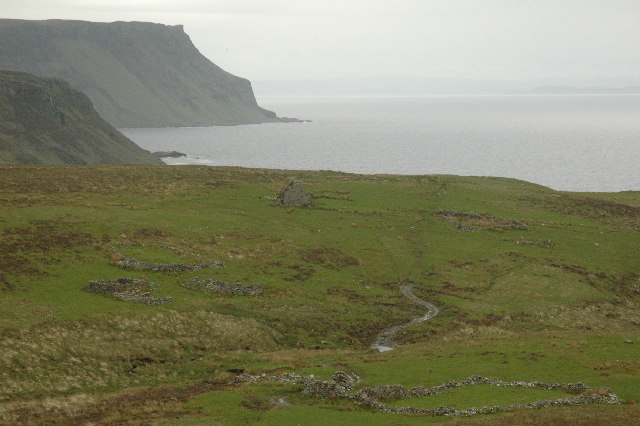
A cleared crofting township on the Ross of Mull whose stone walls, kilns and mill remains survive well enough to trace the whole shift from run rig…
- Near Bunessan
- Rough ground
Building or ruin · Pictish & early medieval
Iona Abbey
Argyll and Bute
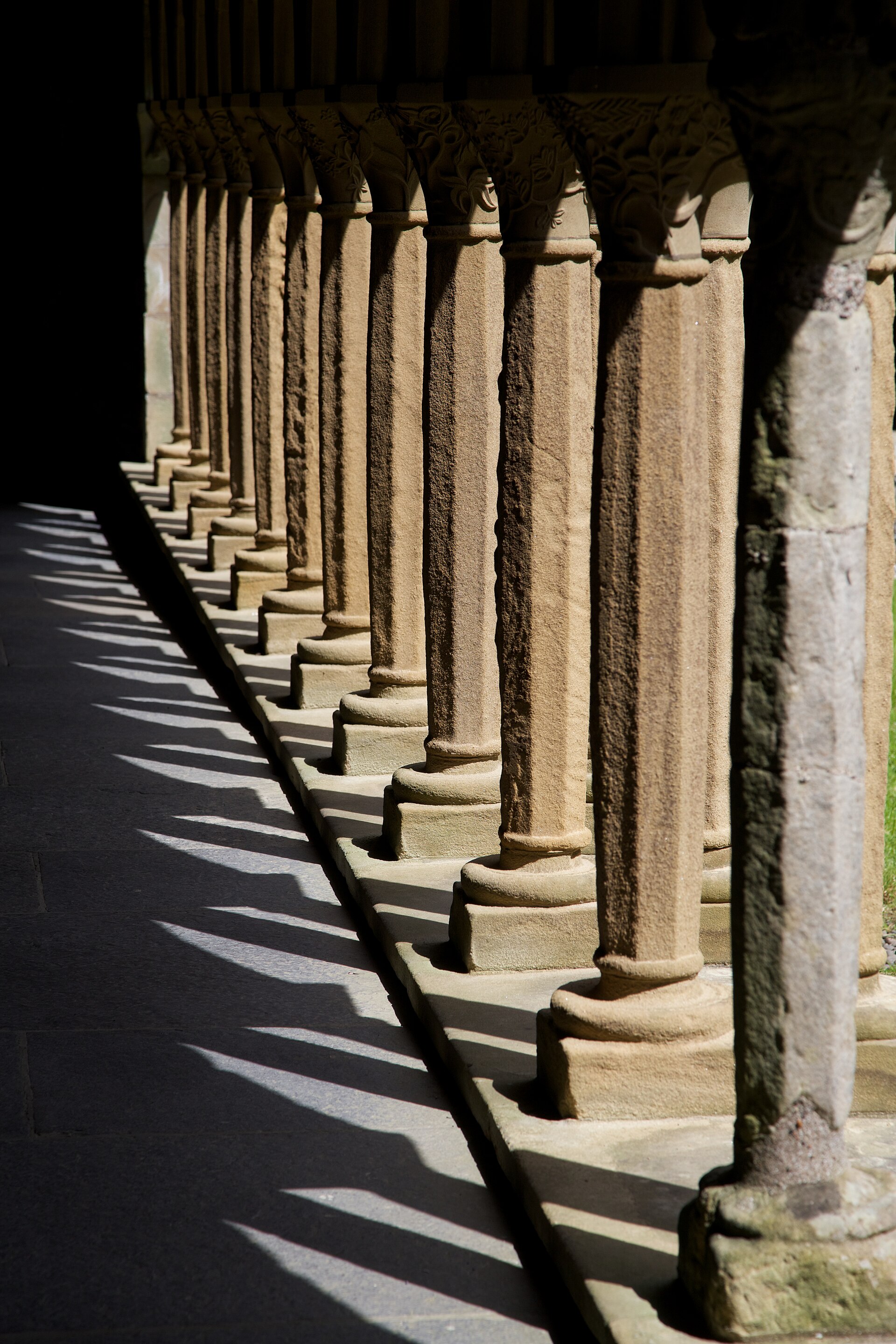
Saint Columba came to Iona from Ireland with twelve companions in 563, founding a monastery when Iona was part of the Kingdom of Dál Riata. It beca…
- Near Baile Mor, Iona
- 1.8 km from car park
The setting
Trees and houses on Inch Kenneth; St Kenneth’s Chapel is not visible.
Photo: Richard Webb / Wikimedia Commons / CC BY-SA 2.0
Loch na Keal viewed from Inch Kenneth in the landscape around St Kenneth’s Chapel; the chapel is not visible.
Photo: Richard Webb / Wikimedia Commons / CC BY-SA 2.0
Pond and island landscape on Inch Kenneth near St Kenneth’s Chapel; the chapel is not visible.
Photo: Richard Webb / Wikimedia Commons / CC BY-SA 2.0
Questions people ask
- Where is St Kenneth's Chapel?
- It stands on Inch Kenneth, a small island in the parish of Kilfinichen and Kilvickeon, off the Isle of Mull, Argyll and Bute.
- How old is St Kenneth's Chapel?
- Architectural features date the church to the 13th century, though its exact construction date was never recorded.
- Why did St Kenneth's Chapel fall into ruin?
- It came under Iona Nunnery's control by the 16th century; the Nunnery's abolition in 1547 is thought to have ended the chapel's use, leaving it to decay.
- What can still be seen inside the chapel?
- Eight carved cross slabs from the 14th to 16th centuries, later 17th- and 18th-century graves nearby, and a 1500s slate high cross set in the enclosure in 1926.
- Is St Kenneth's Chapel a protected monument?
- Yes, it was designated a Scheduled Monument on 27 March 1928.
Sources
The Ancient Codex, in your pocket
Get the Pocket Codex app
Carry the directory with you — St Kenneth's Chapel and thousands of ancient places across Britain and Ireland, offline, wherever you roam.