
A single fortress split across two separate islets in the Treshnish Isles, held in turn by the heirs of Somerled and the Macleans of Duart for over four centuries.
North of Iona, two small Atlantic islets carry one fortress across open water. The larger rock retains a barrack block, chapel, courtyard and guard-house; the smaller has another guard-house and a well, so the garrison occupied both sides of the channel.
A 1991 study of the historic Scottish landscape called it “one of the most isolated fortifications in Britain… and also one of the strangest,” and the description still fits. The site may have begun life as a Viking stronghold, and for centuries afterwards it changed hands between some of the most powerful dynasties of the western Highlands and Islands, from the descendants of the Norse-Gaelic warlord Somerled through Clan MacDougall, Clan MacDonald and finally Clan MacLean, whose chiefs held it as constables into the eighteenth century.
What survives today is a ruin, but the remoteness that made it valuable to medieval lords is exactly what has helped it endure: cut off from the mainland by tidal currents and cliffs, the castle was rarely taken by storm and more often changed hands through politics, inheritance and siege instead.
What follows is drawn from published sources, with each claim labelled by how firmly it is established.
The name
The castle may originally have been a Viking-period stronghold called Kiarnaborg, a name recorded in the thirteenth-century Hákonar saga Hákonarsonar, before re-emerging in Scottish records under the name Cairnburgh from 1249 onward.
History
The castle's origins may reach back to a Viking-period stronghold known as Kiarnaborg, though its first firm documentary appearance dates only to 1249. The thirteenth-century Hákonar saga Hákonarsonar names it as the property of an island king descended from Somerled, whom Alexander III of Scotland pressed to surrender it. From at least 1249 until 1269 the fortress belonged to Clan MacDougall, descendants of Somerled through his son Dubgall.
When Clan MacDougall backed John de Balliol against Robert de Brus during the Wars of Scottish Independence, the Crown confiscated the stronghold from them. Clan MacDonald held it for a time afterwards, before it passed into the hands of Clan MacLean, who would retain it for centuries and use it as one of their principal strongholds in the Hebrides.
In 1409 Hector Maclean, chief of Clan Maclean, received a charter from his uncle Donald of Islay, Lord of the Isles, confirming certain lands to him. The document styled Hector Lord of Duart Castle and constable of the castle of Cairnburg, tying the remote island fortress formally to the Macleans' main seat of power at Duart on Mull.
The castle's natural defences, ringed by sheer cliffs, made it exceptionally hard to approach, but it still drew conflict while the MacLeans held it. In 1504 King James IV besieged the stronghold after the MacLeans rose in support of Domhnall Dubh, chief of Clan Donald, a rebellion that tested the fortress's reputation for near impregnability.
General David Leslie briefly seized the castle in 1647 during the Wars of the Three Kingdoms. Within the following decade Oliver Cromwell's New Model Army put it to the torch, a fire that likely destroyed manuscripts which had been carried there from Iona for safekeeping after a 1561 Act had called for the destruction of religious 'Monuments of Idolatry'.
In 1679 the castle withstood an assault by the Campbells, its cliff-girt position again proving its worth against attackers. That resistance did not hold indefinitely: when attacked once more in 1692, the stronghold finally fell, marking a turning point after which its military importance began to fade. The government garrisoned Cairnburgh with troops during both Jacobite risings, in 1715 and again in 1745, using its isolation to house soldiers rather than to fight battles. In 1759 the castle gained an unlikely claim to fame as the birthplace of the author Isabella Kelly.
People
-
Hector Maclean
Chief of Clan Maclean, named Lord of Duart Castle and constable of Cairnburg in an 1409 charter from his uncle Donald of Islay.
-
James IV of Scotland
King of Scots who besieged the castle in 1504 after the MacLeans rebelled in support of Clan Donald.
-
General David Leslie
Parliamentarian commander who briefly took the castle in 1647 during the Wars of the Three Kingdoms.
-
Isabella Kelly
Author born at the castle in 1759.
Cultural influences
-
Norse-Gaelic maritime lordship
Cairnburgh’s possible Viking-period origin and later role in the Lordship of the Isles show how sea routes and island strongholds structured power in the Hebrides.
Connections
-
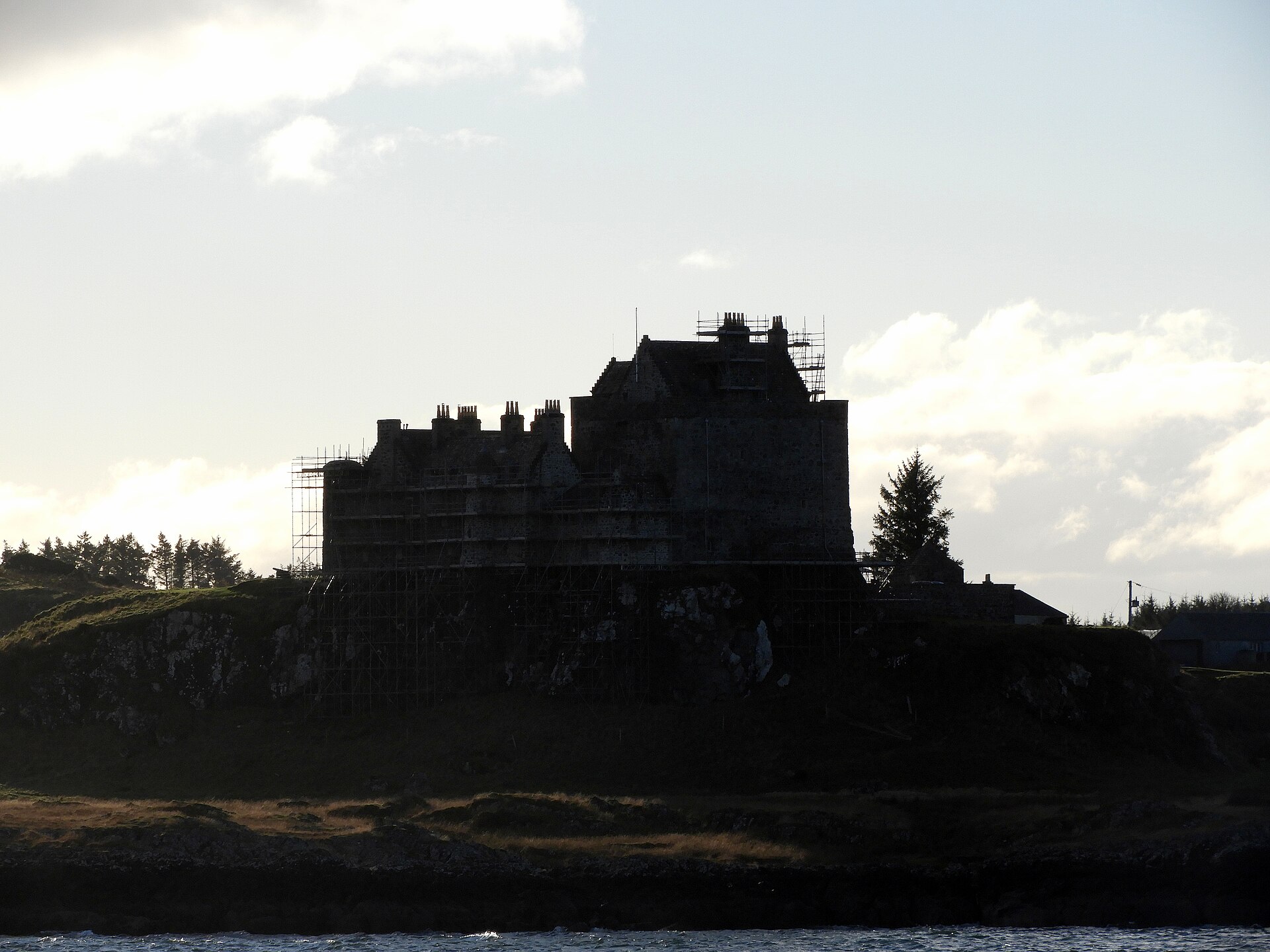
Photo: Reading Tom from Reading, UK / Wikimedia Commons / CC BY 2.0 Hector Maclean, constable of Cairnburgh under the 1409 charter, was also styled Lord of Duart Castle, the Macleans' principal seat.
-
Iona
Manuscripts were moved from Iona to Cairnburgh for safekeeping after a 1561 Act ordered the destruction of religious 'Monuments of Idolatry', and were likely lost when Cromwell's forces burned the castle.
-
Clan MacDougall of Lorn
Descendants of Somerled through his son Dubgall, the MacDougalls held Cairnburgh from at least 1249 to 1269 before losing it to the Crown.
-
Lordship of the Isles (Clan MacDonald)
Clan MacDonald held Cairnburgh briefly after its seizure from the MacDougalls, and Donald of Islay, Lord of the Isles, later issued the 1409 charter naming Hector Maclean constable.
-
Treshnish Isles
Cairnburgh occupies Cairn na Burgh Mòr and Cairn na Burgh Beag, the northernmost islets of the Treshnish Isles, at the mouth of Loch Tuath.
-
Loch Tuath
Cairnburgh occupies two northern Treshnish islets at the mouth of Loch Tuath, north of Iona.
What to look for
-
Barrack block, chapel and courtyard
The larger islet, Cairn na Burgh Mòr, carries the bulk of the surviving structures: a barrack block, a chapel, a courtyard and a guard-house.
-
Second guard-house and well
The smaller islet, Cairn na Burgh Beag, holds its own guard-house together with a well, separate from the main cluster of buildings.
-
A fortress split across two islands
The castle's defences straddle both islets rather than being concentrated on one, an unusual arrangement for a West Highland stronghold.
-
Natural cliff defences
Sheer cliffs surround both islets, providing much of the castle's protection and helping it resist repeated attempts to take it by force.
Plan your visit
- Location
- 56.5183°N · 6.3811°W
- Nearest settlement
- Tobermory
- Terrain
- Rough ground — reasonable boots advised
- Time needed
- About 60 minutes
- Best time
- Only with an appropriate boat trip and calm weather; no public landing route is documented.
- What survives
- Substantial castle remains occupy two remote, cliff-girt islets in the Treshnish Isles.
- Facilities
- No visitor facilities or public landing arrangements are recorded at the castle.
Opening & admission
No admission details are recorded — check the managing body's site before travelling.
- Sits on two remote islands in the Treshnish Isles, reachable only by boat and defended by surrounding cliffs.
- No public access route is documented.
Nearby places

Fortified place · Medieval
Dùn an Achaidh
Argyll and Bute
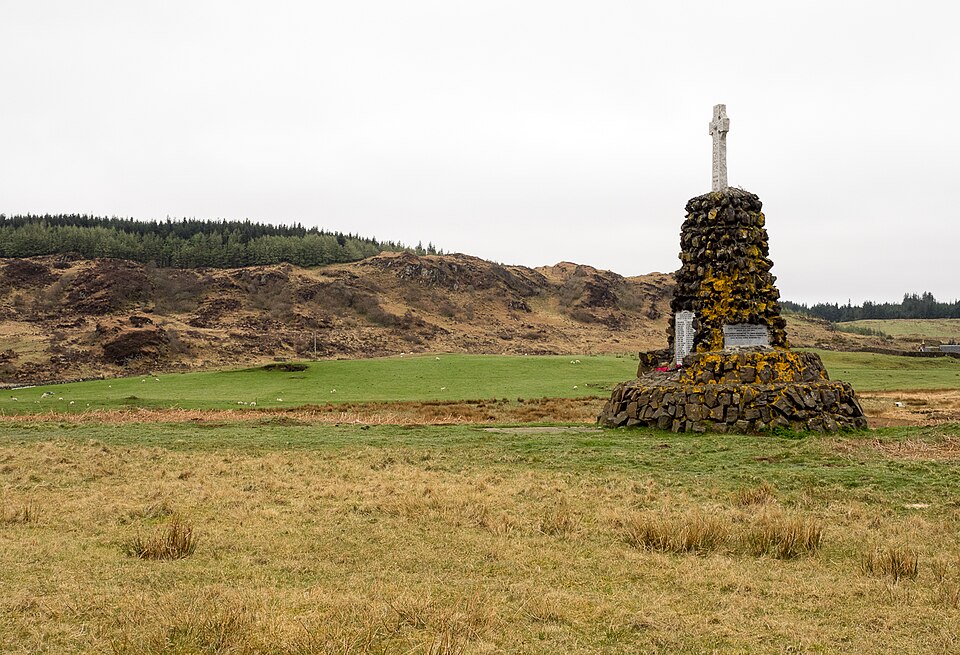
Scorch marks still visible on its foundations appear to confirm a local legend of islanders burning out a tyrannical Norse chief's son from Coll's…
- Near Acha
- Rough ground
Sacred place · Medieval
St Kenneth's Chapel
Argyll and Bute
Eight medieval cross slabs and a sixteenth-century high cross survive inside its walls, set within an island cemetery still used for burials today.
- Rough ground
Settlement · Medieval
Breachacha crannog
Argyll and Bute
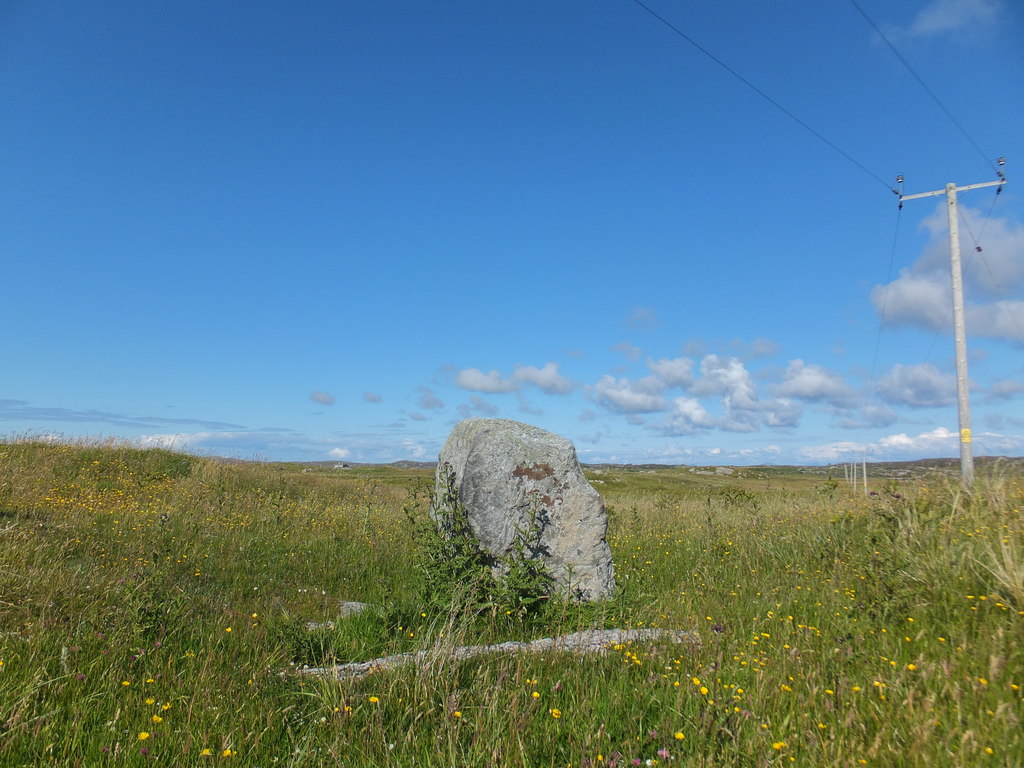
A drained loch bed south of Breachacha Castle on Coll still holds an artificial island whose stonework and mysterious dug pits have never been full…
- Near Arinagour
- Rough ground
Fortified place · Medieval
Dùn Ara
Argyll and Bute
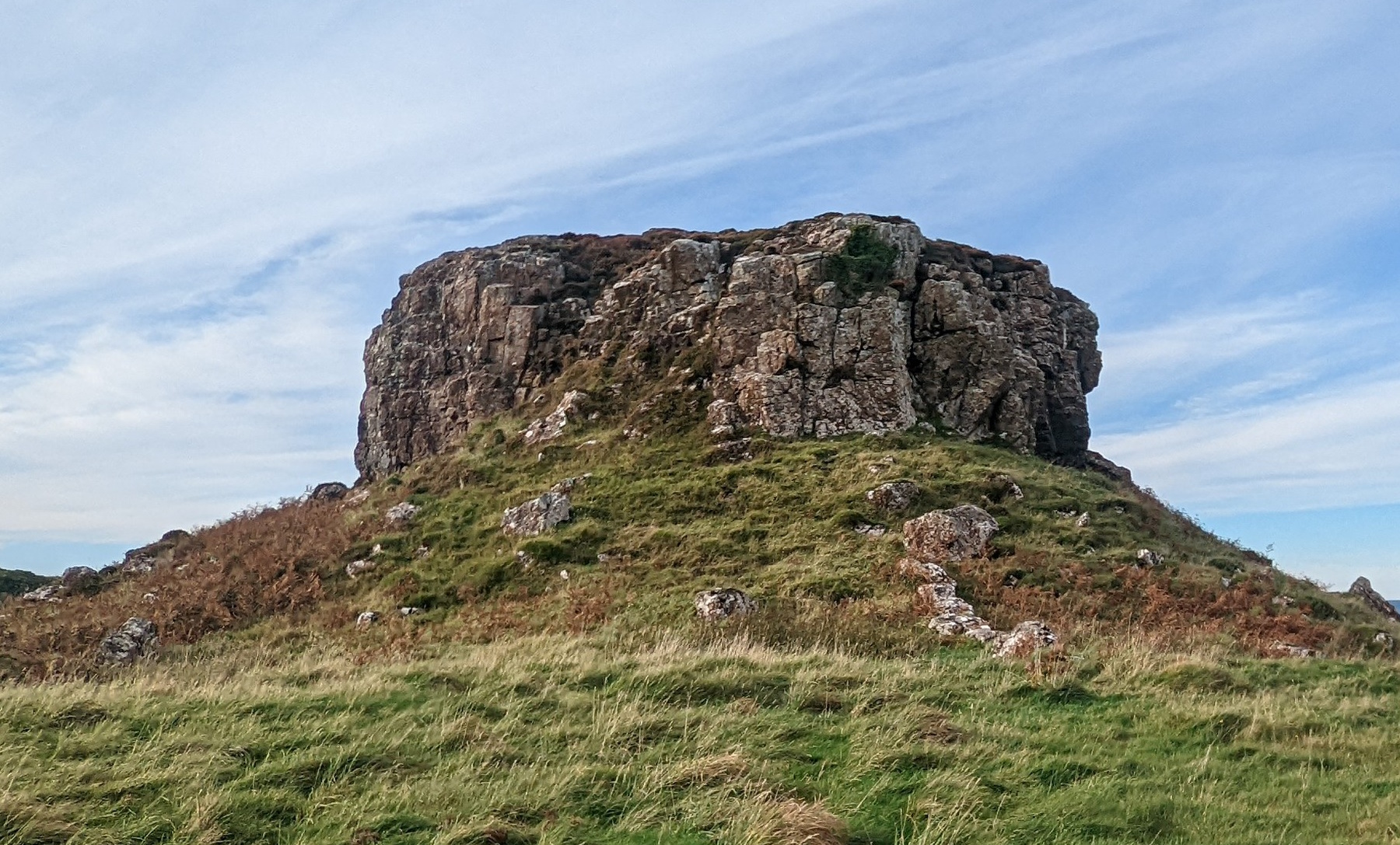
Reachable only by boat or cliff path, this ruined castle stands atop an earlier Gaelic fort and may have guarded a harbour built for Norse-age ships.
- Near Tobermory
- Rough ground
The setting
Birds on the water near the Isle of Mull; Cairnburgh Castle is not visible.
Photo: Lobster1 / Wikimedia Commons / CC BY-SA 3.0
Questions people ask
- Where is Cairnburgh Castle located?
- It stands on two islets, Cairn na Burgh Mòr and Cairn na Burgh Beag, at the northern end of the Treshnish Isles, at the mouth of Loch Tuath north of Iona, in Argyll and Bute.
- Why does the castle occupy two separate islands?
- Its defences straddle both islets: a barrack block, chapel, courtyard and guard-house stand on the larger one, while a second guard-house and a well sit alone on the smaller.
- Which clans held Cairnburgh Castle?
- Clan MacDougall held it from at least 1249, the Crown seized it after the MacDougalls backed John de Balliol, and it passed through Clan MacDonald to Clan MacLean.
- What happened to Cairnburgh Castle in the seventeenth century?
- It was briefly taken by General David Leslie in 1647, then burned by Oliver Cromwell's New Model Army, and later withstood an attack in 1679 but fell in 1692.
- Who was born at Cairnburgh Castle?
- The author Isabella Kelly was born at the castle in 1759, decades after it had last seen serious military action.
Sources
- Wikipedia: Cairnburgh Castle
- Whyte, Ian D. and Kathleen A. Whyte, The Changing Scottish Landscape, 1500-1800 (Taylor & Francis, 1991)
- Marsden, John, Somerled: And the Emergence of Gaelic Scotland (2010)
- Hákonar saga Hákonarsonar
Explore more: Fortified places · Medieval · Argyll and Bute
The Ancient Codex, in your pocket
Get the Pocket Codex app
Carry the directory with you — Cairnburgh Castle and thousands of ancient places across Britain and Ireland, offline, wherever you roam.