
A ruin stripped to its foundations after 1691 and rebuilt two centuries later by the very chief's descendant who lost it — a rare case of a clan seat being reclaimed rather than merely preserved.
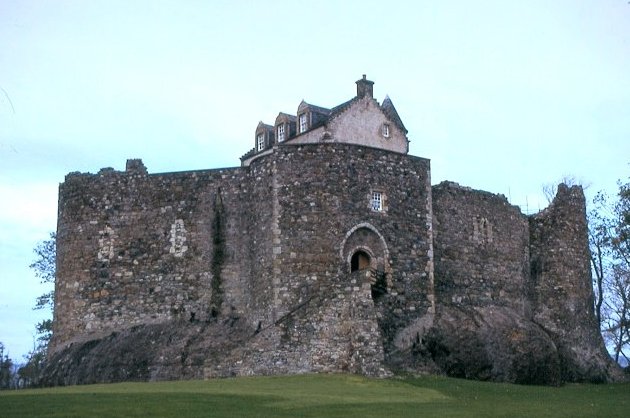
Mull’s Sound narrows beneath Duart’s square tower, built on a bare rock shelf. The masonry was dismantled stone by stone and rebuilt two centuries later; the surviving stronghold still marks the water route it was built to watch.
The MacLean family held Duart as their seat for some four hundred years, through sieges, a Cromwellian naval scare, and a Campbell invasion that ended with the castle’s stones scattered across the hillside. What survived was less a building than a footprint and a family memory of where the walls had stood — and it was that memory, carried down through generations of the same clan, that eventually brought the castle back.
Today the restored building holds the regimental colours of a Canadian battalion from the First World War, a small detail that hints at how far the MacLean name travelled once the clan itself was scattered across the world, long after their castle had fallen silent.
What follows is drawn from published sources, with each claim labelled by how firmly it is established.
The name
The name is rendered in Scottish Gaelic as Caisteal Dhubhairt, and the English form Duart derives from this Gaelic original.
History
The castle was probably raised in the 13th century by Clan MacDougall, who controlled much of this stretch of Argyll's coast at the time. Within the following century it had passed into the hands of Clan MacLean, who would hold it as their principal seat for the next four hundred years, shaping the site far more than its first builders had.
In 1350 Lachlan Lubanach Maclean, the 5th Chief of Clan MacLean, married Mary Macdonald, daughter of John of Islay, Lord of the Isles, and Duart came to him as part of her dowry. The arrangement was formalised in 1390, when Mary's brother Donald Macdonald, by then Lord of the Isles himself, issued a charter confirming the castle to the Macleans, tying the clan's ownership to one of the most powerful lordships in the west.
In 1647 the castle was besieged by government troops of Clan Campbell acting for the Argyll administration, but the Royalist Macleans held firm and drove the attackers off, a rare outright military success for the clan during the turbulent Civil War years in the Highlands and Islands.
In September 1653 a Cromwellian naval task force of six ships anchored off the castle, only to find the Macleans had already withdrawn to Tiree. A storm broke on the 13th of that month, wrecking three of the vessels, including one believed to be the Swan; its remains now lie within a protected marine area just north of the castle, a physical trace of that near-encounter beneath the water.
In 1678 the 9th Earl of Argyll, chief of Clan Campbell, invaded Mull and overran the MacLean lands around Duart. Sir John Maclean, 4th Baronet, fled the castle for Cairnbulg Castle and then on to Kintail, sheltering under the protection of the 3rd Earl of Seaforth while Campbell power tightened its grip on the island.
Sir John Maclean finally surrendered Duart in 1691 to the 10th Earl of Argyll, later created 1st Duke of Argyll. The Campbells partially demolished the castle and scattered its stones across the hillside; the 5th Laird of Torloisk later used some of that fallen masonry to build a cottage near the ruin. By 1751 what remained had been abandoned outright, and Sir John went down in family memory as the last laird of Duart for well over two centuries.
The ruin changed hands several times through the 19th century, sold in 1801 and again in 1865 to A. C. Guthrie as part of the Torosay Estate, before being separated out and bought back on 11 September 1911 by Sir Fitzroy Donald Maclean, 26th Chief of the clan, who restored it as a family seat once more. Further restoration work followed after 2012, when storm damage brought down four ceilings and the family launched a public appeal to fund ongoing repairs into the following decade.
People
-
Lachlan Lubanach Maclean
5th Chief of Clan MacLean and 1st Laird of Duart, who received the castle as part of his wife Mary Macdonald's dowry in 1350.
-
Sir John Maclean, 4th Baronet
16th Laird of Duart, who fled the castle in 1678 and surrendered it to the Earl of Argyll in 1691, becoming its last laird for over two centuries.
-
Sir Fitzroy Donald Maclean
26th Chief of Clan MacLean, who bought back the ruined castle in 1911 and restored it as the clan seat.
Connections
-
Clan MacDougall
Probable original builders of the castle in the 13th century, before it passed to Clan MacLean the following century.
-
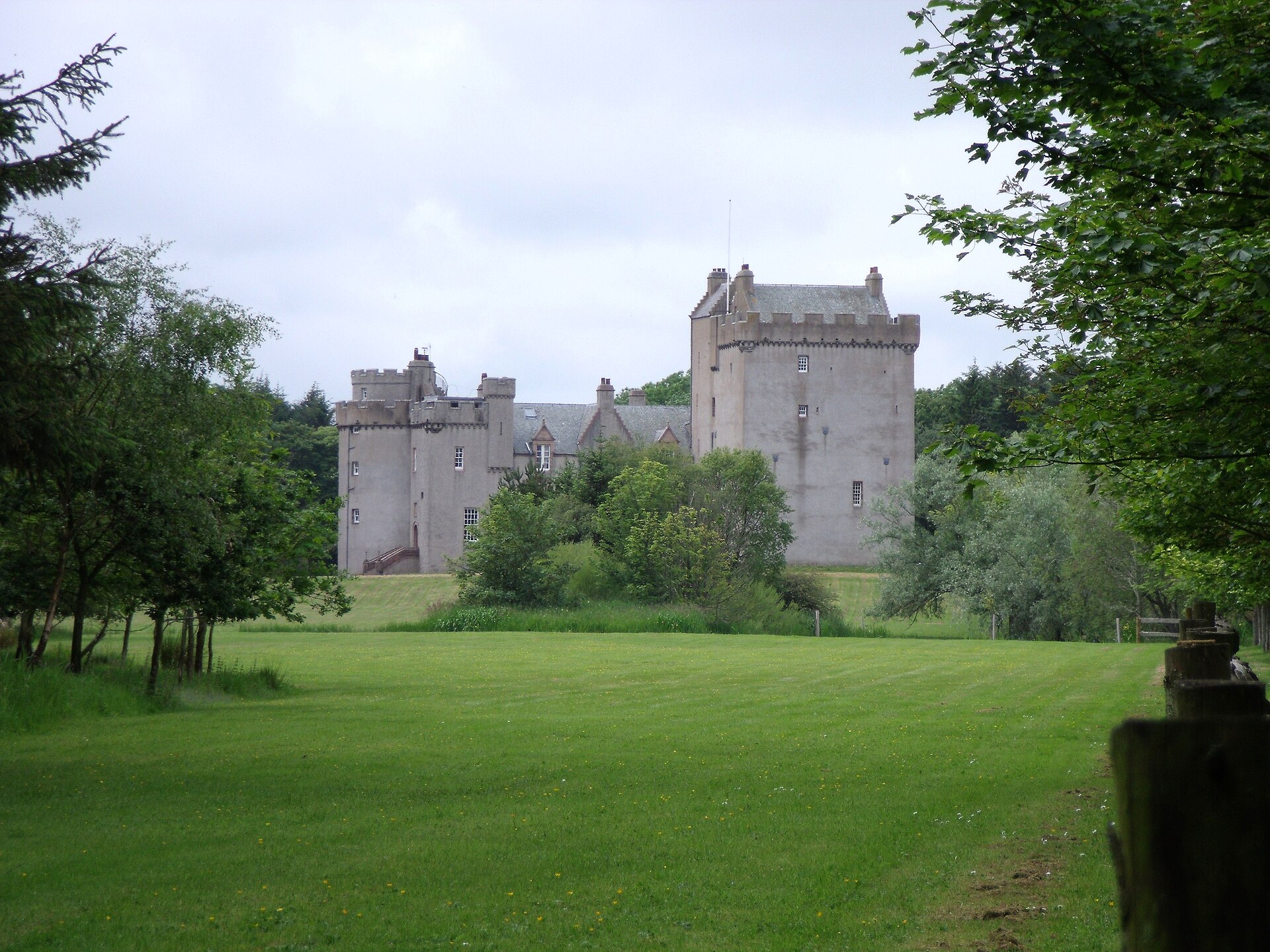
Photo: Astrid H / Wikimedia Commons / CC BY-SA 2.0 Sir John Maclean fled here after the Earl of Argyll's invasion of Mull in 1678, before moving on to Kintail.
-
Torosay Castle
The Duart ruin was held as part of the Torosay Estate through the 19th century until it was separated out and sold to Sir Fitzroy Donald Maclean in 1911.
-
The Swan (17th-century warship wreck)
Believed to be one of three Cromwellian ships lost in the 1653 storm off Duart; its remains lie within a protected marine area north of the castle.
In culture
-
I Know Where I'm Going! (1945)
The castle was used as a filming location under the name "Castle of Sorne" in this 1945 film.
-
When Eight Bells Toll (1971)
Duart Castle featured as a location in this 1971 film starring Anthony Hopkins.
-
Entrapment (1999)
The castle appeared in this 1999 film starring Sean Connery, who has MacLean ancestry through his mother, alongside Catherine Zeta-Jones.
-
Buffy the Vampire Slayer Season Eight
The castle is depicted as the base of Buffy Summers in the first half of this comic-book continuation of the television series.
What to look for
-
The Great Hall
Houses the regimental colours of the 236th Battalion (New Brunswick Kilties), Canadian Expeditionary Force, laid up here as a memorial from the First World War.
-
Duart Point Lighthouse
Standing to the south-east of the castle, this lighthouse was built in 1900 as a memorial to the Scottish novelist William Black.
-
The restored tower
The square tower and surrounding walls, rebuilt from a scattered ruin after 1911, still show the footprint of the medieval MacLean stronghold.
Plan your visit
- Location
- 56.4562°N · 5.6549°W
- Access
- Paid entry — managed visitor site
- Time needed
- About 90 minutes
- Best time
- During daylight hours, within the current opening dates published by the official site.
- What survives
- The castle was restored from ruin in the early 20th century and remains privately maintained by Clan MacLean.
- Facilities
- The official visitor operation provides the relevant castle facilities; check the current website for opening dates, ferry planning and visitor arrangements.
Opening & admission
Check the official Duart Castle website for current opening dates, hours, and admission prices before visiting.
- Restored from ruin in the early 20th century and privately maintained by Clan MacLean, with ongoing restoration appeals
- Located on the Isle of Mull, accessible via ferry
Nearby places
Building or ruin · Medieval
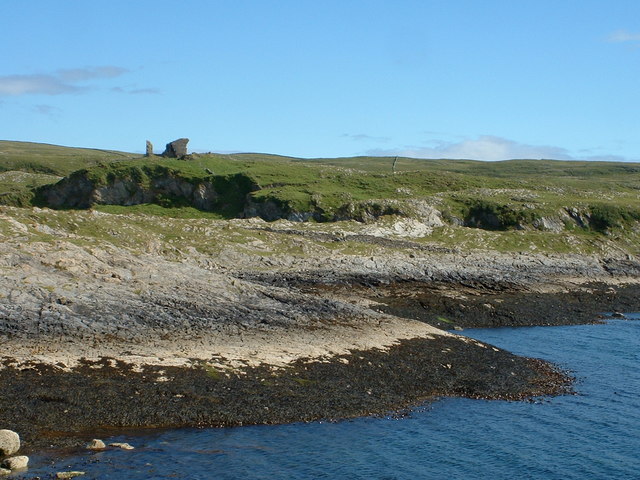
Achanduin Castle
Argyll and Bute
A single 1304 land grant is the earliest written trace of a stronghold long credited to the Bishop of Argyll, though excavation has since pointed t…
- Near Lismore
- Rough ground
Fortified place · Medieval
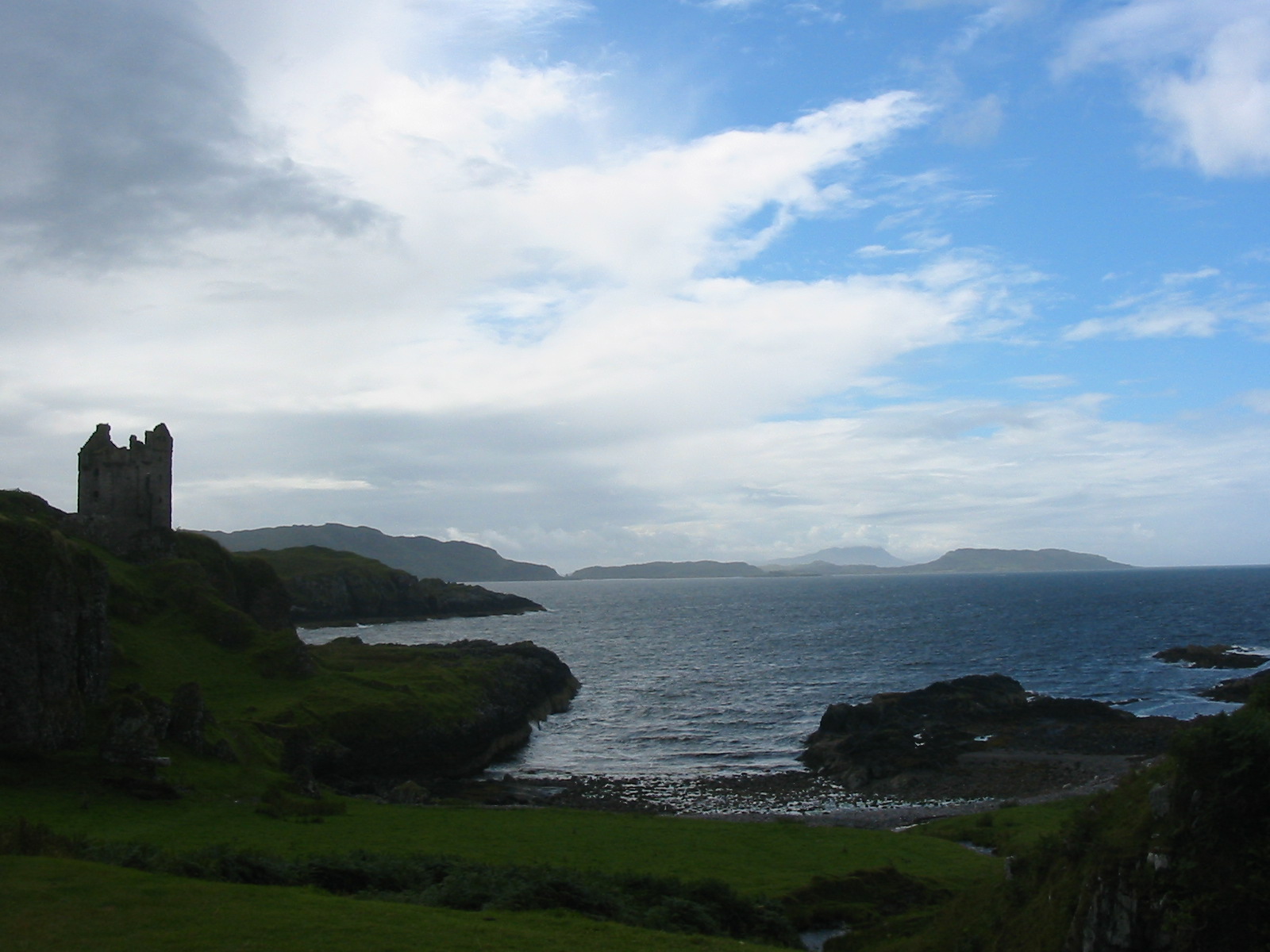
Gylen Castle
Argyll and Bute
A tower house burnt in a single 1647 siege and left roofless for nearly 360 years, until a worldwide clan fundraising effort helped bring the ruin…
- Rough ground
Fortified place · Medieval
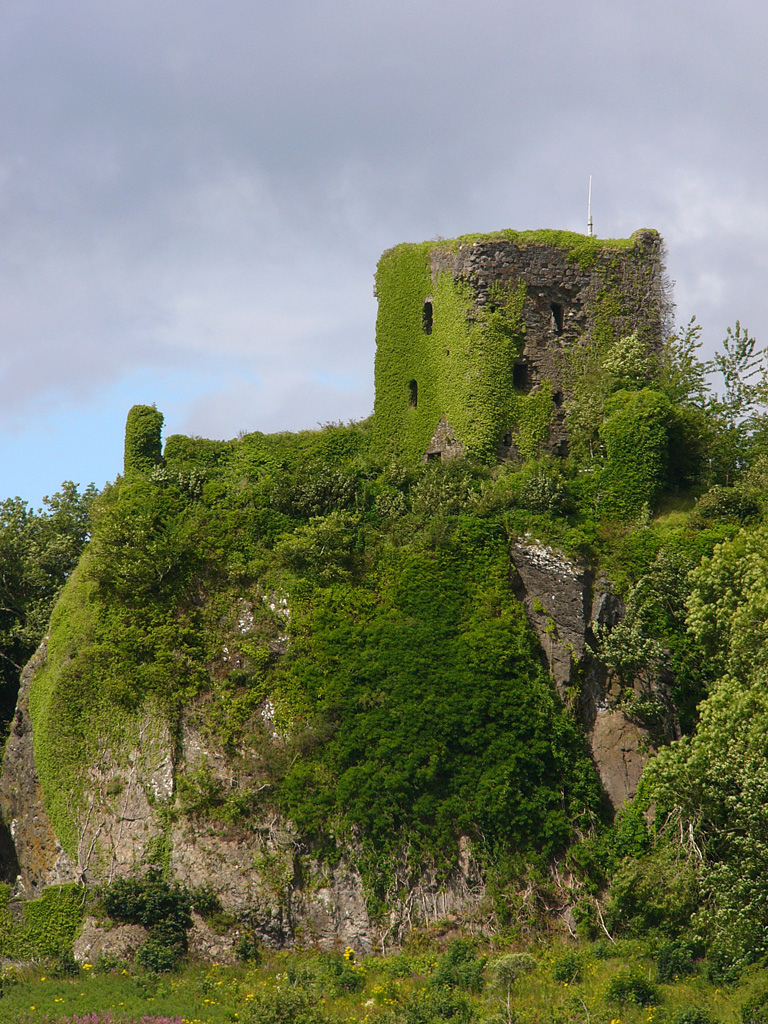
Dunollie Castle
Argyll and Bute
The Irish annals name Dun Ollaigh three times over: attacked or burned in 686, 698 and 701: and then record it rebuilt in 714 by Selbach mac Fercha…
Fortified place · Medieval
Dunstaffnage Castle
Argyll and Bute
One of the oldest stone castles in Scotland, Dunstaffnage was raised in the second quarter of the 13th century by the MacDougall lords of Lorn and…
- Easy path
The setting
Bernera Island viewed from Duart Castle; a related island landscape rather than the castle itself.
Photo: Chris Gorringe / Wikimedia Commons / CC BY-SA 2.0
Questions people ask
- Who built Duart Castle?
- It was probably built by Clan MacDougall in the 13th century, then passed to Clan MacLean within the following century.
- Why was Duart Castle abandoned?
- Sir John Maclean surrendered it in 1691 to the Earl of Argyll, whose Campbell forces partially demolished it; by 1751 it was abandoned.
- Who restored Duart Castle?
- Sir Fitzroy Donald Maclean, 26th Chief of Clan MacLean, bought the ruin in 1911 and restored it as the clan seat.
- Has Duart Castle appeared in films?
- Yes — including I Know Where I'm Going! (1945), When Eight Bells Toll (1971), and Entrapment (1999) with Sean Connery.
- What is kept in the Great Hall at Duart Castle?
- The regimental colours of the Canadian Expeditionary Force's 236th Battalion (New Brunswick Kilties) from the First World War.
Sources
- Wikipedia: Duart Castle
- Duart Castle official website
Explore more: Fortified places · Medieval · Argyll and Bute
The Ancient Codex, in your pocket
Get the Pocket Codex app
Carry the directory with you — Duart Castle and thousands of ancient places across Britain and Ireland, offline, wherever you roam.