One of nine strongholds historian W. Douglas Simpson grouped as the castles of the Knuckle, Aberdeenshire's rocky north-east headland, and still held today by the Fraser line that rebuilt it in 1380.
A square medieval tower and a round one stand shoulder to shoulder against the sky above the River Philorth, joined by a courtyard of later outbuildings — the visible result of a stronghold that was knocked down, rebuilt, sold off, stripped bare and restored again over six centuries. Locally the building carries two names: Cairnbulg, after the settlement that grew up around it, and Philorth, after the river it guards, a name it held for so long that the earlier records simply call it Philorth Castle or Philorth House.
The present arrangement of tower and tower is what specialists call a z-plan: two towers set at opposite corners of a central block so that defenders in one could cover the walls the other could not see. Cairnbulg’s square tower is the older of the pair, and the round one was added generations later, but together they give the castle its distinctive stepped silhouette. Ownership passed between some of north-east Scotland’s most prominent families — Comyns, Earls of Ross, several branches of the Fraser clan, an Aberdeen barrister, and eventually back to the Frasers by purchase.
That last return, in 1934, was not a coincidence: the buyer was a direct descendant of the man who had held the castle centuries before, and his descendants live there still. Between the medieval sieges and the modern private residence lies a stretch of use as a wartime officers’ mess, a Victorian restoration, and a long spell of abandonment — the ordinary, unglamorous rhythm by which old buildings survive or fail to.
What follows is drawn from published sources, with each claim labelled by how firmly it is established.
The name
The castle stands beside the River Philorth and was known for generations as Philorth Castle, or Philorth House, before the name Cairnbulg — taken from the nearby settlement — came into common use for the building itself.
History
Built in the early 14th century, the castle at the mouth of the River Philorth was among the strongholds caught up in the Wars of Independence, and in the winter of 1308 to 1309 it was destroyed rather than left standing to serve either side in the fighting that swept across north-east Scotland at the time. The ruined site remained with the Comyn family until 1375, when it passed to the Earls of Ross, and in 1380 it was rebuilt after the daughter of the 5th Earl married Sir Alexander Fraser of Cowie — the marriage that first brought the Fraser name to Philorth and set the family's long tenure of the castle in motion.
In 1545 the Frasers added a second, round tower, along with a courtyard and further outbuildings, to the original square tower, turning a single medieval keep into the z-plan arrangement of two diagonally opposed towers that still defines the castle's footprint today, more than four and a half centuries on. By 1613 the Frasers of Philorth had nearly bankrupted themselves and sold the castle. It passed through several other branches of the Fraser clan, including the Frasers of Durris, before reaching George Gordon, 3rd Earl of Aberdeen, in 1775, who stripped the building of anything of value; by 1799 it stood abandoned.
The two towers were restored and the central range rebuilt in 1896 by the Aberdeen architectural firm Jenkins & Marr, working for Sir John Duthie, a barrister whose family bought the near-ruinous property and returned it to a habitable state after decades of standing empty and open to the weather.
In 1934 the castle returned to Fraser hands when Lord Saltoun, a direct descendant of the 8th Laird, bought it; during the Second World War it served as the Officers' Mess for the nearby RAF Fraserburgh. Flora Fraser, 21st Lady Saltoun, later lived there with her husband Captain Alexander Ramsay of Mar, one of Queen Victoria's great-grandchildren, and their daughter Katharine Fraser took possession as Mistress of Saltoun in 1997.
People
-
W. Douglas Simpson
Historian who grouped the castle among the nine castles of the Knuckle, the rocky headland of north-east Aberdeenshire.
-
Sir Alexander Fraser of Cowie
Married the daughter of the 5th Earl of Ross in 1380, bringing the castle into Fraser hands.
-
George Gordon, 3rd Earl of Aberdeen
Acquired the castle in 1775 and removed anything of value from it before it was abandoned.
-
Sir John Duthie
Barrister for whom the towers and central range were restored in 1896.
-
Lord Saltoun
Descendant of the 8th Laird who bought the castle back into Fraser ownership in 1934.
-
Flora Fraser, 21st Lady Saltoun
Lived at the castle for a time with her husband, Captain Alexander Ramsay of Mar.
-
Captain Alexander Ramsay of Mar
Husband of Flora Fraser and one of Queen Victoria's great-grandchildren.
-
Katharine Fraser, Mistress of Saltoun
Took possession of the castle in 1997 and is now 22nd Lady Saltoun.
Connections
-
Frasers of Durris
One of the branches of the Fraser clan the castle passed through between its 1613 sale and its purchase by the Earl of Aberdeen in 1775.
-
The nine castles of the Knuckle
Historian W. Douglas Simpson grouped Cairnbulg with eight other fortified sites on Aberdeenshire's rocky north-east headland.
-
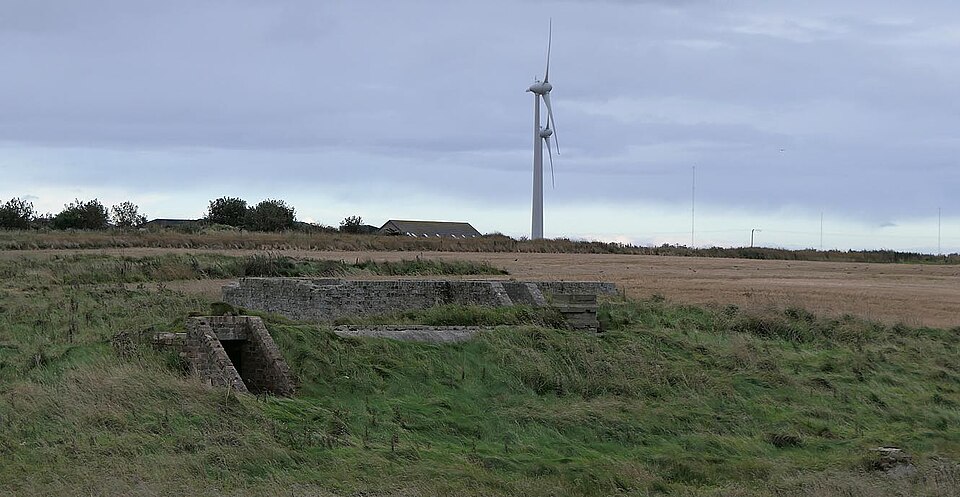
Photo: Claire Pegrum / Wikimedia Commons / CC BY-SA 2.0 RAF Fraserburgh
The castle served as this airbase's Officers' Mess during the Second World War.
-
Fraserburgh and St Combs Light Railway
Philorth Bridge Halt, a station on this line, once stood near the castle.
What to look for
-
The z-plan layout
A square tower and a round tower sit at opposite corners of the central block, the classic z-plan arrangement that let defenders cover walls the other tower could not see.
-
The original square tower
The older of the two towers, dating from the castle's 14th-century origins and rebuilding in 1380.
-
The round tower and courtyard
Added in 1545 along with outbuildings, this addition gave the castle its present two-tower silhouette.
Plan your visit
- Location
- 57.6656°N · 1.9734°W
- Access
- Permission required
- Time needed
- About 60 minutes
- Best time
- Visit only at a time agreed in advance with the owners; no general opening season is advertised.
- What survives
- The restored medieval and early modern castle remains a private family home.
- Facilities
- No visitor facilities are advertised for the privately owned castle; arrange access with the owners before travelling.
Opening & admission
Privately owned and only open to the public by prior appointment — check the official website before planning a visit.
- Access is by appointment only, not open on demand
Nearby places
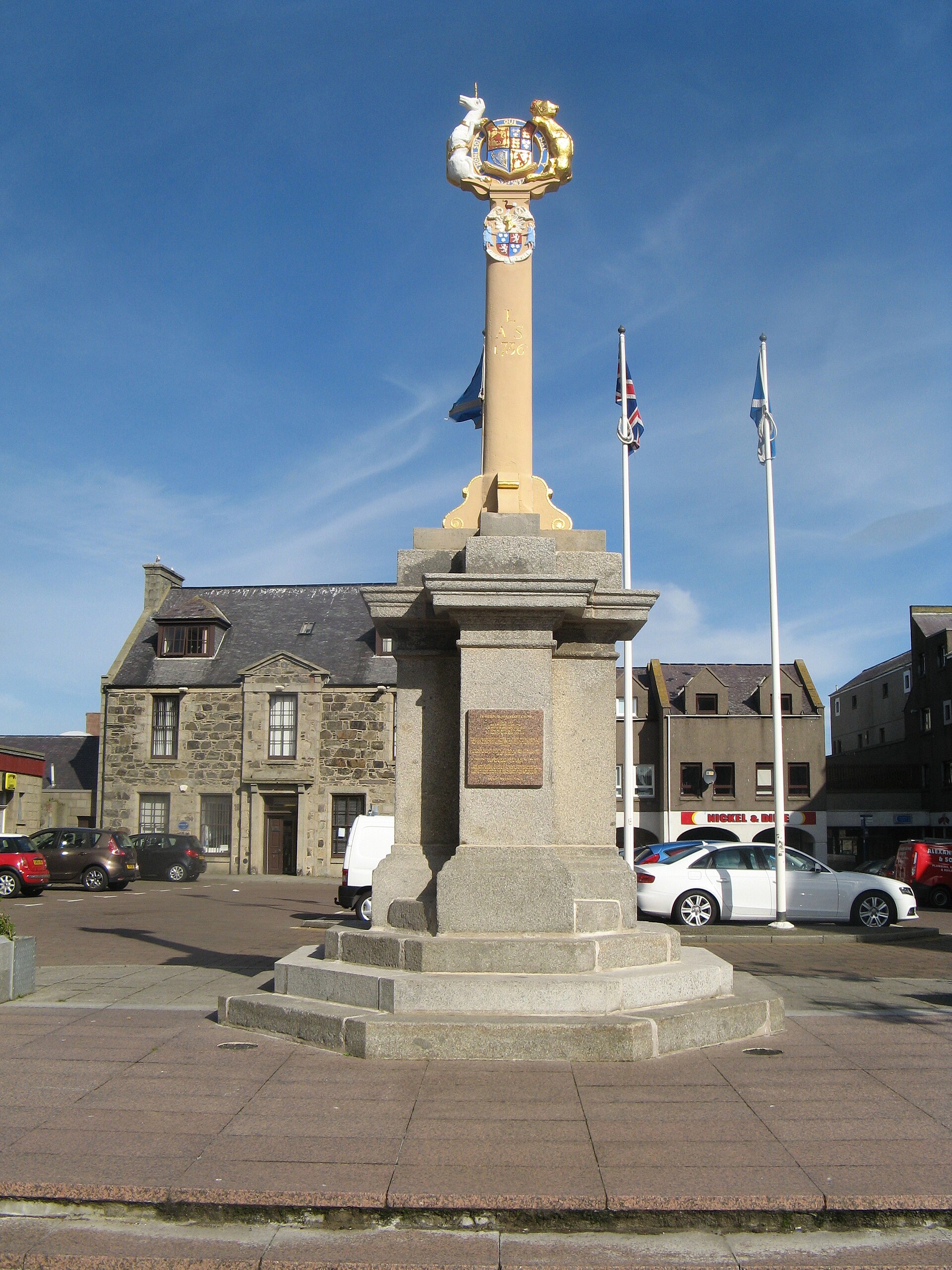
Minor monument · Medieval
Market Cross, Saltoun Square, Fraserburgh
Aberdeenshire
A 1736 granite market cross in Fraserburgh retains its date, oval shaft and coat of arms in the centre of Saltoun Square.
- Easy path
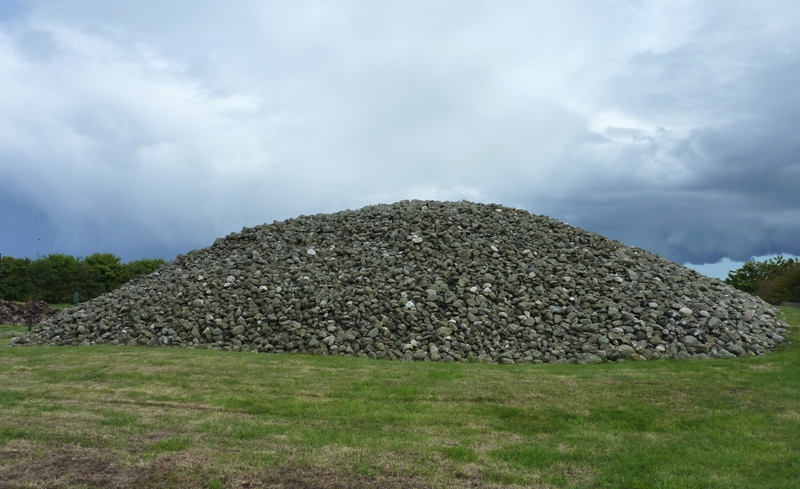
Tomb or burial place · Prehistoric
Memsie Cairn
Aberdeenshire
The sole survivor of a cemetery of three great Bronze Age (roughly 2500–800 BC, when metal tools first spread) cairns, its lost neighbours quarried…
- Easy path
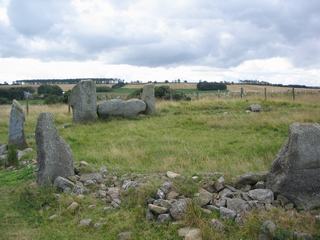
Sacred place · Prehistoric
Strichen stone circle
Aberdeenshire
Destroyed twice and rebuilt twice, Strichen is less a fixed ancient monument than a 250-year argument about where its stones truly belong.
- Some walking
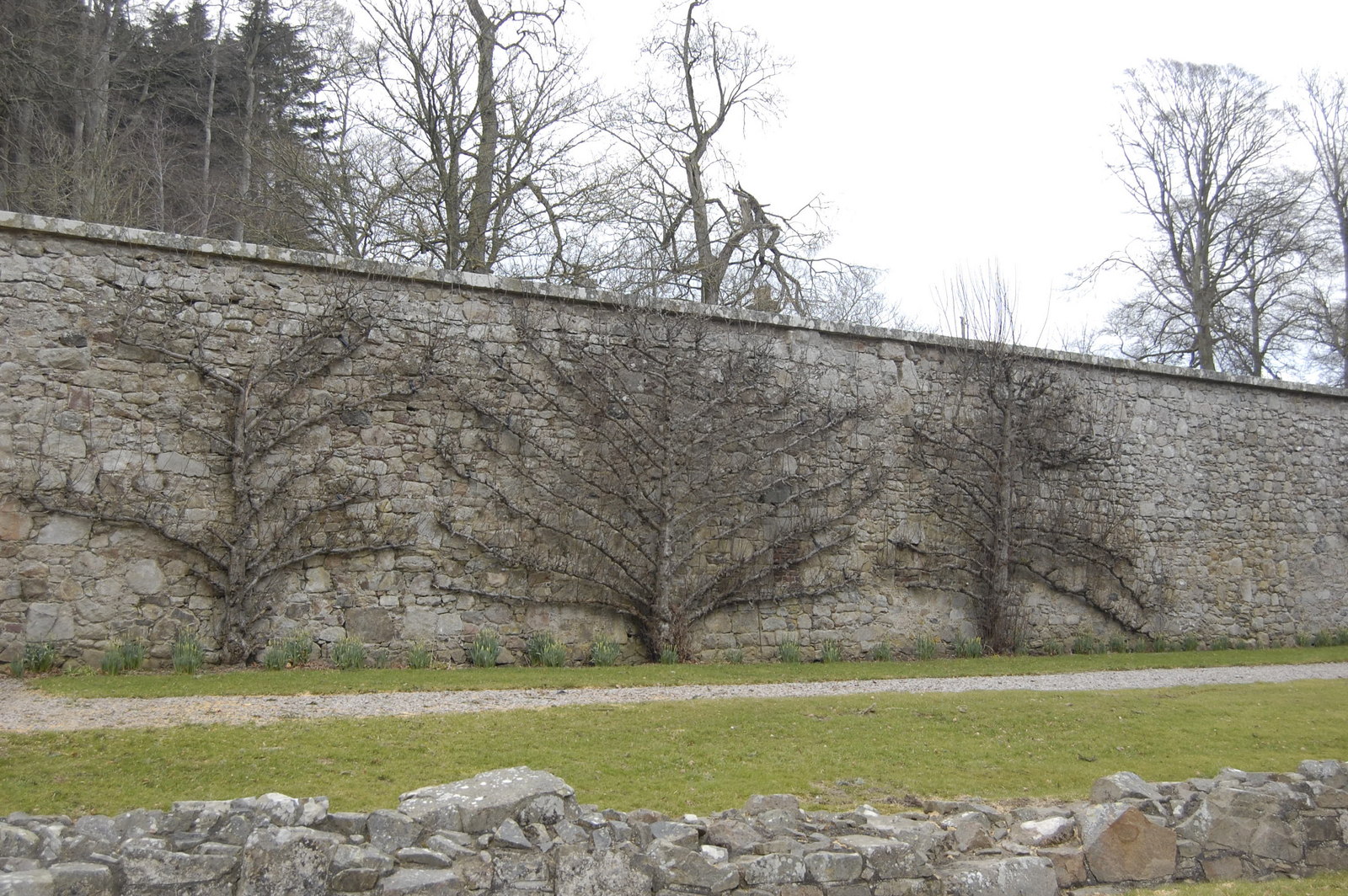
Building or ruin · Medieval
Deer Abbey
Aberdeenshire
Its earlier community is the one recorded in the margins of the Book of Deer, one of Scotland's oldest surviving manuscripts, making this ruin a ra…
- Easy path
The setting
B9033 towards Fraserburgh in the landscape around Cairnbulg Castle; the castle is not visible.
Photo: JThomas / Wikimedia Commons / CC BY-SA 2.0
Formartine and Buchan Way near Cairnbulg Castle; the castle is not visible.
Photo: Ralph Greig / Wikimedia Commons / CC BY-SA 2.0
Roadside rest area in the wider landscape around Cairnbulg Castle; the castle is not visible.
Photo: Anne Burgess / Wikimedia Commons / CC BY-SA 2.0
Questions people ask
- What does "z-plan" mean in Cairnbulg Castle's design?
- A z-plan castle has two towers at diagonally opposite corners of a main block so defenders in each can cover walls the other cannot see; Cairnbulg's square and round towers form this pattern.
- When was Cairnbulg Castle built?
- The core dates to the early 14th century, though it was destroyed in 1308-1309 during the Wars of Independence and rebuilt in 1380.
- Can visitors go inside Cairnbulg Castle?
- It remains a private residence of the Fraser family and is open to the public only by appointment.
- Why was Cairnbulg Castle also called Philorth Castle?
- It stands beside the River Philorth and carried that name, or Philorth House, before the modern name Cairnbulg became standard.
- What role did the castle play during the Second World War?
- It served as the Officers' Mess for the nearby RAF Fraserburgh airbase.
Sources
- Wikipedia: Cairnbulg Castle
- Official website of Lady Saltoun
Explore more: Fortified places · Medieval · Aberdeenshire
The Ancient Codex, in your pocket
Get the Pocket Codex app
Carry the directory with you — Cairnbulg Castle and thousands of ancient places across Britain and Ireland, offline, wherever you roam.