A 1736 granite market cross in Fraserburgh retains its date, oval shaft and coat of arms in the centre of Saltoun Square.
An oval granite shaft rises in Saltoun Square, carrying the date 1736 and a coat of arms above a cruciform base. The cross is a compact monument, but its position in the square gives it the public presence expected of a market marker.
The base dates from about 1845, creating a visible distinction between the older shaft and a later support. Together they preserve the changing form of a civic object whose purpose was tied to the town’s market and public life.
The inscription is the strongest surviving voice from the monument’s history: it fixes the cross in the early eighteenth century while the later base records continued care and adaptation.
What follows is drawn from published sources, with each claim labelled by how firmly it is established.
The name
Fraserburgh was originally Faithlie. Sir Alexander Fraser of Philorth secured the change of name in 1592, and the town name records the Fraser family’s role in founding and developing the burgh whose market cross stands in Saltoun Square.
History
Fraserburgh had been a burgh of barony of the Frasers of Philorth since 1546, so a market marker in the square belonged to a planned civic centre rather than an isolated roadside site. The cross therefore links a later object to the town’s original legal and economic framework.
The town developed from the place known as Faithlie. In 1592 a charter under James VI renamed it Fraserburgh and authorised Sir Alexander Fraser to improve and govern the town. The later market cross stands within that Fraser-era burgh, where a tolbooth, harbour and public market were part of the town’s intended civic life. The later cross gave a durable public marker to the authority the charter established for the square and town.
A 1613 charter authorised erection of Fraserburgh’s market cross. The surviving fabric is later, so the charter marks the legal creation of the civic monument rather than the date carved on its shaft. It demonstrates that authority for the market marker had been established before the dated granite now standing.
The oval granite shaft bears the initials ‘LAS’ and the date 1736. This is the firm date on the standing monument: it identifies the principal surviving element as eighteenth century even though the town’s chartered market-cross tradition was already older. The shaft is surmounted by a coat of arms, giving the marker a deliberately formal public character. The initials, date and arms are the surviving details through which the object still communicates its official purpose.
The cross once stood on the east side of the square on a hexagonal basement, as described in nineteenth-century accounts. The present cruciform granite base is therefore not a complete survival of that earlier arrangement. This evidence preserves a lost spatial relationship between the monument and the built edges of Saltoun Square.
By 1858 only the shaft remained and it had been moved to the square’s centre. Its former position was already unknown, helping explain why it now reads as a free-standing focal point rather than part of the east-side layout. The standing shaft consequently has a documented history of movement as well as of preservation in the civic centre.
The cruciform granite base beneath the older oval shaft dates from about 1845. The monument consequently preserves at least two visible phases: eighteenth-century inscribed shaft and nineteenth-century rebuilding or support. The contrast between shaft and base is part of the cross’s present historic form, rather than an accidental repair. The cross appears on the first-edition 25-inch Ordnance Survey map in 1869. A January 1969 field survey noted the shaft, upper part and modern base together. The survey sequence shows the monument remaining legible in the square across changing maps and streetscape.
Photographs including a 1939 aerial view show later changes in Saltoun Square and details of capital and cross head. In 1971 Category A listing recognised the dated shaft and its civic role. Those records preserve the surviving details for comparison with the significance recognised by the statutory listing.
Connections
-
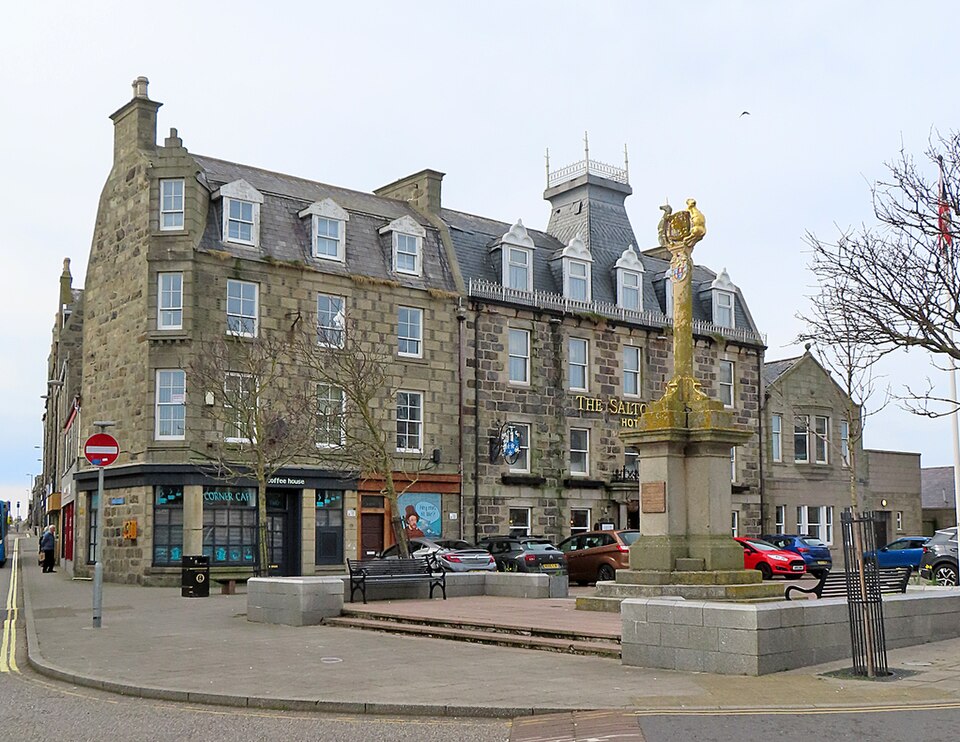
Photo: Anne Burgess / Wikimedia Commons / CC BY-SA 2.0 Saltoun Square
The cross stands at the centre of Saltoun Square, its civic setting in Fraserburgh.
-
Fraserburgh Tolbooth
The cross belongs to the planned burgh centre authorised for Sir Alexander Fraser in 1592, where the tolbooth, harbour and market were intended civic institutions. Its surviving shaft is the market marker within that same formal public setting.
What to look for
-
Dated shaft
The inscription L A S 1736 fixes the date of the surviving shaft and distinguishes it from the older burgh foundation.
Plan your visit
- Location
- 57.6937°N · 2.0052°W
- Access
- Visible from a public way
- Terrain
- Easy going
- Time needed
- About 20 minutes
- Best time
- Daylight is the most useful time to see the carved stonework from the public way.
- What survives
- The historic market cross survives as a visible civic monument in the settlement.
- Facilities
- No dedicated visitor facilities are identified in the cited listed-building source; use the settlement facilities nearby.
Opening & admission
Free to view from the public street or square; no admission arrangement is recorded.
- The cross is a civic street monument in the settlement centre and should be viewed from the public way.
Nearby places
Fortified place · Medieval
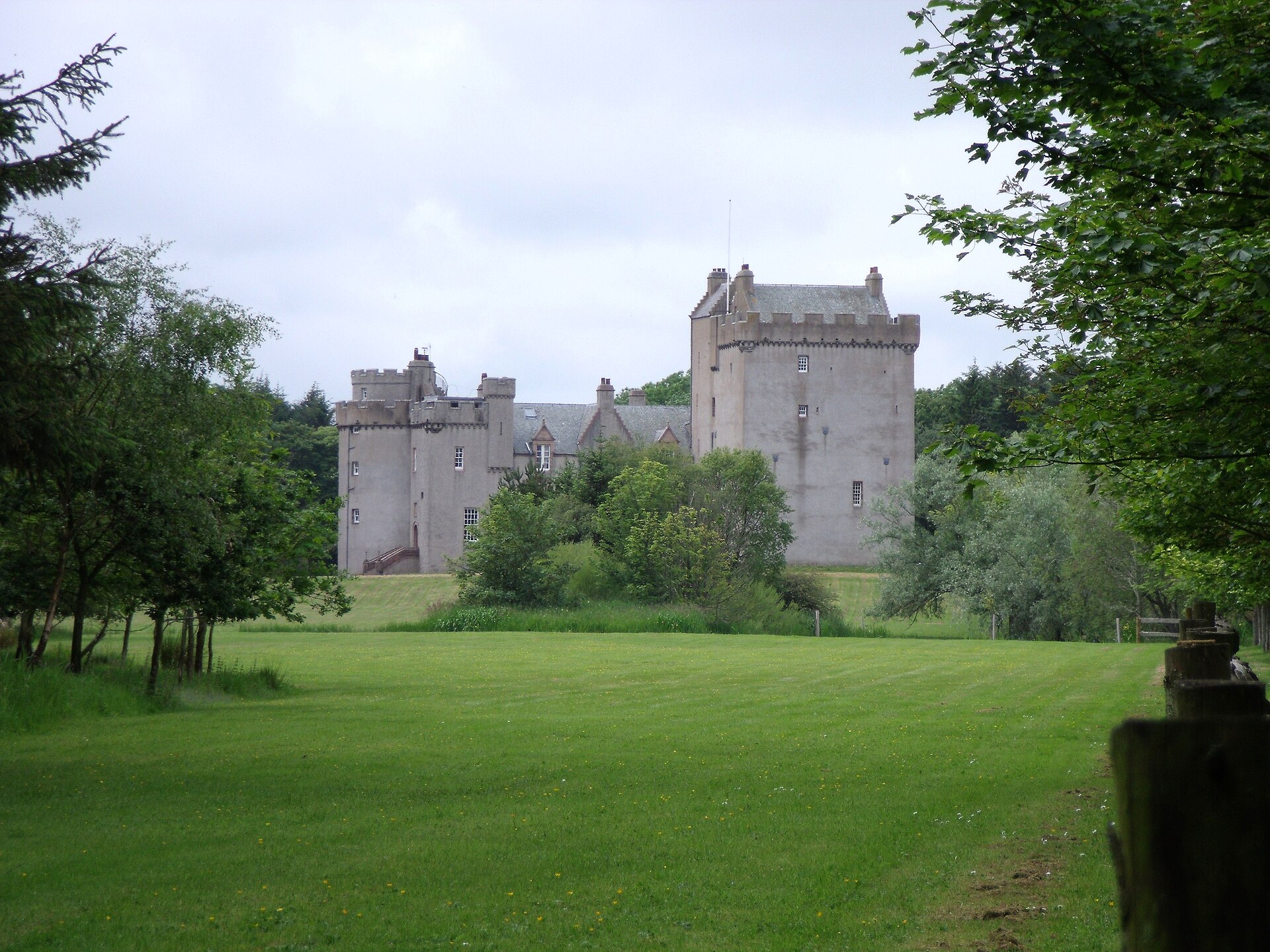
Cairnbulg Castle
Aberdeenshire
One of nine strongholds historian W. Douglas Simpson grouped as the castles of the Knuckle, Aberdeenshire's rocky north-east headland, and still he…
Tomb or burial place · Prehistoric
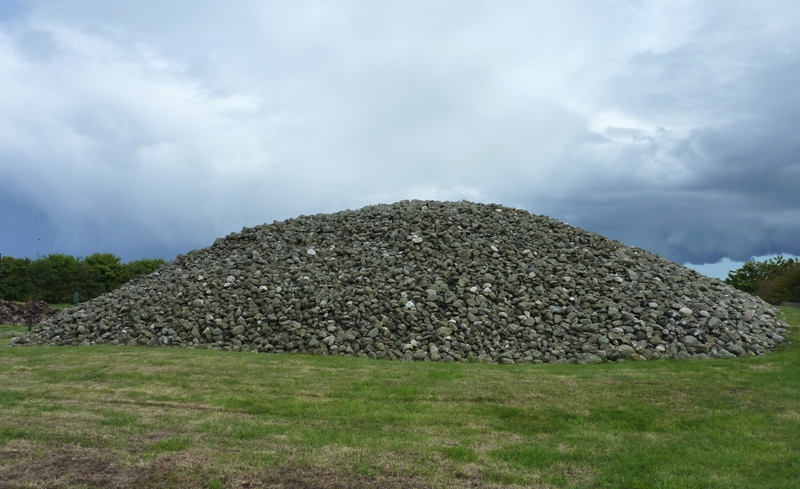
Memsie Cairn
Aberdeenshire
The sole survivor of a cemetery of three great Bronze Age (roughly 2500–800 BC, when metal tools first spread) cairns, its lost neighbours quarried…
- Easy path
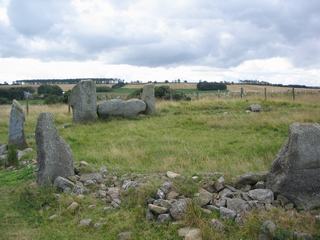
Sacred place · Prehistoric
Strichen stone circle
Aberdeenshire
Destroyed twice and rebuilt twice, Strichen is less a fixed ancient monument than a 250-year argument about where its stones truly belong.
- Some walking
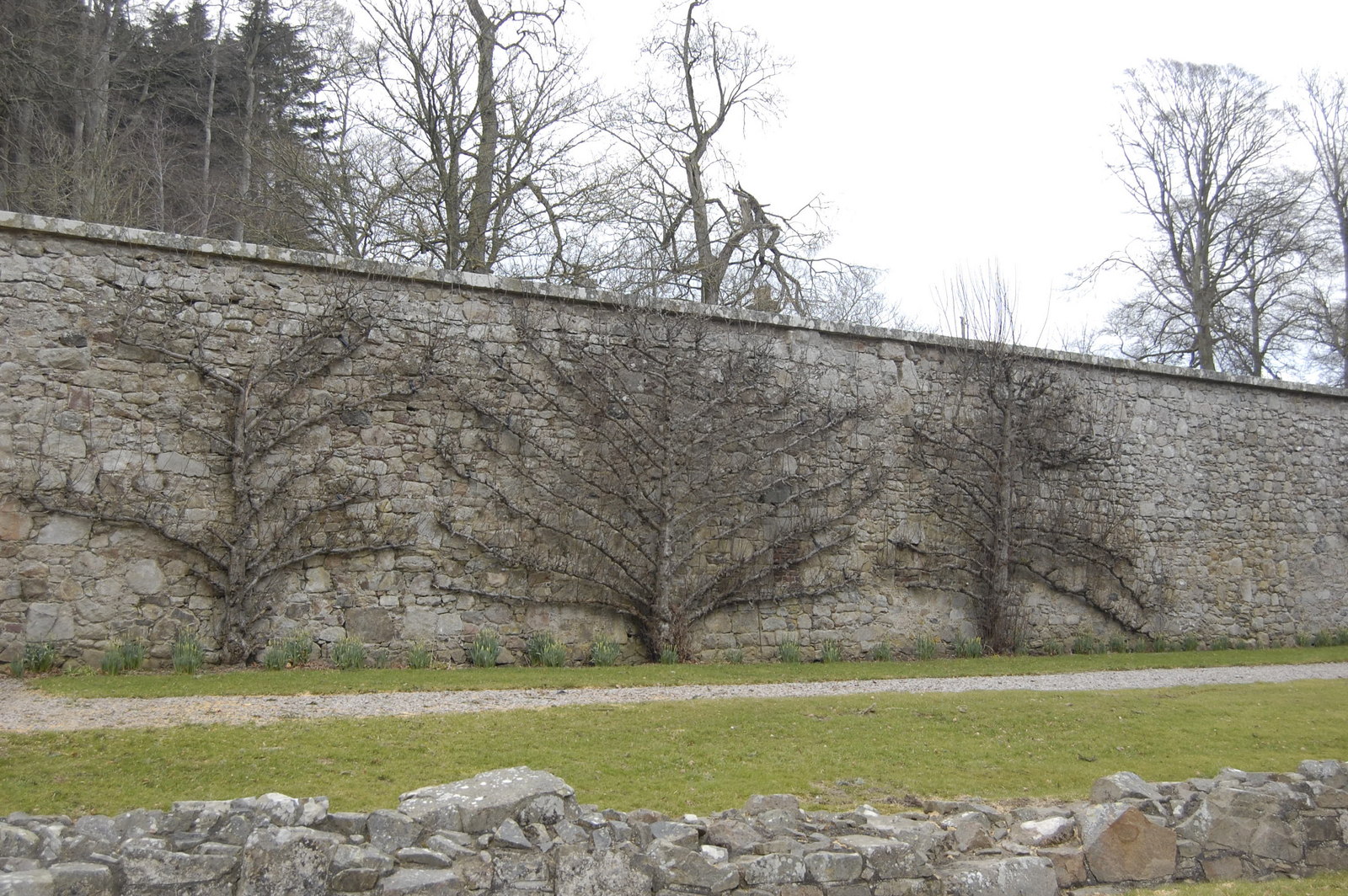
Building or ruin · Medieval
Deer Abbey
Aberdeenshire
Its earlier community is the one recorded in the margins of the Book of Deer, one of Scotland's oldest surviving manuscripts, making this ruin a ra…
- Easy path
Questions people ask
- When was the cross made?
- The shaft is dated 1736.
- What was added later?
- A cruciform granite base was added around 1845.
- What is on the shaft?
- It is oval in section and carries a coat of arms.
Sources
- Historic Environment Scotland — Market Cross, Saltoun Square
- New Statistical Account of Scotland, volume 5
- Trove — Fraserburgh, Saltoun Square, Market Cross
- Aberdeenshire Council Historic Environment Record — Fraserburgh
- Records of the Parliaments of Scotland — Act in favour of Alexander Fraser, laird of Philorth (1597)
Explore more: Minor monuments · Medieval · Aberdeenshire
The Ancient Codex, in your pocket
Get the Pocket Codex app
Carry the directory with you — Market Cross, Saltoun Square, Fraserburgh and thousands of ancient places across Britain and Ireland, offline, wherever you roam.