The ruined church, cloister and domestic ranges of the Iona Nunnery stand in a walled precinct beside Baile Mor, the only village on the island of Iona in the Inner Hebrides. They form the most complete remains of a medieval nunnery surviving in Scotland.
The ruined church, cloister and domestic ranges of the Iona Nunnery stand in a walled precinct beside Baile Mor, the only village on the island of Iona in the Inner Hebrides. They form the most complete remains of a medieval nunnery surviving in Scotland.
The house was an Augustinian convent, established after the founding of the nearby Benedictine monastery in 1203 by Ranald, son of Somerled. Ranald’s sister Bethoc became its first prioress. After the Reformation the priory was dissolved and the buildings fell into ruin.
What follows is drawn from published sources, with each claim labelled by how firmly it is established.
History
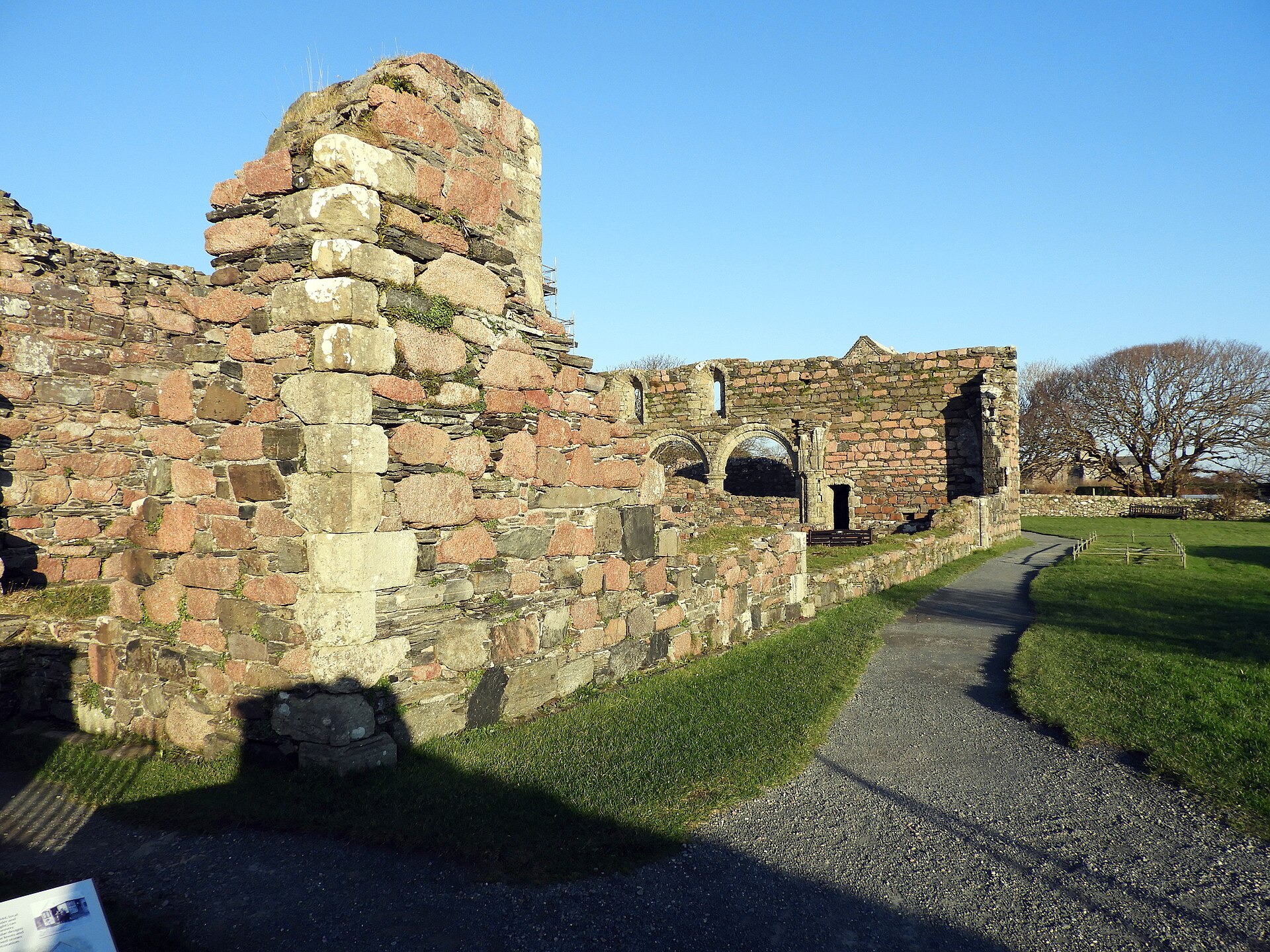
The ground around St Ronan’s Chapel beside the nunnery has a longer sacred history than the convent itself. Historic Environment Scotland records a burial ground that may belong to Iona’s first Christian occupation between the sixth and eighth centuries; a small stone church was built there by about the eighth century, and the present medieval chapel was later raised over its footprint. The evidence is incomplete, so this is a setting history rather than proof that the nunnery itself existed that early.
In 1203, Ranald (Raghnall), son of Somerled and Lord of the Isles, established a house of Augustinian canonesses at Cladh Ronain and appointed his sister Beathag—also called Bethoc or Beatrice—as its first prioress. The new convent was contemporary with the adjacent Benedictine abbey. Dedicated to St Mary the Virgin, it used the usual quadrangular arrangement: church north of the cloister, with domestic ranges enclosing the central garth.
The surviving fabric records continued investment in the fifteenth century. The cloister garth and east range were enlarged, a timber gallery was inserted at the west end of the church nave, and six sculptured corbels were set into its west wall. Their carvings include an Annunciation, an angel and a human face. The same century produced MacLean’s Cross beside the road, a decorated chlorite-schist monument attributed to the Iona school of carvers.
The convent’s final documented transfer came after the Reformation. In 1569 Mary, Queen of Scots granted the title of prioress and the nunnery to Marion MacLean; in 1574 Marion passed the nunnery and its lands to Hector MacLean of Duart. The church eventually became roofless when the chancel vaulting collapsed around 1830, leaving the convent as the ruin now seen within the village precinct.
Nineteenth- and twentieth-century repair work both stabilised the ruins and exposed evidence of their earlier use. Robert Rowand Anderson directed repairs in 1874–75; more work followed in 1917 and 1922–23. Beneath the church floor, the 1922–23 works found four silver spoons and a gold fillet, apparently buried wrapped in linen. In 1993 excavation at St Ronan’s Chapel identified an earlier structure and an early Christian burial, while a 1995 geophysical survey traced a possible road surface north-east of the nunnery.
Iona’s convent was one of only three Augustinian houses for women recorded in medieval Scotland, alongside St Leonard’s at Perth and Teampull na Trionaid at Carinish in North Uist. That small number matters when reading the surviving precinct: its church, cloister and domestic ranges are not simply an adjunct to the abbey but rare physical evidence for women’s religious life in medieval Scotland. Historic Environment Scotland now manages the nunnery as a scheduled monument, preserving the ruins while the adjacent village has continued to occupy the same part of Iona.
People
-
Ranald, son of Somerled (Raghnall mac Somhairle)
Founder of the nearby Benedictine monastery in 1203, after which the nunnery was established
-
Bethoc
Daughter of Somerled and sister of Ranald; first prioress of the nunnery
-
Anna MacLean
Prioress of the nunnery who died in 1543; the upper part of her headstone is preserved in the Iona Abbey museum
Cultural influences
-
Irish architectural style
The construction follows the typical Irish style, with a church of three bays, a passage on the north side and a small chapel to the east of that passage.
Connections
-
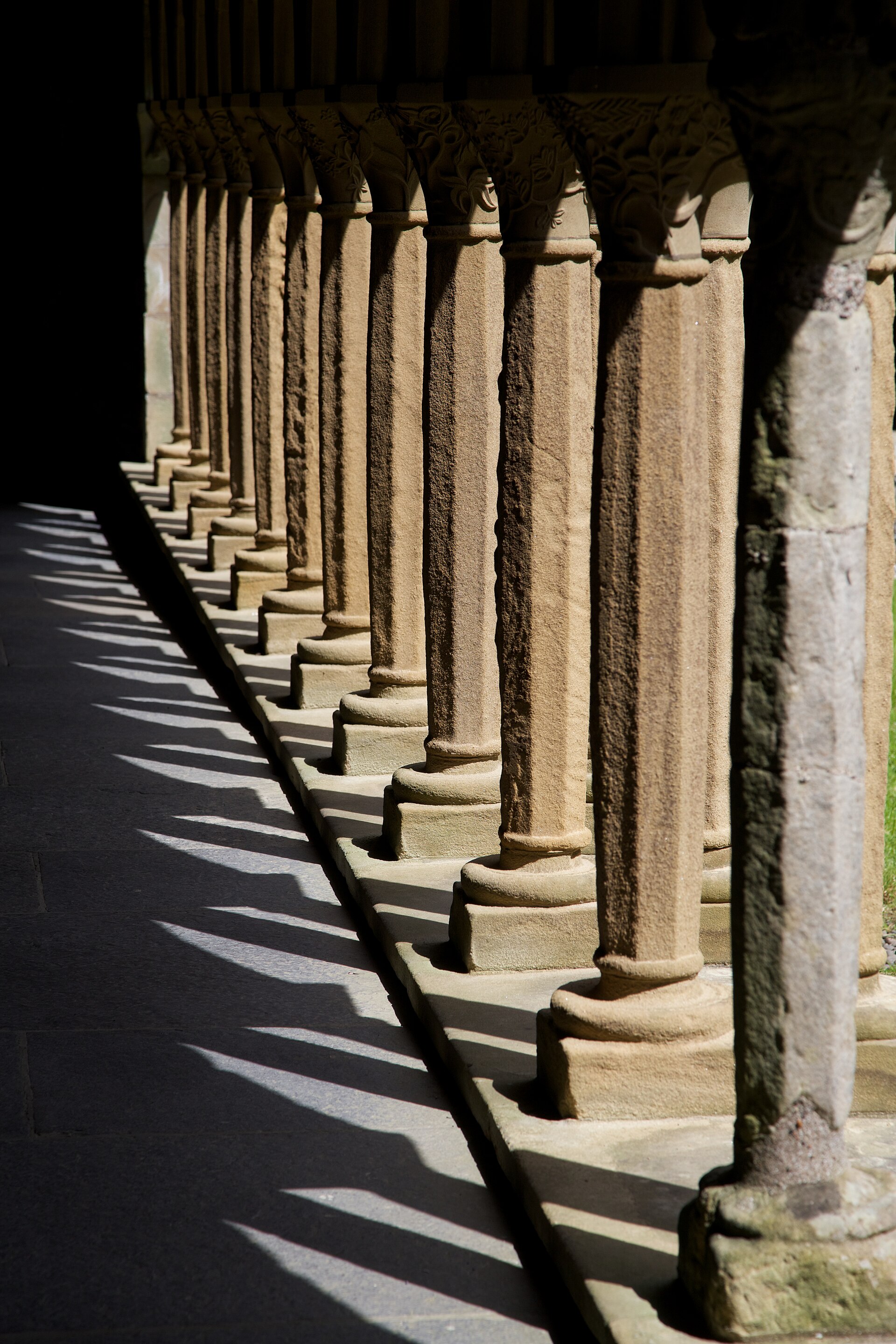
Photo: Tom Parnell / Wikimedia Commons / CC BY-SA 4.0 The Benedictine monastery, founded 1203, whose establishment preceded and prompted the nunnery; its museum holds Anna MacLean's headstone
-
St Leonard's Nunnery, Perth
One of the other two Augustinian houses of women in Scotland
-
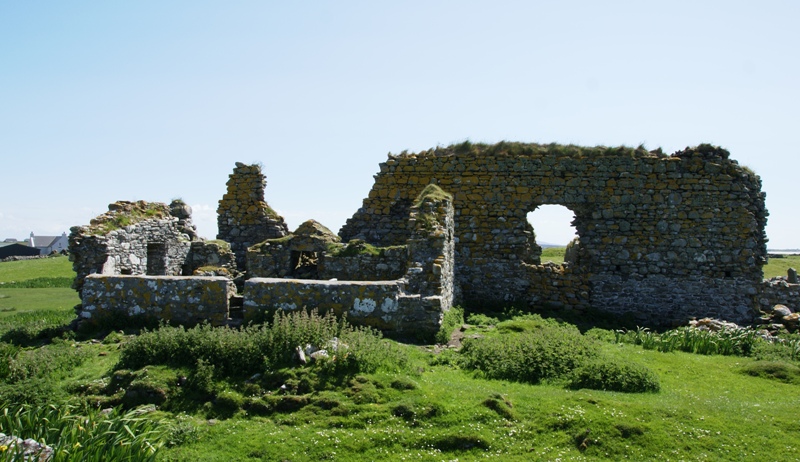
Photo: Otter / Wikimedia Commons / CC BY-SA 3.0 Teampull na Trionaid, Carinish, North Uist
The third of Scotland's three Augustinian houses of women
What to look for
-
The cloister
The monastic cloister measures 14 metres square, though it was originally smaller.
-
The three-bay church
The church is a building of three bays with a passage to the north side and a small chapel on the east side of the passage.
-
East and south ranges
The east wing had three rooms at ground level with the dormitory above, while the south wing held the refectory; a floor was inserted in the sixteenth century.
-
Anna MacLean's headstone
The top half of the headstone of prioress Anna MacLean, who died in 1543, is displayed in the Abbey museum at the nearby Iona Abbey.
Plan your visit
- Location
- 56.3313°N · 6.3940°W
- Nearest settlement
- Baile Mor
- Access
- Open access
- Terrain
- Easy going
- What survives
- The nunnery survives as restored medieval ruins beside Iona village.
Opening & admission
Free to visit at any reasonable time; check Historic Environment Scotland's site for any current details before travelling.
- Ruins stand in a peaceful precinct next to Iona's village of Baile Mor, on level ground.
- Access to Iona itself requires a ferry crossing from Mull.
Nearby places
Building or ruin · Pictish & early medieval
Iona Abbey
Argyll and Bute
Saint Columba came to Iona from Ireland with twelve companions in 563, founding a monastery when Iona was part of the Kingdom of Dál Riata. It beca…
- Near Baile Mor, Iona
- 1.8 km from car park
Building or ruin · Medieval
Shiaba
Argyll and Bute
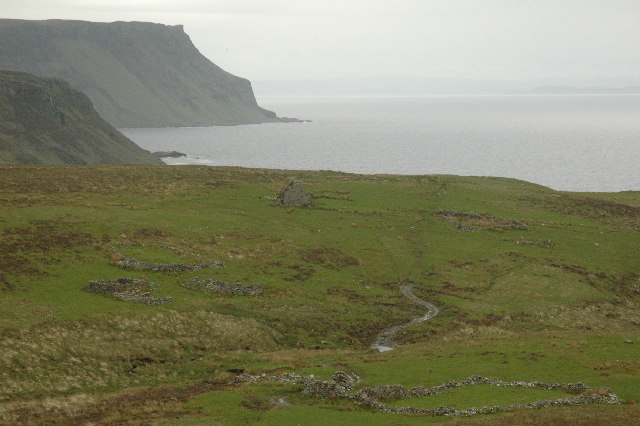
A cleared crofting township on the Ross of Mull whose stone walls, kilns and mill remains survive well enough to trace the whole shift from run rig…
- Near Bunessan
- Rough ground
Sacred place · Medieval
St Kenneth's Chapel
Argyll and Bute
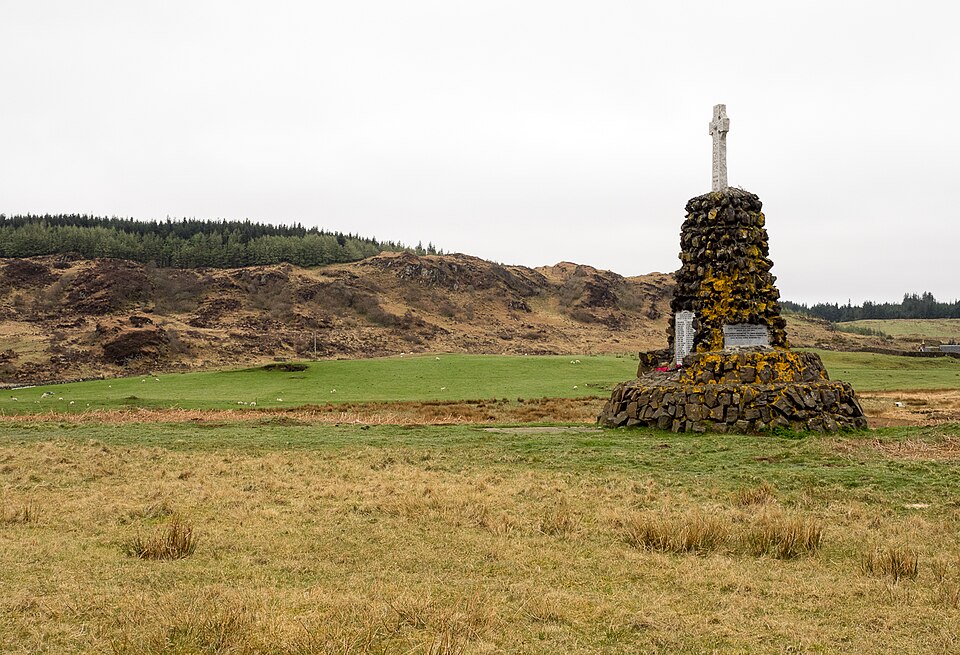
Eight medieval cross slabs and a sixteenth-century high cross survive inside its walls, set within an island cemetery still used for burials today.
- Rough ground
Fortified place · Medieval
Cairnburgh Castle
Argyll and Bute
A single fortress split across two separate islets in the Treshnish Isles, held in turn by the heirs of Somerled and the Macleans of Duart for over…
- Near Tobermory
- Rough ground
Questions people ask
- What kind of religious house was Iona Nunnery?
- It was an Augustinian convent of nuns, one of only three Augustinian houses of women in medieval Scotland, alongside St Leonard's Nunnery at Perth and Teampull na Trionaid at Carinish in North Uist.
- Who founded the nunnery and who was its first prioress?
- It was established after 1203, following the founding of the nearby Benedictine monastery by Ranald, son of Somerled. Ranald's sister Bethoc became the first prioress.
- Why are the ruins significant?
- They form the most complete remains of a medieval nunnery surviving in Scotland.
- Who manages the site today?
- The Iona Nunnery is managed by Historic Environment Scotland and is a scheduled monument.
Sources
- Wikipedia: Iona Nunnery (accessed 2026-07-18)
- Wikidata: Iona Nunnery (Q82249) (accessed 2026-07-18)
- Historic Environment Scotland: Iona Nunnery and MacLean’s Cross Statement of Significance (accessed 2026-08-15)
Explore more: Sacred places · Medieval · Argyll and Bute
The Ancient Codex, in your pocket
Get the Pocket Codex app
Carry the directory with you — Iona Nunnery and thousands of ancient places across Britain and Ireland, offline, wherever you roam.