A 13th-century hall-castle on a Lismore promontory, raised on the site of an earlier Viking stronghold and named for a Danish prince said to haunt it still.
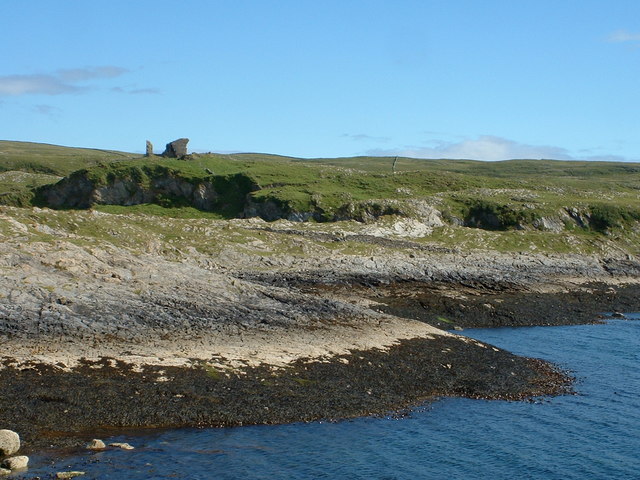
On a low promontory jutting into Loch Linnhe, on the west side of the island of Lismore, a roofless stone hall and its ruined bailey (an outer defended enclosure) face out across the water towards Glensanda on the mainland shore. Wind and ivy have taken most of what once stood here, but the shape of a substantial medieval residence is still legible in the walls: a long rectangular hall over twenty metres in length, its walls more than two metres thick, joined to an irregular walled enclosure that was added around it later.
The castle takes its name, tradition says, from Caifen, a Danish prince who is supposed to have held this headland long before the Gaelic lords of Lorn ever built in stone here. Local lore even gives him a sister whose spirit was said to linger about the ruin until her remains were finally carried home to Norway to lie beside her lover. Whatever the truth behind that story, it points to something the place-name and the archaeology both suggest: this was a Norse-period stronghold before it was a MacDougall one, its site reused across several centuries of lordship over the same stretch of water.
What survives now is largely the work of the MacDougalls of Lorn, who built the hall-house here in the 13th century as part of their control of Lismore — an island that mattered to them well beyond its size, since it held St Moluag’s Cathedral, seat of the Bishop of Argyll.
What follows is drawn from published sources, with each claim labelled by how firmly it is established.
The name
The name Coeffin is thought to derive from Caifen, said in local tradition to have been a Danish prince associated with an earlier fortress on this headland.
History
The ruin standing on this promontory succeeded an earlier Viking-period fortress on the same ground, and even its name is bound up with that older layer: tradition holds that Coeffin derives from Caifen, said to have been a Danish prince whose presence here predates the stone hall later raised by the Gaelic lords of Lorn.
In the 13th century the MacDougalls of Lorn built the hall-house and bailey that survive today, choosing a site that let them watch the width of Loch Linnhe from a low promontory on Lismore's north-west coast. Lismore was no minor holding for the family: the island already carried St Moluag's Cathedral, seat of the Bishop of Argyll, so a stronghold here sat close to the spiritual centre of their lordship as well as its shipping lanes.
The castle passes into the written record only in 1469 to 1470, when Colin Campbell, 1st Earl of Argyll, granted it to Sir Colin Campbell of Glenorchy. By then the MacDougall power that had built the hall had long since given way to Campbell lordship over Argyll, and the grant marks Coeffin's absorption into that wider Campbell network of castles and estates rather than any new building work on the site.
No evidence points to Coeffin being lived in after the medieval period, and the castle appears to have slipped quietly out of use rather than falling in any recorded siege or fire. Later visitors found only a shell: an irregular hall measuring some 20.3 by 10.4 metres, its walls between 2.1 and 2.4 metres thick, standing within a bailey that had itself been added onto the hall at a later date.
When the Ordnance Gazetteer of Scotland was compiled in 1892, it recorded the same ruin under a different name, Castle Rachal, describing "a very ancient Scandinavian fortalice" on the north-west side of Lismore, some 4 kilometres from the island's north-eastern tip, already reduced by then to "a dilapidated ivy-clad ruin" — a description that still holds true today.
People
-
Sir Colin Campbell of Glenorchy
Received the grant of Coeffin Castle in 1469–70 from Colin Campbell, 1st Earl of Argyll.
-
Colin Campbell, 1st Earl of Argyll
Granted Coeffin Castle to Sir Colin Campbell of Glenorchy, the first written record of the castle.
Cultural influences
-
Norse-period stronghold
The thirteenth-century hall-house was built on the site of an earlier Viking fortress. The tradition connecting the name Coeffin with Caifen, a Danish prince, preserves that Norse cultural layer at the headland before the MacDougalls of Lorn built their castle.
Connections
-
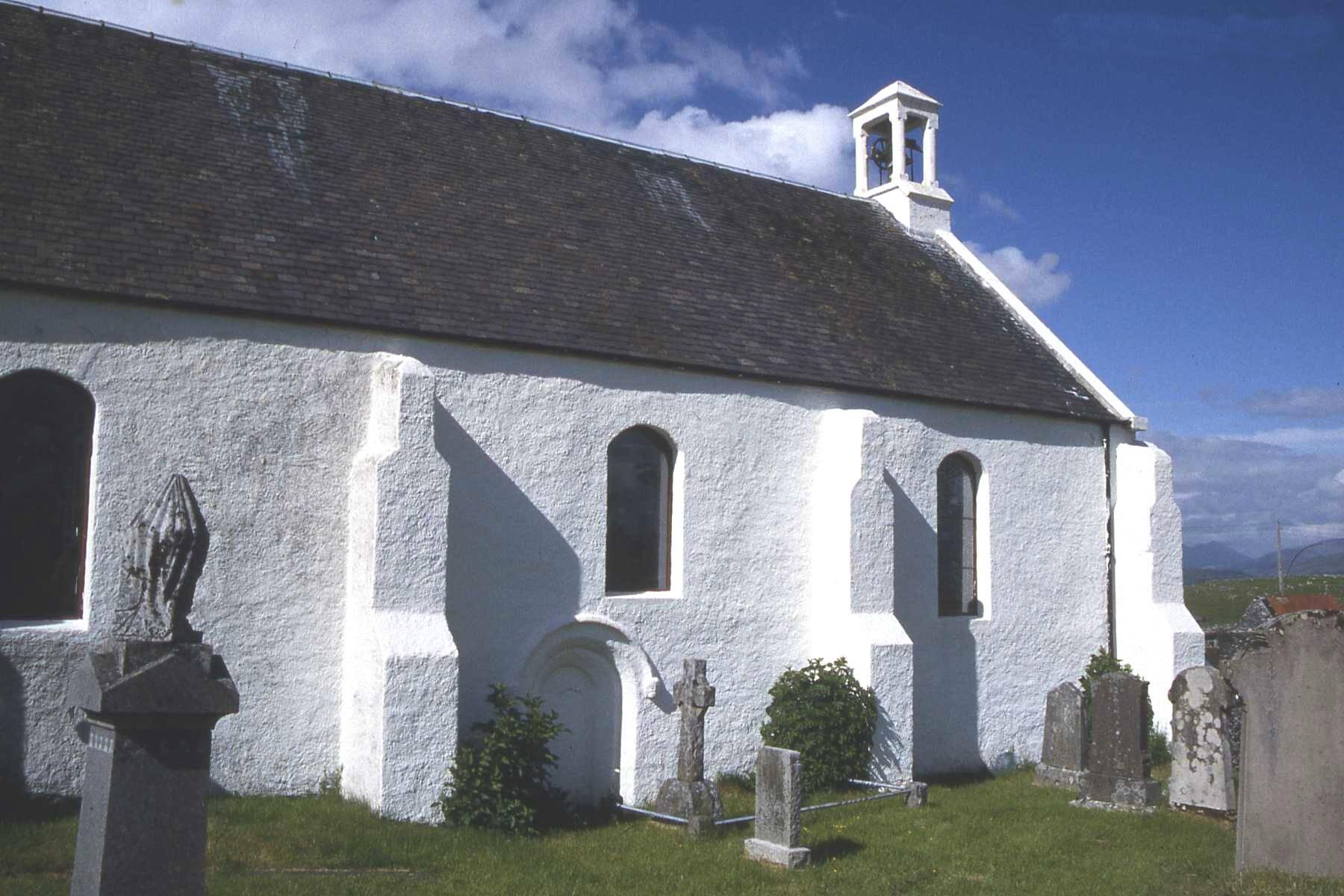
Photo: Richard Park / Wikimedia Commons / CC BY-SA 2.0 St Moluag's Cathedral, Lismore
Stood on the same island as the seat of the Bishop of Argyll, giving Lismore added importance within the MacDougall lordship that built Coeffin Castle.
-
Glenorchy (Clan Campbell of Glenorchy)
Sir Colin Campbell of Glenorchy received the 1469–70 grant of Coeffin Castle from the Earl of Argyll.
-
Glensanda
Lies directly across Loch Linnhe from Coeffin, on the sightline the castle's promontory position commands.
-
Castle Rachal (Ordnance Gazetteer of Scotland, 1892)
Named in the 1892 Gazetteer as an ancient Scandinavian fortalice at the same general location as Coeffin, likely describing the same ruin under an alternative name.
-
Loch Linnhe
Castle Coeffin stands on Lismore’s north-west coast, on a promontory overlooking Loch Linnhe towards Glensanda.
Discovery & excavation
The 1892 Ordnance Gazetteer of Scotland recorded the ruin under the alternative name Castle Rachal, describing it as an ancient Scandinavian fortalice already reduced to a dilapidated, ivy-clad state.
What to look for
-
The great hall
An irregular rectangular hall roughly 20.3 by 10.4 metres, with walls between 2.1 and 2.4 metres thick, forming the core of the castle.
-
The bailey
An irregularly shaped walled enclosure built onto the hall at a later date, reached by an external stair from the entrance in the north-east wall.
-
The sea door
A second doorway in the south-west gave direct access down to the water, likely used for supply or escape by boat.
-
The tidal fish trap
A stone tidal fish trap of unknown age lies in the small bay south-east of the castle, showing how the shoreline was worked alongside the stronghold.
-
The stone-walled fort
The remains of an earlier stone-walled fort lie to the north-east of the castle, part of the wider defensive use of this stretch of coastline.
What is said
Folklore and tradition, recorded as what is said — not as established fact.
-
The sister who would not rest
Local tradition holds that the sister of Caifen, the Danish prince said to give the castle its name, haunted the ruin until her remains were eventually taken back to Norway to be buried beside her lover.
Plan your visit
- Location
- 56.5368°N · 5.4924°W
- Terrain
- Rough ground — reasonable boots advised
- Time needed
- About 90 minutes
- What survives
- A roofless ruin survives on a coastal promontory; no public access route or path is documented.
Opening & admission
No current admission or access details are recorded — check with local sources or Historic Environment Scotland before visiting.
- Ruin on a coastal promontory on the island of Lismore, reachable only by boat to the island and then on foot
- No public access route or path is documented
Nearby places
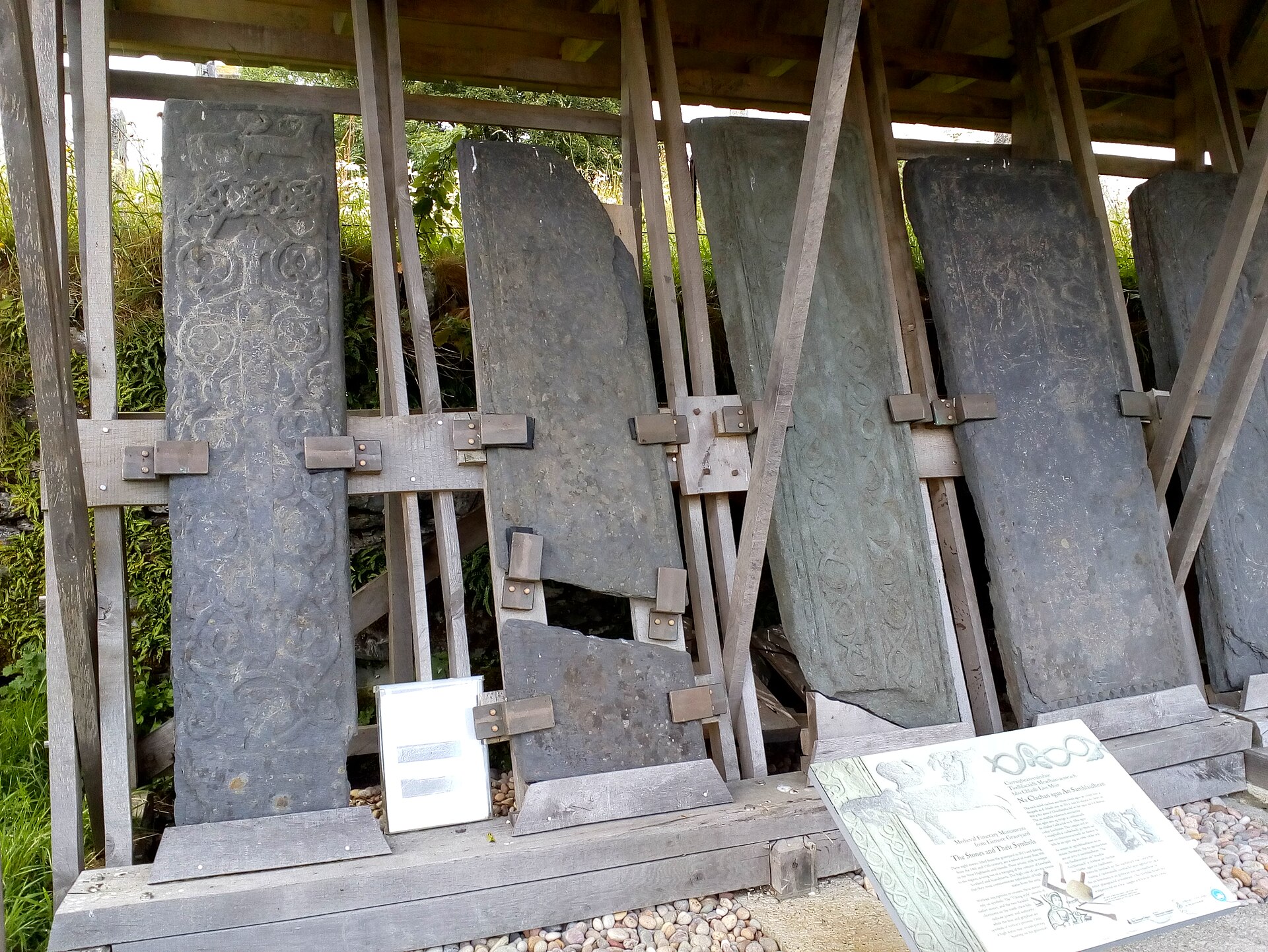
Building or ruin · Medieval
St Moluag's Cathedral, Lismore
Argyll and Bute
The parish church swallowed a medieval cathedral whole in 1749, still wearing its doorways, piscina: the basin near an altar for rinsing communion…
- Easy path
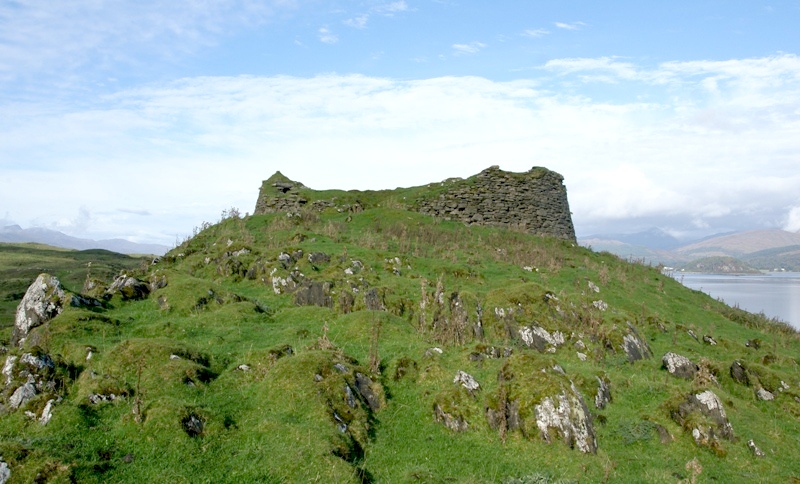
Fortified place · Iron Age
Tirefour Castle
Argyll and Bute
A drystone broch: a round, hollow-walled tower distinctive to Scotland's Iron Age, the centuries before Rome arrived: survives to a maximum height…
- Rough ground

Fortified place · Medieval
Lochnell Castle
Argyll and Bute
A staircase inside is said to be carved from a sacred yew felled on nearby Bernera Island: timber that reportedly survived at least two fires which…
- Easy path
Building or ruin · Medieval
Achanduin Castle
Argyll and Bute
A single 1304 land grant is the earliest written trace of a stronghold long credited to the Bishop of Argyll, though excavation has since pointed t…
- Near Lismore
- Rough ground
Questions people ask
- What is Castle Coeffin?
- A ruined medieval hall-castle on a promontory on the north-west coast of Lismore, in Loch Linnhe, Argyll, built in the 13th century on the site of an earlier Viking fortress.
- Who built Castle Coeffin?
- It was probably built by the MacDougalls of Lorn in the 13th century, on ground already occupied by an earlier Viking-period stronghold.
- Where does the name Coeffin come from?
- Tradition holds the name derives from Caifen, said to have been a Danish prince linked to an earlier fortress on the same site.
- When was Castle Coeffin first recorded in writing?
- In 1469–70, when Colin Campbell, 1st Earl of Argyll, granted it to Sir Colin Campbell of Glenorchy.
- Was Castle Coeffin used after the Middle Ages?
- It is unlikely to have been occupied in post-medieval times, and by 1892 it was already described as a dilapidated, ivy-clad ruin.
Sources
- Wikipedia: Castle Coeffin
- The Ordnance Gazetteer of Scotland, 1892
- Wikidata: Castle Coeffin
Explore more: Fortified places · Medieval · Argyll and Bute
The Ancient Codex, in your pocket
Get the Pocket Codex app
Carry the directory with you — Castle Coeffin and thousands of ancient places across Britain and Ireland, offline, wherever you roam.