The parish church swallowed a medieval cathedral whole in 1749, still wearing its doorways, piscina — the basin near an altar for rinsing communion vessels — and sedilia, the stone seats for clergy in the eastern end of the church, inside a Georgian shell.
A visitor stepping into the parish church on Lismore is really standing in the choir of a vanished cathedral. Three medieval doorways survive in its walls, one of them bricked up; another once carried the priest through a pulpitum, the stone screen dividing clergy from congregation. They are fragments of a much larger building that the 18th century quietly demolished around them.
The island itself explains why a cathedral stood here at all. In an age when boats moved people and goods faster than any road, Lismore’s position in the sea lochs off Oban made it a natural hub rather than a backwater, and Saint Moluag chose it in the 6th century as the base for a monastery that grew into the seat of the medieval bishopric of Argyll.
What remains today is a patchwork of eras: late medieval grave slabs resting in the church and its graveyard, a triple-arched sedilia (stone seating for clergy during Mass) surviving from the cathedral’s working life, all wrapped inside a lowered, re-windowed 1749 rebuild that reduced the once-larger nave and tower to mere foundations in the grass.
What follows is drawn from published sources, with each claim labelled by how firmly it is established.
The name
The dedication preserves the name of Saint Moluag, rendered in Old Irish as Mo-Luóc, the 6th-century monastic founder credited with establishing Christianity on the island.
History
Saint Moluag, known in Old Irish as Mo-Luóc, founded a monastery on Lismore before his death in 592. The site became a major centre of Christianity in early Scotland, its island setting no obstacle in an age when water was the fastest and most reliable way to travel between communities scattered along the western seaboard.
The monastery's standing grew until Lismore became the seat of the medieval bishopric of Argyll, also known as the Diocese of the Isles. It remained, by scale, Scotland's most impoverished diocese, and the cathedral built to serve it was correspondingly modest compared with the grand cathedrals raised elsewhere in the country during the same centuries. According to the historian Robert Hay, construction of the cathedral began during the term of Bishop Laurence de Ergadia, who held the see from 1262 to 1299. His building programme set the footprint that later additions and, eventually, the 1749 remodelling would all work within.
The western tower was added later, during the episcopate of Bishop Martin between 1342 and 1387, completing the medieval cathedral's form roughly a century after the choir and main body were first raised under Bishop Laurence. In 1749 the cathedral's choir was converted into a parish church for the Church of Scotland congregation, a project that lowered the building and fitted it with new windows. The nave and the 14th-century western tower were not rebuilt but reduced to their foundations, leaving only three doorways, a piscina and the triple-arched sedilia as tangible medieval survivors within the new structure.
People
-
Saint Moluag
6th-century monastic founder who established the original monastery on Lismore before his death in 592.
-
Bishop Laurence de Ergadia
Bishop of Argyll from 1262 to 1299, during whose term construction of the cathedral is thought to have begun.
-
Bishop Martin
Bishop of Argyll from 1342 to 1387, during whose term the cathedral's western tower was added.
-
Robert Hay
Historian whose research attributes the start of the cathedral's construction to Bishop Laurence de Ergadia's term.
-
Iain Barclay
Current minister of the parish church of Lismore.
-
Roderick D. M. Campbell
Previous minister of the parish church, formerly of St Andrew's and St George's Church in Edinburgh.
Connections
-
Appin Parish Church
The present-day parish church of Lismore is linked with Appin Parish Church on the mainland as part of a shared charge.
-
St Andrew's and St George's Church, Edinburgh
Former minister Roderick D. M. Campbell served here before taking up his post at Lismore's parish church.
What to look for
-
Three medieval doorways
Three doorways survive from the cathedral, one now blocked and another that originally formed the entrance through the pulpitum, the stone screen separating clergy from the congregation.
-
Piscina
A medieval piscina, a stone basin once used for washing sacred vessels near the altar, survives among the cathedral's chief remaining features.
-
Triple-arched sedilia
A triple-arched sedilia, stone seating built into the wall for clergy during Mass, remains as one of the cathedral's principal medieval fixtures.
-
Late medieval grave slabs
Several late medieval grave slabs are preserved both inside the church and in the adjoining graveyard, physical survivors from the site's centuries as a religious centre.
Plan your visit
- Location
- 56.5344°N · 5.4806°W
- Access
- Open access
- Terrain
- Easy going
- Time needed
- About 30 minutes
- What survives
- The medieval cathedral survives in part within the later parish church, with foundations and fittings from the earlier building.
Opening & admission
No admission details are recorded — check with the local parish before visiting.
- In active use as the parish church of Lismore, with an adjoining graveyard containing medieval grave slabs.
Nearby places
Fortified place · Medieval
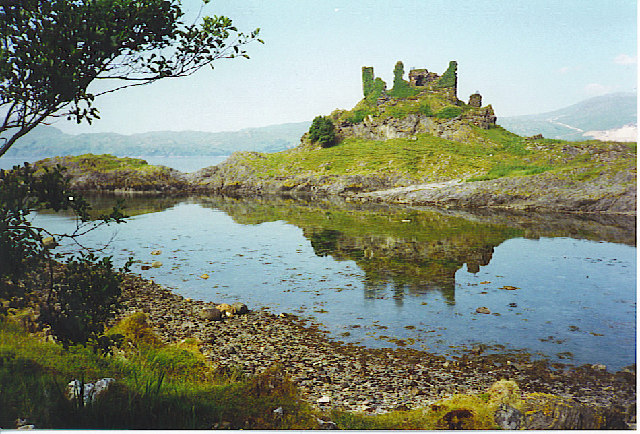
Castle Coeffin
Argyll and Bute
A 13th-century hall-castle on a Lismore promontory, raised on the site of an earlier Viking stronghold and named for a Danish prince said to haunt…
- Rough ground
Fortified place · Iron Age
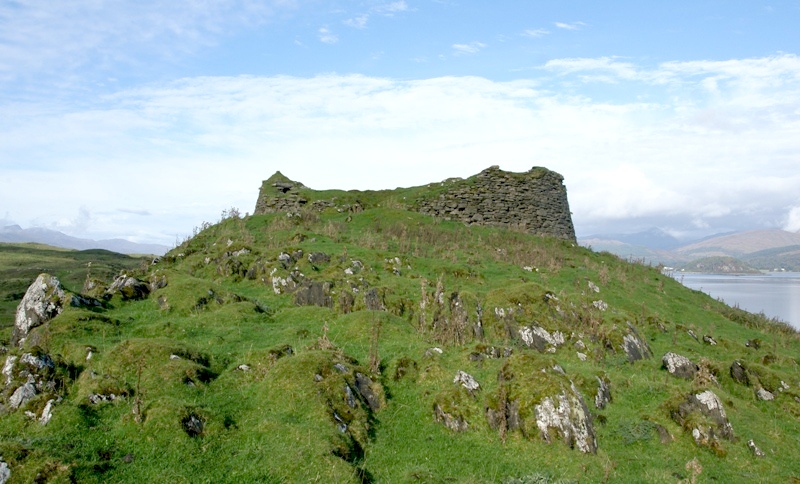
Tirefour Castle
Argyll and Bute
A drystone broch: a round, hollow-walled tower distinctive to Scotland's Iron Age, the centuries before Rome arrived: survives to a maximum height…
- Rough ground

Fortified place · Medieval
Lochnell Castle
Argyll and Bute
A staircase inside is said to be carved from a sacred yew felled on nearby Bernera Island: timber that reportedly survived at least two fires which…
- Easy path
Building or ruin · Medieval
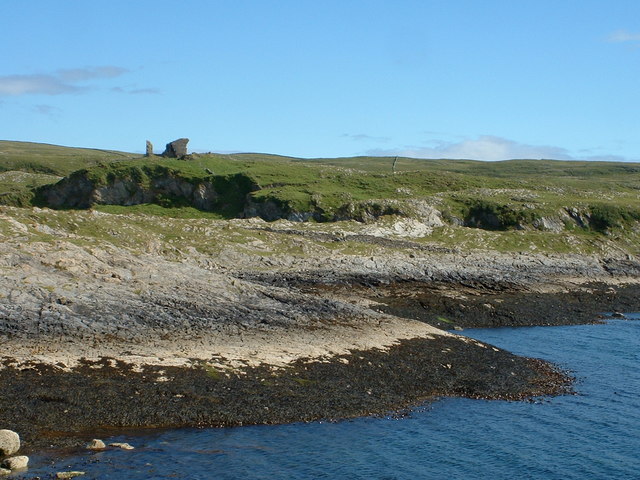
Achanduin Castle
Argyll and Bute
A single 1304 land grant is the earliest written trace of a stronghold long credited to the Bishop of Argyll, though excavation has since pointed t…
- Near Lismore
- Rough ground
Questions people ask
- Is St Moluag's still a cathedral?
- No. Despite the name, it has been a Church of Scotland parish church since 1749 and no longer holds cathedral status.
- Who founded the original monastery on Lismore?
- Saint Moluag, who died in 592, founded the monastery that grew into a major early centre of Christianity in Scotland.
- When was the medieval cathedral built?
- Building is thought to have begun under Bishop Laurence de Ergadia (1262–1299), with the western tower added under Bishop Martin (1342–1387).
- What happened to the cathedral in 1749?
- Its choir was converted into a smaller parish church; the nave and tower were reduced to their foundations and are no longer standing.
- What medieval features can still be seen today?
- Three doorways, a piscina, a triple-arched sedilia, and several late medieval grave slabs in the church and graveyard.
Sources
- Wikipedia: St Moluag's Cathedral, Lismore
- Isle of Lismore
Explore more: Building or ruins · Medieval · Argyll and Bute
The Ancient Codex, in your pocket
Get the Pocket Codex app
Carry the directory with you — St Moluag's Cathedral, Lismore and thousands of ancient places across Britain and Ireland, offline, wherever you roam.