A staircase inside is said to be carved from a sacred yew felled on nearby Bernera Island — timber that reportedly survived at least two fires which gutted the house.
On a low rise above Ardmucknish Bay near Benderloch, the walls of Lochnell Castle stand on foundations far older than the Georgian mansion visible today. Beneath the castle and the chapel behind it lie the remains of a cell said to date from the 6th century and linked to Saint Columba, with traces of that early structure still visible in the undercroft (the low vaulted room under the main floor).
The castle proper was built in 1587 by Archibald Campbell, 5th Earl of Argyll, with the house itself raised by Sir Duncan Campbell, 7th of Lochnell, and it became the seat of Clan Campbell of Lochnell. It did not stay in one form for long: in the late 1730s a new wing was added to the south-east, and around 1818 to 1820 the whole building was remodelled again into a Georgian-style manor house.
Fire damaged the house at least once, and possibly more than once, in the second half of the 19th century, though the surviving accounts disagree on the exact year. One thing that is said to have survived the flames is a staircase reputedly carved from the timber of a huge yew tree on nearby Bernera Island, felled shortly before 1770 and said to have once sheltered Columba himself in prayer.
What follows is drawn from published sources, with each claim labelled by how firmly it is established.
History
Long before the present castle existed, the site was already occupied: in the 6th century a monastic cell associated with Saint Columba stood here, and parts of that early structure survive beneath the later buildings. A medieval chapel was raised behind the site in the 15th century, incorporating the older foundations into its own undercroft and carrying the place's religious use forward for centuries.
In 1587 Archibald Campbell, 5th Earl of Argyll, oversaw the building of Lochnell Castle, with the house itself raised by Sir Duncan Campbell, 7th of Lochnell. From this point the castle became the family seat of Clan Campbell of Lochnell, anchoring the clan's presence on Ardmucknish Bay for generations to come. Between about 1737 and 1739 the castle was substantially altered and enlarged, with a new dwelling-house erected to the south-east of the original building. The addition changed the shape of the residence considerably, setting a pattern of rebuilding that would continue in the centuries that followed.
Around 1818 to 1820 the castle was remodelled once more, this time into a Georgian-style manor house, with General Campbell reportedly spending £15,000 on the enlargement. In the same century a folly known as Lady Margaret's Tower was built on a nearby hilltop within the estate, adding an ornamental landmark to the grounds.
The castle was damaged by fire in the second half of the 19th century, though accounts disagree on exactly when: Cochrane Heritage records a fire in 1859 or 1885, while James Miller's 1877 book placed it in 1850, and the Ancient Yew Group suggests there may have been two or even three separate fires. The building was substantially restored afterwards.
In 1912 the estate was bought by Thomas Cochrane, 13th Earl of Dundonald, bringing it into a new family line. It was requisitioned as a brigade headquarters during the Second World War, and the Cochranes sold the estate in 1949 before buying it back in 1962, restoring their ownership after a gap of thirteen years. Today Lochnell Castle remains a private residence in the hands of Clan Cochrane and the Earl of Dundonald. It is not open to the public, though it now operates as a wedding venue, and, reflecting Thomas Cochrane's ties to Chile, also serves as an Honorary Consulate of Chile. The castle is protected as a Category A Listed Building.
People
-
Archibald Campbell, 5th Earl of Argyll
Oversaw the construction of Lochnell Castle in 1587.
-
Sir Duncan Campbell, 7th of Lochnell
Built the house at Lochnell Castle and, prior to 1770, is said to have felled the Bernera Island yew tree used for the castle's staircase.
-
General Campbell
Reportedly spent £15,000 remodelling the castle into a Georgian manor house around 1818 to 1820.
-
.jpg?width=320)
Portrait: The Lafayette Studio Neg. No: (GP) 6783A LORD COCHRANE Neg. No: (GP) 6 / Wikimedia Commons / Public domain Thomas Cochrane, 13th Earl of Dundonald
Purchased the Lochnell estate in 1912, bringing it into the Cochrane family, whose Chilean connection later gave the castle its role as an Honorary Consulate of Chile.
-
Saint Columba
Associated with an early monastic cell on the castle site in the 6th century and said to have used nearby Bernera Island as a place of retreat and prayer.
-
Saint Moluag
Led the Irish Culdee monks said to have settled Bernera Island in the 6th century.
Connections
-

Photo: Ken Craig / Wikimedia Commons / CC BY-SA 2.0 Bernera Island
The castle's surviving staircase is said to be carved from a yew tree felled on the island, where Columba is said to have prayed and where Irish Culdee monks under Saint Moluag settled in the 6th century.
-
Clan Campbell of Lochnell
The castle served as the clan's family seat from its construction in 1587 until the estate passed out of Campbell hands in the 20th century.
-
Clan Cochrane and the Earl of Dundonald
Thomas Cochrane, 13th Earl of Dundonald, bought the estate in 1912, and it remains a family seat of Clan Cochrane today.
-
Honorary Consulate of Chile
The castle houses an Honorary Consulate of Chile, reflecting the Cochrane family's association with the country.
-

Photo: Ymblanter / Wikimedia Commons / CC BY-SA 4.0 Ardmucknish Bay
Lochnell Castle has stood above Ardmucknish Bay near Benderloch, anchoring the Campbell family’s presence there from the late sixteenth century.
What to look for
-
The undercroft
Beneath the castle and the chapel behind it lie remains said to belong to a 6th-century monastic cell linked to Saint Columba.
-
The yew-wood staircase
A staircase inside the castle is said to have been carved from the timber of a huge yew tree felled on Bernera Island before 1770, and to have survived at least two fires.
-
Lady Margaret's Tower
An 18th-century folly built on a nearby hilltop within the estate grounds.
-
The Georgian manor exterior
The remodelling of around 1818 to 1820 gave the castle its present Georgian-style appearance, protected today as a Category A Listed Building.
-
The name on the statutory record
Historic Environment Scotland listed the building at Category A — the highest of the three Scottish categories — on 20 July 1971, in the parish of Ardchattan and Muckairn. The entry does not call it a castle at all: it appears on the list as "Lochnell House, Ardmucknish Bay", the country-house reading of a building the castle name has outlived.
What is said
Folklore and tradition, recorded as what is said — not as established fact.
-
The Lochnell Brownie
Local legend holds that a Brownie (a household spirit in Scottish folklore) haunts the castle, and several people are reported to have heard supernatural music there.
Plan your visit
- Location
- 56.4953°N · 5.4361°W
- Access
- Private — no general public access
- Terrain
- Easy going
- Time needed
- About 45 minutes
- What survives
- Lochnell survives as a restored Georgian-style country house and private residence.
Opening & admission
This is a private residence, not a general visitor attraction — check the official website for any permitted access such as weddings.
- Remains a private family residence and is not open to the public
- Now used as a wedding venue and as the Honorary Consulate of Chile
Nearby places
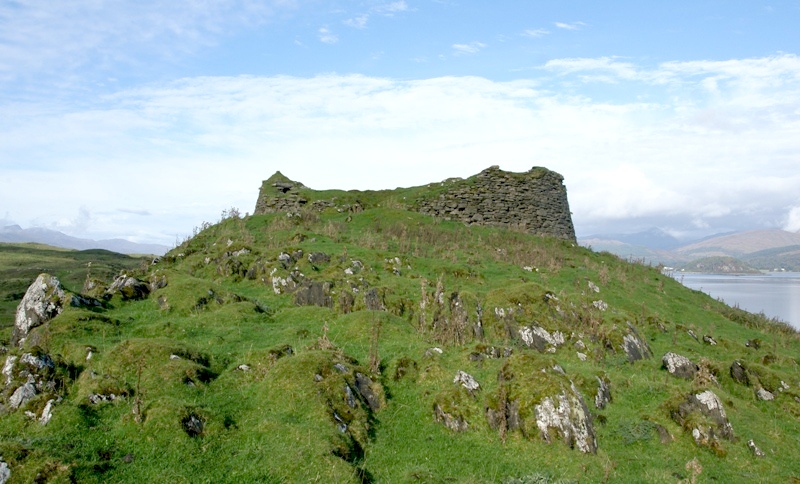
Fortified place · Iron Age
Tirefour Castle
Argyll and Bute
A drystone broch: a round, hollow-walled tower distinctive to Scotland's Iron Age, the centuries before Rome arrived: survives to a maximum height…
- Rough ground
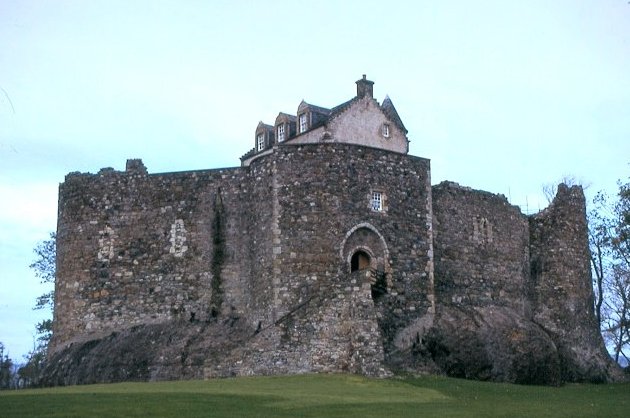
Fortified place · Medieval
Dunstaffnage Castle
Argyll and Bute
One of the oldest stone castles in Scotland, Dunstaffnage was raised in the second quarter of the 13th century by the MacDougall lords of Lorn and…
- Easy path
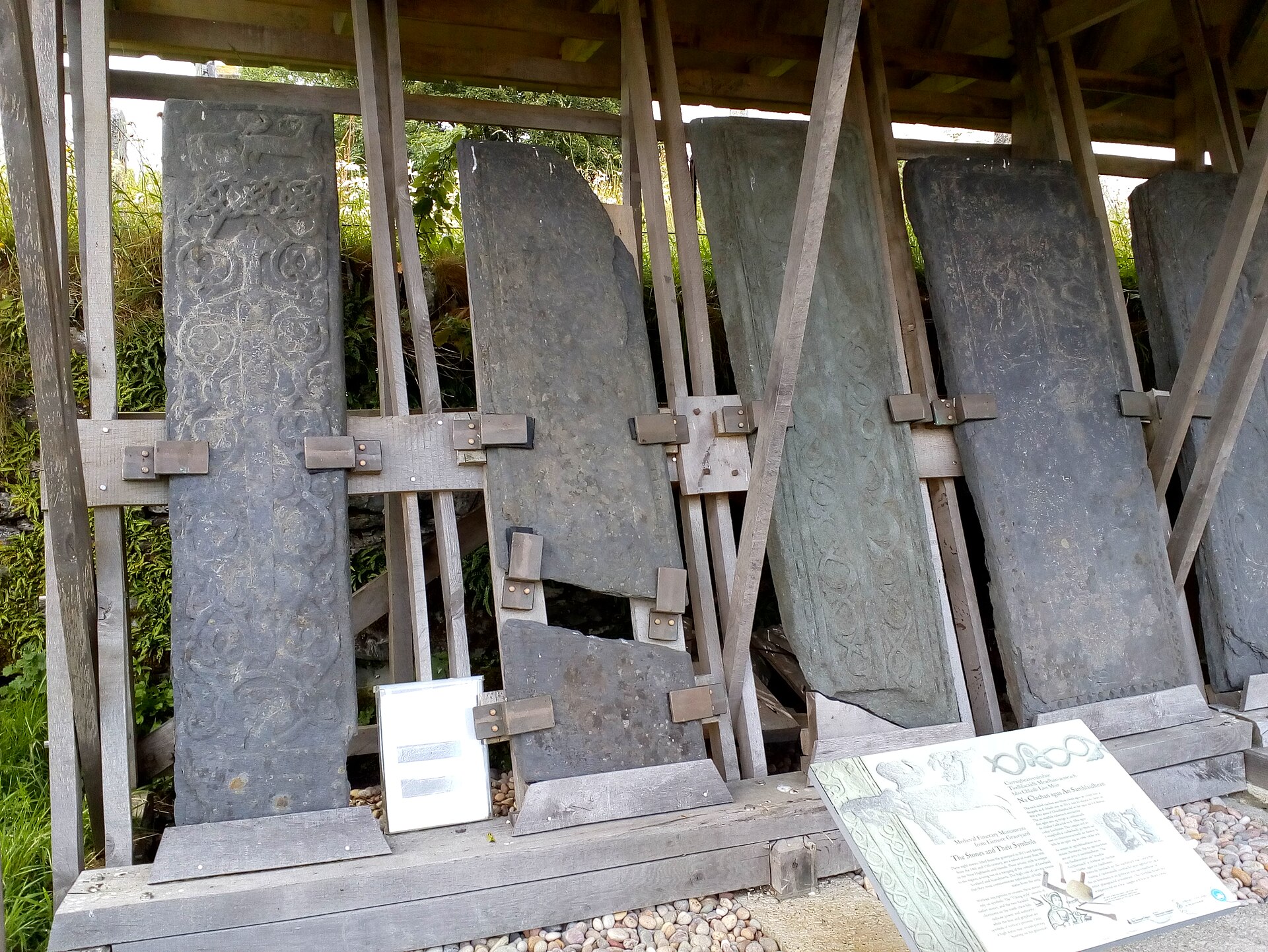
Building or ruin · Medieval
St Moluag's Cathedral, Lismore
Argyll and Bute
The parish church swallowed a medieval cathedral whole in 1749, still wearing its doorways, piscina: the basin near an altar for rinsing communion…
- Easy path
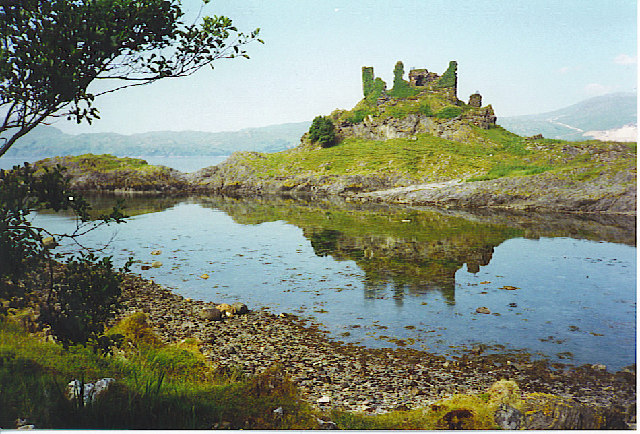
Fortified place · Medieval
Castle Coeffin
Argyll and Bute
A 13th-century hall-castle on a Lismore promontory, raised on the site of an earlier Viking stronghold and named for a Danish prince said to haunt…
- Rough ground
The setting
Farm buildings on the Lochnell estate; Lochnell Castle is not visible.
Photo: Alan Reid / Wikimedia Commons / CC BY-SA 2.0
Overgrown track near Lochnell House in the wider castle estate; the castle is not visible.
Photo: Steven Brown / Wikimedia Commons / CC BY-SA 2.0
An Sàilean and Tralee viewed from the landscape around Lochnell Castle; the castle is not visible.
Photo: Alan Reid / Wikimedia Commons / CC BY-SA 2.0
Questions people ask
- Is Lochnell Castle open to the public?
- No, it remains a private family residence, though it now operates as a wedding venue.
- When was Lochnell Castle built?
- It was built in 1587 by Archibald Campbell, 5th Earl of Argyll, with the house raised by Sir Duncan Campbell, 7th of Lochnell.
- What is the story behind the castle's staircase?
- Tradition holds it was carved from a yew tree on Bernera Island, said to have been used by Columba and felled by Sir Duncan Campbell before 1770.
- Who owns Lochnell Castle today?
- It has been a seat of Clan Cochrane and the Earl of Dundonald since Thomas Cochrane purchased the estate in 1912.
- Is Lochnell Castle said to be haunted?
- Local legend holds that a Brownie haunts the castle, with some reportedly having heard supernatural music there.
Sources
- Wikipedia: Lochnell Castle
- Wikidata: Lochnell Castle
- Historic Environment Scotland designation LB4716: LOCHNELL HOUSE ARDMUCKNISH BAY (accessed 2026-08-03)
Explore more: Fortified places · Medieval · Argyll and Bute
The Ancient Codex, in your pocket
Get the Pocket Codex app
Carry the directory with you — Lochnell Castle and thousands of ancient places across Britain and Ireland, offline, wherever you roam.