
Wemyss Caves preserve rare northern symbols from the period after Roman rule, Christian carvings and evidence of ritual use along Fife’s coast.
At East Wemyss, carved symbols and crosses remain inside a line of sea caves, where natural chambers preserve traces of ritual and religious practice from more than one period. The site lies on the edge of historic Pictland, making its symbols especially important.
Carvings from the period after Roman rule are rare in cave contexts; comparable examples include Sculptor’s Cave at Covesea and Caiplie Caves. Court Cave Passage includes a cup-marked cross, while Jonathan’s Cave may have served as a shrine or hermitage.
Well Cave contains a spring remembered as St Margaret’s Well. Until the nineteenth century people visited on Handsel Monday to drink the water, leave gifts and carve names into the cave wall, linking ancient landscape use with living local custom.
What follows is drawn from published sources, with each claim labelled by how firmly it is established.
History
Wemyss Caves occupy a rare cave setting for Pictish symbols on the edge of Pictland. Comparable symbol-bearing cave sites include Sculptor’s Cave in Moray and Caiplie Caves in Fife. The comparison rests on the carvings themselves rather than on any documented link between the three places: what they share is a symbol vocabulary and a preference for a cave rather than a standing stone, which is what makes the grouping interesting and also what keeps it provisional.
The caves belong to a wider network of coastal places associated with Pictish settlement and practice, including Dunnicaer. A cup-marked cross in Court Cave Passage also resembles early Christian crosses at St Columba’s Cave in Knapdale. That resemblance is a matter of form rather than of recorded contact, and it points at a wider pattern along this coast in which older carved places were reused for Christian marking rather than abandoned or defaced.
Jonathan’s Cave may have been used as a shrine or hermitage, while Well Cave contains a natural spring. Bronze Age activity is suggested by a cup-and-ring mark at Michael Cave and worked stone outside Sliding Cave. Both readings rest on the physical traces alone, since nothing written survives to date either, and they would push use of the caves back well before the symbols that give the site its name — an earlier chapter inferred from marks in stone rather than documented.
Until the nineteenth century Well Cave was the focus of a local custom on Handsel Monday. Visitors drank from St Margaret’s Well, left gifts and carved names into the cave wall, preserving a substantial collection of historic graffiti. The custom is recorded up to the point at which it lapsed, though when or why it stopped is not documented. The graffiti it left behind is now part of what is protected here: names and dates cut by visitors are evidence of the caves' later life, not damage to an earlier one.
Cultural influences
-
Naturally formed sandstone caves on the Fife coast provided a protected setting for Pictish symbols, crosses, later graffiti and a spring.
Connections
-
Sculptor’s Cave, Covesea
It is one of only two other sites identified as comparable cave contexts for Pictish symbols.
-
Caiplie Caves
The Fife caves form another comparable site with Pictish symbols in a cave context.
-
St Columba’s Cave, Knapdale
Crosses at St Columba’s Cave resemble the cup-marked cross in Court Cave Passage.
Discovery & excavation
Nine coastal caves contain a nationally important concentration of abstract and figurative carvings, including Pictish symbols, crosses, holdfasts, graffiti and the spring at Well Cave.
In culture
-
Wemyss Caves 4D presents interactive 3D models of the caves through time.
What to look for
-
Pictish symbols and crosses
The caves contain rare Pictish symbols, cup marks and early Christian crosses, including a cup-marked cross in Court Cave Passage.
What is said
Folklore and tradition, recorded as what is said — not as established fact.
-
Local tradition holds that, until the nineteenth century, Handsel Monday visitors drank from St Margaret’s Well in Well Cave, left gifts and carved names into its wall.
Plan your visit
- Location
- 56.1617°N · 3.0578°W
- Time needed
- About 60 minutes
- Best time
- Visit during published guided-tour or visitor-centre periods and check current arrangements before travelling.
- What survives
- The monument survives as a sequence of coastal caves; metal grilles secure Court Cave, Court Cave Passage, Well Cave and Jonathan’s Cave.
- Facilities
- The Visitor Centre and Museum has exhibits on the caves, local history and geology.
Opening & admission
Guided tours can be booked through the Save Wemyss Ancient Caves Society.
- Check the official site for current tour arrangements.
Nearby places

Fortified place · Medieval
MacDuff's Castle
Fife
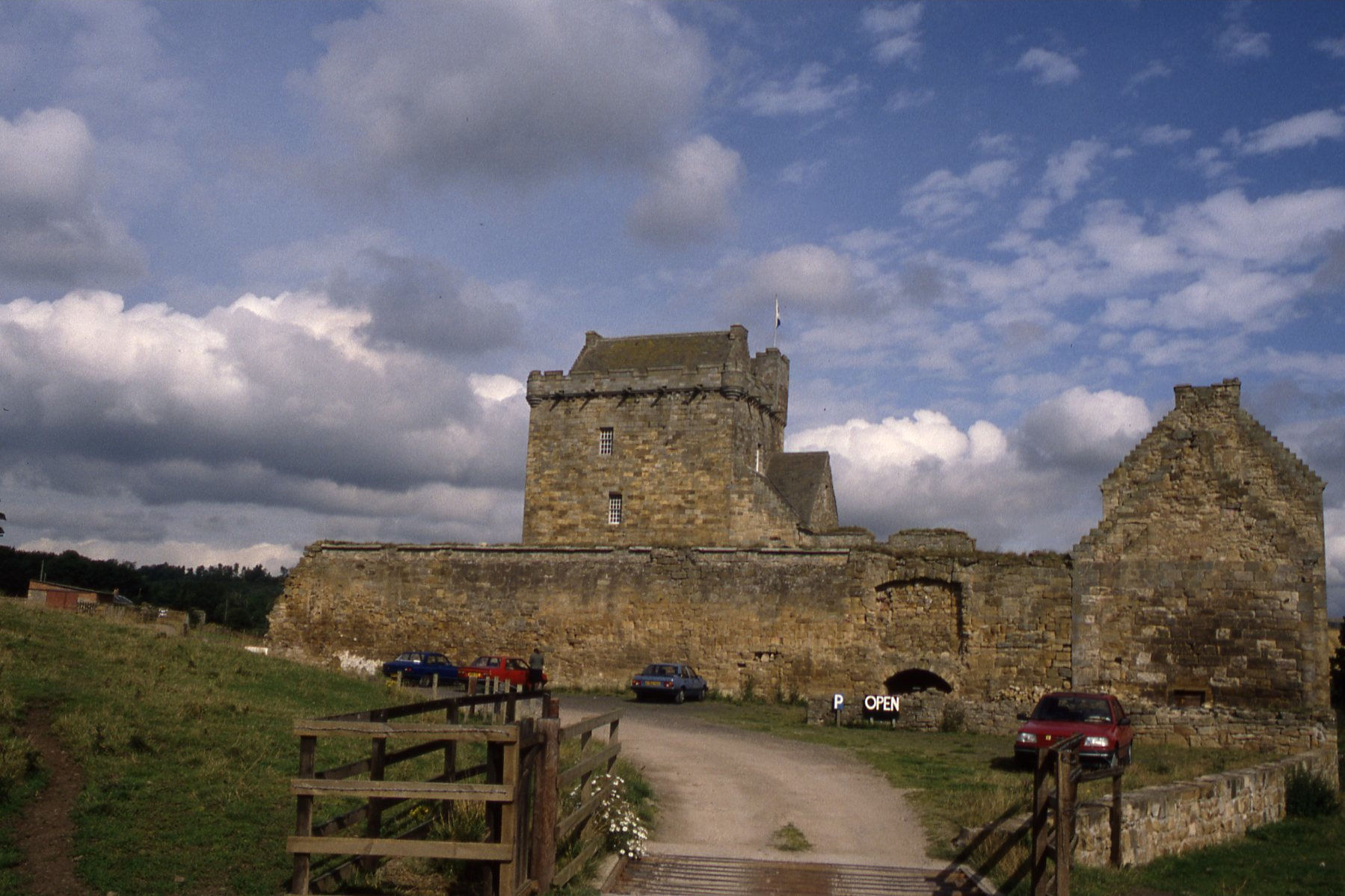
MacDuff’s Castle preserves the changing fortunes of Fife’s medieval elite, from the MacDuff earls and Wemyss family to Colville rebuilding, while i…
- Near St Andrews
Fortified place · Medieval
Balgonie Castle
Fife
Balgonie Castle shows five centuries of incremental change, from a 14th-century tower house to a restored residence within the remains of a 17th-ce…

Sacred place · Prehistoric
Balbirnie Stone Circle
Fife
A circle of which only five stones stood when excavation began in 1970, four more stumps and a tenth socket being found beneath.
- Easy path
Sacred place · Prehistoric
Balfarg
Fife
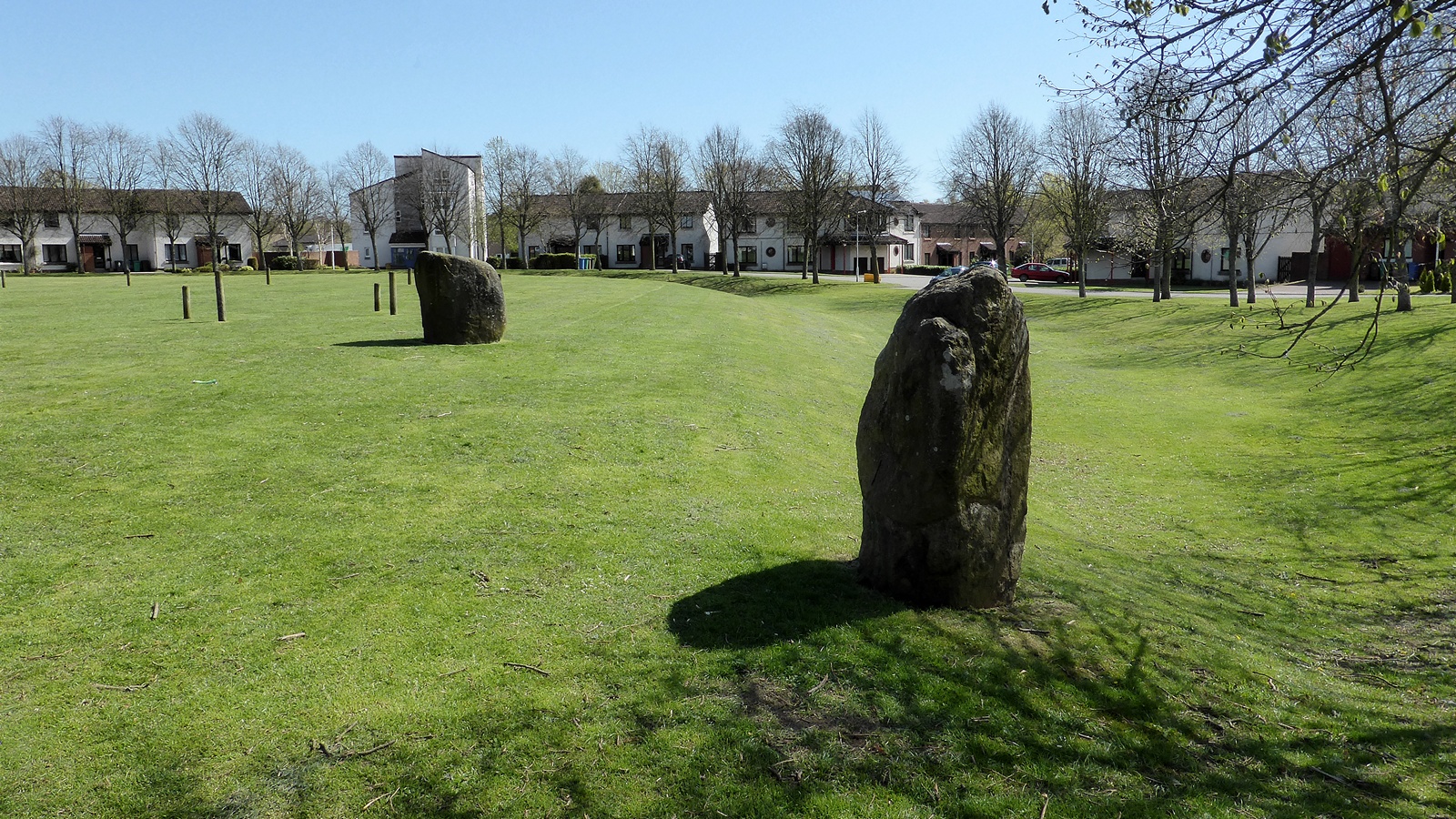
Balfarg preserves a multi-phase Neolithic (the late Stone Age, about 4000–2500 BC in Britain) ceremonial landscape within modern Glenrothes, includ…
- Easy path
Questions people ask
- Why are the caves important?
- They preserve rare Pictish symbols in a cave context alongside Christian carvings and evidence of ritual practice.
- What was St Margaret’s Well?
- It was a spring in Well Cave visited for a local custom until the nineteenth century.
- What is found in Court Cave Passage?
- A cup-marked cross with similarities to early Christian crosses elsewhere in Scotland.
Sources
The Ancient Codex, in your pocket
Get the Pocket Codex app
Carry the directory with you — Wemyss Caves and thousands of ancient places across Britain and Ireland, offline, wherever you roam.