MacDuff’s Castle preserves the changing fortunes of Fife’s medieval elite, from the MacDuff earls and Wemyss family to Colville rebuilding, while its cliff-edge ruins show how demolition and erosion have reshaped coastal heritage.
Ruined towers above the shore near East Wemyss mark MacDuff’s Castle, a scheduled monument (designated under law as an archaeological site of national importance) with a history reaching from the powerful MacDuff earls to the Wemyss and Colville families. The present fabric is later than its legendary early-medieval association.
The Wemyss family held the site from the 14th century and built the earliest surviving castle. Their links with Edward I and Robert the Bruce brought conflict: Edward visited in 1304, then ordered destruction after the family joined Bruce’s cause.
A 16th-century rebuilding created a second tower, gatehouse range and enclosed courtyard. Later losses—including demolition of the eastern tower in 1967 and coastal erosion that destroyed a dovecote—make the remaining ruins a record of both architecture and vulnerability.
What follows is drawn from published sources, with each claim labelled by how firmly it is established.
History
A castle may have stood at MacDuff’s Castle in the 11th century, associated with the MacDuff Mormaers or Earls of Fife during the time of Macbeth. Nothing survives from that period, but the association links the site with the family regarded as the most powerful in medieval Fife. The Wemyss family, descendants of the MacDuffs, owned the property from the 14th century and built the earliest part of the present castle. Edward I stayed with Sir Michael Wemyss in 1304, but later ordered the castle destroyed when Wemyss joined Robert the Bruce’s cause.
After the Wemyss family moved to nearby Wemyss Castle, the property passed through the Livingstones to the Colvilles in 1530. The Colvilles built a second south-west tower and gatehouse range, enclosing a courtyard that reshaped the earlier fortress into a more substantial residence. Sir John Wemyss of West Wemyss bought the castle in 1637, and the East and West Wemyss lands became a single barony in 1651. In 1967 Fife County Council demolished the eastern tower after a child was injured there, while sea erosion destroyed the nearby 16th-century dovecote in the 1970s.
People
-
Sir Michael Wemyss
Wemyss laird who hosted Edward I at the castle in 1304, before the English king ordered its destruction after the family joined Robert the Bruce’s cause.
-

Portrait: Remiguis Goebel / Wikimedia Commons / Public domain Edward I
English king who stayed with Sir Michael Wemyss in 1304 and later ordered the castle destroyed when the Wemyss family allied with Robert the Bruce.
-
Sir John Wemyss of West Wemyss
Wemyss laird who bought the castle from Lord Colville in 1637, before the East and West Wemyss lands became one barony in 1651.
Cultural influences
-
Destroyed the 16th-century dovecote south of the castle in the 1970s.
Connections
-

Photo: Jim Bain / Wikimedia Commons / CC BY-SA 2.0 Wemyss Castle
The Wemyss family moved from MacDuff’s Castle to this nearby residence, leaving the older coastal castle to pass through the Livingstone and Colville families.
-

Photo: Stuart Sellar / Wikimedia Commons / CC BY-SA 3.0 Wemyss Estate
The estate remains the castle’s owner, continuing the Wemyss connection after Sir John Wemyss bought it back from Lord Colville in 1637.
-
MacDuff earls of Fife
Tradition associates an eleventh-century predecessor on this site with the MacDuff Mormaers, the powerful medieval earls from whom the Wemyss family claimed descent.
What to look for
-
Remaining tower and gatehouse range
The surviving ruins combine the fourteenth-century Wemyss tower with the sixteenth-century Colville tower and gatehouse range, which enclosed the courtyard.
-
Gun loops
Gun loops in seventeenth-century walls show the old residence adapting its courtyard defences long after its medieval tower was first built.
-
Coastal setting
The cliff-edge setting explains both the view through the ruined walls and the loss of the nearby sixteenth-century dovecote to sea erosion in the 1970s.
What is said
Folklore and tradition, recorded as what is said — not as established fact.
-
Local ghostlore says the castle is haunted by a ‘Grey Lady’, identified as Mary Sibbald, who was said to have died there after a theft conviction.
Plan your visit
- Location
- 56.1627°N · 3.0579°W
- Nearest settlement
- St Andrews
- Time needed
- About 45 minutes
Nearby places
Sacred place · Medieval
Wemyss Caves
Fife
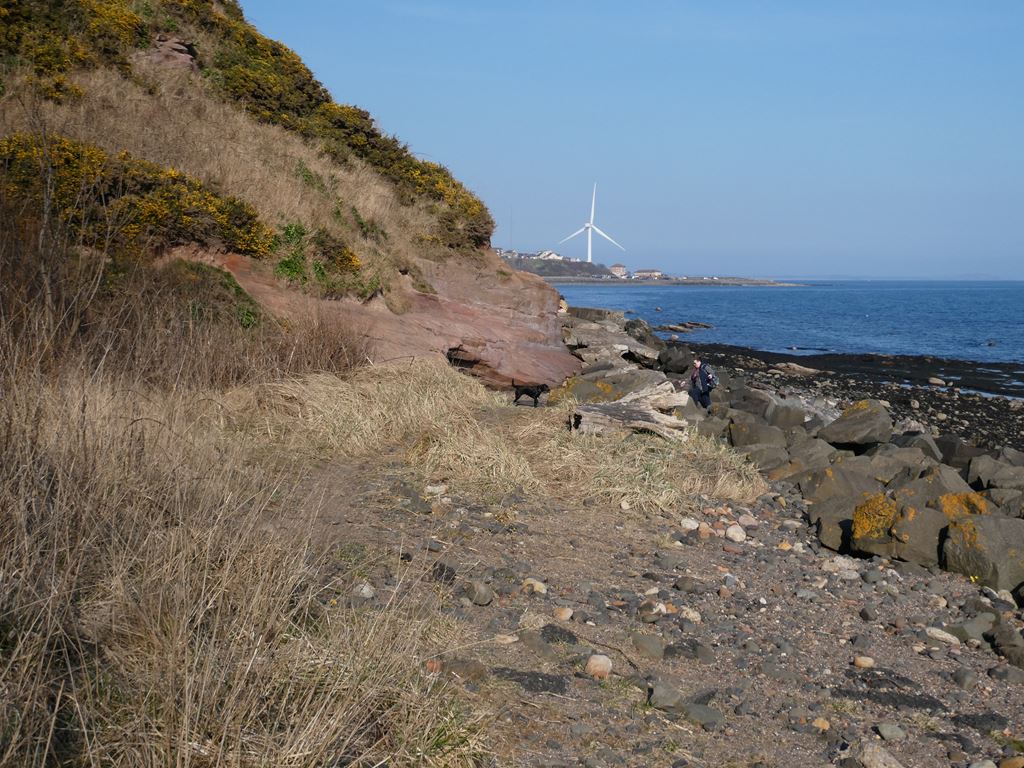
Wemyss Caves preserve rare northern symbols from the period after Roman rule, Christian carvings and evidence of ritual use along Fife’s coast.
Fortified place · Medieval
Balgonie Castle
Fife
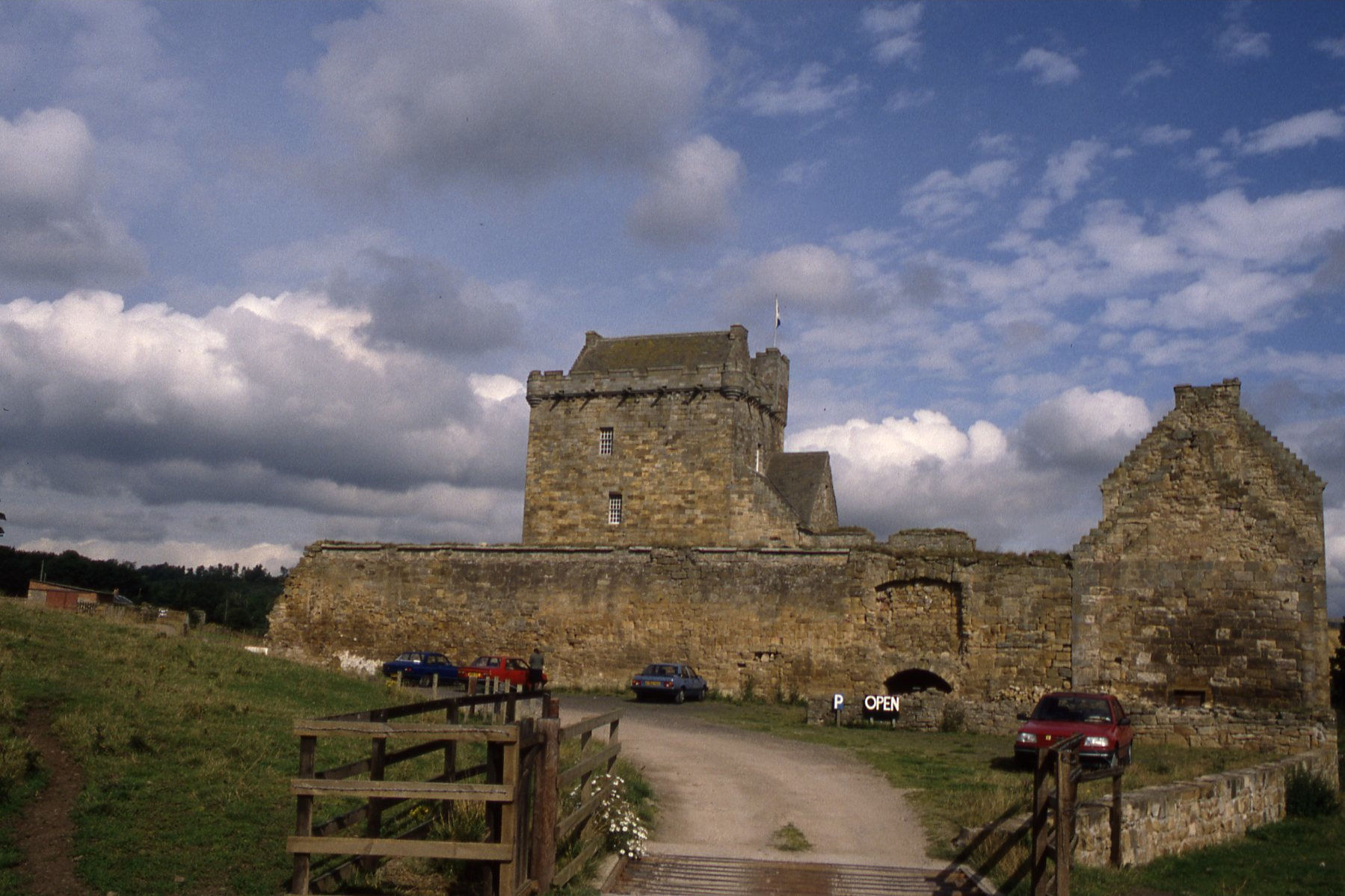
Balgonie Castle shows five centuries of incremental change, from a 14th-century tower house to a restored residence within the remains of a 17th-ce…

Sacred place · Prehistoric
Balbirnie Stone Circle
Fife
A circle of which only five stones stood when excavation began in 1970, four more stumps and a tenth socket being found beneath.
- Easy path
Sacred place · Prehistoric
Balfarg
Fife
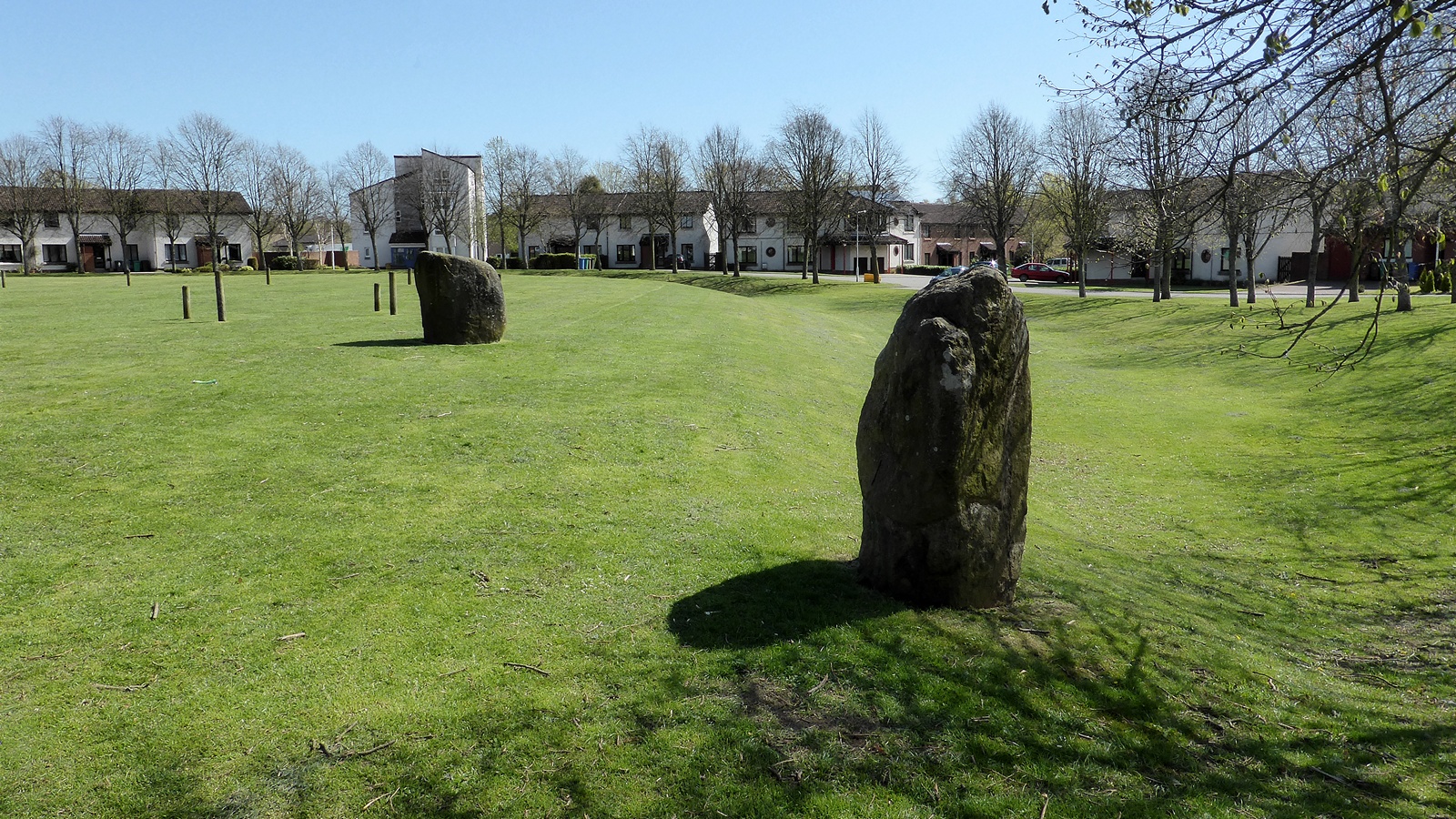
Balfarg preserves a multi-phase Neolithic (the late Stone Age, about 4000–2500 BC in Britain) ceremonial landscape within modern Glenrothes, includ…
- Easy path
Questions people ask
- Who built MacDuff’s Castle?
- The site may have had an 11th-century MacDuff castle, but the earliest surviving part was built by the Wemyss family in the 14th century.
- Why did Edward I order MacDuff’s Castle destroyed?
- Edward I had visited Sir Michael Wemyss there in 1304, but ordered destruction after Wemyss later joined forces with Robert the Bruce.
- Why are parts of the castle missing?
- The eastern tower was demolished in 1967 after an accident, and sea erosion destroyed the nearby 16th-century dovecote in the 1970s.
Sources
The Ancient Codex, in your pocket
Get the Pocket Codex app
Carry the directory with you — MacDuff's Castle and thousands of ancient places across Britain and Ireland, offline, wherever you roam.