
Mumrills was the largest Roman fort on the Antonine Wall, with excavated defences and a rich group of altars, funerary evidence and everyday finds revealing a diverse garrison and the communities around it.
Beneath the landscape at Mumrills lies the largest fort on Scotland’s Antonine Wall. Excavations in the 1920s and 1950s established its outline, while inscriptions and objects found in and around the site preserve traces of soldiers, local recruits and religious practice.
The fort’s scale suggests a major place in the Wall system. Its garrison was part of a frontier where forts could hold hundreds of men and attract civilian communities despite formal restrictions on soldiers’ marriage.
Three inscribed stones are especially revealing: altars to Hercules Magusanus and the mother goddesses, plus a tombstone for Nectovelius, a Brigantian serving in the Second Cohort of Thracians. Together they make Mumrills a place of military movement, ritual and identity.
What follows is drawn from published sources, with each claim labelled by how firmly it is established.
History
Mumrills became the largest Roman fort on the Antonine Wall in Scotland. Its size placed it among the major frontier installations, and its location may have allowed signalling links with forts of the earlier Flavian Gask Ridge, although that proposed communication role remains a possibility rather than an established fact. Excavations from 1923 to 1928 and again from 1958 to 1960 established the fort’s outline. These investigations made it possible to recognise Mumrills as a major Roman site even though the fort’s buildings are no longer standing above ground, and photographs of the work remain available online.
An altar to Hercules Magusanus, found near Brightons Bridge in 1841, is now held by National Museums Scotland. A second altar, dedicated to the Matres by Cassius, a signifer at the fort, dates between AD 140 and 165 and demonstrates formal religious observance within the garrison. A funerary inscription commemorates Nectovelius, son of Vindex, a Brigantian who served nine years in the Second Cohort of Thracians. Other finds include tools, cooking pottery, concrete, a hearth, animal bones and shells, offering evidence for craft activity, food and the fort’s wider lived environment.
People
-
Portrait: Vincenzo Camuccini / Wikimedia Commons / Public domain Cassius
Signifer at Mumrills who dedicated the altar to the Matres.
-
Nectovelius
Brigantian soldier commemorated in a funerary inscription after service in the Second Cohort of Thracians.
-
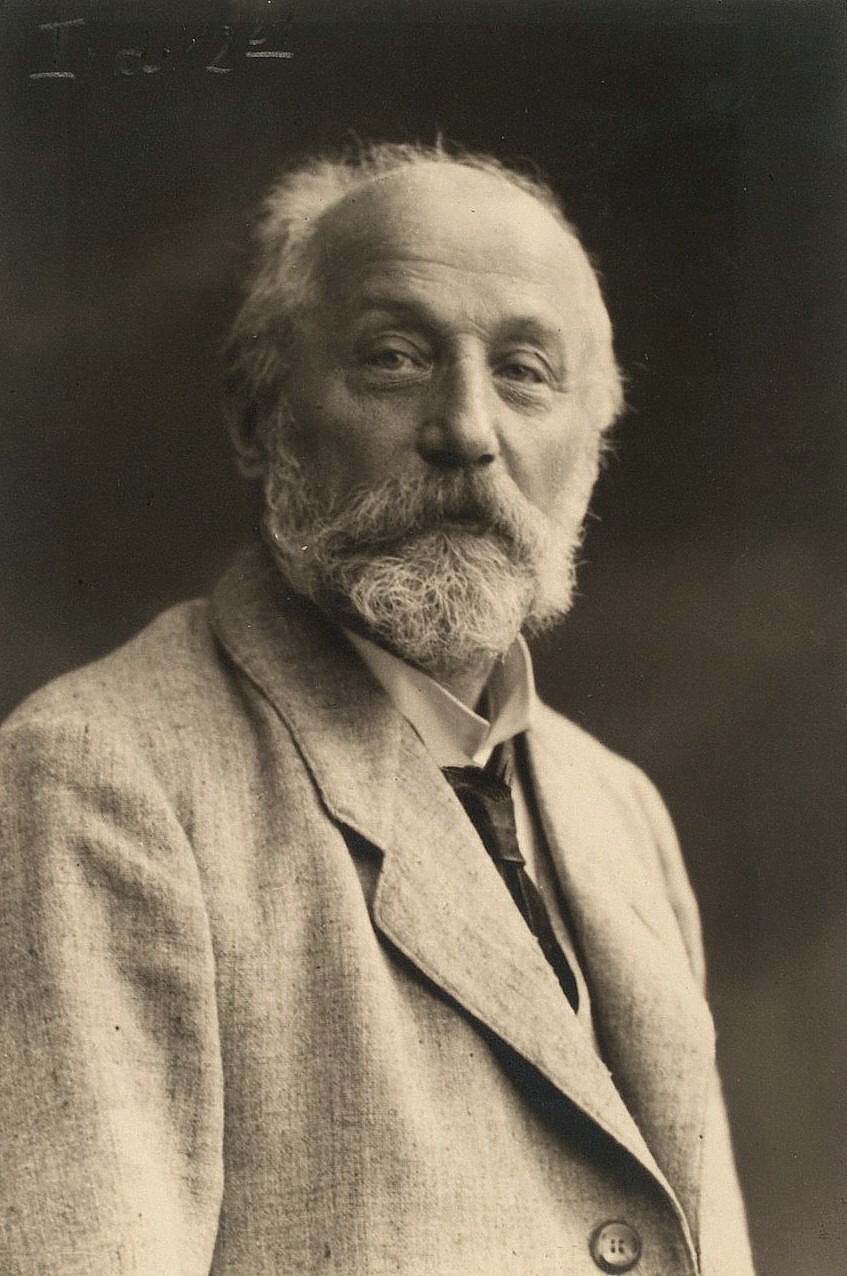
Portrait: Unknown author / Wikimedia Commons / Public domain Alfred von Domaszewski
Historian who proposed an interpretation of the Matres named on the Mumrills altar.
Cultural influences
-
Mumrills’ large fort size and possible signalling connections formed part of Rome’s northern military network.
Connections
-
Brightons Bridge
Location about a mile south-east of the fort where the Hercules altar was found.
-
Laurieston
Falkirk village where a Roman Hercules carving was found in a garden in 1987.
Discovery & excavation
Excavations in 1923–28 and again in 1958–60 established the outline of the fort. These investigations underpin the identification of Mumrills as the Antonine Wall’s largest Roman fort, even though no fort buildings remain above ground.
What to look for
-
Fort outline
Excavation records provide the clearest guide to the layout of the now-buried Antonine Wall fort.
-
Inscribed-stone evidence
Altars and the Nectovelius tombstone are the most direct evidence for the fort’s soldiers and their religious lives.
-
Finds of daily activity
Pottery, tools, animal remains and a hearth indicate domestic and craft activity around the garrison.
What is said
Folklore and tradition, recorded as what is said — not as established fact.
-
Some accounts identify Mumrills as the site of William Wallace’s defeat at the Battle of Falkirk, but this association is presented as a belief rather than established evidence.
Plan your visit
- Location
- 55.9956°N · 3.7353°W
- Access
- Open access
- Terrain
- Moderate walking
- Time needed
- About 60 minutes
Opening & admission
No admission arrangement is confirmed; check current local access information before travelling.
- The site is understood chiefly through its excavated remains and recorded finds.
Nearby places
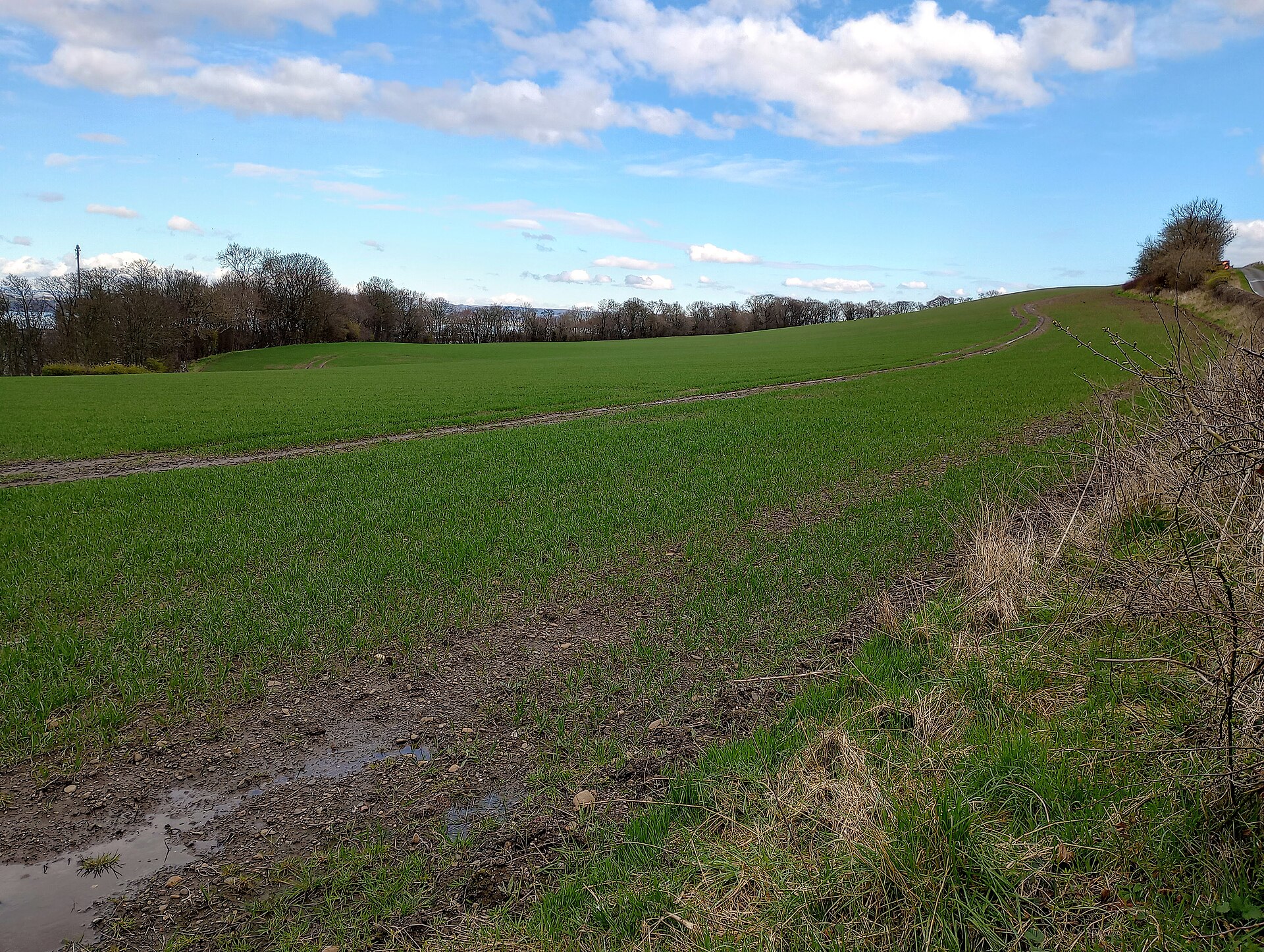
Fortified place · Roman
Inveravon
Falkirk
Inveravon is one of the Antonine Wall’s most uncertain fort sites, where limited excavation, geophysics and aerial photography reveal faint foundat…
- Some walking
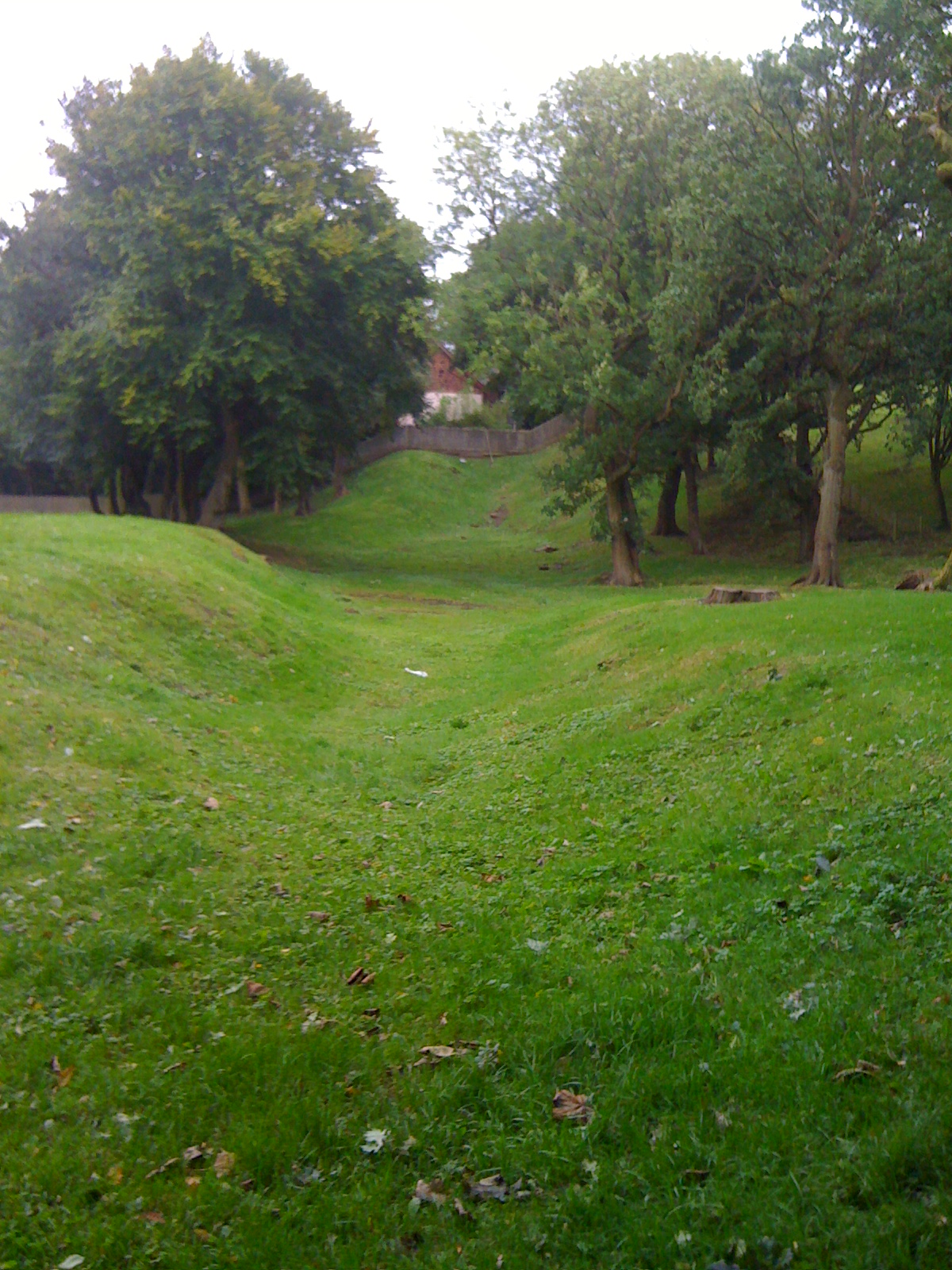
Fortified place · Roman
Watling Lodge
Falkirk
Watling Lodge contains a notably well-preserved stretch of Antonine Wall ditch, showing the frontier’s local defensive landscape between the Roman…
- Some walking
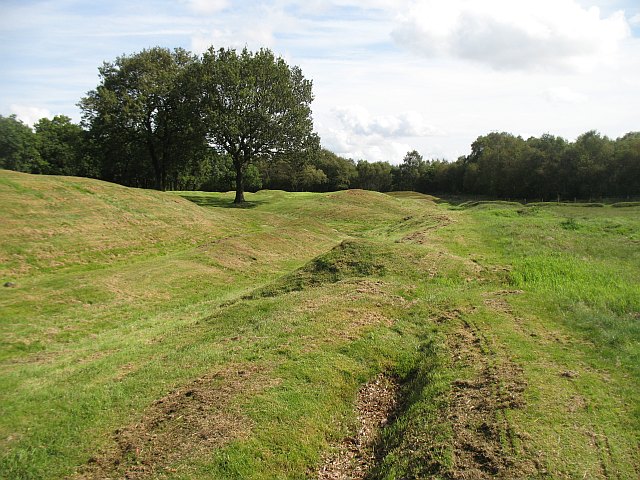
Fortified place · Roman
Antonine Wall: Rough Castle
Falkirk
Rough Castle is one of the best-preserved forts on the Antonine Wall, retaining the defensive landscape of Rome’s short-lived northern frontier and…
- Near Bonnybridge
- 15 min walk from car park
- Some walking
Ancient tree · Medieval
Katie Wearie's Tree
Perth and Kinross
Katie Wearie’s Tree was a named Linlithgow memorial to a drover girl, preserved in an early twentieth-century postcard even though little else is k…
- Near Perth and Kinross
The setting
Icehouse Brae near Mumrills, in the wider setting of the Roman fort
Photo: Jim Smillie / Wikimedia Commons / CC BY-SA 2.0
A9 near Laurieston, showing the wider setting around Mumrills
Photo: Robert Murray / Wikimedia Commons / CC BY-SA 2.0
Questions people ask
- Why is Mumrills important on the Antonine Wall?
- It was the largest Roman fort on the Wall in Scotland and has produced inscriptions and other finds that document its garrison and daily life.
- What Roman inscriptions have been found at Mumrills?
- They include altars to Hercules Magusanus and the Matres, and a funerary inscription for Nectovelius, a Brigantian serving in the Second Cohort of Thracians.
- What have excavations revealed?
- Excavations in 1923–28 and 1958–60 established the fort’s outline. Finds include tools, cooking pottery, concrete, a hearth, animal bones and shells.
Sources
Explore more: Fortified places · Roman · Falkirk
The Ancient Codex, in your pocket
Get the Pocket Codex app
Carry the directory with you — Mumrills and thousands of ancient places across Britain and Ireland, offline, wherever you roam.