Castlecary Roman Fort anchors an Antonine Wall landscape where archaeological finds—altars, a bathhouse, children’s shoes and military inscriptions—show a large frontier garrison and the civilian life around it.
The Antonine Wall passes through Castlecary, where a Roman fort once stood beside the Red Burn and the later Forth and Clyde Canal. The site’s archaeology has been repeatedly disturbed, yet its surviving finds give a remarkably human picture of a northern Roman garrison.
A Roman camp was built here around AD 80, perhaps during Agricola’s fourth campaign. Castlecary later became one of the larger Wall forts, nominally holding a cohort of about 1,000 men and likely surrounded by civilians, women and children.
Canal works exposed parts of the fort in 1769, followed by more sympathetic excavation in 1902. Altars, sculptural fragments, a bathhouse, military equipment and domestic items now connect the lost fort to museum collections and to the continuing Wall route at nearby Tollpark.
What follows is drawn from published sources, with each claim labelled by how firmly it is established.
History
A Roman camp was built at Castlecary around AD 80, perhaps during Agricola’s fourth campaigning season. The site later formed part of the Antonine Wall system, where a larger fort could nominally accommodate a cohort of about 1,000 men alongside the civilian communities that usually developed outside such garrisons.
In 1769, workmen seeking material for the Forth and Clyde Canal uncovered eight apartments and an L-shaped hypocausted bathhouse in the fort’s south-east area. Human bones, pottery and boars’ tusks were also found, but later agricultural improvement used damaging methods including gunpowder before a more careful excavation in 1902.
Castlecary has produced eleven inscribed stones, nine of them altars and six naming Roman military units. Finds include an altar to Mercury set up by the Sixth Legion, a sandstone Fortuna statuette, coins, a Roman tuba fragment, glass, tools and small shoes that indicate children were present at or near the garrison. The fort lies in a wider Wall landscape: temporary camps were found at Garnhall west of Castlecary, and a long continuous Wall stretch survives at Tollpark between Castlecary and Westerwood. The canal now crosses the Red Burn on an aqueduct near the former Roman setting.
People
-
Agricola
Roman governor whose fourth campaign season is a possible context for the camp built around AD 80.
-
Antonius Aratus
Centurion named on a recovered stone for the Sixth Cohort.
-
George MacDonald
Antiquary who catalogued the Sixth Legion altar to Mercury in The Roman Wall in Scotland.
Cultural influences
-
The fort’s later role was shaped by the Wall’s network of garrisons, roads and temporary camps.
Connections
-
Hunterian Museum
Glasgow museum displaying Castlecary finds including the altar to Fortuna.
-
Tollpark
Location of one of the longest continuous Wall stretches, between Castlecary and Westerwood.
-
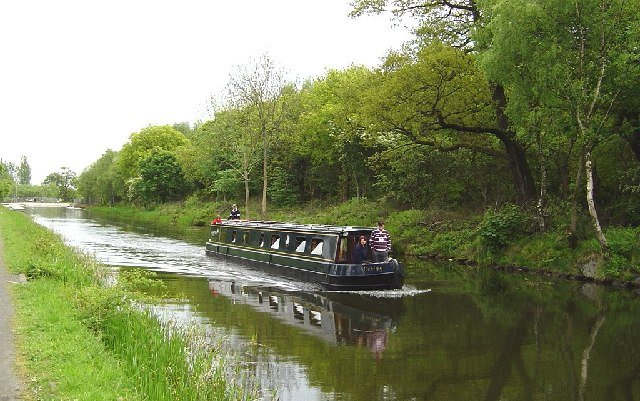
Photo: Michel Van den Berghe / Wikimedia Commons / CC BY-SA 2.0 18th-century canal whose construction revealed major Roman remains at the fort.
Discovery & excavation
Canal work in 1769 exposed eight rooms and an L-shaped hypocausted bathhouse in the fort’s south-east area, together with bones, pottery and boars’ tusks. Later agricultural improvement damaged the site, including by gunpowder use, before a more careful excavation in 1902.
What to look for
-
Antonine Wall route
The Antonine Wall alignment runs through Castlecary and continues visibly at Tollpark, linking the lost fort to the surviving frontier landscape.
-
Red Burn and canal aqueduct
The Forth and Clyde Canal crosses the Red Burn near the fort; its 1769 construction first exposed rooms and a hypocausted bathhouse.
-
Museum finds
The Hunterian holds Castlecary altars and other finds, including material that records the Sixth Legion, Mercury and Fortuna.
What is said
Folklore and tradition, recorded as what is said — not as established fact.
-
Tradition holds that Castlecary was Ptolemy’s Coria Damniorum, but the source states that this identification lacks evidence.
Plan your visit
- Location
- 55.9820°N · 3.9413°W
- Access
- Reached on a public path
- Terrain
- Moderate walking
- Time needed
- About 60 minutes
Opening & admission
No admission arrangement is confirmed; check current local access information before travelling.
- A kissing gate behind the hotel provides access to the Tollpark wall stretch.
- The fort and castle lie east of the M80.
Nearby places
Fortified place · Roman
Seabegs Wood
Falkirk
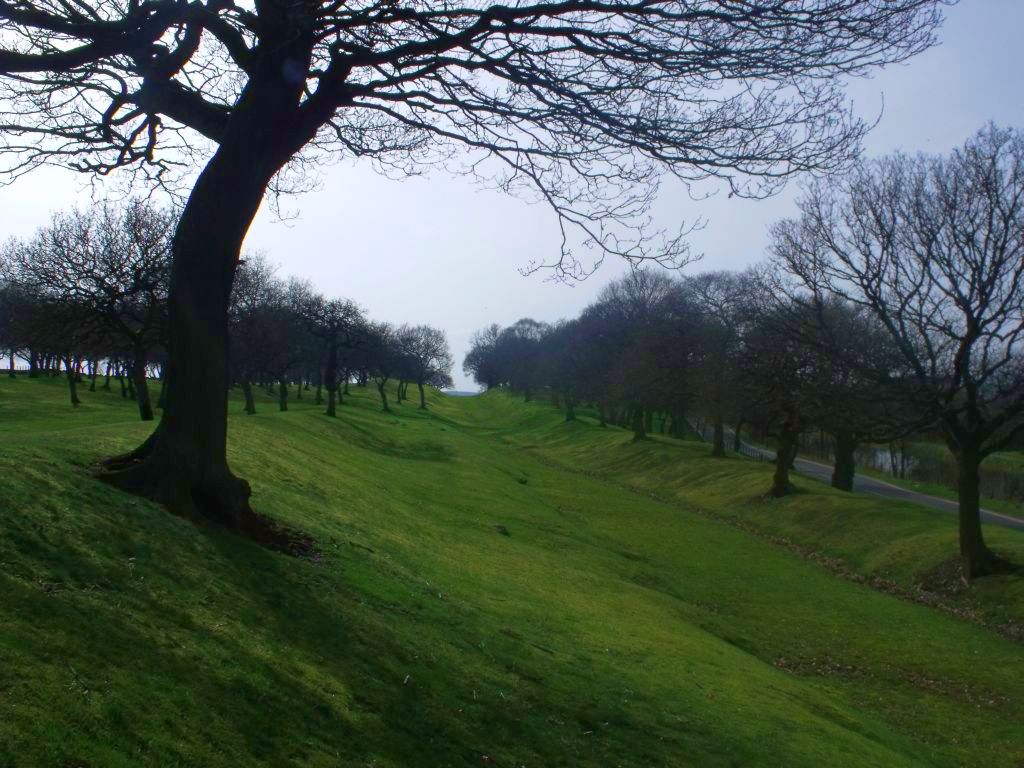
Seabegs Wood preserves a fortlet on the Antonine Wall, with excavated rampart (a defensive bank of earth or stone) foundations and a position betwe…
- Some walking
Fortified place · Roman
Antonine Wall: Rough Castle
Falkirk
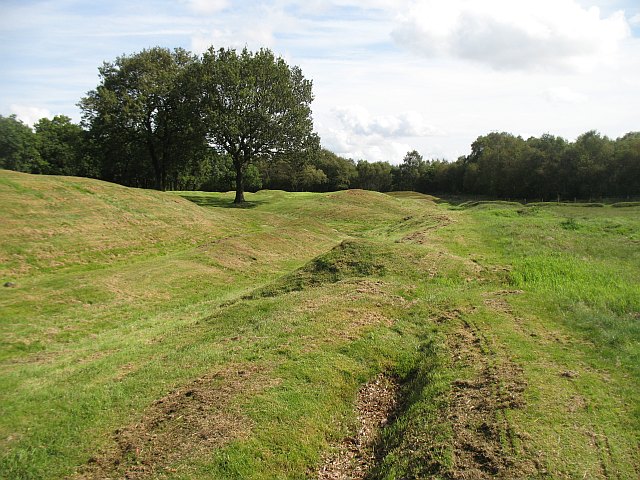
Rough Castle is one of the best-preserved forts on the Antonine Wall, retaining the defensive landscape of Rome’s short-lived northern frontier and…
- Near Bonnybridge
- 15 min walk from car park
- Some walking

Fortified place · Roman
Croy Hill
North Lanarkshire
Croy Hill is the Antonine Wall’s exceptional unditched sector, combining difficult geology, frontier forts, a bathhouse and rich religious finds.
Fortified place · Roman
Watling Lodge
Falkirk
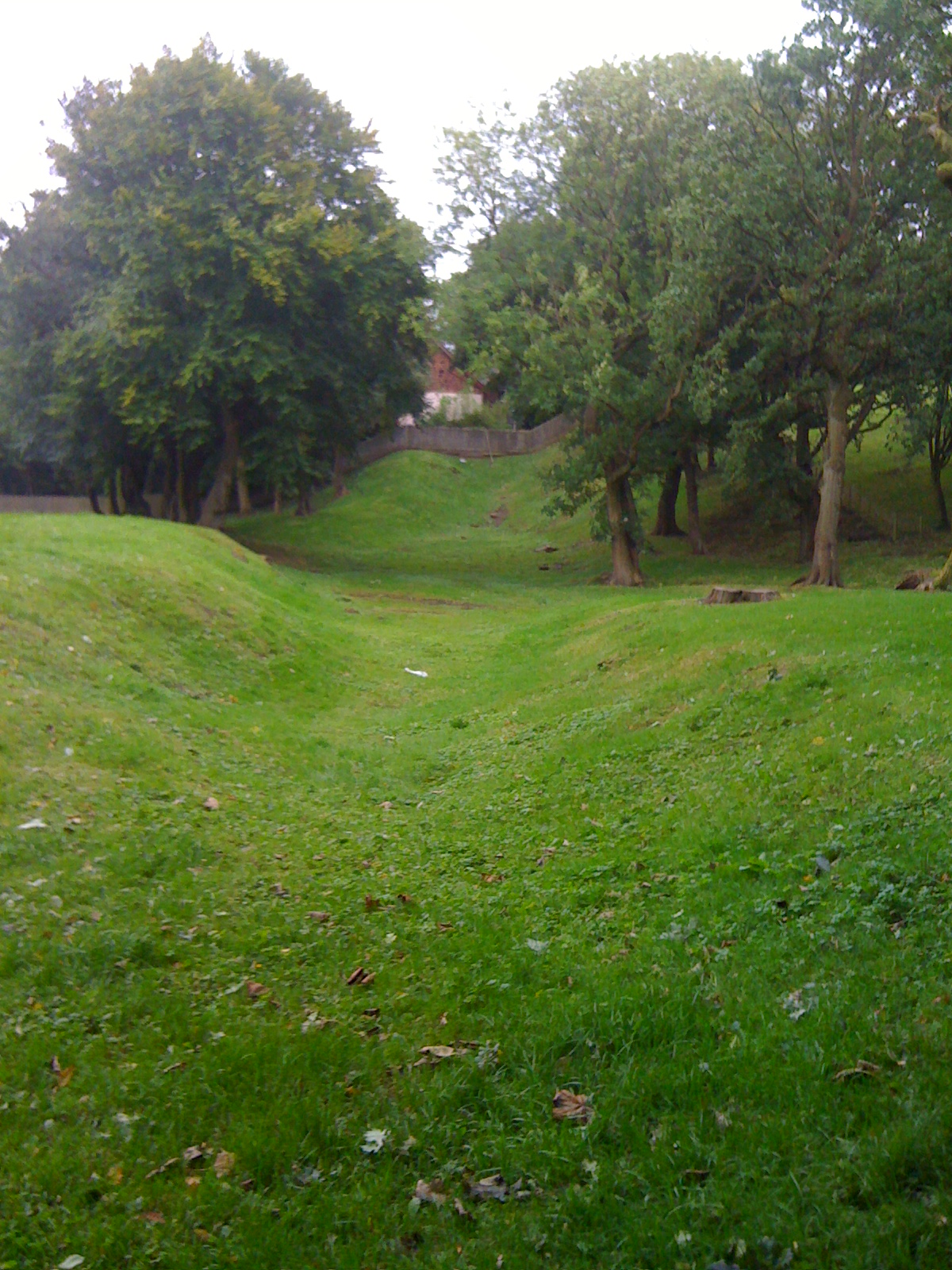
Watling Lodge contains a notably well-preserved stretch of Antonine Wall ditch, showing the frontier’s local defensive landscape between the Roman…
- Some walking
Questions people ask
- When was the Roman fort at Castlecary built?
- A Roman camp was built around AD 80, possibly in Agricola’s fourth campaign season; the site later formed part of the Antonine Wall frontier.
- What has been found at Castlecary Roman Fort?
- Finds include a hypocaust bathhouse, altars, a Fortuna statuette, pottery, coins, military inscriptions, a tuba fragment, glass, tools and children’s shoes.
- Where can Castlecary’s Roman artefacts be seen?
- Artefacts including the altar to Fortuna are held at the Hunterian Museum in Glasgow.
Sources
Explore more: Fortified places · Roman · Falkirk
The Ancient Codex, in your pocket
Get the Pocket Codex app
Carry the directory with you — Castlecary Roman fort and thousands of ancient places across Britain and Ireland, offline, wherever you roam.