
A roofless chapel far larger than any other in Kintyre, standing beside five carved late medieval tombstones in a graveyard still used today.
Down by the shore, some 330 metres southeast of Skipness Castle, a long rectangular ruin looks out across the Kilbrannan Sound towards the Isle of Arran. The walls stand roofless but largely intact, built of coursed rubble with door frames, window surrounds, corner stones and roof-edge copings all cut from dressed red sandstone that still glows against the grey rubble. At 25 metres long, the building is markedly bigger than the other medieval chapels scattered across Kintyre, and its scale alone marks it out as a place of more than local importance.
Light would once have entered through narrow, splayed lancet windows set into the nave and chancel, with a large window traced in flowing stonework filling the east end above where the altar stood. Two doorways pierced the south wall, one now blocked, with a third giving access from the north. Around the building, and inside its roofless nave, lie five finely carved recumbent tombstones from the late medieval period, along with older pre-Reformation slabs and a scatter of eighteenth- and early nineteenth-century headstones, the burial ground still receiving new graves in the present day.
The chapel takes its popular name, Kilbrannan, from the sound it overlooks, but it carries the dedication of an Irish saint, Brendan, whose name marks a later rebuilding of a much older sacred site.
What follows is drawn from published sources, with each claim labelled by how firmly it is established.
The name
The chapel is known locally as Kilbrannan Chapel, a name shared with the Kilbrannan Sound it overlooks, while its formal dedication is to St Brendan. The name and the discovery of early medieval burials at the site both point to an earlier church having stood here long before the surviving building was raised.
History
Long before the standing ruin was built, early medieval burials at the site and the survival of the name Kilbrannan point to an earlier church already established here, dedicated to St Columba, whose remains were said to lie near where Skipness Castle would later be raised. That earlier foundation gave the place its lasting identity even after it was rebuilt and rededicated.
In the late 13th or early 14th century a new chapel was constructed on the site, replacing the earlier church of St Columba and taking instead the dedication of St Brendan. Building work is thought to have proceeded around the same time as the nearby construction of Skipness Castle, tying the chapel's fortunes to the lords who were establishing their stronghold on the slope above.
Once complete, the new chapel served as the parish church for the surrounding district, its unusually large footprint setting it apart from the smaller medieval chapels found elsewhere in Kintyre. Its scale reflected the standing of the castle it stood beside, and burials in its graveyard continued to accumulate across the following centuries. St Brendan's continued in use as the parish church long after Skipness Castle itself had been abandoned as a residence, remaining the district's place of worship until at least 1692, a span of use stretching across roughly four centuries from its original construction.
During the 18th century the chapel ceased to function as a place of worship, its congregation drawn away, it is thought, by the establishment of a new parish church at Claonaig. The building was left to fall into ruin, its roof eventually lost, while the surrounding graveyard remained in community use. The chapel and Skipness Castle are today designated together as a single scheduled monument, recognising the two structures as one historic unit, and the burial ground beside the ruin continues to receive new graves into the present.
Connections
-
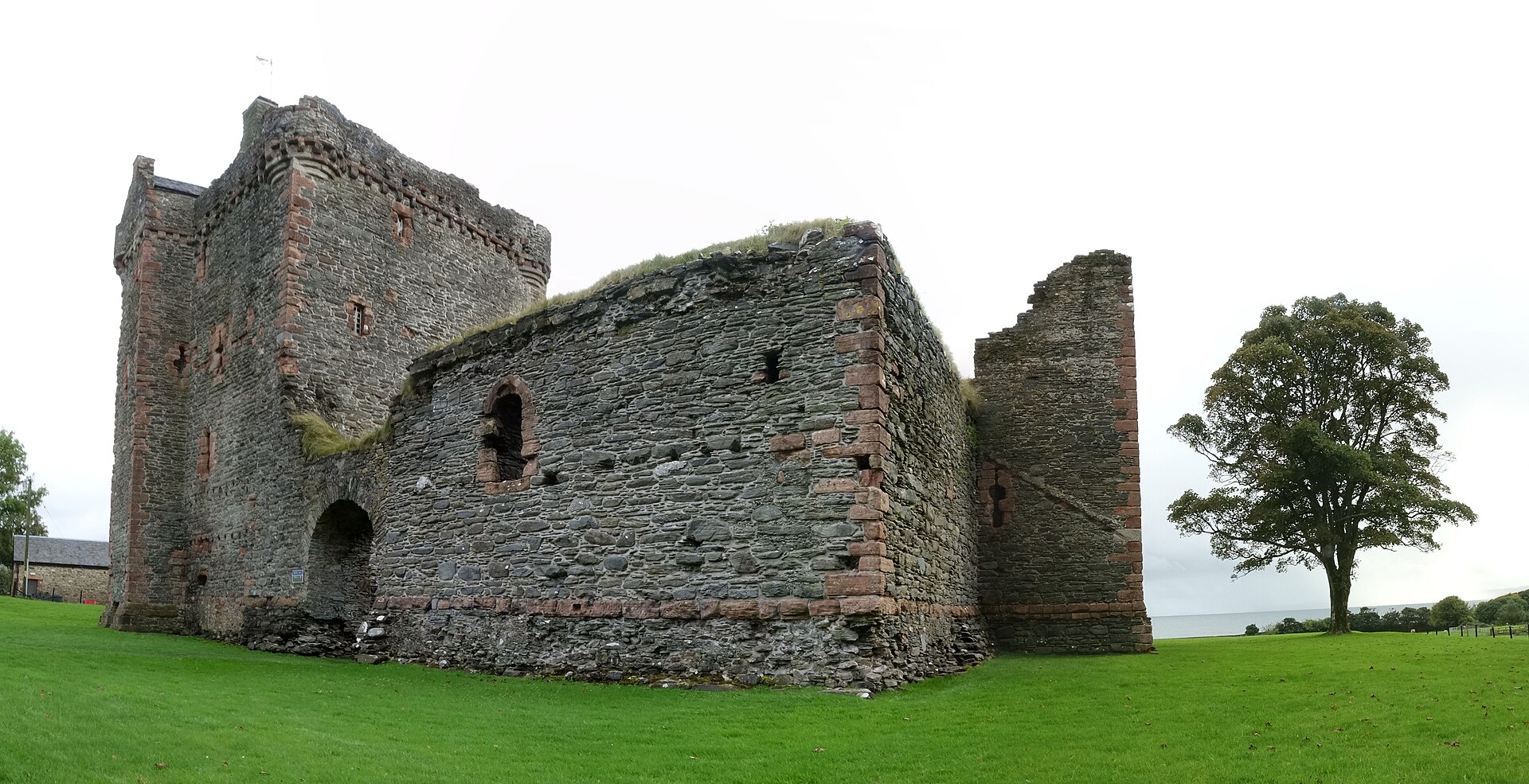
Photo: chdphd / Wikimedia Commons / CC BY-SA 4.0 The chapel stands 330 metres southeast of the castle, was probably built at the same time in the late 13th or early 14th century, and the two are designated together as a single scheduled monument.
-
Chapel of St Columba, Skipness
St Brendan's Chapel was built to replace this earlier church, whose remains are said to lie near Skipness Castle, and whose early presence is remembered in the surviving place name Kilbrannan.
-
Claonaig parish church
The establishment of a new parish church at Claonaig is thought to have drawn worship away from St Brendan's, leading to its abandonment as a place of worship in the 18th century.
-
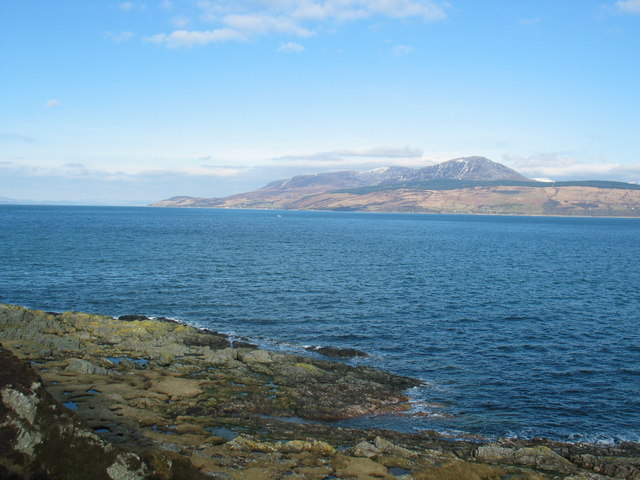
Photo: Johnny Durnan / Wikimedia Commons / CC BY-SA 2.0 Kilbrannan Sound and the Isle of Arran
The chapel and castle look out over the Sound towards Arran, and the Sound itself lends the chapel its everyday name, Kilbrannan Chapel.
Discovery & excavation
Early medieval burials found at the site, together with the survival of the name Kilbrannan, provided the evidence that an earlier church had occupied the ground before the present ruin was built.
What to look for
-
Red sandstone dressings
The doors, windows, corner stones and roof-edge copings are all cut from dressed red sandstone, standing out against the grey coursed rubble of the main walls.
-
The east window
A large window with flowing stone tracery fills the east end of the chapel, above where the altar would have stood.
-
Lancet windows
Narrow, splayed lancet windows light the nave and chancel, typical of the chapel's late 13th- or early 14th-century date.
-
Three doorways
Two doors open from the south wall, one now blocked, with a third entrance in the north wall.
-
The recumbent tombstones
Five notable late medieval carved recumbent tombstones lie in and around the chapel, alongside older pre-Reformation slabs and 18th- and early 19th-century gravestones.
Plan your visit
- Location
- 55.7659°N · 5.3327°W
- Nearest settlement
- Skipness
- Access
- Open access
- Terrain
- Easy going
- Time needed
- About 30 minutes
- Best time
- Daylight, when the surviving stonework and grave slabs can be read clearly.
- What survives
- A roofless medieval chapel survives within an active graveyard beside Skipness Castle.
Opening & admission
Free to visit, but check current access conditions with Historic Environment Scotland before travelling.
- Roofless ruined chapel and graveyard near the shore, still used as a burial ground
- Scheduled monument alongside nearby Skipness Castle
Nearby places
Fortified place · Medieval
Skipness Castle
Argyll and Bute
A working stronghold refortified across three centuries, ending its working life not by decay but under active siege in 1646: the last Scottish cas…
- Near Skipness
- Easy path

Fortified place · Medieval
Lochranza Castle
North Ayrshire
Lochranza’s waterside tower links thirteenth-century lordship with Robert the Bruce’s reported 1306 landing, James IV’s island campaign and later a…
Fortified place · Medieval
Tarbert Castle
Argyll and Bute
A royal stronghold fought over for nearly a thousand years, from early-medieval burnings to a 1494 siege by a Scottish king, now looked after by th…
- Near Tarbert
- Some walking
Sacred place · Prehistoric
Avinagillan standing stone
Argyll and Bute
A solitary standing stone raised somewhere in prehistory, its silent presence over the Kintyre shoreline outlasting any record of who put it there…
- Near Campbeltown
- Easy path
Questions people ask
- What is St Brendan's Chapel also known as?
- It is also known as Kilbrannan Chapel, a name it shares with the Kilbrannan Sound it overlooks near Skipness.
- When was the chapel built?
- It was probably built in the late 13th or early 14th century, around the same time as nearby Skipness Castle.
- Why is the chapel larger than other Kintyre chapels?
- At 25 by 8 metres, it is significantly bigger than other medieval chapels in Kintyre, reflecting its ties to Skipness Castle.
- Why did the chapel stop being used for worship?
- It functioned as the parish church until at least 1692, then was abandoned in the 18th century, likely after a new church was built at Claonaig.
- Is the graveyard still in use?
- Yes, the graveyard beside the ruined chapel remains in use by the local community as a burial ground today.
Sources
- Wikipedia: St Brendan's Chapel, Skipness
- Historic Environment Scotland — Canmore
- Wikidata: St Brendan's Chapel, Skipness
Explore more: Building or ruins · Medieval · Argyll and Bute
The Ancient Codex, in your pocket
Get the Pocket Codex app
Carry the directory with you — St Brendan's Chapel, Skipness and thousands of ancient places across Britain and Ireland, offline, wherever you roam.