
A royal stronghold fought over for nearly a thousand years, from early-medieval burnings to a 1494 siege by a Scottish king, now looked after by the community that lives beneath it.
Tarbert’s surviving tower-house walls look down on the harbour from high ground above East Loch Tarbert. The stronghold once controlled the narrow neck of land and water at Kintyre’s northern end, a position that made the crossing point worth fighting over for a thousand years.
What stands now is mostly a tower house, added in the 16th century and the most recognisable part of the remains, but the site had already been fortified for hundreds of years before that. Earlier defences on the same high land were reinforced in the 1320s with an outer bailey and towers, and the whole complex changed hands repeatedly between local dynasties, the Scottish crown, and the English crown across the medieval centuries.
From the tumbled walls there is still a commanding view of the water approaches: up Loch Fyne, and beyond to the Firth of Clyde. That view is the whole reason the castle exists — whoever held Tarbert could watch, and control, the ships moving along one of the key sea routes of the western Highlands. The site is now in community ownership, cared for as a volunteer-maintained heritage park rather than left to fall further.
What follows is drawn from published sources, with each claim labelled by how firmly it is established.
History
The earliest recorded violence at Tarbert belongs to the power struggles of Dál Riata, the early-medieval kingdom straddling the Irish Sea. In 712 the site was burned by Selbach mac Ferchair, king of Cenél Loairn, and burned again in 731 by his son Dúngal mac Selbaig, evidence that whatever stood at Tarbert then was already worth destroying to deny it to a rival.
A proper fortified structure was built at Tarbert during the 13th century, and in 1292 King Edward I of England handed control of the castle to the Scottish king John Balliol, a transfer that shows how thoroughly the site's strategic value was recognised on both sides of the border during the disputes over the Scottish succession.
In the 1320s Robert the Bruce strengthened the castle considerably, adding an outer bailey and towers to the existing structure. This was part of his wider effort to secure royal authority over the western seaboard, and it turned Tarbert from a local stronghold into a significant royal fortress overlooking the sea approaches to Kintyre and Loch Fyne. By 1326 the castle had its own constable, John de Lany, appointed to hold it on the crown's behalf, and Charles MacAlister held the same post in 1481, showing continuous royal administration of the site across a century and a half.
In 1494 James IV of Scotland captured Tarbert Castle from John MacDonald of Islay, Lord of the Isles, as part of a deliberate campaign to break the independent power of the Lordship of the Isles. The 16th-century tower house that still dominates the remains dates from around this period, built to mark the crown's renewed grip on the site.
In 1687 the castle changed hands again when Walter Campbell of Skipness Castle seized it as a stronghold for Archibald Campbell, 9th Earl of Argyll, during the unrest connected to the Monmouth Rebellion in England — the last recorded military use of the site before it passed into ruin and, eventually, community ownership.
People
-
John de Lany
Held office as constable of Tarbert Castle from 1326, administering it on behalf of the Scottish crown.
-
Charles MacAlister
Served as constable of Tarbert Castle in 1481, continuing the line of royal appointees at the site.
-
Robert the Bruce
Reinforced the castle in the 1320s with an outer bailey and towers as part of securing royal control of the western seaboard.
-
James IV of Scotland
Captured the castle from John MacDonald of Islay in 1494 during his campaign to destroy the power of the Lords of the Isles.
-
John MacDonald of Islay, Lord of the Isles
Held Tarbert Castle before it was captured from him by James IV in 1494.
-
Walter Campbell of Skipness Castle
Seized Tarbert Castle in 1687 as a stronghold for Archibald Campbell, 9th Earl of Argyll.
-
Archibald Campbell, 9th Earl of Argyll
The castle was held in his interest after its seizure in 1687 during actions connected to the Monmouth Rebellion.
Connections
-
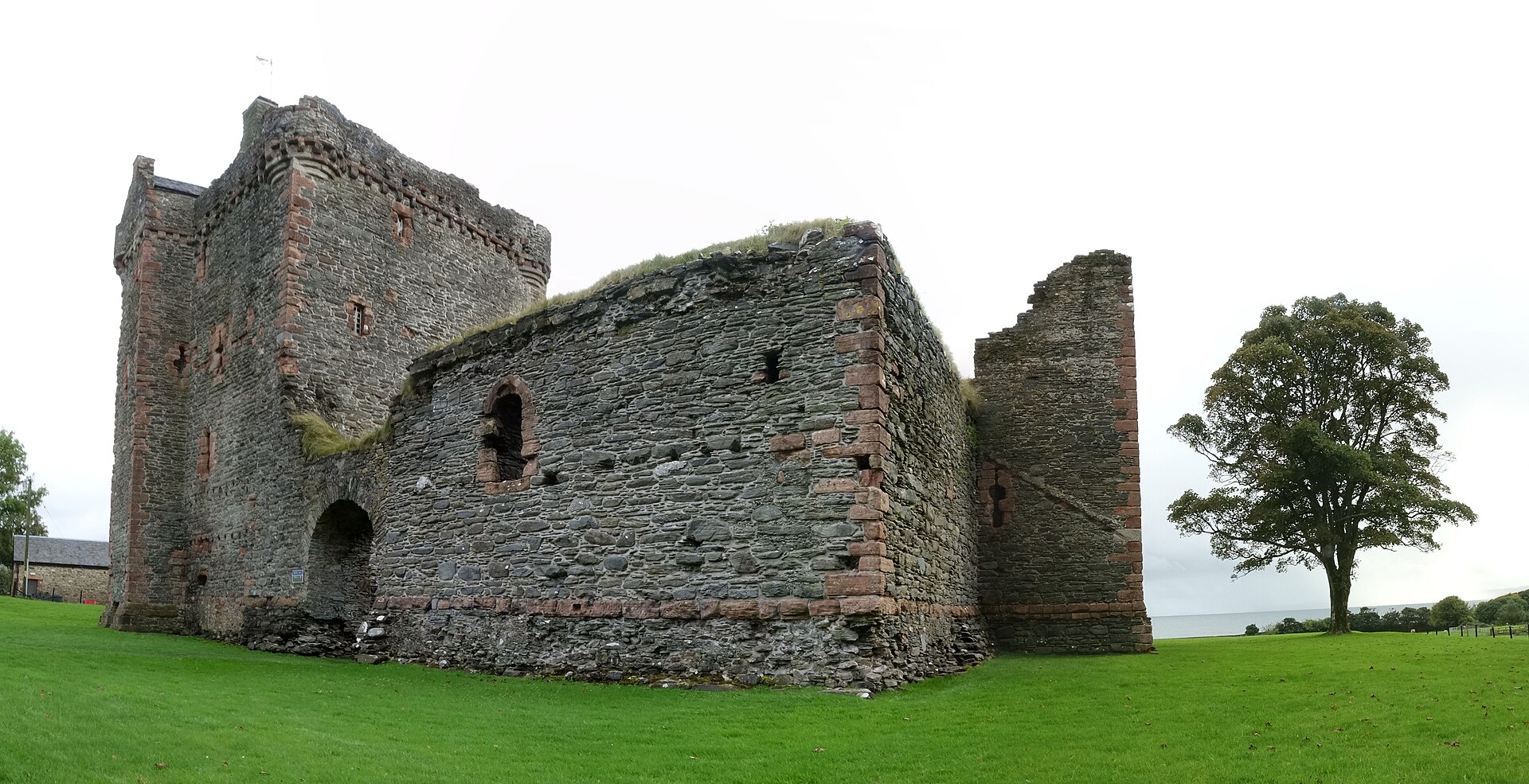
Photo: chdphd / Wikimedia Commons / CC BY-SA 4.0 Its holder, Walter Campbell, seized Tarbert Castle in 1687 to hold it for the Earl of Argyll.
-
Lordship of the Isles
Tarbert Castle was captured from the Lordship's leader, John MacDonald of Islay, by James IV in 1494 as part of the crown's campaign to break MacDonald power.
-
Cenél Loairn
This Dál Riata kindred, under kings Selbach mac Ferchair and his son Dúngal, burned the site at Tarbert in 712 and 731.
-
Tarbert harbour
The surviving tower-house walls occupy high ground above Tarbert harbour, commanding the water approaches at the north end of Kintyre.
What to look for
-
The surviving tower house
The most recognisable standing remains, added in the 16th century around the time of James IV's 1494 campaign, though only a couple of lengths of wall now stand.
-
Views up Loch Fyne and the Firth of Clyde
From the high ground of the castle site there is a commanding view of the water approaches, the entire strategic reason the stronghold was built here.
-
The outer bailey earthworks
Traces of the defences added in the 1320s by Robert the Bruce, when the site was expanded from an earlier fortified structure into a stronger royal castle.
-
The site's position above the harbour
The castle occupies high land directly above the village of Tarbert and its harbour, controlling the narrow crossing point that gives the settlement its name.
Plan your visit
- Location
- 55.8636°N · 5.4086°W
- Nearest settlement
- Tarbert
- Access
- Open access
- Terrain
- Moderate walking
- Time needed
- About 30 minutes
- Best time
- Daylight in dry conditions, when the climb and harbour setting can be viewed safely.
- What survives
- A few standing lengths of the later tower house remain above Tarbert harbour.
Opening & admission
Free to visit; check locally for current access details.
- Now community-owned and maintained as a volunteer heritage park
- Only a couple of standing walls remain
- Occupies high ground above the village, so reaching it involves a climb
Nearby places
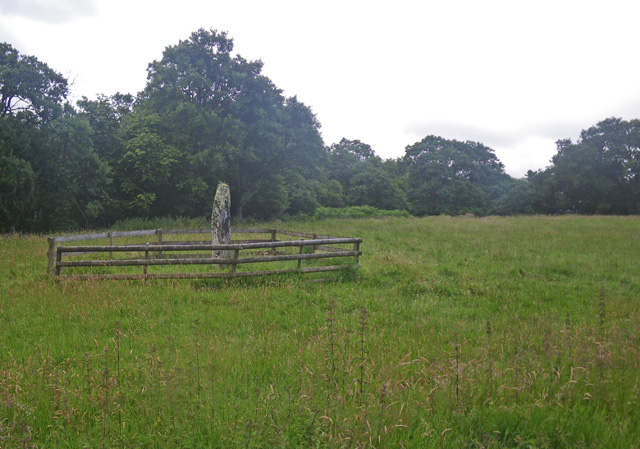
Sacred place · Prehistoric
Avinagillan standing stone
Argyll and Bute
A solitary standing stone raised somewhere in prehistory, its silent presence over the Kintyre shoreline outlasting any record of who put it there…
- Near Campbeltown
- Easy path
Fortified place · Medieval
Dùn a' Choin Duibh
Argyll and Bute
Its Gaelic name preserves a guardian-dog legend rather than any battle record, and its ridge commands an open sightline across four separate lands.
- Near Tobermory
- Rough ground
Fortified place · Medieval
Skipness Castle
Argyll and Bute
A working stronghold refortified across three centuries, ending its working life not by decay but under active siege in 1646: the last Scottish cas…
- Near Skipness
- Easy path
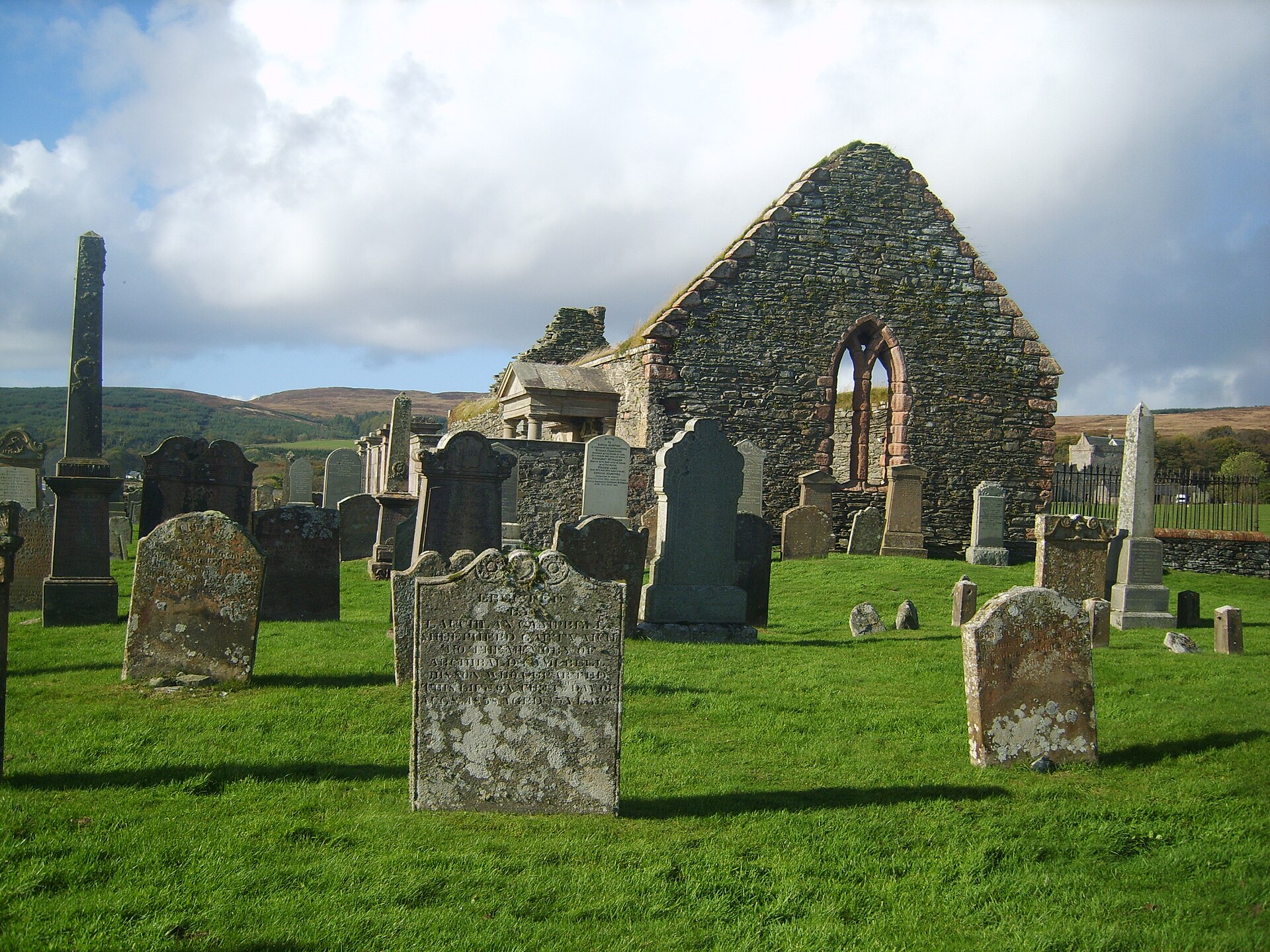
Building or ruin · Medieval
St Brendan's Chapel, Skipness
Argyll and Bute
A roofless chapel far larger than any other in Kintyre, standing beside five carved late medieval tombstones in a graveyard still used today.
- Near Skipness
- Easy path
The setting
View over Tarbert from the hill of Tarbert Castle.
Photo: Michael Jagger / Wikimedia Commons / CC BY-SA 2.0
Questions people ask
- When was Tarbert Castle built?
- A fortified structure stood on the site before the 14th century; the surviving tower house dates from the 16th century, around the time of James IV's 1494 campaign.
- Who captured Tarbert Castle in 1494?
- James IV of Scotland captured it from John MacDonald of Islay, Lord of the Isles, as part of his campaign against the Lordship of the Isles.
- What remains of Tarbert Castle today?
- Only a couple of standing walls survive, chiefly from the 16th-century tower house, with a commanding view over the water approaches.
- Why was Tarbert Castle strategically important?
- It overlooked the harbour and the water approaches up Loch Fyne to the Firth of Clyde, controlling a key crossing point at the north end of Kintyre.
- Who looks after Tarbert Castle now?
- The site is community-owned and maintained by volunteers as part of a local heritage park.
Sources
- Wikipedia: Tarbert Castle
- David Hicks, The Highland Clans (1982)
- Annals of Ulster, AD 431-1201
- Tarbert's Royal Castle (official website)
Explore more: Fortified places · Medieval · Argyll and Bute
The Ancient Codex, in your pocket
Get the Pocket Codex app
Carry the directory with you — Tarbert Castle and thousands of ancient places across Britain and Ireland, offline, wherever you roam.