
Its Gaelic name preserves a guardian-dog legend rather than any battle record, and its ridge commands an open sightline across four separate lands.
Across the Kintyre horizon, Gigha, Islay and Jura sit between the ridge and the farther Mull of Kintyre and Irish coast. Dùn a’ Choin Duibh occupies this viewpoint as a hillfort (a defended settlement built on high ground for both protection and visibility), above several sea approaches.
The fort’s Gaelic name, Dùn a’ Choin Duibh, means “fort of the black dog.” According to local shanachies (traditional Gaelic storytellers), the name comes from a black wolfhound, itself said to be half wolf, that once defended the site. No date or further detail attaches to the story; it survives only as an oral tradition tied to the place itself.
Beyond the name and its legend, little else is recorded about the fort’s builders, its age, or its later history. What remains is the ridge, the view it commands, and the tale that explains why the fort carries the name it does.
What follows is drawn from published sources, with each claim labelled by how firmly it is established.
The name
Dùn a' Choin Duibh is Scottish Gaelic for "fort of the black dog." Dùn denotes a fort or fortified place, while a' choin duibh means "of the black dog," a phrase preserved directly in the local place name.
History
No dated record of the fort's construction, occupation, or abandonment survives. What is documented is its location near Torinturk on the Kintyre peninsula and the tradition, carried by local shanachies (traditional Gaelic storytellers), that explains its name. According to that tradition, the fort was defended by a black wolfhound said to be half wolf, and it is this animal the name Dùn a' Choin Duibh commemorates. The story has been passed down without an attached date, surviving as oral history rather than written record.
Connections
-
Gigha
Gigha is the nearest of the Inner Hebridean islands visible from Dùn a’ Choin Duibh, seen across the Sound of Gigha from the fort’s ridge.
-
Islay
Islay appears in the western sea view from the fort beyond the nearer island of Gigha, part of the long maritime outlook recorded for Dùn a’ Choin Duibh.
-
Jura
Jura is another Inner Hebridean island visible from the fort’s ridge, extending its documented panorama north-westward from the Kintyre coast.
-
Mull of Kintyre
The Mull of Kintyre forms the southern landward limit of the panorama from the fort, which also takes in the islands and the distant Irish coast.
-
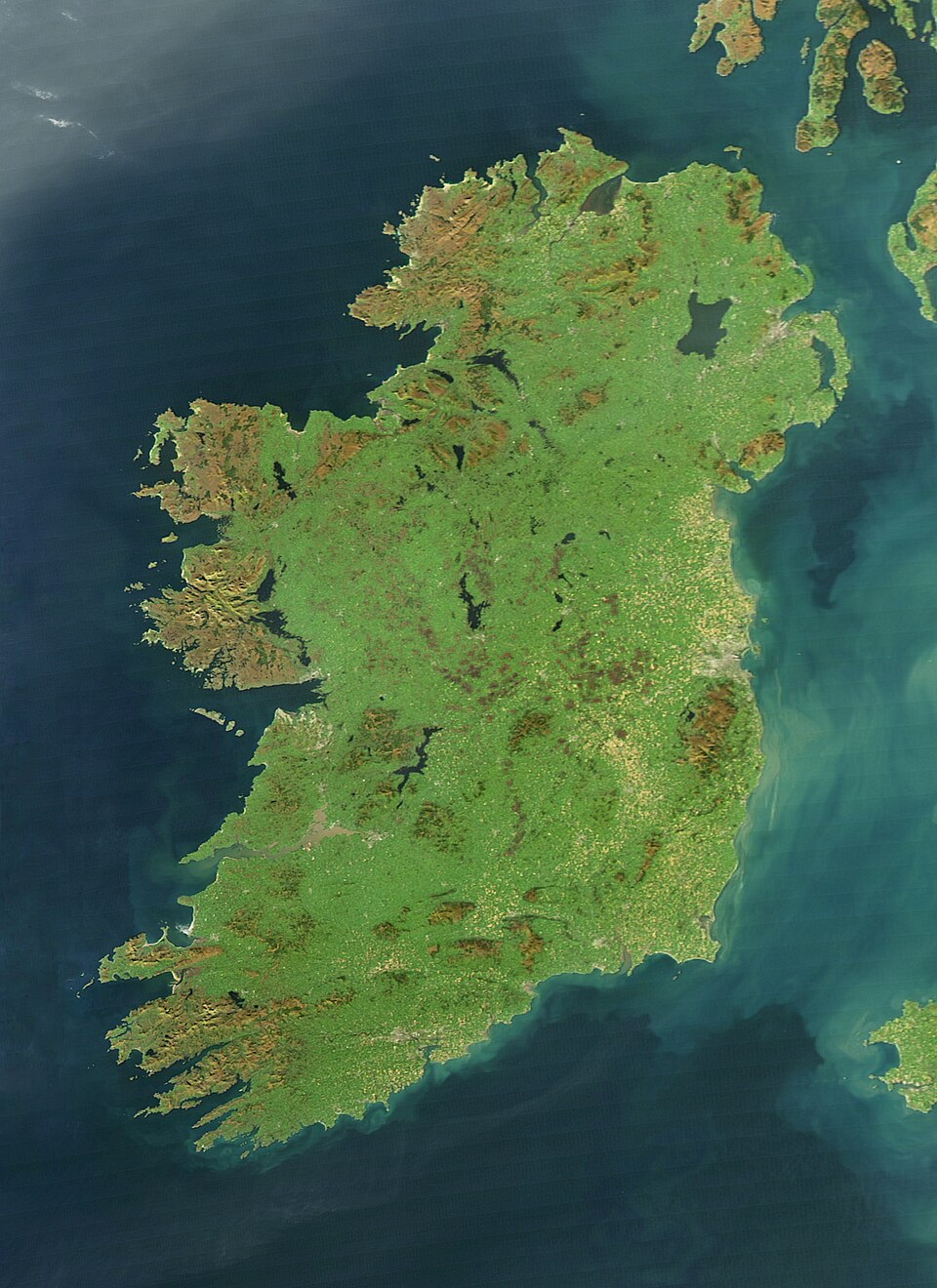
Photo: Jeff Schmaltz / Wikimedia Commons / Public domain Ireland
Ireland is recorded as the furthest element of the sea view from Dùn a’ Choin Duibh on clear days, beyond the nearer Inner Hebrides.
What to look for
-
The outlook to the Hebrides and Ireland
The principal feature to look for is the view itself: from the fort, sightlines extend to Gigha, Islay and Jura, and on to the Mull of Kintyre and the coast of Ireland.
What is said
Folklore and tradition, recorded as what is said — not as established fact.
-
The Black Wolfhound
According to local shanachies (traditional Gaelic storytellers), the fort is named after a black wolfhound, said to have been half wolf, that once defended it.
Plan your visit
- Location
- 55.8203°N · 5.5056°W
- Nearest settlement
- Tobermory
- Terrain
- Rough ground — reasonable boots advised
- Time needed
- About 30 minutes
- What survives
- Low stone remains of a coastal dun survive on rough ground.
Opening & admission
No current admission or access details are recorded — check locally before travelling.
Nearby places
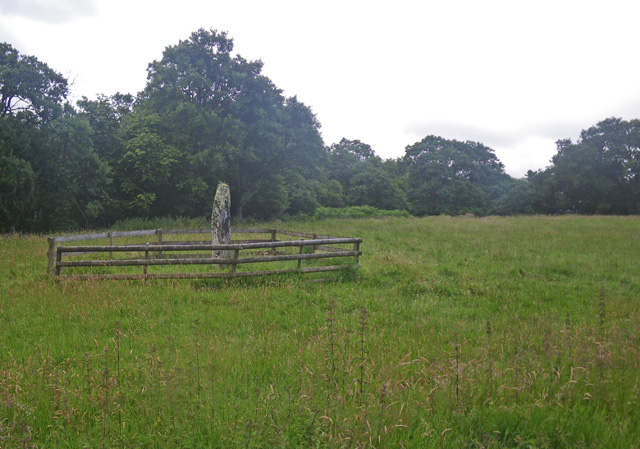
Sacred place · Prehistoric
Avinagillan standing stone
Argyll and Bute
A solitary standing stone raised somewhere in prehistory, its silent presence over the Kintyre shoreline outlasting any record of who put it there…
- Near Campbeltown
- Easy path
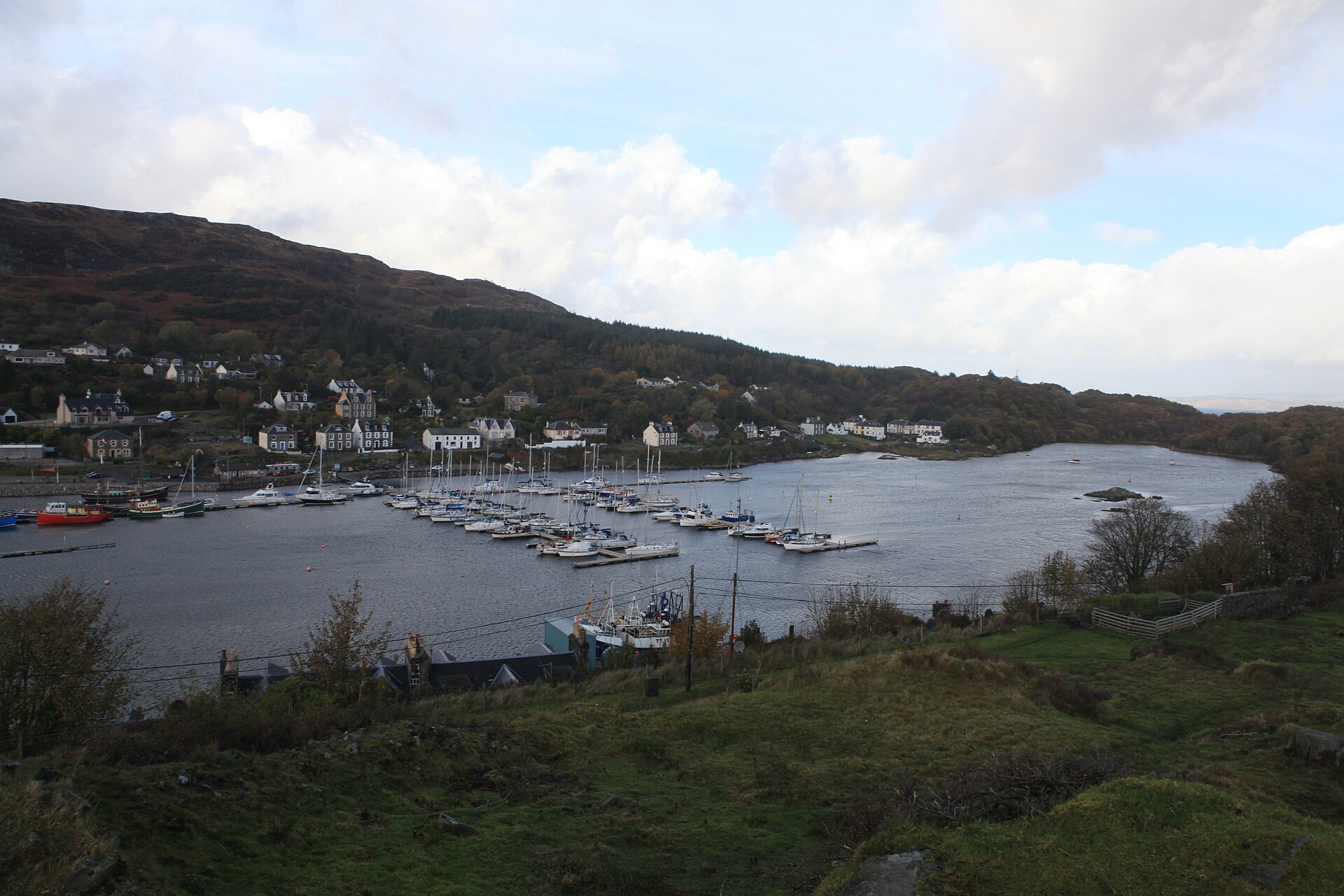
Fortified place · Medieval
Tarbert Castle
Argyll and Bute
A royal stronghold fought over for nearly a thousand years, from early-medieval burnings to a 1494 siege by a Scottish king, now looked after by th…
- Near Tarbert
- Some walking
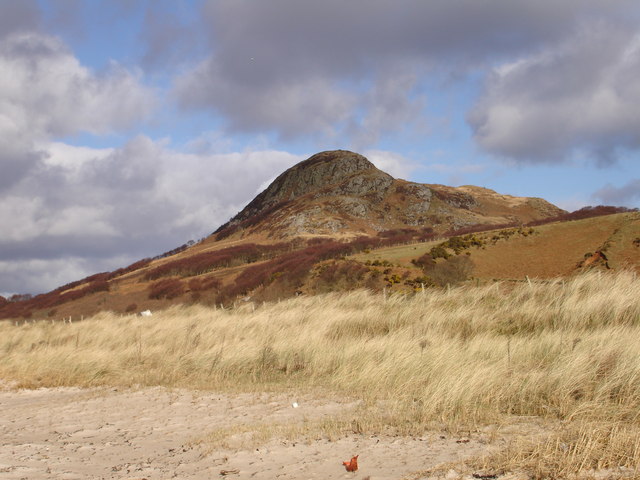
Fortified place · Medieval
Dun Skeig
Argyll and Bute
Two forts share one summit here: a compact Iron Age (the centuries before Rome arrived, from about 800 BC) dun with a single entrance, and beside i…
- Near Clachan
- Rough ground
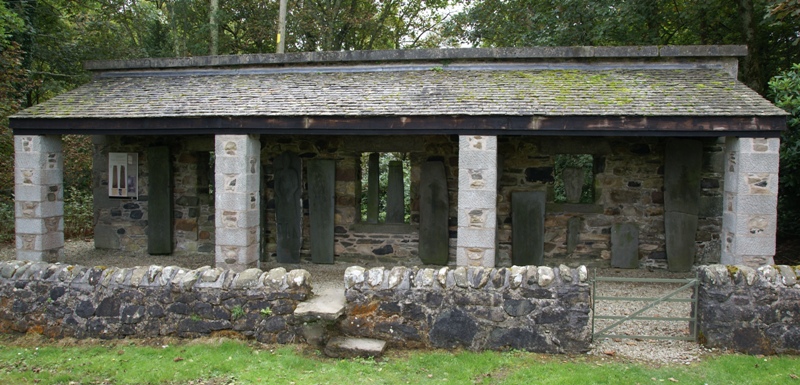
Carved stone · Medieval
Kilberry Sculptured Stones
Argyll and Bute
The Kilberry Sculptured Stones preserve medieval cross-slabs and grave markers from a parish church destroyed in the 17th century, keeping a disper…
- Near Kilberry
- Easy path
Questions people ask
- What does the name Dùn a' Choin Duibh mean?
- It is Scottish Gaelic for "fort of the black dog."
- Why is the fort named after a black dog?
- Local shanachies (traditional Gaelic storytellers) say it was named for a black wolfhound, said to be half wolf, that defended the fort.
- Where is Dùn a' Choin Duibh located?
- It is a hillfort near Torinturk, on the Kintyre peninsula in Argyll and Bute, Scotland.
- What can be seen from the fort?
- Views reach the Inner Hebridean islands of Gigha, Islay and Jura, and further to the Mull of Kintyre and Ireland.
- Is there a documented date for the fort's construction?
- No dated record survives; what is known comes from its name, its Gaelic naming tradition, and its location.
Sources
The Ancient Codex, in your pocket
Get the Pocket Codex app
Carry the directory with you — Dùn a' Choin Duibh and thousands of ancient places across Britain and Ireland, offline, wherever you roam.