
Its identity was forged not by an ancient founding but by two centuries of Scottish church schism and reunion, condensed into a single Dunblane building.
On the Sunday morning the new Free Church congregation of Dunblane first gathered, in October 1843, the building they filled — seating 521 people — was packed to capacity for its opening service. Days earlier, in the aftermath of that year’s General Assembly, the town’s parish minister, Rev. William MacKenzie, had walked out of the Church of Scotland altogether, taking eight of the nine elders on the Kirk Session with him. The dispute was not over doctrine but over who had the right to choose a congregation’s own minister — a question that had already split Scottish Presbyterianism once before, and would do so again.
That single act of secession set off more than a century of division, rebuilding and eventual reunion before the congregation settled into the building known today as St Blane’s. The church now standing dates from 1854, a Gothic Revival structure raised directly across the street from the first Free Church after that earlier building was, for reasons no surviving record explains, judged unsatisfactory within little more than a decade of its opening.
The present name is younger still. It was only in 1952, after national mergers had folded Dunblane’s various secession and Free Church congregations into the United Free Church and then the Church of Scotland, that the town’s Leighton and East congregations united to form St Blane’s, taking the 1854 building as their home. Today the church shares its Presbytery of Stirling parish life with Dunblane Cathedral nearby, the two buildings offering contrasting settings for worship within a few streets of one another.
What follows is drawn from published sources, with each claim labelled by how firmly it is established.
History
In 1758 a congregation of Seceders broke from the established Church of Scotland in Dunblane and built its first meeting house on the site now known as the Haining. Initially linked with a fellow congregation in nearby Doune, it grew steadily until, in 1766, it became a fully separate charge in its own right, one of many small dissenting communities then multiplying across Scotland.
Over the following decades the congregation passed through a succession of names — Associate, then First Associate Burgher, then United Secession, then United Presbyterian — before becoming the Leighton United Free Church of Scotland in 1900. In 1836 its original meeting house in the Haining was rebuilt on the same site, and remarkably the congregation was served by only three ministers across 134 years.
The Disruption of 1843 struck Dunblane with sudden force. In the aftermath of that year's General Assembly, the parish minister, Rev. William MacKenzie, walked out alongside eight of the nine elders on the Kirk Session to found a new Free Church of Scotland congregation. By October a church seating 521 people had been built and stood packed for its opening Sunday service.
For reasons no surviving record explains, that new building was soon judged unsatisfactory, and in 1854 a second church was raised directly across the street from it in the Gothic Revival style. This building became St Blane's, while the abandoned first church was later converted into private houses.
When the United Presbyterian and Free Churches merged nationally in 1900 to form the United Free Church of Scotland, the 1854 congregation took the name Dunblane East United Free Church. A further national union in 1929, joining the Church of Scotland and the United Free Church, left Dunblane with three congregations of the same denomination sharing the town: the Cathedral, the Leighton and the East.
Talks to combine the Leighton and East congregations gathered pace through the early 1950s, and in 1952 the two united to form St Blane's Church, taking the East Church as its home. The former Leighton Church stood empty for several years before being converted into a dwelling house within the Scottish Churches House complex, and within a decade St Blane's identity was firmly established, helped by an influx of new members during the 1960s housing boom.
People
-
Rev. Michael Gilfillan
Minister of the seceding Dunblane congregation from 1768 to 1816, one of only three ministers who served it across 134 years.
-
Rev. James Anderson
Minister of the congregation from 1818 to 1854, through its various changes of name and affiliation.
-
Rev. William Blair
Minister from 1856 onwards, serving the congregation that would eventually become St Blane's.
-
Rev. William MacKenzie
Minister of Dunblane's parish church who led the 1843 Disruption walkout, founding the Free Church congregation that became St Blane's.
Cultural influences
-
Scottish Presbyterian change
The congregation’s development was shaped by the Secession, the 1843 Disruption and later church unions in nineteenth- and twentieth-century Scotland.
Connections
-
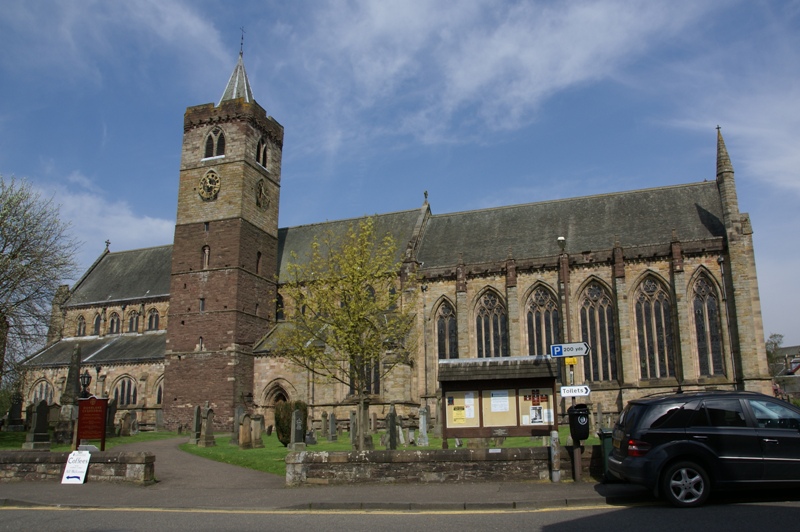
Photo: Otter / Wikimedia Commons / CC BY-SA 3.0 Serves the same town alongside St Blane's, the two buildings offering contrasting settings for worship within the Presbyterian tradition.
-
Leighton United Free Church
United with the East congregation in 1952 to form St Blane's Church.
-
Scottish Churches House
Incorporated the former Leighton Church building after it was converted into a dwelling house.
-
United Free Church of Scotland
Formed by the 1900 union of the United Presbyterian and Free Churches, giving the congregation its Dunblane East United Free Church name.
What to look for
-
Gothic Revival architecture
The 1854 building was raised in the Gothic Revival style favoured for many Scottish churches of the mid-19th century, distinguishing it from older buildings nearby.
-
Category B listed building
The church holds category B listed status, recognising it as an architecturally significant example of a mid-19th-century Free Church building.
Plan your visit
- Location
- 55.7368°N · 5.0359°W
- Nearest settlement
- Dunblane
- Time needed
- About 30 minutes
- Best time
- Daylight, subject to the church’s current visiting arrangements.
- What survives
- A Category B listed mid-nineteenth-century Gothic Revival church building.
- Facilities
- No dedicated visitor facilities are recorded beyond those associated with current church use.
Opening & admission
Contact the church or check its website for current admission and visiting arrangements.
Nearby places
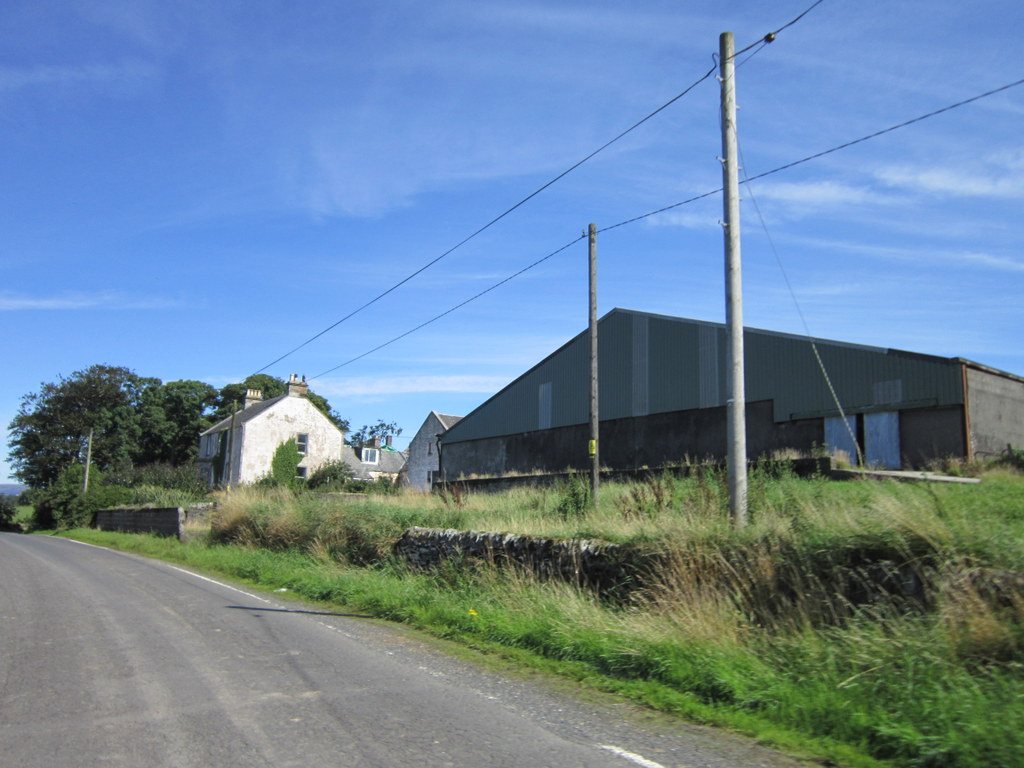
Fortified place · Medieval
Kilmory Castle, Bute
Argyll and Bute
Its nickname, Crowner's Castle, preserves the memory of a hereditary legal office: coroner of Bute: held by one family for generations.
- Near Meikle Kilmory
- Some walking
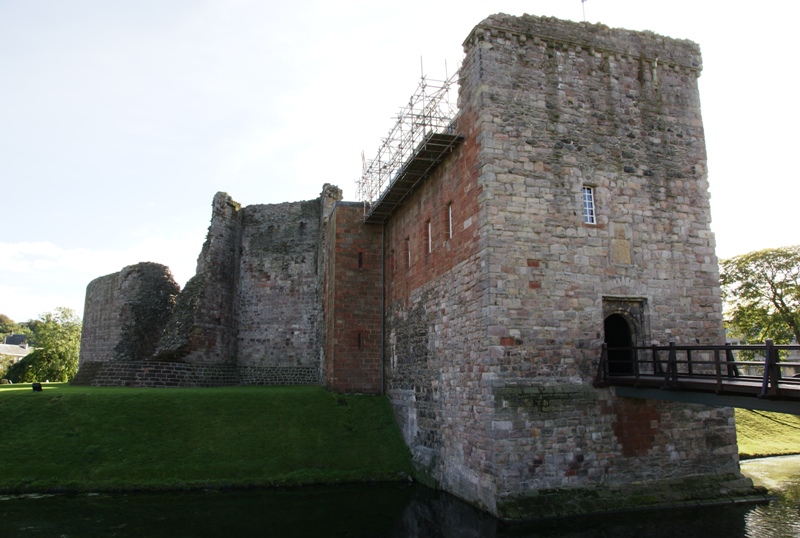
Fortified place · Medieval
Rothesay Castle
Argyll and Bute
A huge circular curtain wall, some 42 metres in diameter and originally around 7.9 metres high, still stands on a low mound above the town of Rothe…
- Some walking

Fortified place · Medieval
Lochranza Castle
North Ayrshire
Lochranza’s waterside tower links thirteenth-century lordship with Robert the Bruce’s reported 1306 landing, James IV’s island campaign and later a…

Fortified place · Medieval
Brodick Castle
North Ayrshire
A Norse-named stronghold on the Clyde approaches, seized and re-seized by Norwegian kings, Bruce's lieutenants, Campbell raiders and Cromwell's gun…
Questions people ask
- When was St Blane's Church built?
- The present building opened in 1854 as Dunblane's second Free Church, replacing an 1843 church nearby that had proved unsatisfactory.
- Why is it called St Blane's?
- The congregation took the name St Blane's in 1952, when the Leighton and East United Free Church congregations merged and settled in the East Church building.
- What listing status does the building hold?
- It is a category B listed building, recognising it as a Gothic Revival structure of architectural significance.
- How does St Blane's relate to Dunblane Cathedral?
- They are separate, independent congregations in the same town, offering contrasting worship settings within the Church of Scotland's Presbyterian tradition.
- What denomination is St Blane's part of?
- It is a Church of Scotland congregation within the Presbytery of Stirling, formed through 20th-century unions of secession and Free Church congregations.
Sources
- Wikipedia: St Blane's Church, Dunblane
- Historic Environment Scotland — Listed Building Record
Explore more: Building or ruins · Medieval · Argyll and Bute
The Ancient Codex, in your pocket
Get the Pocket Codex app
Carry the directory with you — St Blane's Church and thousands of ancient places across Britain and Ireland, offline, wherever you roam.