A Norse-named stronghold on the Clyde approaches, seized and re-seized by Norwegian kings, Bruce's lieutenants, Campbell raiders and Cromwell's gunners across seven centuries of conflict.
A red sandstone tower stands over Brodick Bay on the Isle of Arran, on a knoll that has carried a fortress since at least the fifth century, when Gaelic settlers from Antrim pushed into the region and gave the emerging kingdom of Dál Riata its first hold on the island. The name itself is a relic of a later occupation: Brodick derives from the Old Norse Breiðvík, “broad bay”, recalling the centuries when Arran lay within the Norse-ruled Sudreys, administered from Dublin or Orkney under the nominal authority of the King of Norway.
The site changed hands repeatedly. English forces held it after Edward I’s invasion of Scotland, until James Douglas and Sir Robert Boyd recaptured it for Robert the Bruce in January 1307, one of the first castles to fall to his cause. It was damaged again by an English raid in 1406 and by John of Islay, Lord of the Isles, in 1455, before passing after 1470 to the Hamilton family, who rebuilt it as a tower house by 1510 and held it, with interruptions, for close to five hundred years.
Cromwell’s Roundheads added an artillery battery in 1650 during their occupation of the castle, and in 1844 the architect James Gillespie Graham nearly tripled its size for William, 11th Duke of Hamilton. The National Trust for Scotland took over the castle and its gardens in 1958, after Lady Jean Fforde surrendered them in lieu of death duties, and an illustration of Brodick has appeared on Royal Bank of Scotland twenty-pound notes since 1972.
What follows is drawn from published sources, with each claim labelled by how firmly it is established.
The name
Brodick derives from the Old Norse Breiðvík, meaning "broad bay" — also recorded historically in variant spellings including Brethwic, Brathwik, Bradewik and Braizay — a legacy of Arran's incorporation into the Norse-ruled Sudreys by the tenth century.
History
By the mid-thirteenth century Arran formed part of the Kingdom of Mann and the Isles, ruled by Gall Gaidheal chieftains under the nominal overlordship of Hákon Hákonarson, King of Norway. In July 1263 Hákon sailed a great fleet to Lamlash Bay on Arran before crossing the firth to fight the Battle of Largs; his retreating army regrouped on the island, then withdrew to Orkney, where the king died, and the 1266 Treaty of Perth ceded the Hebrides to Scotland.
During Robert the Bruce's time in hiding after his defeat at the Battle of Methven, tradition places his legendary encounter with a spider on Arran. In the winter of 1306 James Douglas, Lord of Douglas, struck at forces supplying Brodick Castle, seizing much-needed provisions before an assault on Carrick. Acting with Sir Robert Boyd of Kilmarnock, Douglas dislodged the English garrison from Brodick in January 1307, one of the first castles to fall to Bruce's cause.
In 1406, the same year James I was captured by English pirates and Robert III died, an English force sailed into Brodick Bay and badly damaged the castle. Further destruction followed in 1455 at the hands of John of Islay, Lord of the Isles. Some time after 1470 James III granted the ruined stronghold to his brother-in-law James Hamilton, 1st Lord Hamilton, whose son was created Earl of Arran in 1503 and added the Lymphad of the Isles to the family's coat of arms.
By 1510 the Earl of Arran had rebuilt Brodick as a tower house, though it suffered further raids from the Campbells and MacLeans. During the Rough Wooing of Mary, Queen of Scots, an English force under the Earl of Lennox attacked the castle on behalf of Henry VIII. As Regent of Scotland during Mary's infancy, the 2nd Earl continued to enlarge the building; in 1550 Andrew Hamilton and Dean John Slater worked on it, and by 1552 a carpenter named Peter Moffett was fitting new doors.
The castle was drawn into the Wars of the Three Kingdoms when Archibald Campbell, 1st Marquess of Argyll, seized it from James Hamilton, 3rd Marquess and later 1st Duke of Hamilton, in 1639. Hamilton recovered Brodick in 1644 but lost it again to the Campbells in 1646; captured after the Battle of Preston, he was executed in March 1649. In 1650 Cromwell's Roundheads occupied the castle and built an artillery battery there to command the firth.
The dukedom and earldom passed to the first Duke's sole surviving child, Anne, who had been sent to Brodick for safety as a child; she later returned to her Lowland estates and in 1656 married William Douglas, who became Duke of Hamilton for life and used the castle chiefly for hunting. It remained a sporting estate until 1844, when the architect James Gillespie Graham nearly tripled its size for William, 11th Duke of Hamilton, following his marriage to Princess Marie of Baden.
The 12th Duke had no male heir, so although his titles passed to a distant cousin, Brodick itself was entailed on his daughter Lady Mary Louise Douglas-Hamilton, who married the 6th Duke of Montrose in 1906. In 1958 the National Trust for Scotland acquired the castle and gardens from Lady Jean Fforde in lieu of death duties owed on the death of her mother, the Dowager Duchess of Montrose.
People
-
James Hamilton, 1st Lord Hamilton
Granted Brodick by James III after 1470, founding the family's long tenure at the castle.
-
James Hamilton, 2nd Lord Hamilton
Created Earl of Arran in 1503; rebuilt Brodick as a tower house by 1510.
-
James Hamilton, 3rd Marquess and 1st Duke of Hamilton
Charles I's chief adviser on Scottish affairs; lost Brodick to the Marquess of Argyll in 1639 and was executed in March 1649.
-
Anne, Duchess of Hamilton
Inherited the dukedom and earldom of Arran as the first Duke's only surviving child, having been sent to Brodick for safety as a child.
-
William, 11th Duke of Hamilton
Married Princess Marie of Baden in 1843 and commissioned the 1844 enlargement of the castle.
-
James Gillespie Graham
Architect who nearly tripled the size of Brodick Castle in the 1844 rebuilding.
-
Lady Jean Fforde
Surrendered Brodick Castle and its gardens to the National Trust for Scotland in 1958 in lieu of death duties.
Cultural influences
-
Brodick’s Old Norse name, Breiðvík or “broad bay”, reflects Arran’s inclusion in the Norse-ruled Sudreys by the tenth century.
Connections
-
Royal Bank of Scotland
Has featured an illustration of Brodick Castle on the reverse of its twenty-pound banknotes since 1972.
-
Home Farm, Brodick
A related site within the wider Brodick estate associated with the castle.
-
Battle of Largs
Fought nearby in 1263 after King Hákon Hákonarson's fleet anchored off Arran at Lamlash Bay en route to the engagement.
-
Dukes of Hamilton
Held Brodick Castle as a seat for more than five centuries, from the fifteenth century until 1906.
In culture
-
Royal Bank of Scotland banknotes
Since 1972 an illustration of Brodick Castle has appeared on the reverse of Royal Bank of Scotland twenty-pound notes.
-
The Governess (1998)
The film The Governess, starring Minnie Driver, was filmed at Brodick Castle.
What to look for
-
The tower house core
The oldest surviving fabric dates to the rebuilding completed by the Earl of Arran around 1510.
-
Cromwell's artillery battery
An artillery battery added by Cromwell's occupying forces in 1650 still marks the castle's role in defending the firth.
-
The 1844 wing
James Gillespie Graham's 1844 addition, built for the 11th Duke of Hamilton, nearly tripled the size of the castle.
-
The Walled Garden
Built in 1710, the Walled Garden retains bee boles (recesses built into a wall to shelter woven bee skeps).
-
Woollett's engraving of The Death of General Wolfe
A black-and-white copy of William Woollett's engraving after Benjamin West's painting can be seen inside the castle.
What is said
Folklore and tradition, recorded as what is said — not as established fact.
-
Robert the Bruce and the spider
Tradition holds that while hiding on Arran after his defeat at the Battle of Methven, Robert the Bruce had his legendary encounter with a spider whose persistence is said to have inspired him to continue his struggle.
Plan your visit
- Location
- 55.5926°N · 5.1488°W
- Time needed
- About 90 minutes
- Best time
- Visit during published castle, garden or event opening periods and check current arrangements before travelling.
- What survives
- An intact baronial castle with formal gardens and country park, managed as a National Trust for Scotland visitor attraction.
- Facilities
- Visitor facilities depend on the current estate operation; check the official information before travelling.
Opening & admission
Castle, Garden & Country Park: adult £16; concession £12; child £8; National Trust for Scotland members enter free.
- Castle: daily 10am–5pm (last entry 4pm) from 30 March to 25 October; closed 26 October–28 February 2027.
- Country Park and Garden: daily 10am–5pm year-round (last entry 4pm).
Nearby places
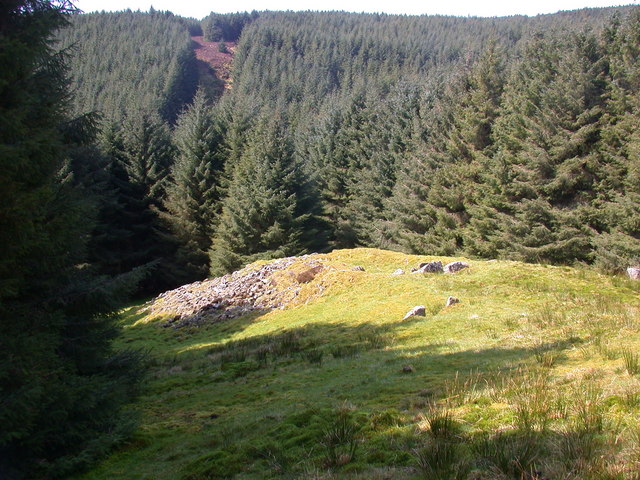
Tomb or burial place · Prehistoric
Carn Ban, Arran
North Ayrshire
Carn Ban is one of south-west Scotland’s best-known Neolithic (the first farming period in Britain, roughly 4000–2500 BC) Clyde cairns, preserving…
- Near Kilmory
- Easy path

Sacred place · Prehistoric
Machrie Moor Stone Circles
North Ayrshire
Machrie Moor gathers stone circles, burials and earlier timber settings into an exceptional prehistoric (before any written account of Britain exis…
- Near Machrie
- Some walking

Sacred place · Prehistoric
Moss Farm Road Stone Circle
North Ayrshire
Moss Farm Road preserves a damaged Bronze Age: the period from about 2500 to 800 BC: stone-mound-and-circle monument within Arran’s wider Machrie M…
- Near Machrie
- Some walking

Sacred place · Prehistoric
Auchagallon Stone Circle
North Ayrshire
Auchagallon is a fifteen-stone Arran monument whose circle and central cairn, a mound of piled stones covering a burial, preserve evidence of Stone…
- Near Machrie
- Some walking
The setting
Near Brodick Castle, about 9 metres away.
Photo: Billy McCrorie / Wikimedia Commons / CC BY-SA 2.0
Near Brodick Castle, about 9 metres away.
Photo: Billy McCrorie / Wikimedia Commons / CC BY-SA 2.0
Near Brodick Castle, about 14 metres away.
Photo: Billy McCrorie / Wikimedia Commons / CC BY-SA 2.0
Near Brodick Castle, about 20 metres away.
Photo: Billy McCrorie / Wikimedia Commons / CC BY-SA 2.0
Near Brodick Castle, about 20 metres away.
Photo: Billy McCrorie / Wikimedia Commons / CC BY-SA 2.0
Near Brodick Castle, about 20 metres away.
Photo: Billy McCrorie / Wikimedia Commons / CC BY-SA 2.0
Questions people ask
- What does the name "Brodick" mean?
- It derives from the Old Norse Breiðvík, meaning "broad bay", a legacy of the centuries when Arran lay within the Norse-ruled Sudreys.
- Who owns Brodick Castle today?
- The National Trust for Scotland, which acquired the castle and gardens from Lady Jean Fforde in 1958 in lieu of death duties.
- How is Brodick Castle connected to Robert the Bruce?
- In January 1307 his lieutenants James Douglas and Robert Boyd recaptured it from an English garrison, one of the first castles to fall to Bruce's cause.
- When was the castle greatly enlarged?
- In 1844, when architect James Gillespie Graham nearly tripled its size for William, 11th Duke of Hamilton.
- Why does Brodick Castle appear on Scottish banknotes?
- Since 1972 an illustration of the castle has featured on the reverse of Royal Bank of Scotland twenty-pound notes.
Sources
- Wikipedia: Brodick Castle
- Historic Environment Scotland — Brodick Castle (GDL00071)
- Historic Environment Scotland — Brodick Castle Estate (LB7507)
- Coventry, Martin — The Castles of Scotland
- National Trust for Scotland — Brodick Castle and Country Park
Explore more: Fortified places · Medieval · North Ayrshire
The Ancient Codex, in your pocket
Get the Pocket Codex app
Carry the directory with you — Brodick Castle and thousands of ancient places across Britain and Ireland, offline, wherever you roam.