Its carver rendered Christ with spiral arms and a fishtail body, an image found nowhere else among Scotland's early medieval (roughly AD 400–1100, between the Romans and the Normans) crosses.
Christ’s carved face looks out from a slab now kept in the gardens of Colonsay House. Heavy eyebrows and prominent ears sit above a long thin neck; below, opposing spirals replace arms and the body narrows into a fish’s tail. The unusual image is the reason this small monument remains memorable.
The cross takes its name from Riasg Buidhe, a village on the Inner Hebridean island of Colonsay that was abandoned and now survives only as ruins about two and a half kilometres southeast of the house. It was there, in an old burial ground, that the cross originally stood before it was lifted and brought to its present setting in 1870. The figure carved into its face is presumed to represent Christ, its fishtail drawing on the old Christian symbol of Christ as a fish, though the carving’s other face has prompted rather different, more contested readings.
What follows is drawn from published sources, with each claim labelled by how firmly it is established.
History
Carvers working on Colonsay during the 7th or 8th century cut the cross from a single slab of stone, giving one face a solemn human head with heavy eyebrows and prominent ears set above a long thin neck. Below the head they carved two opposing spirals in place of arms and closed the design with a body that narrows into a fishtail, a design without a close parallel among the surviving Pictish and early Christian sculpture of the region.
For centuries afterwards the cross remained at Riasg Buidhe, standing within what later records describe as an old burial ground attached to the now-vanished settlement there. It stayed in that position through the medieval and early modern periods while the village around it eventually declined and was abandoned, leaving the cross as one of the few visible markers of a community that has otherwise disappeared from the landscape.
In 1870 the cross was taken from its original site at Riasg Buidhe and moved to the grounds of Colonsay House, a mansion built in 1722 near Kiloran, known in Scottish Gaelic as Cill Odhráin. There it was set beside Tobar Oran, the well of St Oran, close to the site of the now-lost Chapel of St Oran, relocating the monument from an abandoned rural burial ground into a designed garden setting where it has remained since.
Later scholarship placed the cross within the wider study of early medieval sculpture from the Pictish world, most notably in David M. Wilson's The Art of the Picts, published in 2004, which set the carving alongside other early Christian stonework from Scotland. Kevin Byrne's Lonely Colonsay: Island at the Edge, published in 2010, likewise recorded the cross as part of the island's history, keeping its story attached to Colonsay even after its removal from Riasg Buidhe.
Cultural influences
-
Early Christian sculpture
The cross is shaped by the early Christian artistic tradition of western Scotland, while its present setting reflects its nineteenth-century removal to Colonsay House.
Connections
-
Riasg Buidhe
The abandoned village that gives the cross its name and where it originally stood in an old burial ground until 1870.
-
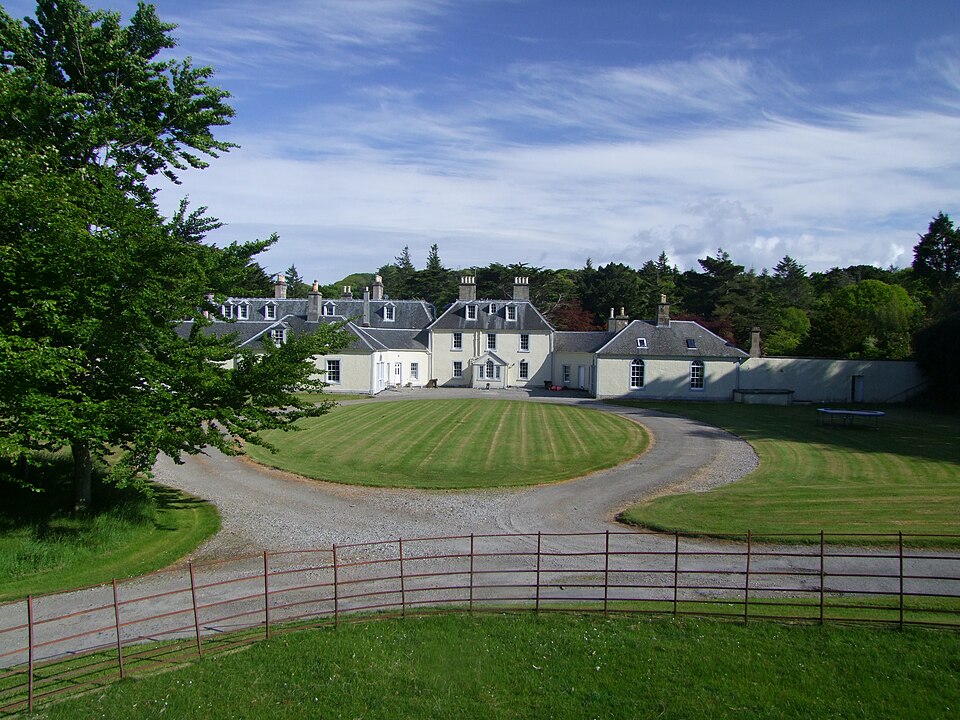
Photo: Catriona Colonsay / Wikimedia Commons / CC BY-SA 3.0 Colonsay House
The mansion, built in 1722, to whose gardens the cross was moved in 1870 and where it still stands.
-
Chapel of St Oran
The now-lost chapel near Kiloran beside whose site, and beside the associated well Tobar Oran, the cross was placed after its move.
Discovery & excavation
The cross was recorded standing at Riasg Buidhe in what was described as an old burial ground before it was removed from that site in 1870 and relocated to the grounds of Colonsay House, where it remains on display.
What to look for
-
The carved face
A solemn face with pronounced eyebrows and ears, set above a long thin neck, dominates one side of the cross.
-
Spiral arms and fishtail
The presumed figure of Christ has two opposing spirals for arms and a body that narrows into a fishtail at its base, echoing the early Christian symbol of Christ as a fish.
-
The garden setting
The cross now stands in the gardens of Colonsay House beside Tobar Oran, the well of St Oran, near the site of the lost Chapel of St Oran.
What is said
Folklore and tradition, recorded as what is said — not as established fact.
-
The second face
Some have suggested that the reverse side of the cross may be intended to represent a penis, though this reading of the carving is a matter of interpretation rather than settled fact.
Plan your visit
- Location
- 56.0930°N · 6.1882°W
- Nearest settlement
- Scalasaig
- Terrain
- Easy going
- Time needed
- About 15 minutes
- Best time
- Daylight, subject to any current arrangements for the private garden setting.
- What survives
- An early medieval carved stone preserved in the gardens of Colonsay House, away from its original burial-ground setting.
- Facilities
- No public visitor facilities are recorded at the cross.
Opening & admission
No current admission details are recorded — check the managing body's site before travelling.
- The cross stands in the private gardens of Colonsay House rather than at its original findspot
- No public access route is documented
Nearby places
Fortified place · Medieval
Dùn Eibhinn
Argyll and Bute
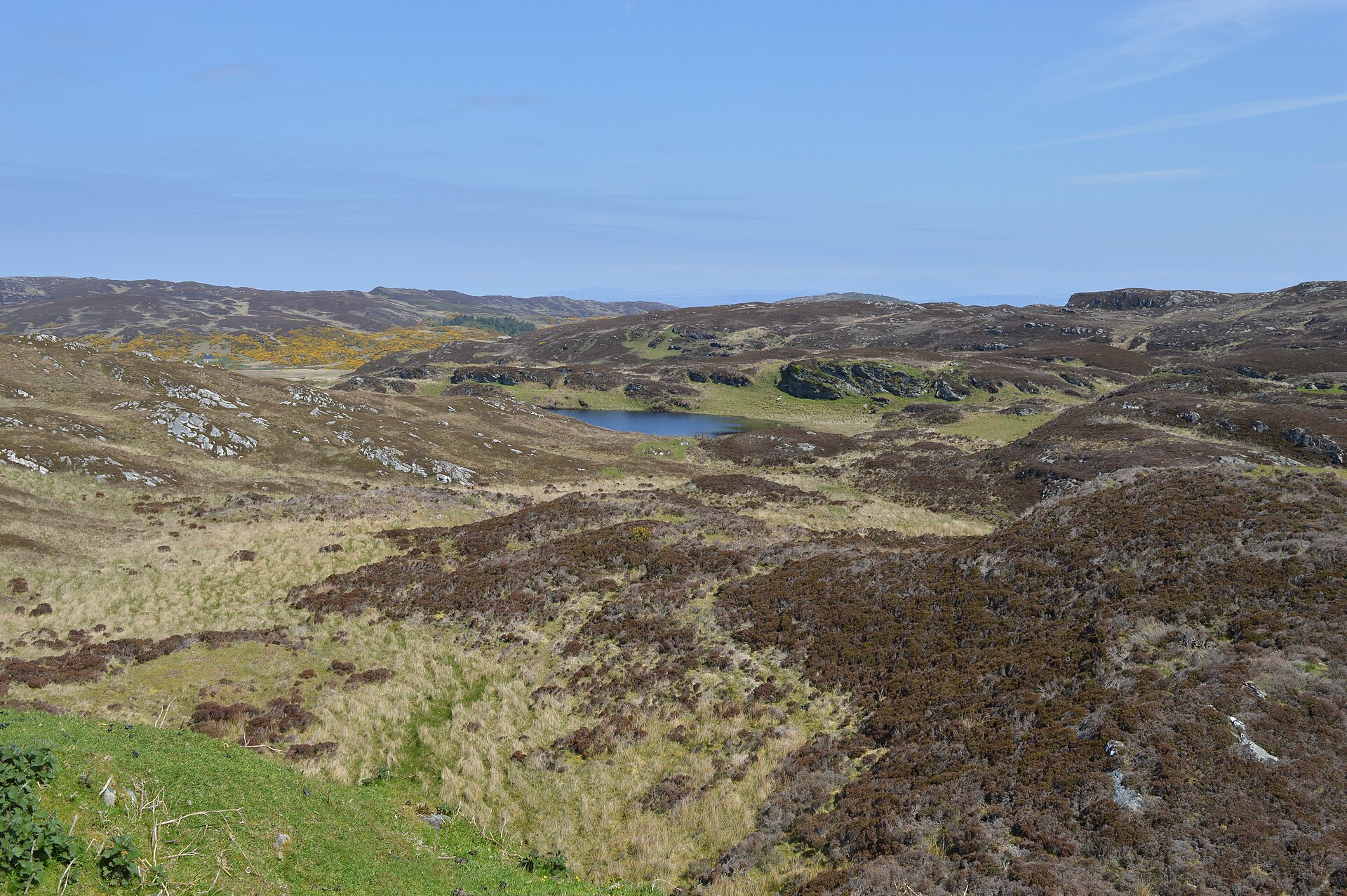
A hilltop stronghold on Colonsay carries a Norse name to this day: Fort of Eyvind: a rare physical trace of Viking-era rule surviving in the Hebrides.
- Near Scalasaig
- Rough ground
Fortified place · Iron Age
Dùn Meadhonach
Argyll and Bute
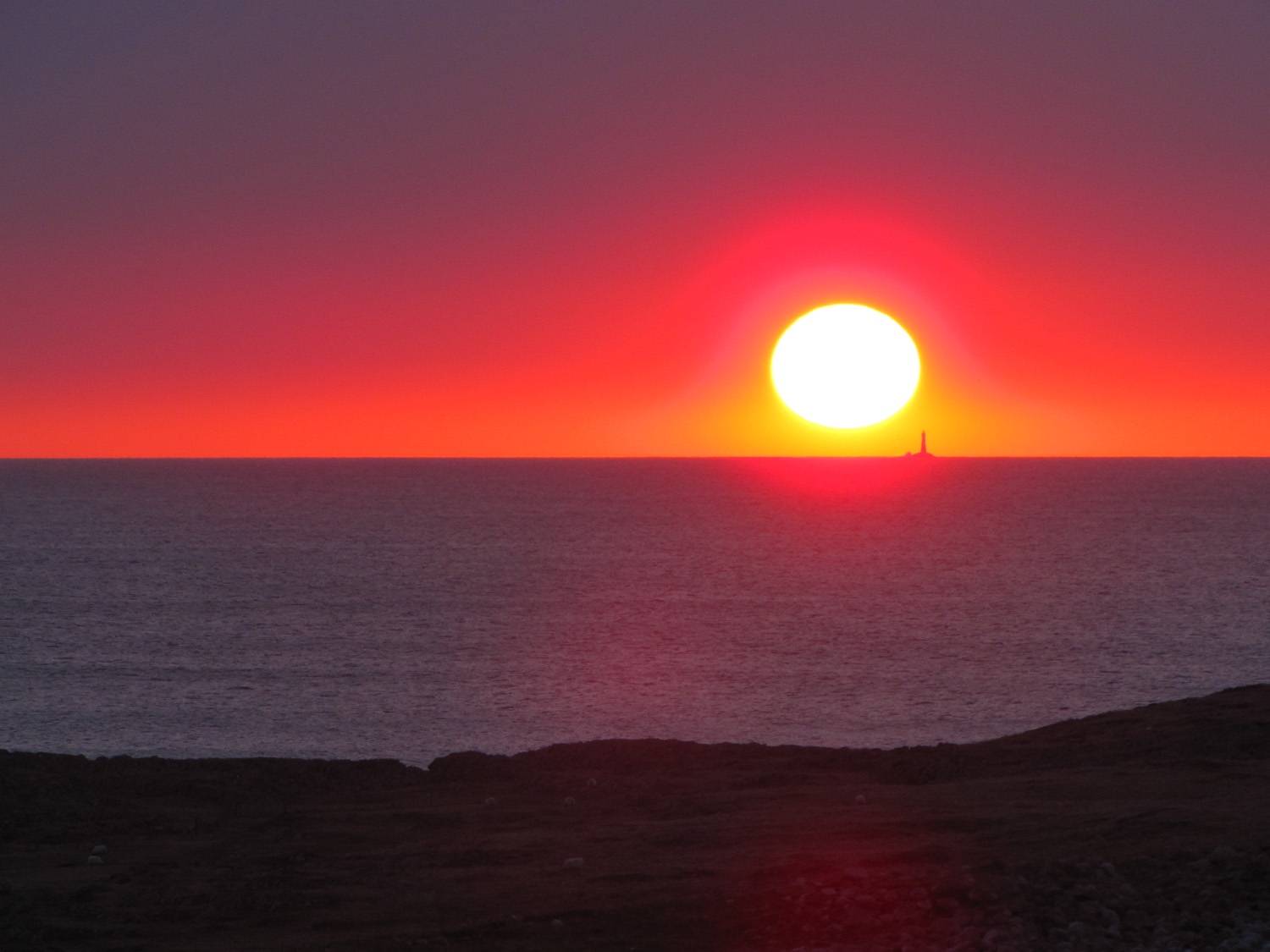
Its Gaelic name, Middle Fort, hints at a lost network of strongholds along this stretch of Colonsay: of which this is now the only one still named.
- Near Lower Kilchattan
- Rough ground
Fortified place · Medieval
Dùn Cholla
Argyll and Bute
Tradition ties this hilltop fort to an exiled Irish king and to Columba's first Scottish church: one summit knotted into two founding legends.
- Near Scalasaig
- Rough ground
.jpg?width=800)
Fortified place · Prehistoric
Dùn Galláin
Argyll and Bute
The fort's own name, Fort of the Strangers, and a battle remembered on the beach just to its north, seem to point at the same event from two differ…
- Near Scalasaig
- Rough ground
Questions people ask
- Where is the Riasg Buidhe Cross located?
- It stands in the gardens of Colonsay House on the island of Colonsay, having been moved there in 1870 from the abandoned village of Riasg Buidhe.
- How old is the Riasg Buidhe Cross?
- It dates from the 7th or 8th century, making it an early medieval carving from the Pictish period.
- What does the carving on the cross show?
- One side shows a solemn face with a long neck, spiral arms, and a body ending in a fishtail, presumed to represent Christ.
- Why was the cross moved from Riasg Buidhe?
- It was taken from the old burial ground at Riasg Buidhe in 1870 and relocated to the grounds of Colonsay House, where it remains today.
- What is Riasg Buidhe itself?
- Riasg Buidhe is a now-abandoned and ruined village on Colonsay, about two and a half kilometres southeast of Colonsay House, from which the cross takes its name.
Sources
- Wikipedia: Riasg Buidhe Cross
- David M. Wilson, The Art of the Picts
- Kevin Byrne, Lonely Colonsay: Island at the Edge
Explore more: Carved stones · Medieval · Argyll and Bute
The Ancient Codex, in your pocket
Get the Pocket Codex app
Carry the directory with you — Riasg Buidhe Cross and thousands of ancient places across Britain and Ireland, offline, wherever you roam.