A hilltop stronghold on Colonsay carries a Norse name to this day — Fort of Eyvind — a rare physical trace of Viking-era rule surviving in the Hebrides.
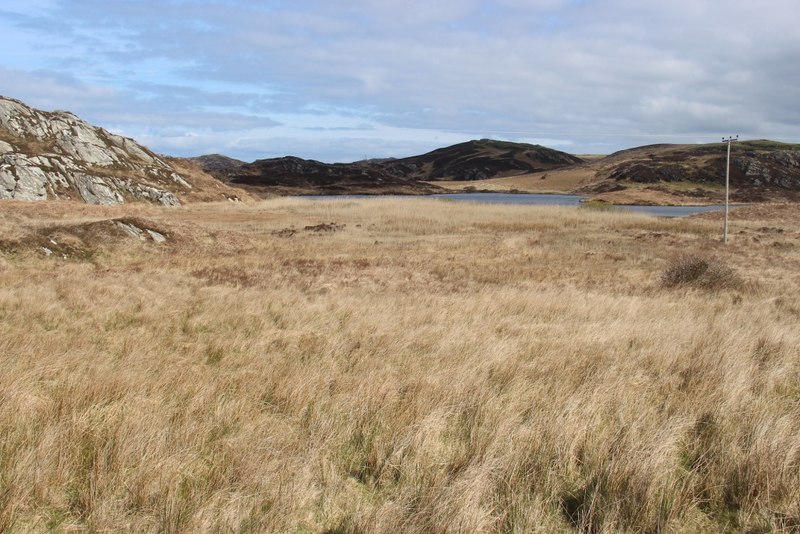
Heather reaches the foot of Dùn Eibhinn, where broken walls crown Colonsay’s rocky rise. Local records call the hillfort (a fortified settlement built on defensible high ground) Dun Evan, Dun Eivan and Fort of Eyvind, preserving the Scandinavian personal name attached to the summit.
The fort is believed to have been raised in the early eleventh century as a royal residence, a seat from which Norse power was exercised over the Hebrides at a time when the islands sat within a wider Norse-Gaelic world stretching from Dublin to Orkney. That Viking-age origin makes Dùn Eibhinn one of the more evocative survivals of that period on Colonsay, even though little of its early fabric can now be read on the ground.
Ownership later passed into Gaelic hands: by the early thirteenth century the fort belonged to Clan Macfie, who held Colonsay and, with it, Dùn Eibhinn for some four hundred years. That tenure ended abruptly in the seventeenth century, in a killing that closed the fort’s working life for good.
What follows is drawn from published sources, with each claim labelled by how firmly it is established.
The name
The name Dùn Eibhinn combines dùn (a fort, typically on a defensible hilltop) with a personal name rendered in English as Evan or Eivan and, in fuller translation, as Eyvind — a Norse name. The recorded variants Dun Evan, Dun Eivan and Fort of Eyvind all preserve the same underlying Scandinavian name, marking the site as a memory of a named Norse ruler rather than a purely Gaelic foundation.
History
In the early eleventh century Dùn Eibhinn is believed to have been built as a royal residence, raised on high ground on Colonsay at a time when the Hebrides lay within the orbit of Norse power stretching across the Irish Sea and the Northern Isles. As a seat of Viking authority in the islands, the fort would have anchored a Norse ruler's control over Colonsay and its surrounding waters, a position that later gave the site its Scandinavian name.
By the early part of the thirteenth century, control of the fort had passed to Clan Macfie, who made Colonsay their principal territory and held Dùn Eibhinn as part of their power on the island. This transfer marks the point at which the site moved from Norse to Gaelic clan hands, beginning roughly four centuries of Macfie tenure over the fort and the island around it, long after the Norse rulers commemorated in its name had gone from the Hebrides.
In 1623 Malcolm Macfie of Colonsay, Chief of Clan Macfie, was killed in a feud by Coll Mac Gillespick MacDonald. His death broke Macfie authority over Colonsay, and with it the fort's role as a working stronghold; Dùn Eibhinn was abandoned in the aftermath and left to fall into ruin, closing some four centuries of Macfie tenure and the state in which the site survives today.
People
-
Malcolm Macfie of Colonsay
Chief of Clan Macfie, killed in a 1623 feud with Coll Mac Gillespick MacDonald, an event after which the fort was abandoned.
-
Coll Mac Gillespick MacDonald
Killed Malcolm Macfie of Colonsay in the 1623 feud that ended Clan Macfie's hold on Dùn Eibhinn.
Connections
-
Clan Macfie
Held Dùn Eibhinn and Colonsay from the early thirteenth century until 1623, when the killing of their chief ended their control of the fort.
-
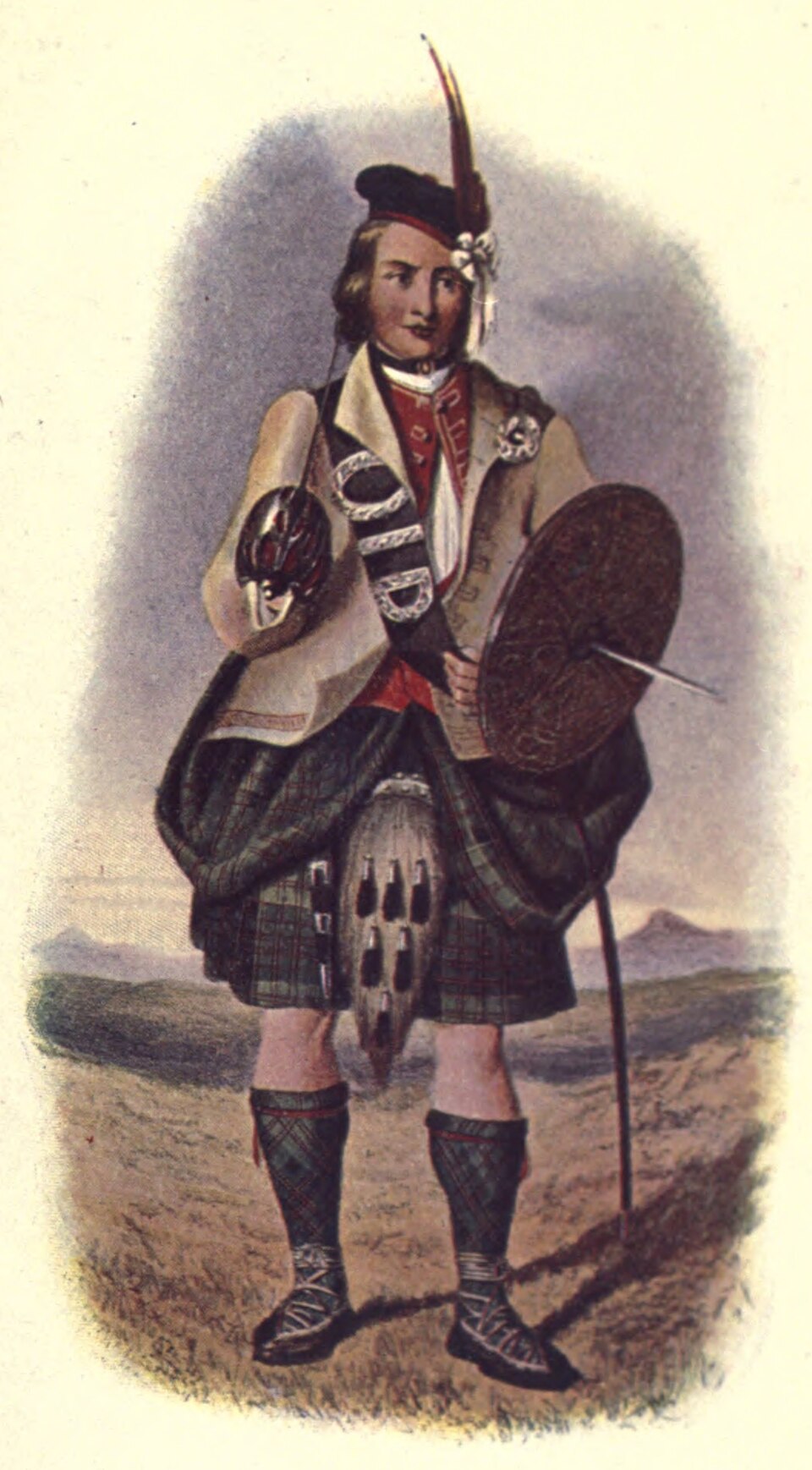
Photo: Robert Ronald McIan (1803-1856). / Wikimedia Commons / Public domain Clan Donald (Clan MacDonald)
A member of the clan, Coll Mac Gillespick MacDonald, killed the Macfie chief in the 1623 feud that brought about the fort's abandonment.
What to look for
-
Hilltop siting
Dùn Eibhinn stands on high ground on Colonsay, the kind of defensible summit typical of hillforts, chosen to command the surrounding land and coastline first as a Norse stronghold and later as a Macfie seat of power.
Plan your visit
- Location
- 56.0706°N · 6.2078°W
- Nearest settlement
- Scalasaig
- Access
- Open access
- Terrain
- Rough ground — reasonable boots advised
- Time needed
- About 45 minutes
- What survives
- Ruined walls and earthworks survive on high ground above Colonsay.
Opening & admission
No current admission details are recorded — check ahead before visiting.
- Hillfort ruin on Colonsay reached across open hill ground; no path or facilities are documented
Nearby places
Fortified place · Iron Age
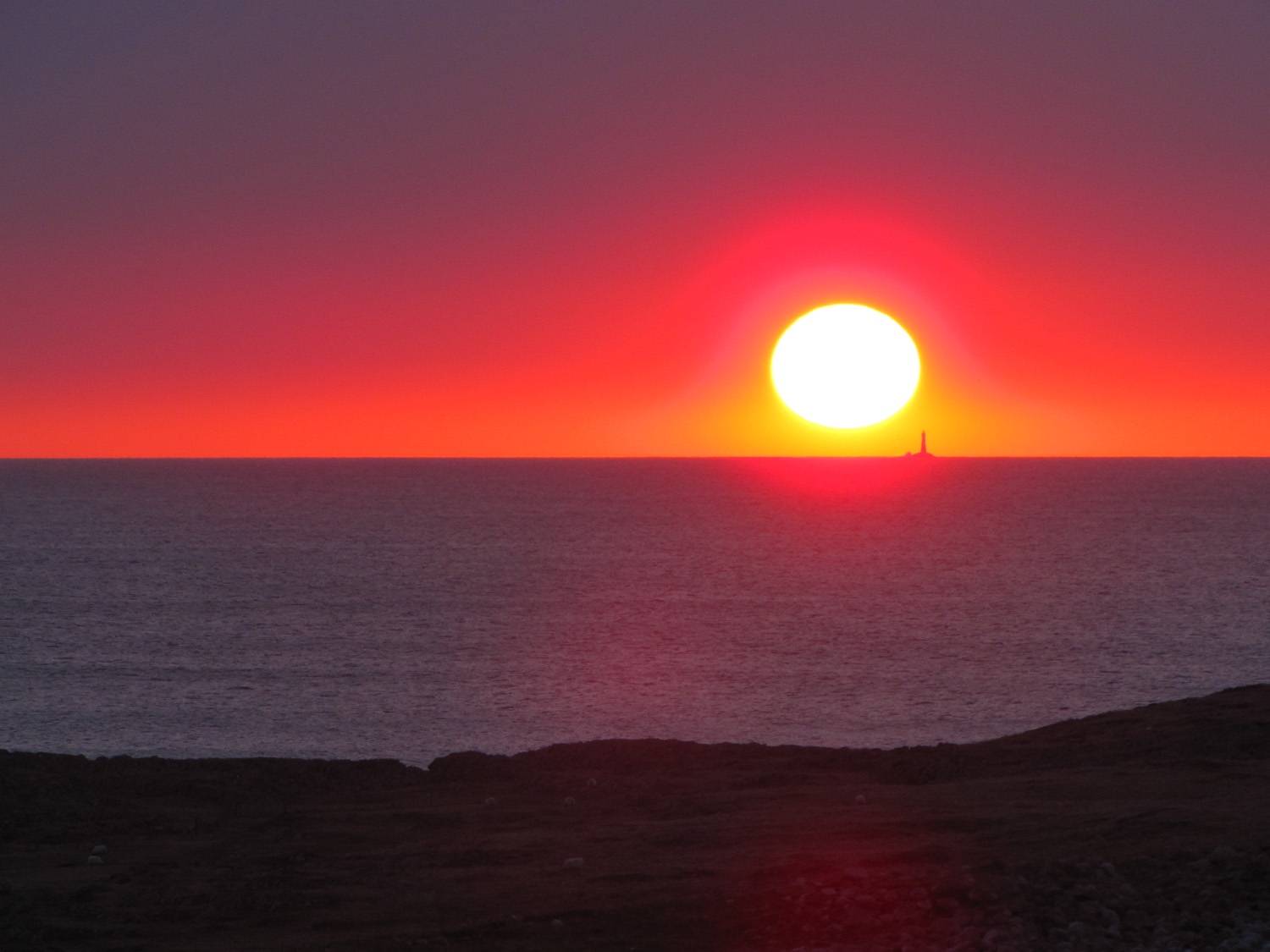
Dùn Meadhonach
Argyll and Bute
Its Gaelic name, Middle Fort, hints at a lost network of strongholds along this stretch of Colonsay: of which this is now the only one still named.
- Near Lower Kilchattan
- Rough ground
Carved stone · Medieval
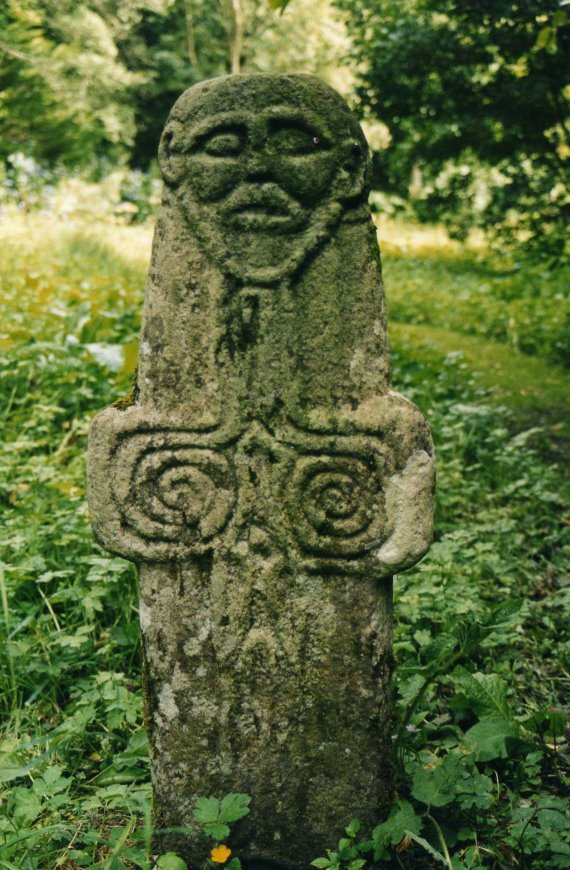
Riasg Buidhe Cross
Argyll and Bute
Its carver rendered Christ with spiral arms and a fishtail body, an image found nowhere else among Scotland's early medieval (roughly AD 400–1100,…
- Near Scalasaig
- Easy path
Fortified place · Medieval
Dùn Cholla
Argyll and Bute
Tradition ties this hilltop fort to an exiled Irish king and to Columba's first Scottish church: one summit knotted into two founding legends.
- Near Scalasaig
- Rough ground
.jpg?width=800)
Fortified place · Prehistoric
Dùn Galláin
Argyll and Bute
The fort's own name, Fort of the Strangers, and a battle remembered on the beach just to its north, seem to point at the same event from two differ…
- Near Scalasaig
- Rough ground
Questions people ask
- What is Dùn Eibhinn?
- A hillfort on the Inner Hebridean island of Colonsay, believed founded as a Norse royal residence and later held by Clan Macfie.
- Why is it also called Fort of Eyvind?
- Its name preserves a Norse personal name, rendered in English as Evan, Eivan or Eyvind, reflecting its origin as a Viking-era stronghold.
- Who built Dùn Eibhinn?
- It is believed to have been built in the early eleventh century as a royal residence and seat of Viking power in the Hebrides.
- When did Clan Macfie gain control of the fort?
- In the early part of the thirteenth century, when Dùn Eibhinn came into Clan Macfie possession along with Colonsay.
- Why was Dùn Eibhinn abandoned?
- After Malcolm Macfie, Chief of Clan Macfie, was killed in a 1623 feud by Coll Mac Gillespick MacDonald, the fort was abandoned and fell into ruin.
Sources
- Wikipedia: Dùn Eibhinn
- Wikidata: Dùn Eibhinn (Q5320410)
- Kevin Byrne, Colkitto! A Celebration of Clan Donald of Colonsay 1570-1647 (1997)
Explore more: Fortified places · Medieval · Argyll and Bute
The Ancient Codex, in your pocket
Get the Pocket Codex app
Carry the directory with you — Dùn Eibhinn and thousands of ancient places across Britain and Ireland, offline, wherever you roam.