
A rare assembly of medieval West Highland grave slabs kept together under one roof, in the direct care of Historic Environment Scotland, rather than scattered singly across the churchyard.
Inside a small stone aisle built onto the side of Kilmodan Church, a row of carved grave slabs lies gathered together, their weathered surfaces still bearing the marks of medieval carvers working in a distinctive West Highland style. Rather than standing scattered singly across the surrounding churchyard, as such slabs often do elsewhere, the Kilmodan stones were brought together under one roof, making them easier to view side by side and easier to shelter from the weather.
The churchyard itself sits at Clachan of Glendaruel, a small settlement on the Cowal Peninsula in Argyll and Bute, on Scotland’s west coast. Glendaruel has long formed a route through the hills of Cowal, and the church at its heart has served the surrounding community for generations, with the burial aisle added as a way of keeping the carved stones together rather than left exposed individually to rain and lichen.
Today the collection is in the care of Historic Environment Scotland, the public body responsible for looking after Scotland’s protected historic sites, which lists the stones as a monument in their own right rather than simply an adjunct to the working church beside them. That status reflects the value placed on West Highland carved grave slabs as a body of medieval sculpture, even where, as at Kilmodan, little else is recorded about the individuals the stones were carved to commemorate.
What follows is drawn from published sources, with each claim labelled by how firmly it is established.
History
The carved grave slabs were gathered together within a purpose-built burial aisle attached to Kilmodan Church, rather than left scattered across the surrounding churchyard where individual medieval markers usually stand or lie exposed to the weather. Bringing the stones under one roof made it possible to view them as a single collection and helped protect their carved surfaces from further erosion.
Care of the stones passed to Historic Scotland, and today rests with its successor body, Historic Environment Scotland, which maintains the aisle and lists the carved stones as a recognised monument in their own right. Local interest in the site is sustained by groups such as the Friends of Kilmodan & Colintraive, who support the wider heritage of the churchyard and its surroundings.
Connections
-
Friends of Kilmodan & Colintraive
A community group supporting ongoing care of, and public interest in, Kilmodan Churchyard and its carved stones.
-
Faith in Cowal
A regional heritage initiative covering churches and religious sites across the Cowal Peninsula, including Kilmodan.
-
Clachan of Glendaruel
Kilmodan Church, where the carved stones are displayed in a burial aisle, stands in this settlement in Cowal.
Discovery & excavation
Historic Environment Scotland records the carved stones as a protected monument, providing their modern heritage documentation.
What to look for
-
The burial aisle
A small stone aisle attached to Kilmodan Church shelters the collection of carved slabs, keeping them together rather than dispersed across the open churchyard.
-
The carved grave slabs
A group of medieval West Highland grave slabs, each bearing the weathered carving characteristic of the type, is displayed together within the aisle.
Plan your visit
- Location
- 56.0082°N · 5.2178°W
- Nearest settlement
- Clachan of Glendaruel
- Access
- Open access
- Terrain
- Easy going
- Time needed
- About 20 minutes
- What survives
- A collection of weathered medieval grave slabs is displayed in a burial aisle at Kilmodan Churchyard.
Opening & admission
In the care of Historic Environment Scotland; check the official site for current admission details.
- Housed in a burial aisle within Kilmodan Churchyard, a short walk from the road at Clachan of Glendaruel.
Nearby places
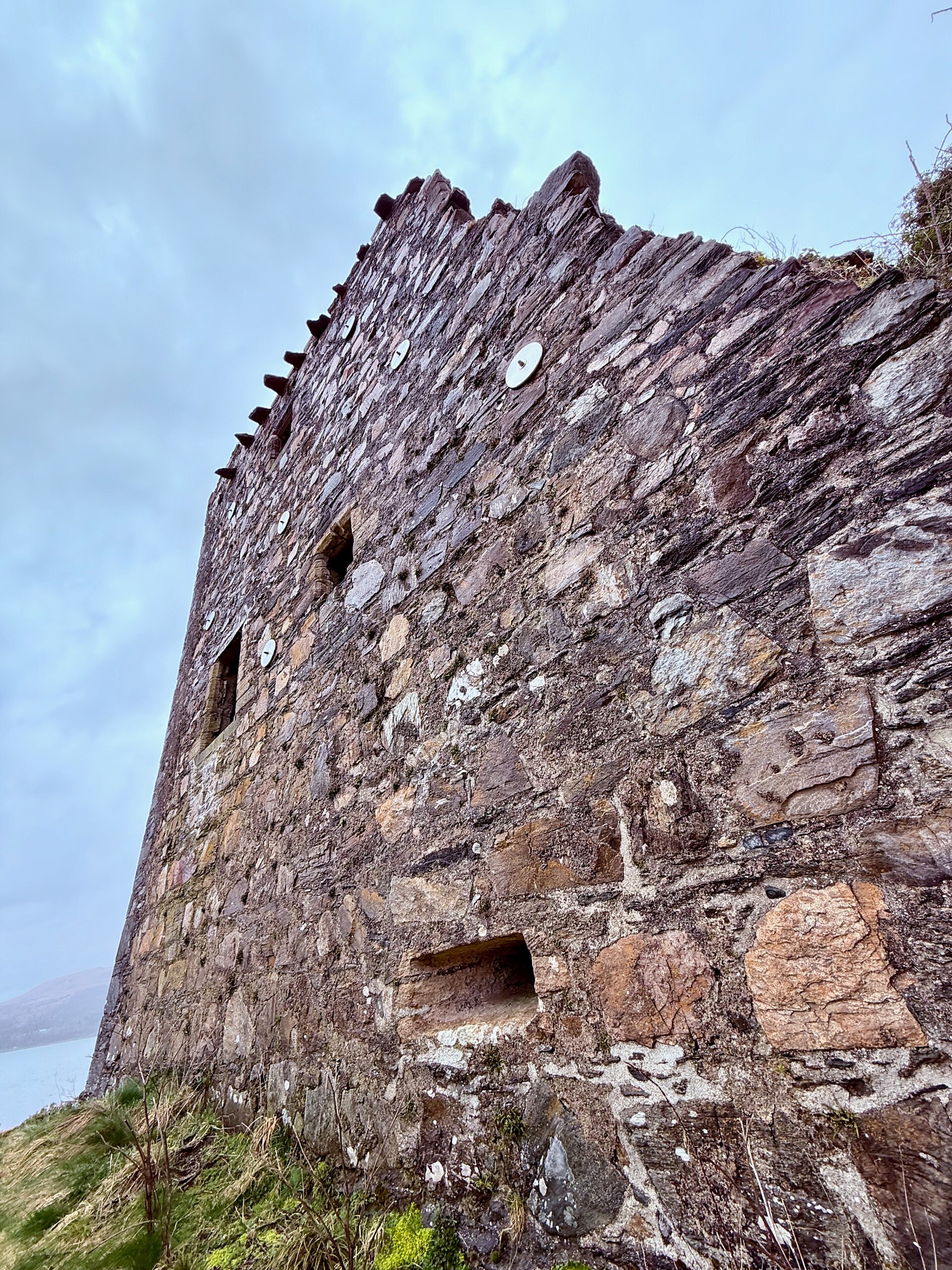
Fortified place · Medieval
Old Castle Lachlan
Argyll and Bute
A clan stronghold bombarded into ruin by government order after Culloden: its fall traces the collapse of Jacobite Cowal in a single act of naval g…
- Near Strathlachlan
- Some walking
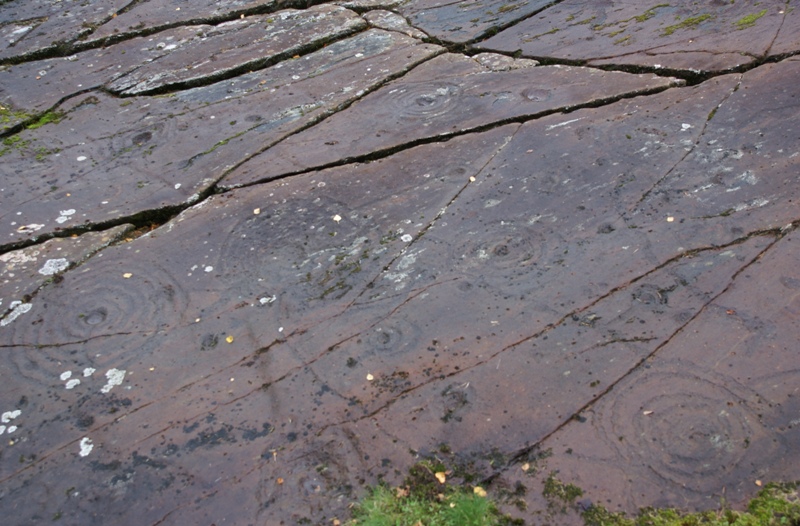
Carved stone · Prehistoric
Achnabreck Cup and Ring Marks
Argyll and Bute
One of the densest and most elaborate concentrations of prehistoric (before written records reached Britain) cup and ring carvings anywhere in Scot…
- Near Lochgilphead
- 6 min walk from car park
- Easy path
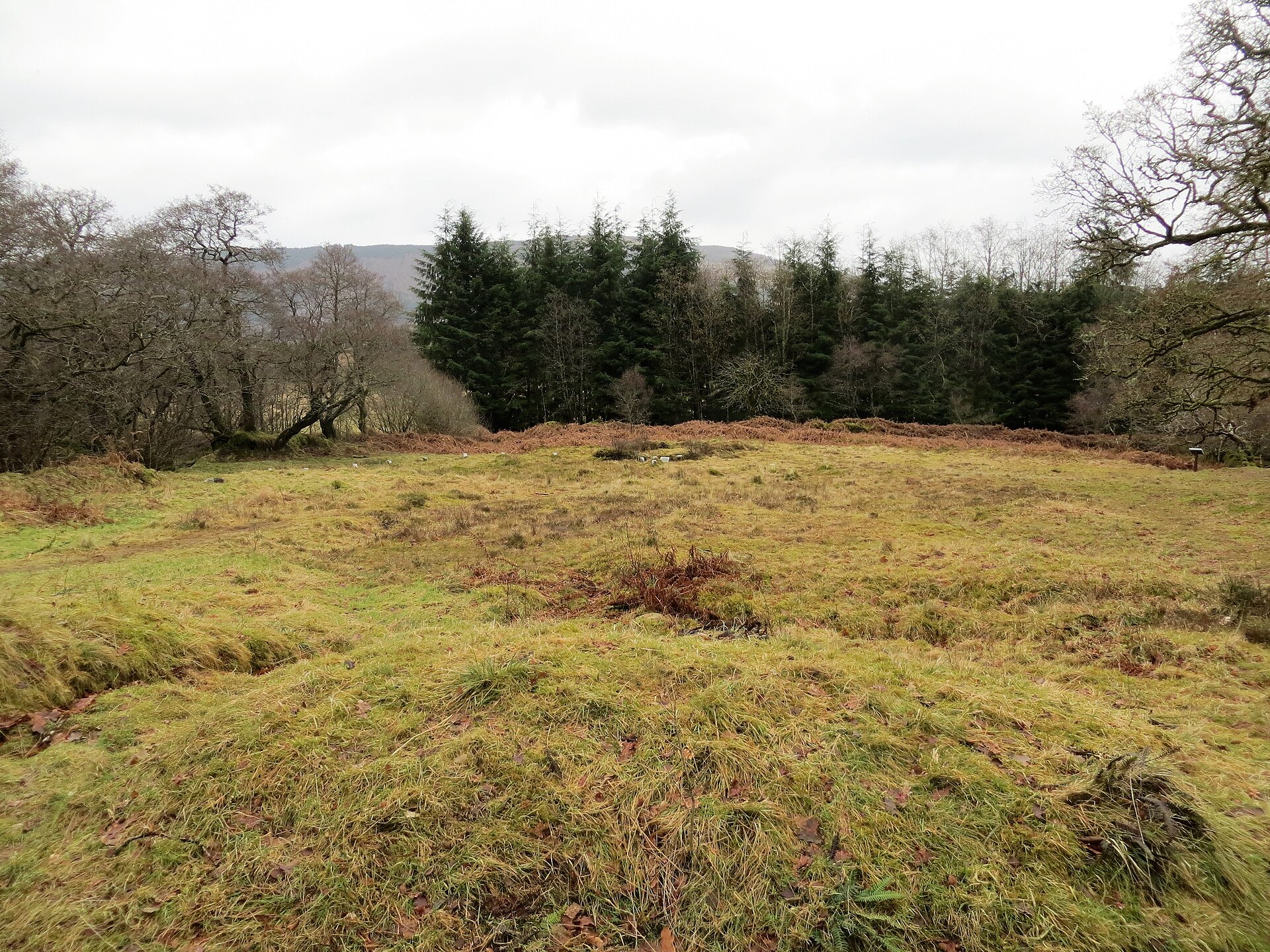
Sacred place · Prehistoric
Ardnadam Farm
Argyll and Bute
A field on the Cowal shore where a Neolithic tomb was read by nineteenth-century antiquarians as a Druidical altar, and by local tradition as the g…
- Near Dunoon
- Easy path
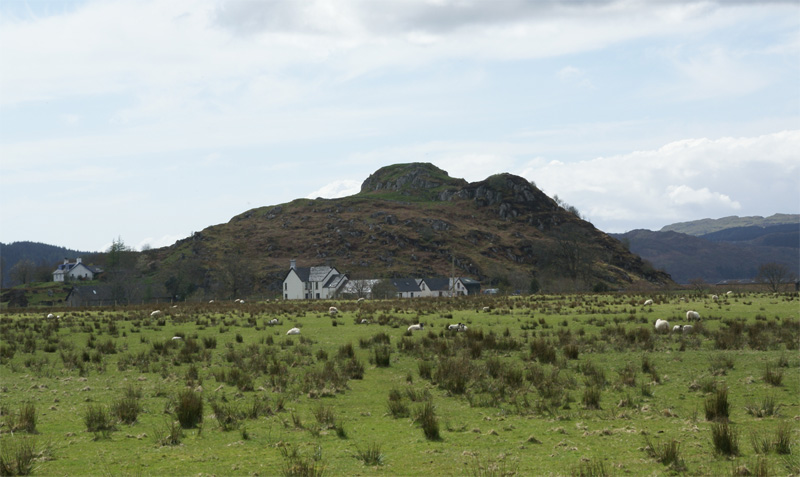
Fortified place · Iron Age
Dunadd Fort
Argyll and Bute
Dunadd is a hillfort in Argyll and Bute, occupied from the Iron Age and into the early medieval period, and believed to have been the capital of th…
- Near Kilmartin
- 237 metres from car park
- Some walking
The setting
Kilmodan Church and churchyard, beside the burial aisle where the carved stones are displayed.
Photo: Thomas Nugent / Wikimedia Commons / CC BY-SA 2.0
Questions people ask
- What are the Kilmodan Carved Stones?
- A collection of medieval West Highland carved grave slabs displayed together in a burial aisle at Kilmodan Churchyard, Argyll and Bute.
- Where are the stones located?
- In a burial aisle within Kilmodan Churchyard at Clachan of Glendaruel on the Cowal Peninsula, Argyll and Bute.
- Who looks after the stones?
- Historic Environment Scotland, the public body responsible for Scotland's protected historic sites, formerly known as Historic Scotland.
- Why were the slabs gathered into one aisle?
- To display them together and protect their carved surfaces from weathering, rather than leaving them scattered across the open churchyard.
- Is there local support for the site?
- Yes: the Friends of Kilmodan & Colintraive and the Faith in Cowal initiative both promote interest in the churchyard and its heritage.
Sources
- Wikipedia: Kilmodan Carved Stones
- Historic Environment Scotland
- Faith in Cowal
Explore more: Carved stones · Pictish & early medieval · Argyll and Bute
The Ancient Codex, in your pocket
Get the Pocket Codex app
Carry the directory with you — Kilmodan Carved Stones and thousands of ancient places across Britain and Ireland, offline, wherever you roam.