
A clan stronghold bombarded into ruin by government order after Culloden — its fall traces the collapse of Jacobite Cowal in a single act of naval gunfire.
Loch Fyne reaches the foot of Old Castle Lachlan’s broken curtain wall. The open enclosure still outlines the hall and chambers that housed Clan Maclachlan’s chiefs for about four centuries, before the ruin ceased to be their residence.
The surviving enclosure took form in the early fifteenth century, with buildings added inside it later in that same century, replacing whatever earlier structure had stood on land first recorded under the name Castlelachlan in 1314. It served as the chiefs’ base through charters, feuds and battles until the family finally abandoned it in the chaos following the 1746 Jacobite defeat, decades before a new house was raised nearby to take its place.
Today the castle is protected as a scheduled monument, and since 2011 the clan itself has led efforts to stabilise the walls against the weather and the sea, using traditional masonry methods rather than modern repair, so that what Culloden’s aftermath left standing does not now fall to simple neglect.
What follows is drawn from published sources, with each claim labelled by how firmly it is established.
The name
The name preserves that of Lachlan Mor, or "Great Lachlan", the thirteenth-century chieftain on Loch Fyne from whom the clan and its lands took their name; the earliest record of the site itself, in 1314, already calls it Castlelachlan.
History
The Maclachlans' hold on this shore of Loch Fyne is documented from 1292, when Gilleskel Maclachlan received a charter from John, King of Scots, for the lands known as Strathlachlan on the loch's eastern side. A further record in 1314 names the site itself as Castlelachlan, though nothing survives today of whatever fourteenth-century stronghold that name first described; the ruin now standing belongs to a later rebuilding entirely.
The enclosure visible today took shape in the early fifteenth century, with the buildings inside it added during the later part of that century, and architectural evidence has led some to place the design as late as the sixteenth. In 1574 the crown granted Archibald MacLachlan, the fifteenth chief, a charter confirming his family's hold on the lands of Cowal and Glasrie to him and his male heirs bearing the Maclachlan name and arms.
Clan loyalties through the seventeenth century drew the Maclachlans into national conflict on more than one occasion: they aided the MacGregors at the Battle of Glen Fruin in 1603, and fought for the crown at the Battle of Alford in 1645. In 1680 the clan's holdings were consolidated when Strathlachlan was erected into a free barony, formally uniting the family's lands under a single name.
The Maclachlans kept faith with the exiled Stuarts long after the Campbells across the loch had settled with the government. Lachlan Maclachlan, the seventeenth chief, supported Viscount Dundee at the Battle of Killiecrankie in 1689 and rallied to James VIII in the 1715 rising; when Charles Edward Stuart raised his banner at Glen Shiel in 1745, the chief gathered a hundred men and marched east to Holyrood in Edinburgh.
On 16 April 1746 Lachlan Maclachlan led a regiment of 115 of his own clansmen and 182 MacLeans of Mull, whose own chief had failed to arrive, into the Battle of Culloden alongside Clan Mackintosh and Clan Chattan. After surviving a Hanoverian artillery barrage the Jacobites pressed an offensive but were outnumbered and driven back; the chief himself was struck by a cannonball and killed, his body found afterwards behind the government lines.
In the rout that followed, the Maclachlans were forced to abandon their castle, and it was bombarded from the sea later in 1746 on the orders of the Duke of Cumberland, after which it was never again lived in and has stood as a ruin since. A 1748 letter from Rev. John MacLachlan of Kilchoan to the Bishop of Ross and Caithness recorded the chief's service and death, complaining that the newspapers of the day had overlooked him entirely.
Through the intervention of the Duke of Argyll, the family's confiscated lands were restored on 18 November 1749 to Robert MacLachlan, the eighteenth chief, then only fourteen years old, though the castle was never rebuilt as a residence. Since 2011 Clan MacLachlan has run a conservation programme at the ruin, using traditional masonry to arrest erosion and prevent collapse, alongside its protection as a scheduled monument.
People
-
Lachlan Mor
Thirteenth-century chieftain on Loch Fyne from whom the clan and the castle's name derive, said to descend from the Irish prince Anrothan O'Neill.
-
Archibald MacLachlan
Fifteenth clan chief, granted a 1574 crown charter confirming his family's lands of Cowal and Glasrie.
-
Lachlan Maclachlan
Seventeenth clan chief and committed Jacobite, killed by cannonball leading his regiment at the Battle of Culloden in 1746.
-
Robert MacLachlan
Eighteenth clan chief, who had the family's confiscated lands restored to him in 1749 at the age of fourteen.
-
Duke of Cumberland
Ordered the bombardment of the abandoned castle from the sea after the 1746 Jacobite defeat.
Cultural influences
-
Loch Fyne clan stronghold
Its shore-side position on Loch Fyne made the castle the historic focus of the Maclachlan lands and their clan’s political loyalties.
Connections
-
Kilmorie Chapel
Stands near the castle and served as the burial place of the Maclachlan clan chiefs, and is one of the few surviving medieval church buildings in the west of Scotland.
-
New Castle Lachlan
Built in 1790 about 0.8 kilometres to the east-north-east as the clan's replacement residence after the old castle was abandoned.
-
Clan Campbell
Held lands across Loch Fyne from the Maclachlans and, unlike them, did not maintain Jacobite loyalties through the eighteenth century.
-
Clan Mackintosh and Clan Chattan
Fought in the same part of the Jacobite line as the Maclachlan regiment at the Battle of Culloden in 1746.
-
The MacLeans of Mull
Joined the Maclachlan regiment at Culloden as 182 men after their own clan chief failed to arrive.
-
Battle of Culloden
Lachlan Maclachlan was killed leading his clansmen at Culloden in 1746; the defeat led to the castle’s bombardment and abandonment.
What to look for
-
The early fifteenth-century enclosure
The outer walls of the ruin belong to a rebuilding of the early 1400s, distinct from the earlier fourteenth-century stronghold of which nothing now remains.
-
The later internal buildings
Structures within the enclosure were added later in the fifteenth century, giving the ruin its layered building history.
-
Conservation stonework since 2011
Traditional masonry repairs carried out by Clan MacLachlan can be seen stabilising sections of wall most at risk from weathering and erosion.
Plan your visit
- Location
- 56.1085°N · 5.2095°W
- Nearest settlement
- Strathlachlan
- Access
- Open access
- Terrain
- Moderate walking
- Time needed
- About 30 minutes
- Best time
- Daylight in dry weather, when the conservation masonry and loch-side setting are easier to see.
- What survives
- A roofless medieval ruin under a conservation programme to arrest weathering and erosion.
- Facilities
- No dedicated visitor facilities are recorded at the ruin.
Opening & admission
Free to view from outside; check current access conditions before visiting.
- A scheduled monument and ruin on the shore of Loch Fyne, drawing many passers-by
- Ongoing conservation work has been underway since 2011 to prevent further erosion and collapse
Nearby places
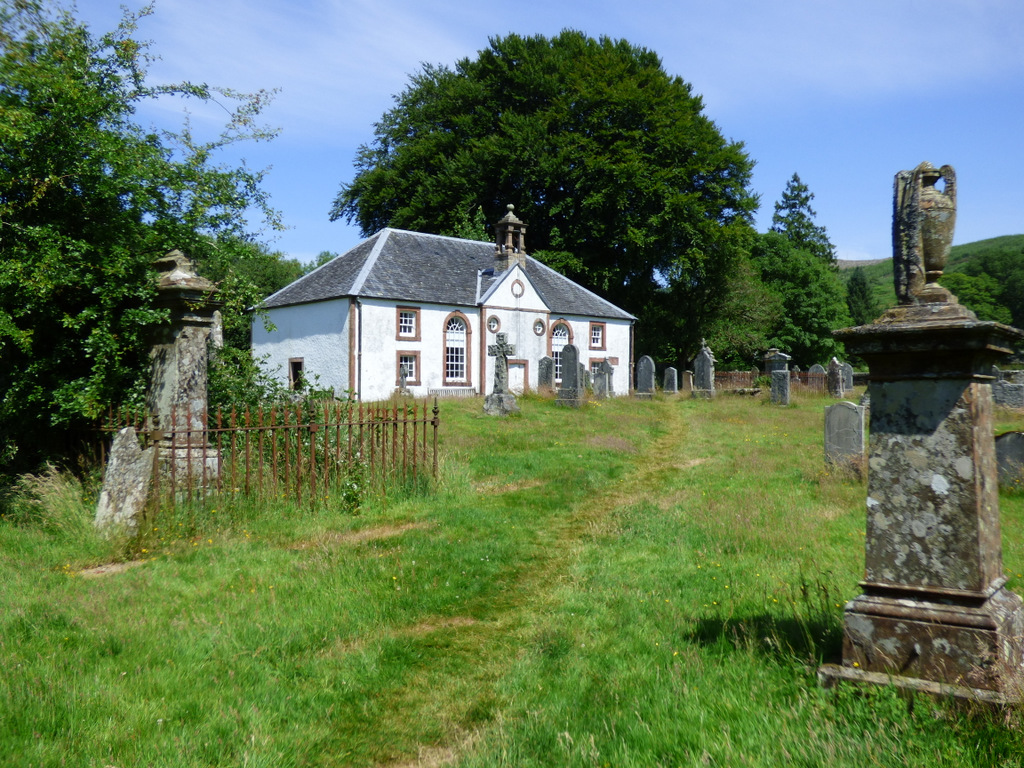
Carved stone · Pictish & early medieval
Kilmodan Carved Stones
Argyll and Bute
A rare assembly of medieval West Highland grave slabs kept together under one roof, in the direct care of Historic Environment Scotland, rather tha…
- Near Clachan of Glendaruel
- Easy path
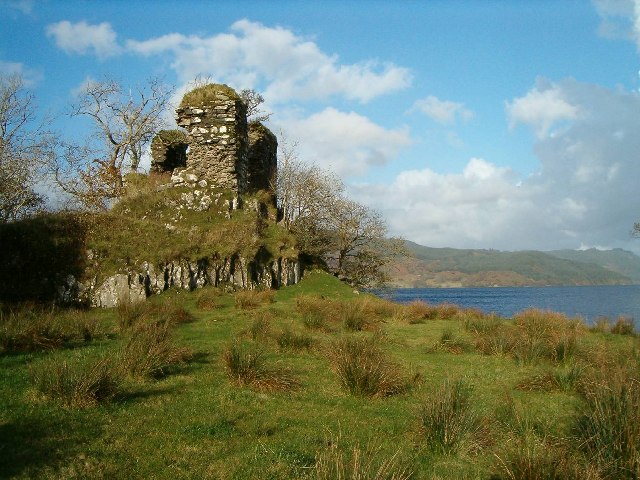
Fortified place · Medieval
Fincharn Castle
Argyll and Bute
Known by three names and fought over twice in a single generation, its ruin marks a stronghold that changed hands between Scottish, English and Heb…
- Rough ground
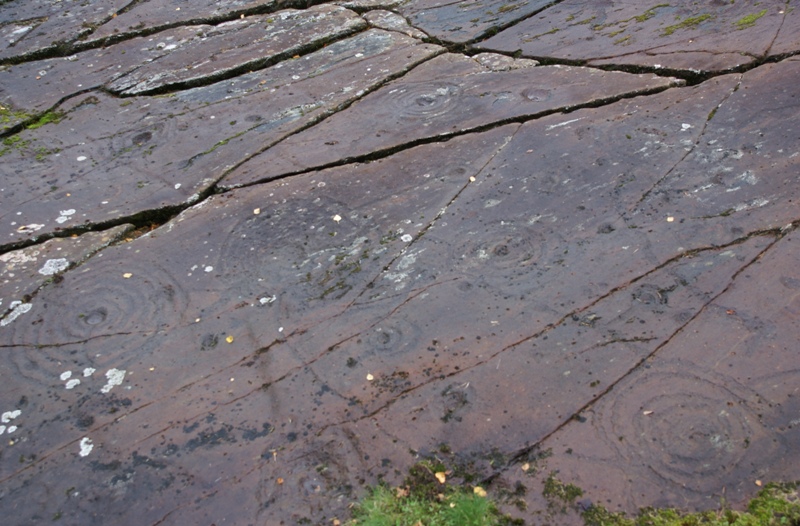
Carved stone · Prehistoric
Achnabreck Cup and Ring Marks
Argyll and Bute
One of the densest and most elaborate concentrations of prehistoric (before written records reached Britain) cup and ring carvings anywhere in Scot…
- Near Lochgilphead
- 6 min walk from car park
- Easy path
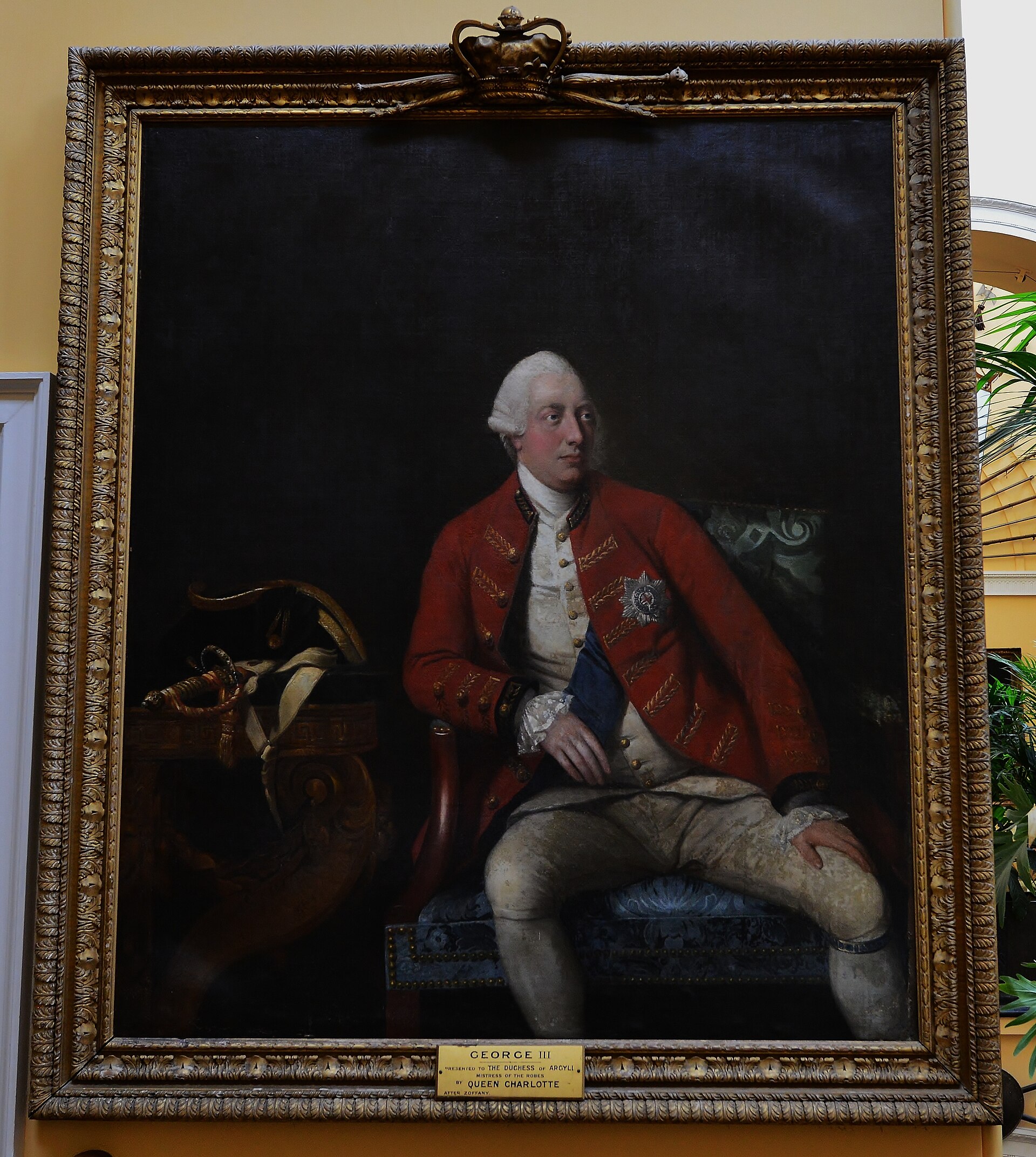
Fortified place · Medieval
Inveraray Castle
Argyll and Bute
One of the first Gothic Revival buildings anywhere, raised by a Highland clan chief to replace a medieval stronghold rather than restore it.
- Near Inveraray
- Easy path
Questions people ask
- Who built Old Castle Lachlan?
- It was probably built by Clan Maclachlan on lands first recorded in 1314 as Castlelachlan, though the surviving enclosure dates from the early fifteenth century.
- Why is the castle in ruins?
- The Maclachlans fled after the 1746 Jacobite defeat at Culloden, and the castle was bombarded from the sea that year on the Duke of Cumberland's orders, leaving it uninhabited ever since.
- What replaced Old Castle Lachlan as the clan's home?
- New Castle Lachlan, built in 1790 about 0.8 kilometres to the east-north-east of the old ruin.
- Is Old Castle Lachlan protected?
- Yes, it is protected as a scheduled monument, and Clan MacLachlan has run conservation work at the site since 2011.
- What happened to the clan chief at Culloden?
- Lachlan Maclachlan, the seventeenth chief, led his regiment into the battle on 16 April 1746 and was killed by a cannonball while advancing on horseback.
Sources
- Wikipedia: Old Castle Lachlan
- Historic Environment Scotland — Canmore
- Wikidata: Old Castle Lachlan
Explore more: Fortified places · Medieval · Argyll and Bute
The Ancient Codex, in your pocket
Get the Pocket Codex app
Carry the directory with you — Old Castle Lachlan and thousands of ancient places across Britain and Ireland, offline, wherever you roam.