
Known by three names and fought over twice in a single generation, its ruin marks a stronghold that changed hands between Scottish, English and Hebridean lords during the Wars of Independence.
Fincharn’s broken walls overlook reeds and still water at Loch Awe’s south-western shore. The castle is also recorded as Fionchairn and Glassery; its low footprint survives near Ford where the loch served as approach and defence.
The castle’s origins lie in a royal land grant. Around 1240, Alexander II, King of Scotland, granted the lands of Fincharn to Giolla Easbaig Mac Giolla Chríost, and it is thought that building began at much the same time, giving the new landholder a base to match his standing on the loch shore.
Within two generations the castle was caught up in the wider struggle for the Scottish crown. Surviving correspondence from the late thirteenth and early fourteenth centuries shows it being seized, garrisoned and fought over by rival lords acting for both the Scottish and English kings, a reminder that even a modest loch-side stronghold in Argyll could become a pawn in a much larger conflict.
What follows is drawn from published sources, with each claim labelled by how firmly it is established.
History
In around 1240 the lands of Fincharn passed to Giolla Easbaig Mac Giolla Chríost, granted to him by Alexander II, King of Scotland, and it was probably in this same year that construction of the castle began on its rise above Loch Awe's southwestern shore, giving the new landholder a stronghold to match the lands he had just been given.
By 1297 the castle, recorded in surviving correspondence under the name 'Glasrog', had become a prize in the turmoil of the Wars of Scottish Independence: letters between Alasdair Óg Mac Domhnaill and Edward I, King of England, describe how Alasdair Óg seized the barony and castle from the Steward of Scotland, whose loyalty to the English crown had come into question.
A further exchange of correspondence, this time between Eóin Mac Dubhghaill and Edward I in 1308 or 1309, may refer to the same stronghold as one of three castles that Eóin garrisoned on the English king's behalf, evidence that control of Fincharn continued to shift between rival lords as the conflict over the Scottish crown dragged on into the following decade. Long since abandoned and reduced to its lower courses, Fincharn Castle survives today as a scheduled monument, its ruin standing as one of the few physical traces left of the network of loch-side strongholds that once controlled movement through mid Argyll.
People
-
Giolla Easbaig Mac Giolla Chríost
Granted the lands of Fincharn by Alexander II in around 1240, likely the castle's founder.
-
Alexander II, King of Scotland
Granted the lands of Fincharn to Giolla Easbaig Mac Giolla Chríost in around 1240.
-
Alasdair Óg Mac Domhnaill
Seized the barony and castle of 'Glasrog' from the Steward of Scotland in 1297, according to correspondence with Edward I.
-
Eóin Mac Dubhghaill
May have garrisoned the castle on behalf of Edward I in 1308 or 1309, according to surviving correspondence.
-
Edward I, King of England
Recipient of the correspondence documenting the castle's seizure and garrisoning in 1297 and 1308–9.
Cultural influences
-
Loch Awe route
The low rise above Loch Awe shaped the castle’s position within a network of strongholds controlling movement through mid Argyll.
Connections
-
Clan Donald (Lordship of the Isles)
Alasdair Óg Mac Domhnaill, who seized the castle in 1297, belonged to this Hebridean dynasty.
-
Clan MacDougall of Lorn
Eóin Mac Dubhghaill, who may have garrisoned the castle for Edward I in 1308–9, belonged to this Argyll dynasty.
What to look for
-
Loch-shore siting
The ruin sits on a low rise directly above the southwestern shore of Loch Awe, using the water as a natural approach and defence.
-
Surviving wall footings
Sections of the castle's lower walls remain visible on the ground, tracing the outline of the original structure.
-
Scheduled monument status
The site is legally protected as a scheduled monument under reference SM5276.
Plan your visit
- Location
- 56.1862°N · 5.3881°W
- Access
- Open access
- Terrain
- Rough ground — reasonable boots advised
- Time needed
- About 30 minutes
- Best time
- Daylight in dry weather, when the low surviving walls can be read against the loch-side setting.
- What survives
- A ruin surviving mainly in its lower wall courses on a rise above Loch Awe.
- Facilities
- No dedicated visitor facilities are recorded at the ruin.
Opening & admission
No admission fee applies; check Historic Environment Scotland's records before visiting.
- A scheduled monument in ruined condition on the southwest shore of Loch Awe
Nearby places
Fortified place · Medieval
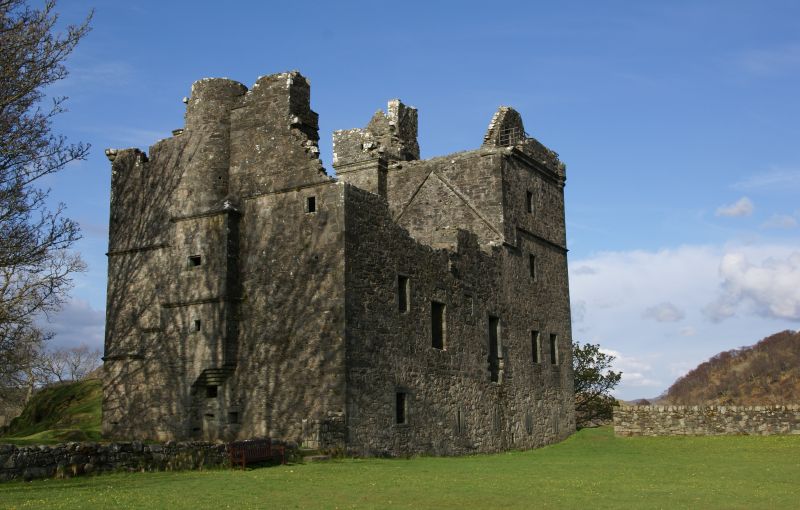
Carnasserie Castle
Argyll and Bute
A ruined 16th-century tower house stands on raised ground about 2 kilometres north of Kilmartin, at the head of Kilmartin Glen in Argyll and Bute.…
- Some walking
Sacred place · Medieval
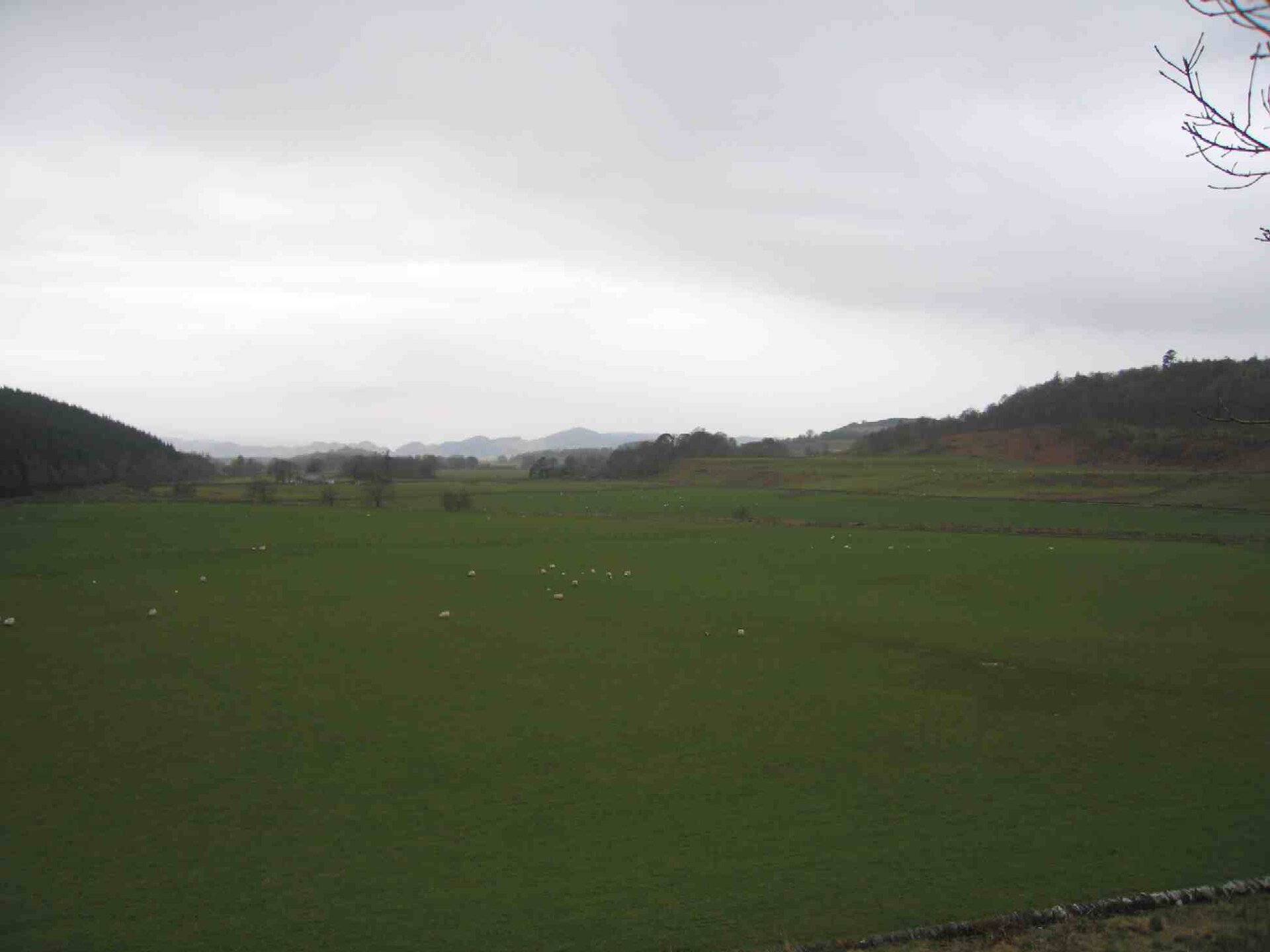
Kilmartin Glen
Argyll and Bute
Within a six-mile radius of the village of Kilmartin, in Argyll north of Knapdale, stand more than 800 ancient monuments, of which some 150 date fr…
- Easy path
Tomb or burial place · Prehistoric
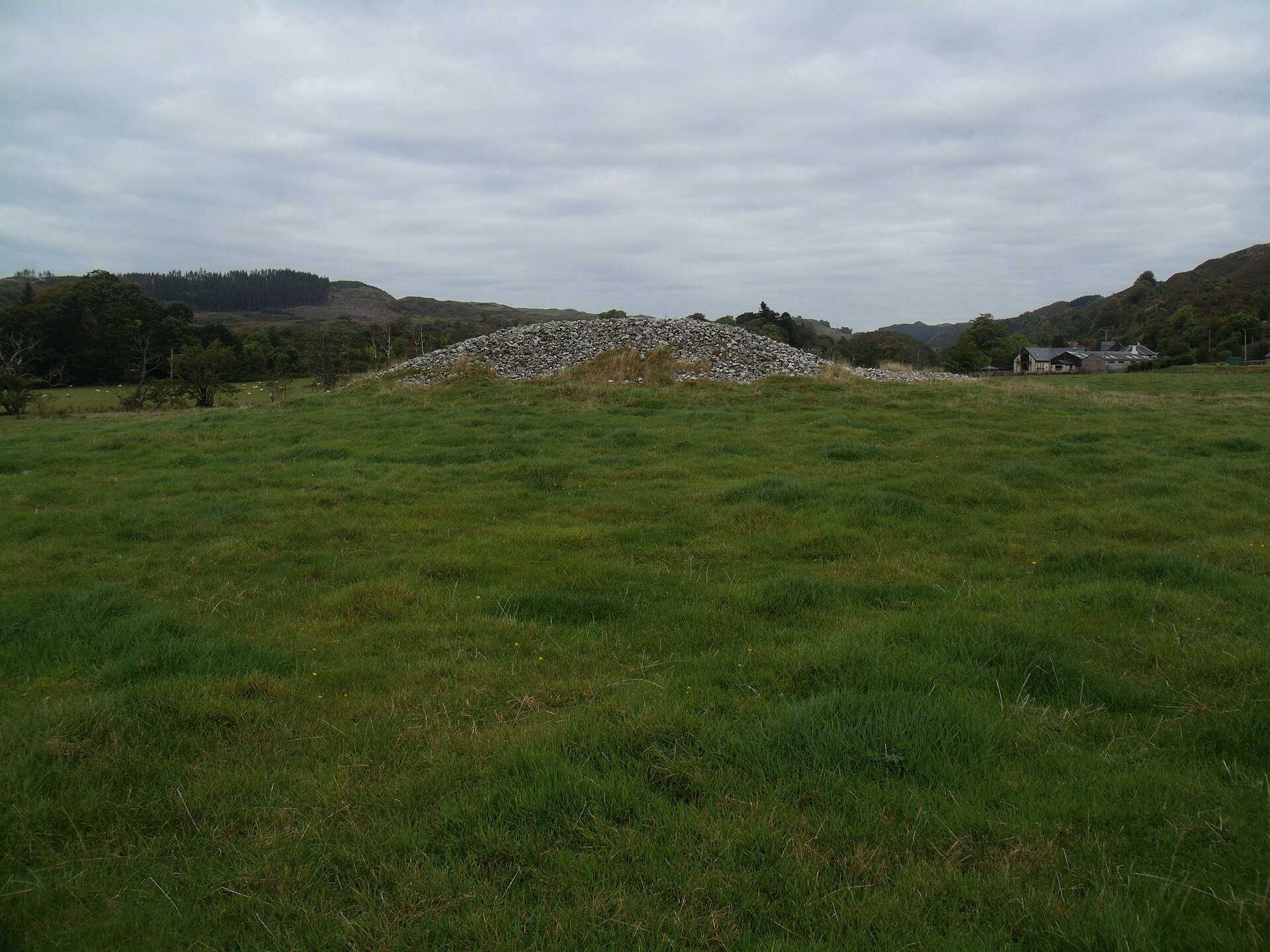
Glebe Cairn
Argyll and Bute
A jet necklace recovered from one of its two Bronze Age (roughly 2500–800 BC) stone cists is a rare surviving trace of the personal ornaments burie…
- Near Kilmartin
- Easy path
Tomb or burial place · Prehistoric
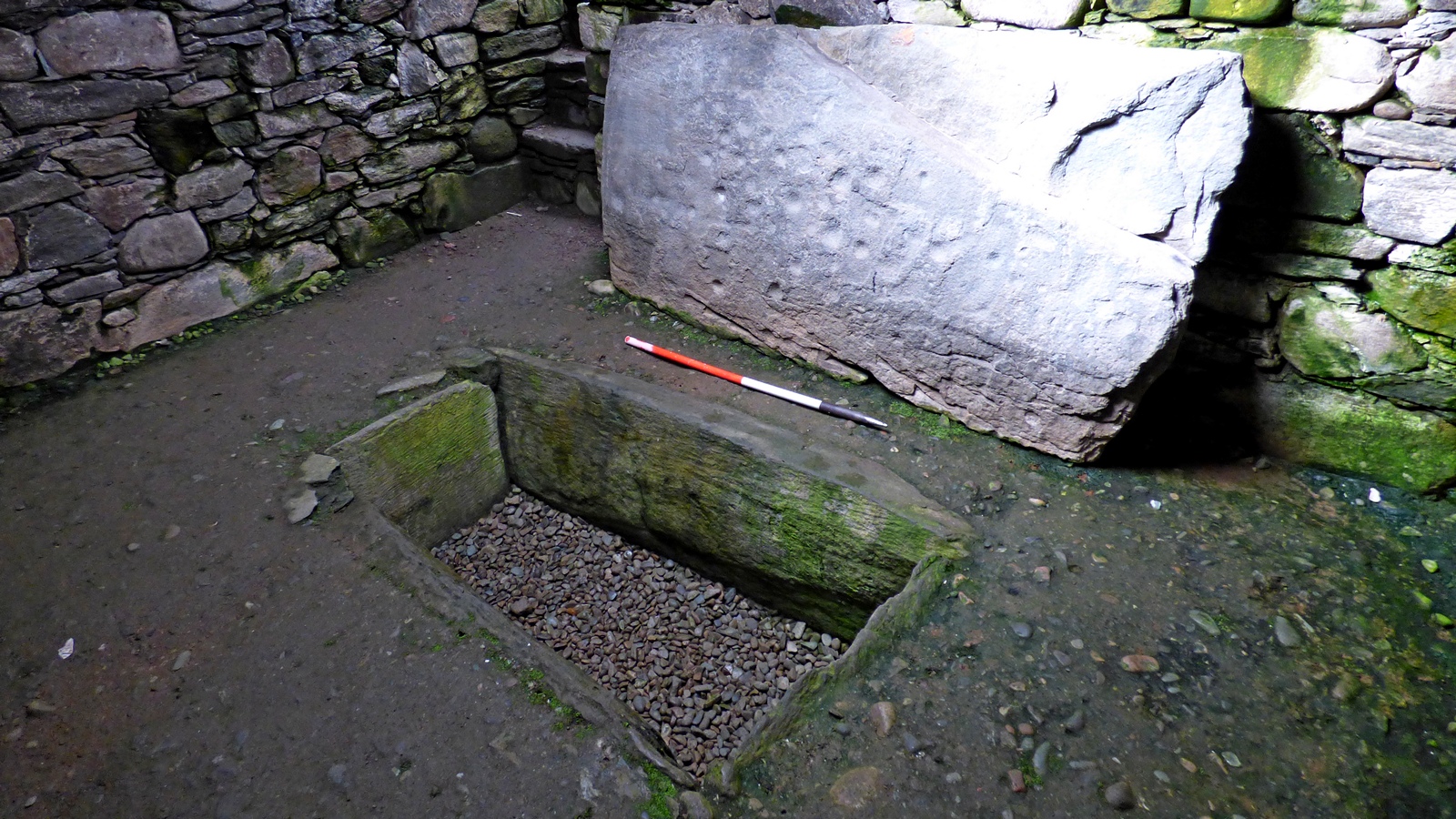
Nether Largie North Cairn
Argyll and Bute
The mound standing here today is not undisturbed ancient masonry: it is a 1930 reconstruction, a fact that changes what a visitor is actually looki…
- Near Kilmartin
- Easy path
Questions people ask
- Where is Fincharn Castle?
- On a low rise on the southwest shore of Loch Awe, near the village of Ford, in Argyll and Bute.
- When was Fincharn Castle built?
- Probably around 1240, the year the lands of Fincharn were granted to Giolla Easbaig Mac Giolla Chríost by Alexander II.
- Is Fincharn Castle a protected site?
- Yes. It is a scheduled monument, reference SM5276, recognised by Historic Environment Scotland.
- What other names does Fincharn Castle go by?
- It is also known as Fionchairn Castle and Glassery Castle.
- Was Fincharn Castle fought over during the Wars of Independence?
- It appears so: correspondence from 1297 and 1308–9 describes the castle being seized and garrisoned by rival lords acting for the Scottish and English crowns.
Sources
- Historic Environment Scotland — Scheduled Monument SM5276
- Canmore — Fincharn Castle
- Wikipedia: Fincharn Castle
- Argyll: An Inventory of the Monuments, Vol. 7, Mid Argyll & Cowal (RCAHMS, 1992)
Explore more: Fortified places · Medieval · Argyll and Bute
The Ancient Codex, in your pocket
Get the Pocket Codex app
Carry the directory with you — Fincharn Castle and thousands of ancient places across Britain and Ireland, offline, wherever you roam.