
Fortified place · Medieval · argyll-and-bute
Kildonan Dun
Most duns are round. This one is D-shaped, and its double stair up the rampart and a round wall niche both survive intact.
Almost every dun in Scotland is round. This one is not: Kildonan has a D-shaped ground plan, straight along one side, a form it shares with only a handful of others — Barsalloch Fort and Castle Haven, both in Galloway. It measures roughly 19 metres by 13 inside a ring wall a metre high and two metres thick.
A dun is a small drystone fort of the Iron Age, and this one is dated from 200 BC. What makes it worth the walk beyond Pluck Wood, at the end of Saddell Bay, is how much of the working detail survives. The entrance on the south-west still shows its door construction clearly enough to read how the gate was hung and barred. A double staircase runs up inside the thickness of the wall on the west side to reach the rampart, intact. A round niche in the north-east survives complete. In form and detail the dun shows several features that turn up in brochs of the same period, which places it among a group of builders trying out new ideas rather than repeating old ones.
Excavation between 1936 and 1938 gave the site a precise chronology, and the interesting part is not the beginning but the length. Objects of the first and second centuries AD fix when the dun was built. Objects of the sixth century, and again of the ninth to twelfth centuries and later, show that the enclosed central area went on mattering to people for something like a thousand years afterwards — through the early medieval period, the Norse centuries, and into the later Middle Ages.
By the time Somerled founded the Cistercian abbey at the head of this same bay, around 1160, the dun had been standing above the shore for more than thirteen centuries and was still, on the evidence of the finds, in use. The material from the excavation is held in Campbeltown Museum.
What follows is drawn from published sources, with each claim labelled by how firmly it is established.
History
The dun stands at the end of Saddell Bay, beyond Pluck Wood, on the east side of the Kintyre peninsula. A dun is a small drystone fort of the Scottish Iron Age, and this one is dated from 200 BC, built of stone throughout. Where most duns are round, Kildonan is D-shaped in plan, a form it shares with Barsalloch Fort and Castle Haven in Galloway. It measures about 19 metres by 13 within an outer ring wall standing a metre high and two metres thick.
The entrance lies to the south-west and preserves a clearly readable door construction — the checks and bar-holes that show how the door was hung and secured. Its survival is unusual in a structure of this age and makes the working of the gateway legible on the ground. Two features inside the wall are intact. A double staircase set within the wall on the west side climbs to the rampart, and a round niche survives in the north-east. In form and design the dun shows several novelties that appear in brochs of the same period, so it belongs to a moment of experiment in drystone building.
Excavation between 1936 and 1938 produced a precise chronology for the site. Objects of the first and second centuries AD indicate when the dun was built, while material of the sixth century and of the ninth to twelfth centuries and later shows that the central area went on being a focus long after the fort itself had ceased to be new. That later material matters as much as the early. It records roughly a thousand years of continued use of the same enclosed space, through the early medieval centuries and into the Norse and later medieval periods. The finds are held in Campbeltown Museum.
Connections
-
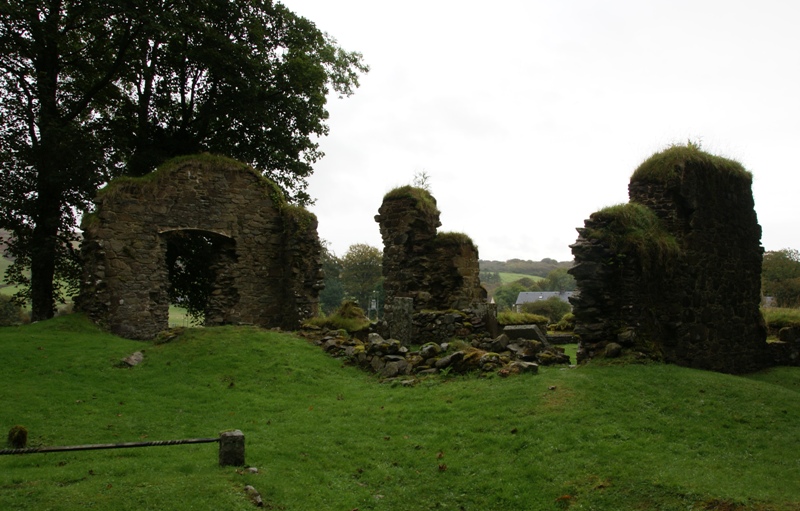
Photo: Otter / Wikimedia Commons / CC BY-SA 3.0 The Cistercian abbey founded about 1160 by Somerled lies at the head of the same bay, on ground the dun had already overlooked for well over a thousand years.
-
Castle Haven, Galloway
One of the few other duns built to a D-shaped rather than a circular plan.
-
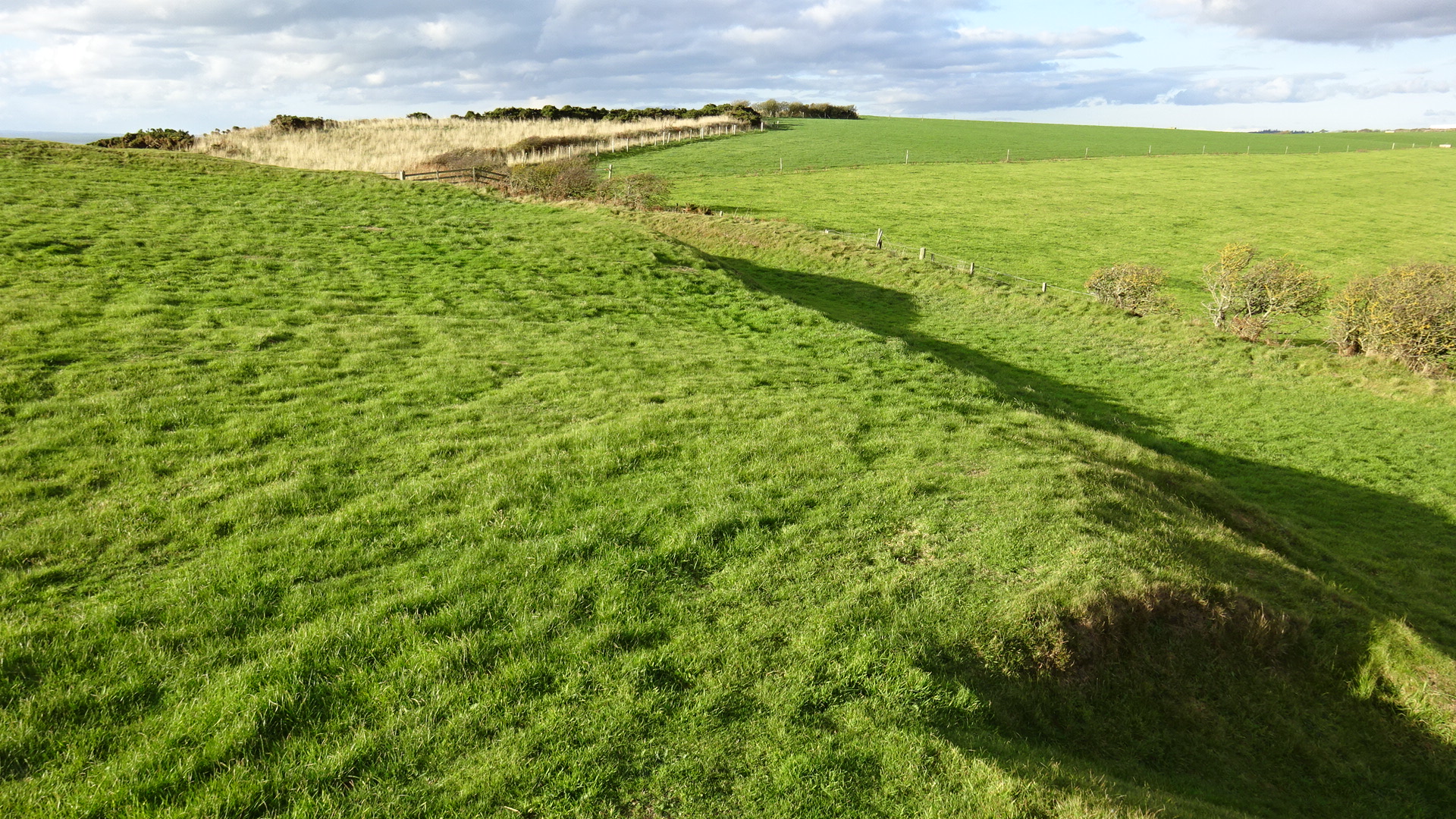
Photo: Rosser1954 / Wikimedia Commons / CC BY-SA 4.0 Another D-shaped Galloway fort sharing this dun's unusual ground plan.
-
Saddell Castle
A tower house of the early sixteenth century a short way along the same shore, later restored by the Landmark Trust.
What to look for
-
The double staircase
Built within the thickness of the wall on the west side, climbing to the rampart, and still intact.
-
The south-west entrance
The door construction remains clearly recognisable, so the way the gate worked can still be read.
-
The round wall niche
A circular recess in the north-east of the wall, surviving complete.
-
The D-shaped plan
About 19 metres by 13, straight on one side where most duns are circular throughout.
Plan your visit
- Location
- 55.5314°N · 5.5111°W
Nearby places
Building or ruin · Medieval
Saddell Abbey
Argyll and Bute
On a bluff above the confluence of Saddell Water and Allt nam Manach: the Water of the Monks: stand the fragmentary remains of a Cistercian monaste…
- Near Carradale
- Easy path
Fortified place · Medieval
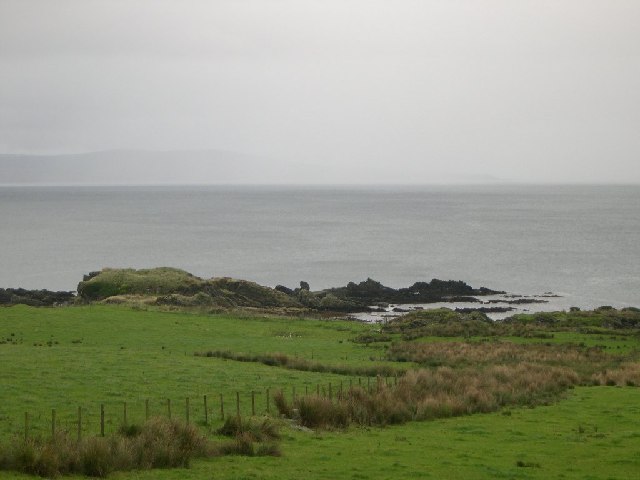
Dun Ugadale
Argyll and Bute
Its Gaelic name preserves a memory of owls in the glen below, while a brooch once kept by its owners carries a tradition linking the fort to Robert…
- Near Ugadale
- Rough ground
Building or ruin · Medieval
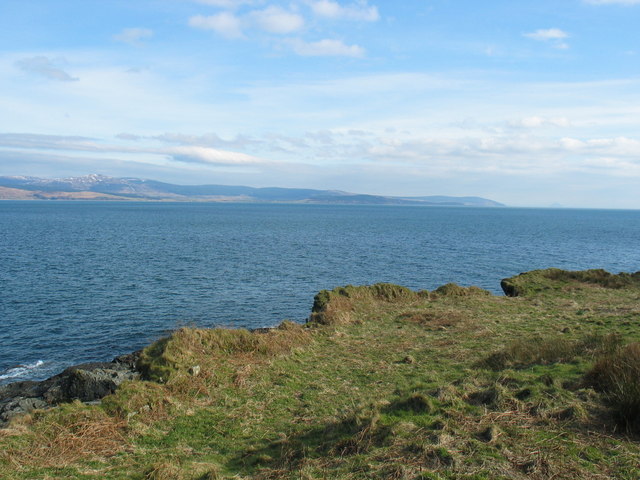
Airds Castle
Argyll and Bute
For a century after the Lordship of the Isles fell, this headland castle changed hands between an Ayrshire family and the MacDonalds of Dunnyveg: K…
- Near Carradale
- Rough ground
Fortified place · Medieval
Tangy Loch Castle
Argyll and Bute
A causeway now vanished beneath the water once linked this island stronghold to the shore, leaving a ruin that in the seventeenth century belonged…
- Near Campbeltown
- Rough ground
Questions people ask
- What is a dun?
- A small drystone fort of the Scottish Iron Age, usually circular. Kildonan is unusual in being D-shaped.
- How old is Kildonan Dun?
- It dates from 200 BC. Excavation finds of the first and second centuries AD indicate the period of construction of the visible structure.
- How long was it in use?
- Finds of the sixth century and of the ninth to twelfth centuries and later show the central area remained an important focus for roughly a thousand years after the dun was built.
- Where are the finds?
- In Campbeltown Museum, from the excavation of 1936 to 1938.
The Ancient Codex, in your pocket
Get the Pocket Codex app
Carry the directory with you — Kildonan Dun and thousands of ancient places across Britain and Ireland, offline, wherever you roam.