
Its Gaelic name preserves a memory of owls in the glen below, while a brooch once kept by its owners carries a tradition linking the fort to Robert the Bruce's flight to Arran.
Above the Kintyre shore, Ugadale’s banked enclosure occupies a promontory chosen to watch the sea approach. Its Gaelic name translates as “fort of the valley of the owl”; little else is recorded about the builders of this pre-Roman site, raised in the first millennium BC.
What can be traced with more certainty is who held the place in later centuries. By the 14th century Dun Ugadale and its lands belonged to the MacKay family, who kept it as a seat in Kintyre for some three hundred years before it passed, by marriage in the 17th century, to the MacNeils. Bound up with the MacKays’ tenure is the story of the Ugadale Brooch, an heirloom said to have been a royal gift for a service done during one of Scotland’s most turbulent centuries.
What follows is drawn from published sources, with each claim labelled by how firmly it is established.
The name
The name Dun Ugadale is rendered in English as "fort of the valley of the owl", combining the Gaelic dun (a fort) with a place name describing the glen in which it stands.
History
Dun Ugadale was built during the Iron Age as a promontory fort near Ugadale on the Kintyre peninsula, its position chosen to overlook the coastline and command the approach to the shore below. No further detail survives of its original construction or of the community that raised it, and its early history rests on the surviving earthworks themselves rather than on any written record.
By the 14th century the fort and its surrounding land had passed into the hands of the MacKay family, who held Dun Ugadale as their seat in Kintyre. The MacKays' possession placed the old fort at the centre of a local family whose name became closely tied to this stretch of the Kintyre coast for the following three hundred years.
Tradition holds that the Ugadale Brooch was given to the MacKays by Robert the Bruce during his flight in the early 14th century, said to have been presented near Crois Mhic Aoidh (Mackay's Cross) at Arnicle in gratitude for having been carried across to Arran. Whether or not the story is accurate in its particulars, the brooch became one of the family's most treasured possessions, its supposed royal origin binding Dun Ugadale to the wider story of Bruce's wanderings.
In the 17th century Dun Ugadale and its lands passed by marriage from the MacKay family to the MacNeils, bringing three centuries of MacKay possession of the fort and its estate to a close. The property then continued under MacNeil ownership, though no later record of building work or further occupation on the site survives.
People
-
The MacKay family
Held Dun Ugadale and its lands as their seat in Kintyre from the 14th century until the 17th century.
-
Robert the Bruce
According to tradition, gave the Ugadale Brooch to the MacKays after being carried across to Arran during his flight in the early 14th century.
-
The MacNeil family
Gained possession of Dun Ugadale and its lands through marriage to the MacKays in the 17th century.
Connections
-
Arran
Robert the Bruce was reputedly carried across to Arran from the Kintyre coast near Dun Ugadale, the crossing at the centre of the Ugadale Brooch tradition.
-
Crois Mhic Aoidh (Mackay's Cross), Arnicle
Tradition holds that Robert the Bruce presented the Ugadale Brooch to the MacKays near this cross at Arnicle.
Discovery & excavation
Horace Fairhurst began a small excavation at Ugadale Point in June 1939, opening a strip across the northern rampart and entrance. The interrupted investigation was later published as a provisional report after the finds were recovered from Campbeltown Museum; a 1954 survey added a measured plan of the site.
In culture
-
Rebellious Highland Hearts
Jayne Castel’s modern historical-romance series Rebellious Highland Hearts follows fictional members of the Mackay family of Dun Ugadale; it uses the place and family name as its medieval setting rather than as an archaeological account.
What to look for
-
The promontory position
The fort occupies a promontory near Ugadale on the Kintyre coast, its position chosen to overlook the shoreline below and command the approach from the sea.
-
The extent of the scheduling
Historic Environment Scotland scheduled the site on 30 June 1972 as "Ugadale Point, dun", classing it as prehistoric domestic and defensive work in the parish of Campbeltown. The protected area runs to about 1,900 square metres, taking in the promontory head rather than the wider headland.
What is said
Folklore and tradition, recorded as what is said — not as established fact.
-
The Ugadale Brooch and Robert the Bruce
Tradition holds that the Ugadale Brooch was given to the MacKays by Robert the Bruce near Crois Mhic Aoidh (Mackay's Cross) at Arnicle, in gratitude for having been carried across to Arran.
Plan your visit
- Location
- 55.5000°N · 5.5083°W
- Nearest settlement
- Ugadale
- Terrain
- Rough ground — reasonable boots advised
- Time needed
- About 45 minutes
- What survives
- Banked enclosure and defensive remains survive on a coastal promontory; the site is not presented as a restored monument.
Opening & admission
No current visitor or admission details are recorded — check with local authorities before visiting.
Nearby places
Fortified place · Medieval
Kildonan Dun
argyll-and-bute
Most duns are round. This one is D-shaped, and its double stair up the rampart and a round wall niche both survive intact.
Building or ruin · Medieval
Saddell Abbey
Argyll and Bute
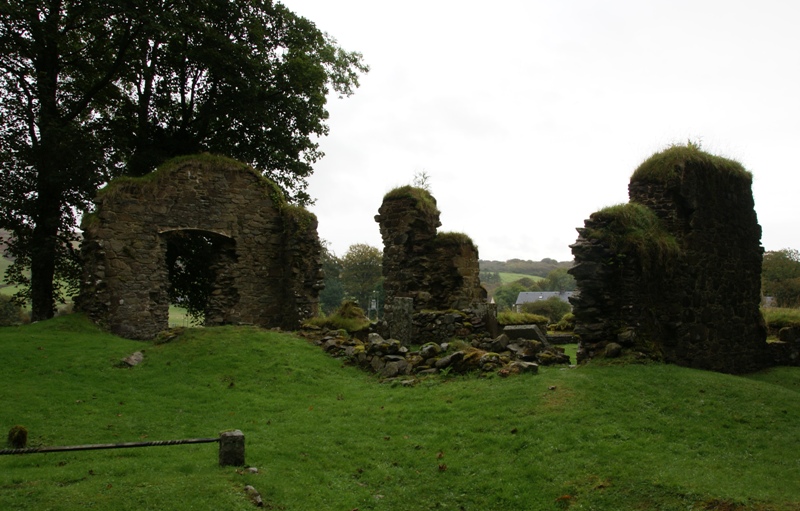
On a bluff above the confluence of Saddell Water and Allt nam Manach: the Water of the Monks: stand the fragmentary remains of a Cistercian monaste…
- Near Carradale
- Easy path
Fortified place · Medieval
Smerby Castle
Argyll and Bute
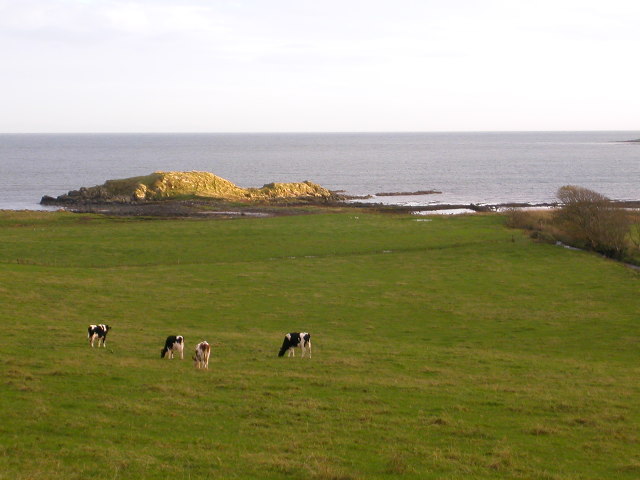
Two separate bonds, in 1594 and 1597, show the family here signing not as MacDonald but as M'Connall: a rare direct trace of how Gaelic Kintyre act…
- Near Campbeltown
- Rough ground
Sacred place · Medieval
Kilchousland Chapel
Argyll and Bute
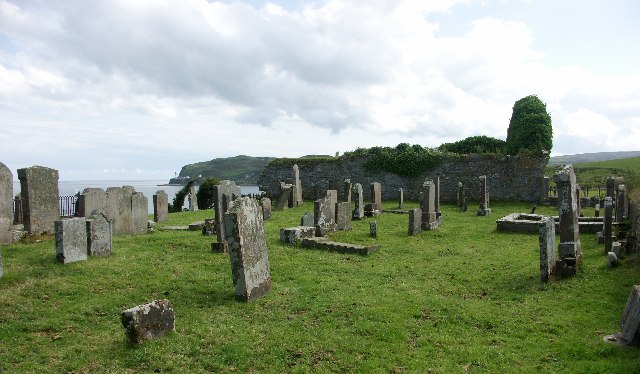
One of only a handful of Scottish chapels dedicated to St Constantine, a shadowy royal-saint whose cult is otherwise scarce in the historical record.
- Near Campbeltown
- Some walking
Questions people ask
- What is Dun Ugadale?
- An Iron Age promontory fort near Ugadale on the Kintyre peninsula, later held as a seat by the MacKay and then the MacNeil families.
- What does the name Dun Ugadale mean?
- It is rendered in English as "fort of the valley of the owl".
- Who owned Dun Ugadale?
- The MacKay family held it from the 14th century until the 17th century, when it passed by marriage to the MacNeils.
- What is the Ugadale Brooch?
- An heirloom tradition holds was given to the MacKays by Robert the Bruce near Mackay's Cross at Arnicle, after he was carried across to Arran.
- Where is Dun Ugadale?
- On a promontory near Ugadale, on the Kintyre peninsula in Argyll and Bute.
Sources
The Ancient Codex, in your pocket
Get the Pocket Codex app
Carry the directory with you — Dun Ugadale and thousands of ancient places across Britain and Ireland, offline, wherever you roam.