
A single carved slab from around the 8th century, still standing almost undamaged in its churchyard — widely judged the finest surviving Celtic high cross in Scotland.
At Kildalton, a ringed cross rises from the graveyard on Islay’s southern shore. The cross-head holds a mother and child within a circular frame, while the slab’s exposed surface retains much of its carving after more than a millennium of Hebridean weather.
The carving is generally dated to the second half of the 8th century AD, placing it in the same period and artistic world as the great crosses raised on Iona, some forty miles to the north. The Virgin and Child panel on the cross-head echoes figures found on Iona’s St Martin’s Cross and St Oran’s Cross, and shares ground with an illuminated page in the Book of Kells, suggesting a shared repertoire of images moving between the region’s monastic centres and, further afield, with the kind of Marian imagery current in Rome at the time.
Beside the cross stands the roofless shell of the medieval parish church of Kildalton, and a second, plainer cross of later medieval date stands nearby, a reminder that the site went on being used as a place of worship and burial for centuries after the great cross was first raised. Both the cross and the church are now held in the care of Historic Environment Scotland as a single scheduled monument, open to visitors at all times.
What follows is drawn from published sources, with each claim labelled by how firmly it is established.
The name
The name Kildalton comes from the Scottish Gaelic Cill Daltain, meaning "Church of the Foster Son", a name understood to refer to St John the Evangelist, who was regarded in Christian tradition as the foster son of the Virgin Mary.
History
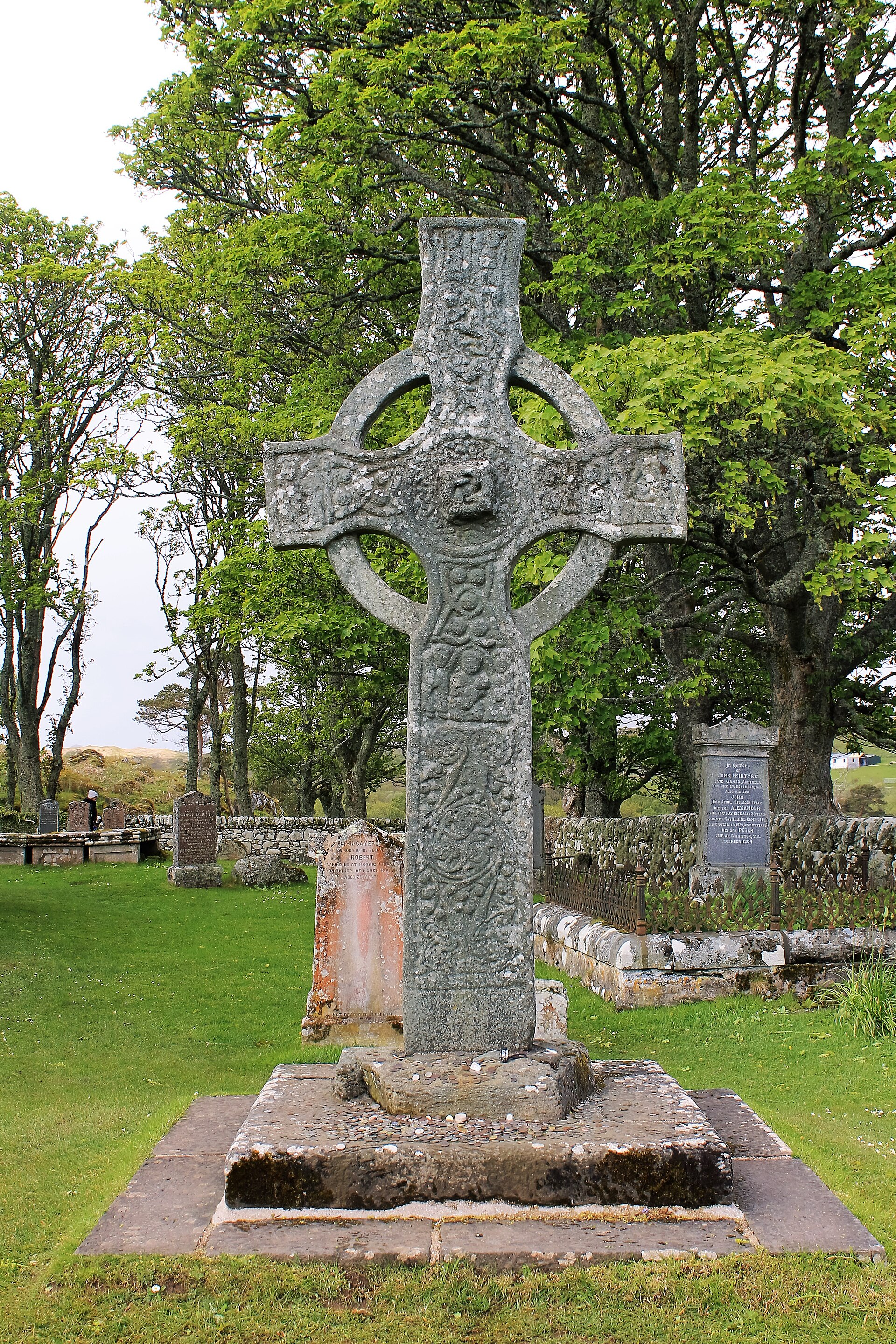
During the second half of the 8th century AD, carvers on Islay shaped a single slab of stone into the ringed form of a Celtic high cross, working it on both faces with interlace, animal ornament and figural scenes. The result is closely related in style and date to the crosses raised in the same period on Iona, pointing to a shared artistic tradition linking the two islands rather than an isolated local effort.
As part of that carving, the cross-head was given a panel showing the Virgin and Child seated within a circular frame, an image closely related to the same subject on Iona's St Martin's Cross and St Oran's Cross. The composition also shares ground with an illustration on folio 7v of the Book of Kells, and has been connected to the Marian imagery known as the Maria Regina, used in Rome around the same period to counter iconoclasm.
In the centuries after the cross was raised, a parish church was built immediately beside it at Kildalton, serving the local community and giving the site its long-standing role as a place of worship and burial on Islay's southern coast. The church that stands today, now roofless, represents a later medieval phase of building on the same spot rather than the original structure contemporary with the cross.
At some point in the late medieval period, a second, plainer cross was set up close to the earlier monument, a simpler piece of carving that lacks the elaborate figural ornament of its neighbour. Its presence shows that the churchyard continued to attract new monuments long after the 8th-century cross had already become an object of note in its own right.
In the modern era the cross and the adjoining roofless church passed into the care of Historic Environment Scotland, which manages the site jointly as a single scheduled monument. Public access is unrestricted at all times, and the cross is now widely regarded as the finest surviving Celtic high cross in Scotland and among the most complete monuments of its date anywhere in western Europe.
People
-
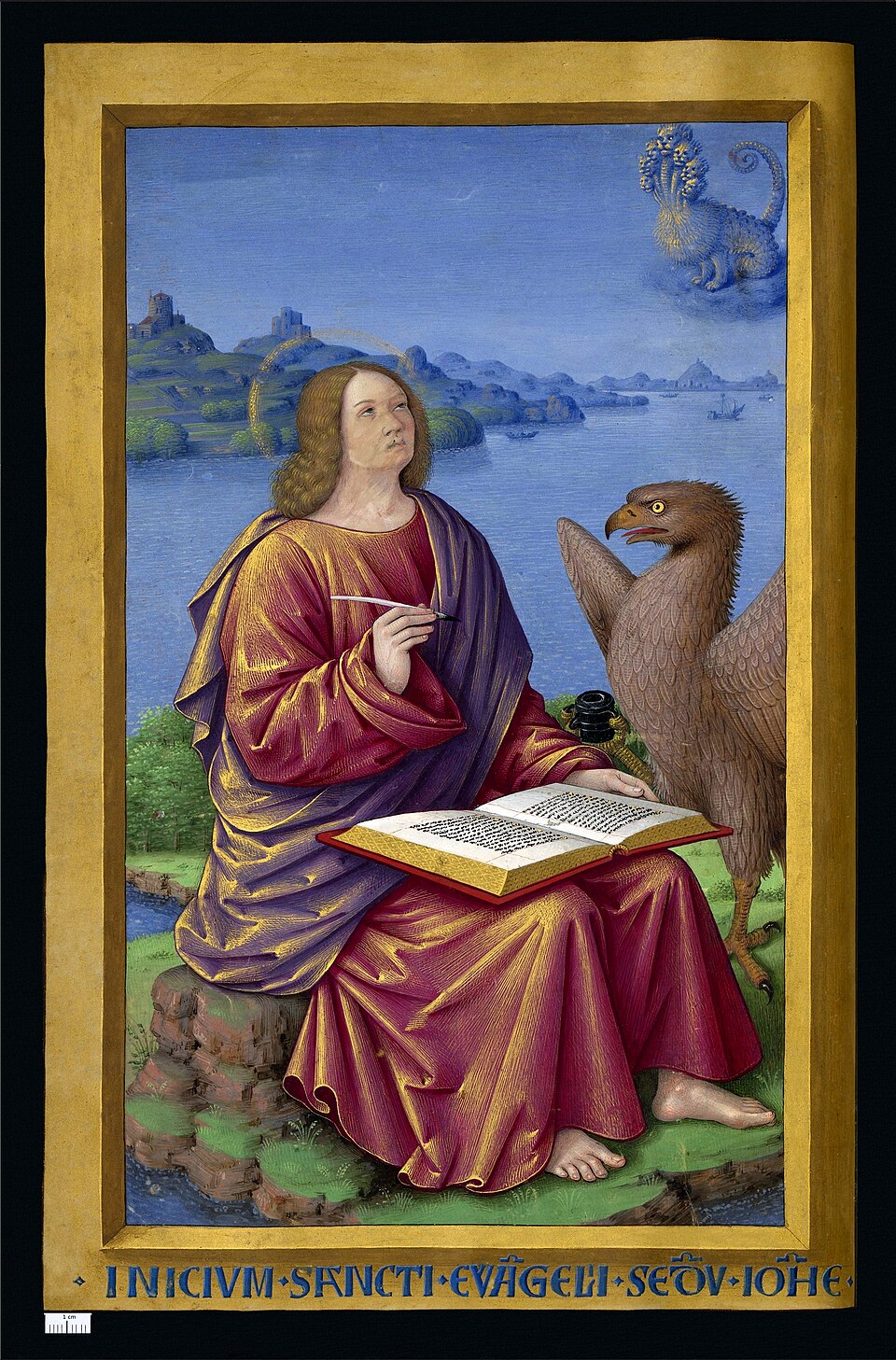
Portrait: Jean Bourdichon / Wikimedia Commons / Public domain St John the Evangelist
The figure understood in the Gaelic name Cill Daltain, meaning “Church of the Foster Son”, referring to his traditional relationship with the Virgin Mary.
Cultural influences
-
Iona's high crosses
The carving of the Kildalton Cross is closely related to the crosses raised on Iona in the same period, including St Martin's Cross and St Oran's Cross, whose Virgin and Child imagery it shares.
-
The Book of Kells
The Virgin and Child panel on the cross-head displays similarities with the illustration on folio 7v of the Book of Kells, pointing to a shared visual vocabulary among the period's Christian art.
-
Mediterranean Marian iconography
The type of Virgin and Child image used on the cross may be related to the Maria Regina iconography current in Rome at the time, which was used there to refute iconoclasm.
Connections
-
St Martin's Cross, Iona
Shares closely related carving style and Virgin and Child iconography with the Kildalton Cross, both dated to the same period.
-
St Oran's Cross, Iona
Displays Virgin and Child imagery closely comparable to the panel on the Kildalton Cross.
-
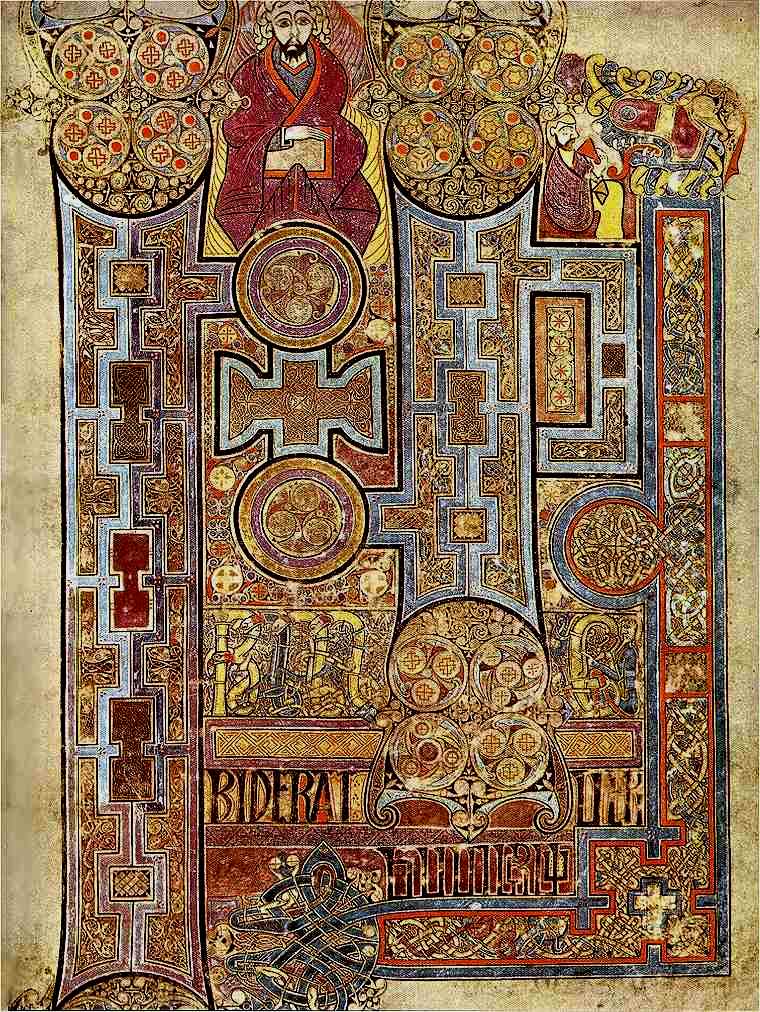
Photo: Unknown author / Wikimedia Commons / Public domain Book of Kells
Folio 7v of the manuscript shares similarities with the Virgin and Child panel carved on the Kildalton Cross.
What to look for
-
The Virgin and Child panel
A carved roundel on the head of the cross showing a seated mother with the infant on her lap, comparable to similar panels on Iona.
-
The ringed cross-head
The monolithic slab is shaped into the ringed Celtic cross form, carved on both faces with interlace and figural ornament.
-
The roofless parish church
The walls of the former medieval parish church of Kildalton stand immediately beside the cross, without a roof.
-
The later medieval cross
A second, plainer cross of late medieval date stands near the 8th-century monument, without its elaborate carving.
Plan your visit
- Location
- 55.6842°N · 6.0455°W
- Nearest settlement
- Port Ellen
- Access
- Open access
- Terrain
- Easy going
- Parking
- Small gravel parking area immediately beside the chapel and cross, west of Ardmore on Islay.
- Start point
- Kildalton Cross · West of Ardmore on Islay.
- Time needed
- About 20 minutes
- Best time
- Open year-round.
- What survives
- The approximately 8th-century cross remains standing almost undamaged in the former churchyard beside the chapel.
- Facilities
- A small gravel parking area lies beside the site.
- Start point
- Kildalton Cross car park (gravel) — Small gravel parking area immediately beside the chapel and cross, west of Ardmore on Islay.
Opening & admission
Free entry
- Open year-round.
Nearby places
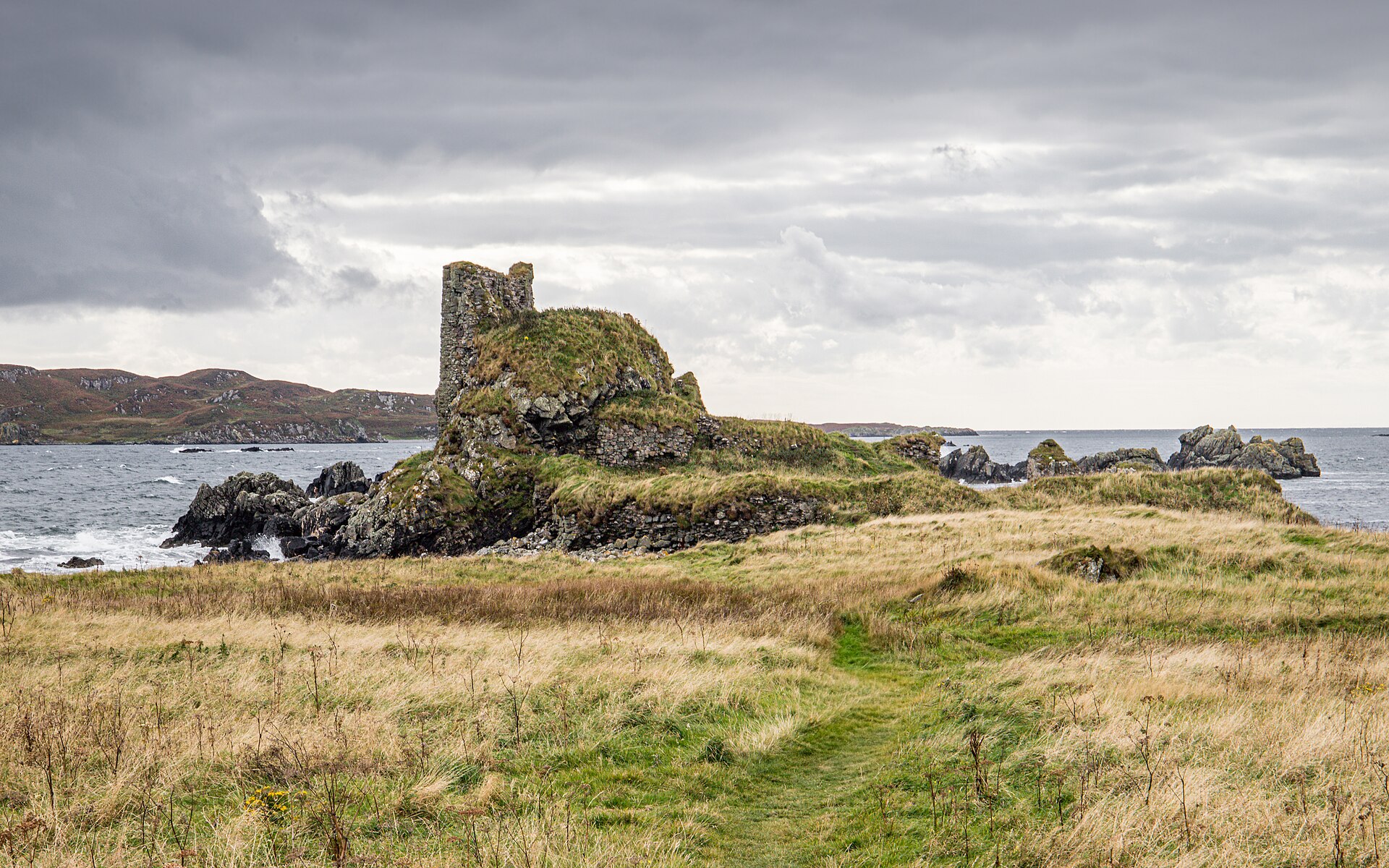
Fortified place · Medieval
Dunyvaig Castle
Argyll and Bute
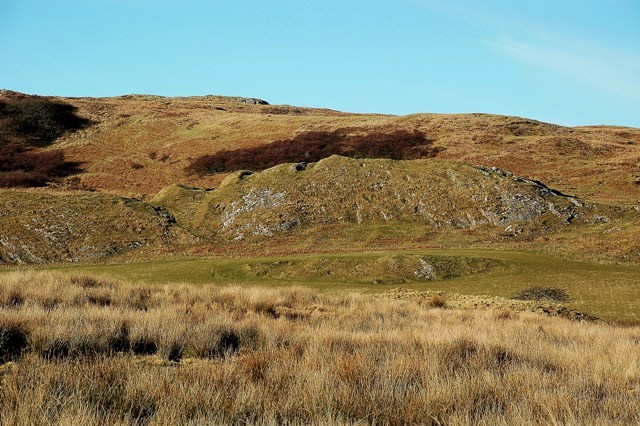
A galley stronghold on Lagavulin Bay that anchored the Lord of the Isles' fleet and was fought over in five separate sieges within a single decade.
- Near Lagavulin
- Rough ground
Fortified place · Medieval
Dun Nosebridge
Argyll and Bute
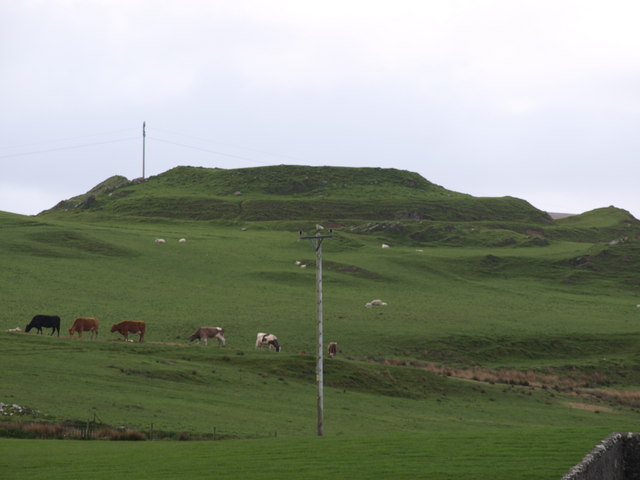
Its name fuses Gaelic and Norse in one word: a fort whose very label records the island passing from Gaelic to Viking hands and back again.
- Near Bridgend
- Some walking
Fortified place · Prehistoric
Dun Guaidhre
Argyll and Bute
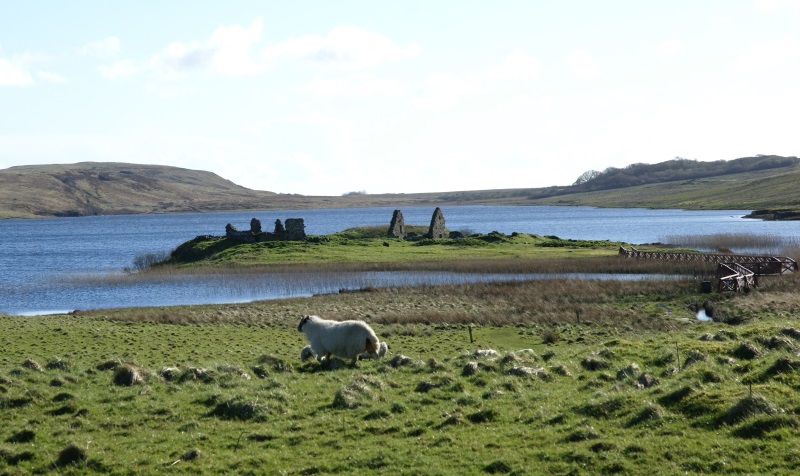
A small Iron Age (the period from roughly 800 BC to the Roman conquest) stronghold on Islay whose very name is entangled with a Norse-Gaelic king w…
- Near Kilmeny
- Rough ground
Building or ruin · Medieval
Finlaggan, Eilean Mor
Argyll and Bute
In the first half of the 7th century a monastic community was established on Eilean Mor, the largest of the three islands in Loch Finlaggan: either…
- Near Port Askaig
- 520 metres from car park
- Some walking
Questions people ask
- How old is the Kildalton Cross?
- It was carved probably in the second half of the 8th century AD, making it broadly contemporary with the great high crosses of Iona.
- Why is the Kildalton Cross considered so important?
- It survives in near-complete condition and is often ranked the finest Celtic high cross in Scotland and one of the best-preserved monuments of its date in western Europe.
- What does the name Kildalton mean?
- It comes from the Gaelic Cill Daltain, "Church of the Foster Son", referring to St John the Evangelist as the Virgin Mary's foster son.
- Can visitors see the Kildalton Cross today?
- Yes. It stands in a churchyard on Islay alongside a roofless medieval church, and Historic Environment Scotland allows access at all times.
- Is there more than one cross at the site?
- Yes. A simpler, plainer cross of late medieval date stands near the 8th-century Kildalton Cross in the same churchyard.
Sources
- Wikipedia: Kildalton Cross
- Historic Environment Scotland — Scheduled Monuments
Explore more: Tomb or burial places · Pictish & early medieval · Argyll and Bute
The Ancient Codex, in your pocket
Get the Pocket Codex app
Carry the directory with you — Kildalton Cross and Chapel and thousands of ancient places across Britain and Ireland, offline, wherever you roam.