
A small Iron Age (the period from roughly 800 BC to the Roman conquest) stronghold on Islay whose very name is entangled with a Norse-Gaelic king who ruled the Isles a thousand years after the fort itself was raised.
Kilmeny’s farmland holds the low footings of Dùn Ghùaidhre, a defensive enclosure on Islay. The dun (a small, fortified Iron Age homestead) belongs to the Hebridean group of small forts built by farming communities to protect stock and stores.
What survives today is modest: walling reduced by centuries of weather and reuse, set within a landscape still worked as farmland. Its interest lies less in scale than in continuity — a place that has carried a name, and a story, across a very long span of time, from the anonymous Iron Age families who built it to the medieval world of Norse-Gaelic lordship that later attached itself to the site in local memory.
What follows is drawn from published sources, with each claim labelled by how firmly it is established.
The name
The element "dun" is a common Gaelic word for a fort or fortified dwelling, found across Scotland and Ireland attached to hundreds of small Iron Age sites; "Guaidhre" (also spelled Ghùaidhre) is retained as a personal or place-name element specific to this site, though its origin is not otherwise recorded.
History
Across Argyll and the Hebrides, farming communities built small dry-stone duns around the turn of the era, protecting a household, its stock and its stores rather than holding a wide territory. Dun Guaidhre, raised on high ground south-west of Kilmeny on Islay, belongs to that island tradition of small-scale defensive building, one of many sites that still punctuate the Islay landscape.
In the medieval centuries that followed the fort's abandonment as a working stronghold, the site retained its name and, with it, a thread of local memory linking it to Godred Crovan, the Norse-Gaelic ruler of Mann and the Isles who died at the very end of the eleventh century. No excavation or record ties him to the fort directly; the association survives purely as something the district has continued to tell about the place.
In recent times the fort has been formally protected as a scheduled monument, a legal status recognising its archaeological value and restricting disturbance to the site, ensuring that what remains of the Iron Age walling and its later associations continue to be preserved for study.
Connections
-
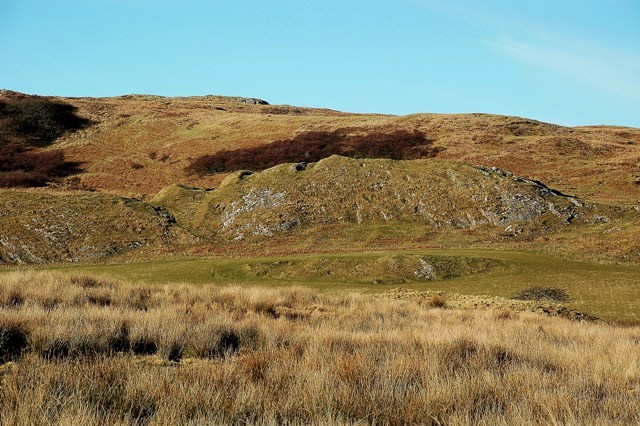
Photo: Mary and Angus Hogg / Wikimedia Commons / CC BY-SA 2.0 A second Iron Age fort on Islay, the closest comparison for how these strongholds were placed on the island.
-
Kilmeny
The settlement north-east of the fort, the point its position is usually described from.
-
Godred Crovan
The eleventh-century king of Dublin and the Isles whom local tradition attaches to the fort, long after the Iron Age date of its building.
-
Islay
The island the fort stands on, whose forts and later lordship sites form a single defended landscape.
-
Finlaggan
The later seat of the Lords of the Isles on the same island, marking where power on Islay moved to after the age of the forts.
What to look for
-
The defensive setting
The fort occupies rising ground southwest of Kilmeny, the kind of naturally defensible position Iron Age communities on Islay favoured when siting a small dun overlooking their farmland.
-
Surviving stonework
Low, weathered stone footings trace the outline of the original fortified enclosure, the visible remnant of the dry-stone walling that once defended the site.
What is said
Folklore and tradition, recorded as what is said — not as established fact.
-
The Godred Crovan association
Local tradition holds that the fort is connected to Godred Crovan, the Norse-Gaelic king of Mann and the Isles who died in 1095, though no documentary or archaeological evidence confirms the link.
Plan your visit
- Location
- 55.8067°N · 6.1707°W
- Nearest settlement
- Kilmeny
- Terrain
- Rough ground — reasonable boots advised
- Time needed
- About 30 minutes
- What survives
- Low weathered stone footings mark the outline of the small dun on rising ground south-west of Kilmeny.
Opening & admission
No current admission or access details are recorded — check the managing body's site before travelling.
Nearby places
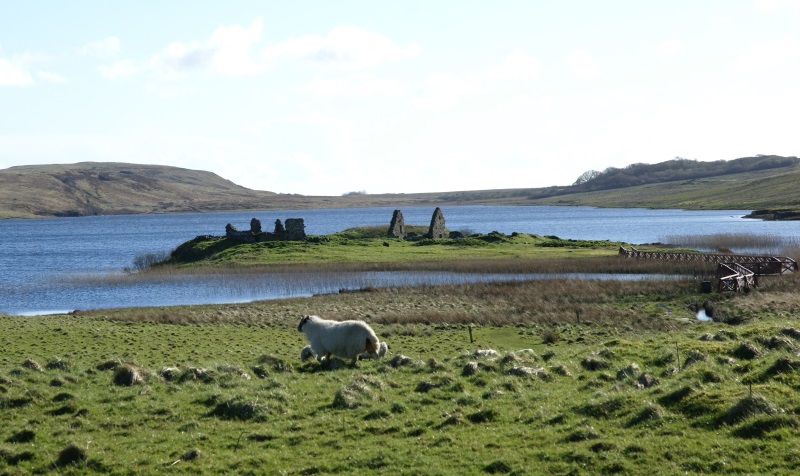
Building or ruin · Medieval
Finlaggan, Eilean Mor
Argyll and Bute
In the first half of the 7th century a monastic community was established on Eilean Mor, the largest of the three islands in Loch Finlaggan: either…
- Near Port Askaig
- 520 metres from car park
- Some walking
Fortified place · Medieval
Dun Nosebridge
Argyll and Bute
Its name fuses Gaelic and Norse in one word: a fort whose very label records the island passing from Gaelic to Viking hands and back again.
- Near Bridgend
- Some walking
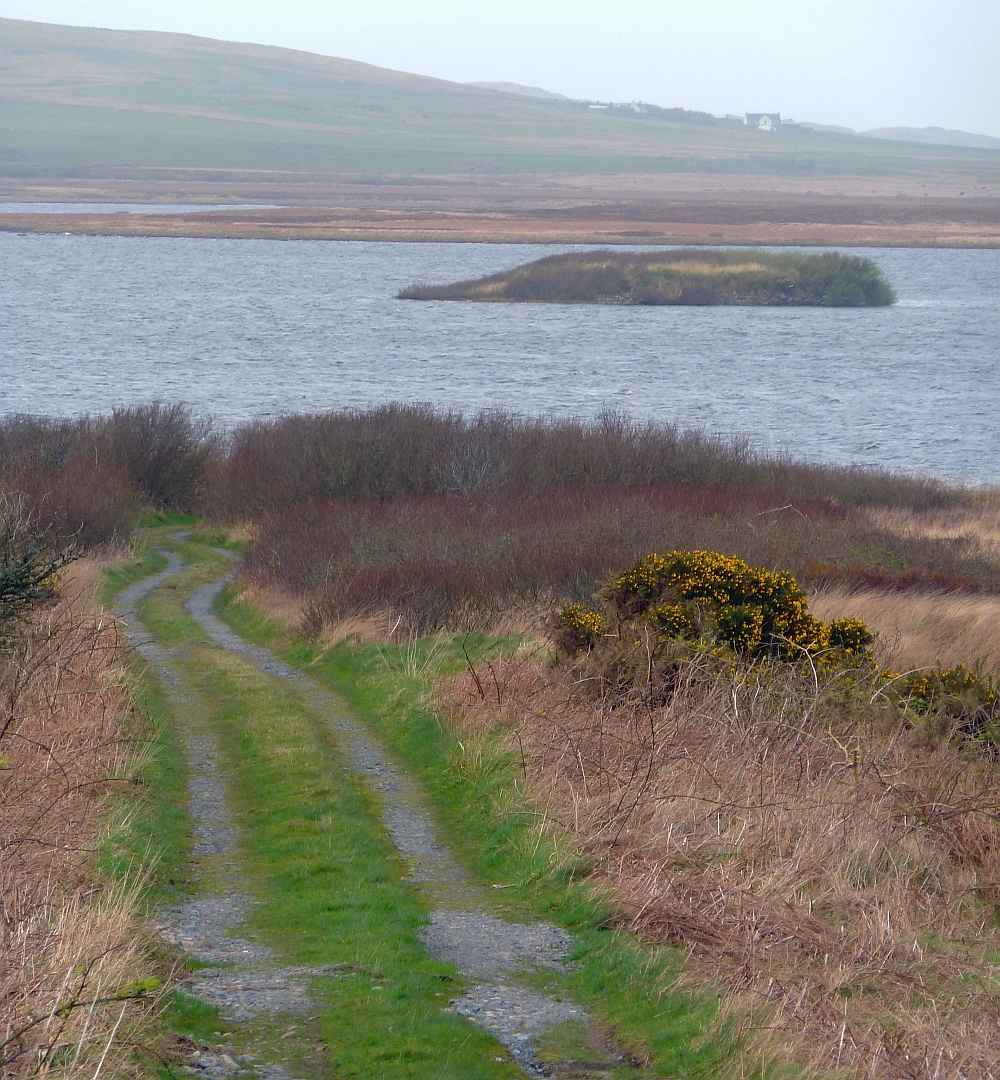
Fortified place · Medieval
Loch Gorm Castle
Argyll and Bute
A Clan Donald stronghold so thoroughly reduced that its island now looks bare from the shore, yet its walls changed hands four times in fewer than…
- Rough ground
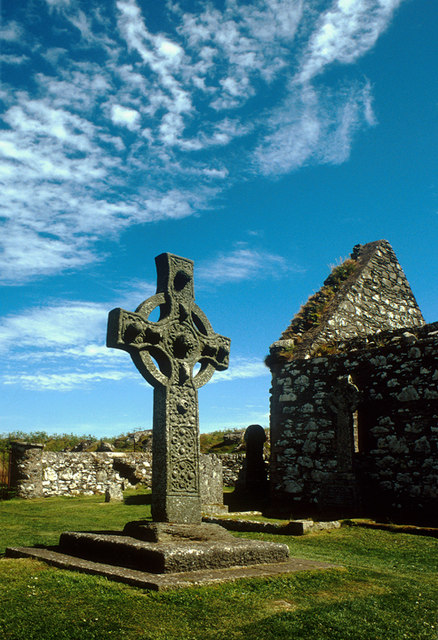
Tomb or burial place · Pictish & early medieval
Kildalton Cross and Chapel
Argyll and Bute
A single carved slab from around the 8th century, still standing almost undamaged in its churchyard: widely judged the finest surviving Celtic high…
- Near Port Ellen
- 1 min walk from car park
- Easy path
Questions people ask
- What is Dun Guaidhre?
- An Iron Age fort, or dun, southwest of Kilmeny on the island of Islay in Argyll and Bute, protected today as a scheduled monument.
- What does the name Dun Guaidhre mean?
- "Dun" is the common Gaelic word for a fort; the site is also recorded as Dùn Ghùaidhre, though the meaning of "Guaidhre" itself is not recorded.
- Is Dun Guaidhre linked to Godred Crovan?
- Local tradition associates the fort with Godred Crovan, the eleventh-century Norse-Gaelic king of Mann and the Isles, but this is an unverified oral association rather than a documented fact.
- Is Dun Guaidhre protected?
- Yes, it is protected as a scheduled monument, which restricts disturbance to the site to safeguard its archaeological remains.
- Where is Dun Guaidhre?
- On the island of Islay, Argyll and Bute, on high ground southwest of the village of Kilmeny.
Sources
The Ancient Codex, in your pocket
Get the Pocket Codex app
Carry the directory with you — Dun Guaidhre and thousands of ancient places across Britain and Ireland, offline, wherever you roam.