
A Clan Donald stronghold so thoroughly reduced that its island now looks bare from the shore, yet its walls changed hands four times in fewer than forty years.
From the shoreline of Loch Gorm, on Islay, the small island of Eilean Mòr looks almost featureless — a low hump of ground with nothing obviously built upon it. Walk onto it, though, and the shape of a fortress emerges from the undergrowth: a square courtyard with a round bastion rising at each corner, the stonework so overgrown and reduced that it takes a moment to read as a castle at all rather than a natural mound.
It was raised in the early fifteenth century, probably around the 1430s, as a stronghold of Clan Donald, and its low island setting was itself a form of defence, ringed by water rather than by cliffs or walls alone. For nearly two centuries it stood at the centre of contests for control of Islay, changing hands between rival clans and the Crown’s own forces before it was finally left to fall into the ruin visitors find today.
What survives is modest in height but rich in incident: a fortress fought over, surrendered, retaken, garrisoned again, and eventually abandoned, its history readable less in standing masonry than in the documented comings and goings of the men who held it.
What follows is drawn from published sources, with each claim labelled by how firmly it is established.
History
The castle was built in the early fifteenth century, generally dated to around the 1430s, as a stronghold of Clan Donald on the island of Eilean Mòr within Loch Gorm. It was laid out on a square plan with a round bastion projecting from each corner, a design meant to give defenders clear lines of fire along every wall while using the loch itself as a natural moat.
In 1578 the castle was seized and occupied for a time by Sir Lachlan Mor Maclean of Duart, who took it as part of a wider campaign to recover or seize the Rinns of Islay from the MacDonalds. The Macleans held it only temporarily before being forced out again, one episode in the long rivalry between the two clans for control of Islay's western peninsula.
The Macleans were ejected from Loch Gorm Castle by the MacDonalds of Dunnyveg, who received help from Colin Campbell, 6th Earl of Argyll — Lachlan Mor's own cousin, and a sign of how family loyalty could give way to political calculation in these disputes. The castle then fell into decline, recorded as ruinous from 1586, before royal forces under Andrew Stuart, 3rd Lord Ochiltree, demolished it outright in 1608 to break its usefulness as a rebel stronghold.
Despite the 1608 demolition the castle was repaired and returned to use, with Ranald MacDonald of Smerby placed in command of its garrison. On 28 January 1615 he surrendered the castle to Sir John Campbell of Cawdor, handing government-aligned forces control of one of Islay's key strongpoints during a period of sustained unrest among the island's clans.
The surrender did not settle matters for long. In April 1615 Sir James MacDonald, 9th of Dunnyveg, retook the island and left his own garrison stationed on Eilean Mòr, reasserting MacDonald control over the castle within months of losing it. A further private garrison was maintained on the island between 1639 and 1640, the last recorded military use of the site before it passed out of active service and into the slow decay visible today.
People
-
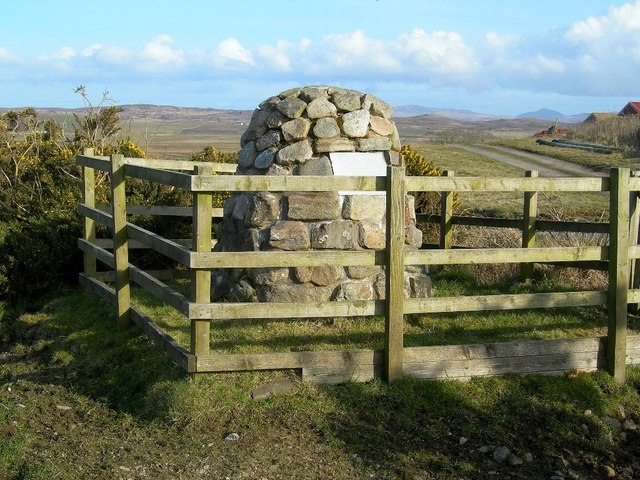
Portrait: Mary and Angus Hogg / Wikimedia Commons / CC BY-SA 2.0 Sir Lachlan Mor Maclean of Duart
Occupied the castle in 1578 during his campaign to recover or seize the Rinns of Islay for the Macleans.
-
Colin Campbell, 6th Earl of Argyll
Assisted the MacDonalds of Dunnyveg in ejecting his cousin Lachlan Mor Maclean from the castle in 1578.
-
Andrew Stuart, 3rd Lord Ochiltree
Led the royal forces that demolished the castle in 1608.
-
Ranald MacDonald of Smerby
Commanded the castle's garrison and surrendered it to Sir John Campbell of Cawdor on 28 January 1615.
-
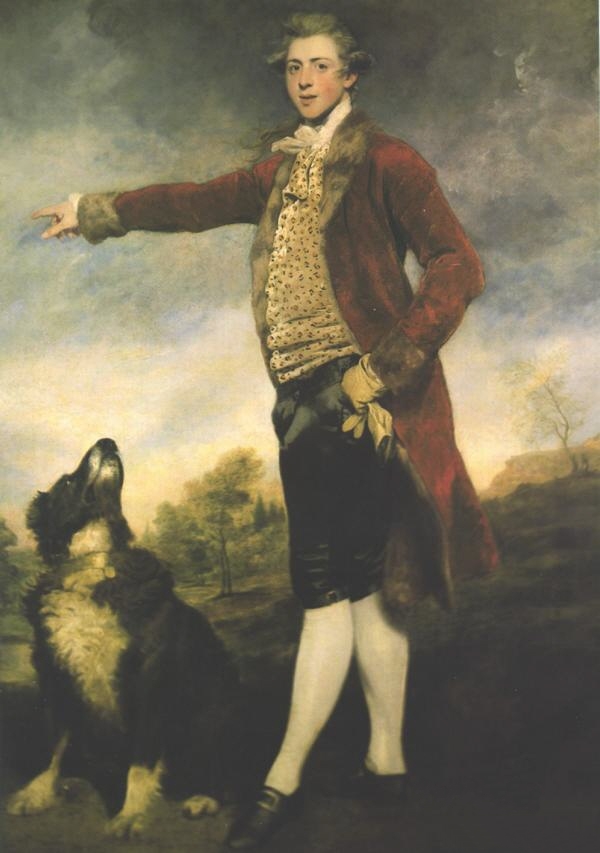
Portrait: Sir Joshua Reynolds (1723-1792) / Wikimedia Commons / Public domain Sir John Campbell of Cawdor
Received the castle's surrender from its MacDonald garrison in January 1615.
-
Sir James MacDonald, 9th of Dunnyveg
Retook the island in April 1615 and left a garrison stationed there.
Connections
-
MacDonalds of Dunnyveg
Held Loch Gorm Castle as one of their Islay strongholds, losing and retaking it in the events of 1578 and 1615.
-
Clan Maclean of Duart
Sir Lachlan Mor Maclean of Duart occupied the castle in 1578 as part of his campaign against the MacDonalds for the Rinns of Islay.
-
Earls of Argyll
Colin Campbell, 6th Earl of Argyll, helped drive the Macleans out of the castle in 1578 despite his kinship with Lachlan Mor.
-
Campbell of Cawdor
Sir John Campbell of Cawdor accepted the garrison's surrender of the castle in January 1615.
What to look for
-
Square plan with corner bastions
The castle was built to a square layout with a round bastion at each corner, a design still traceable in the low, overgrown remains despite centuries of decay.
-
Island setting on Eilean Mòr
The ruins stand on Eilean Mòr, the 'big island' within Loch Gorm, using the surrounding water as a natural line of defence.
-
Overgrown, low-lying ruins
The remaining stonework has been reduced to a low level and is heavily overgrown, so that from the loch shore the island appears almost featureless.
Plan your visit
- Location
- 55.8034°N · 6.4142°W
- Terrain
- Rough ground — reasonable boots advised
- Time needed
- About 45 minutes
- What survives
- Low, heavily overgrown ruins of the castle survive on Eilean Mòr in Loch Gorm.
Opening & admission
No current admission details are recorded — check the Historic Environment Scotland site before travelling.
- Ruins are heavily overgrown and reduced to a low level
- Sits on an island (Eilean Mòr) in Loch Gorm, so reaching it likely requires crossing water
- No public access route is documented
Nearby places
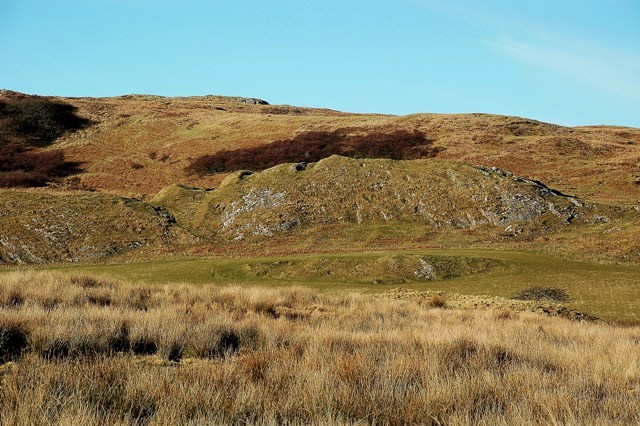
Fortified place · Medieval
Dun Nosebridge
Argyll and Bute
Its name fuses Gaelic and Norse in one word: a fort whose very label records the island passing from Gaelic to Viking hands and back again.
- Near Bridgend
- Some walking
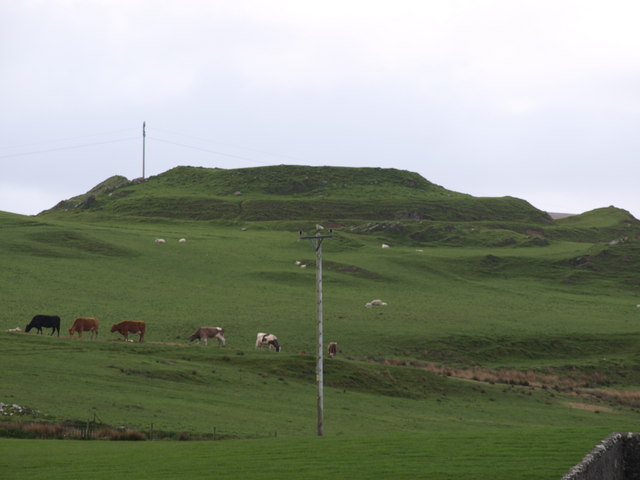
Fortified place · Prehistoric
Dun Guaidhre
Argyll and Bute
A small Iron Age (the period from roughly 800 BC to the Roman conquest) stronghold on Islay whose very name is entangled with a Norse-Gaelic king w…
- Near Kilmeny
- Rough ground
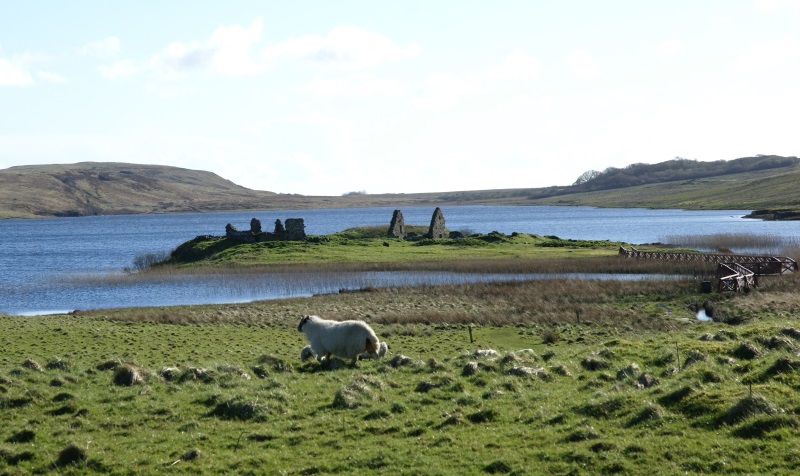
Building or ruin · Medieval
Finlaggan, Eilean Mor
Argyll and Bute
In the first half of the 7th century a monastic community was established on Eilean Mor, the largest of the three islands in Loch Finlaggan: either…
- Near Port Askaig
- 520 metres from car park
- Some walking
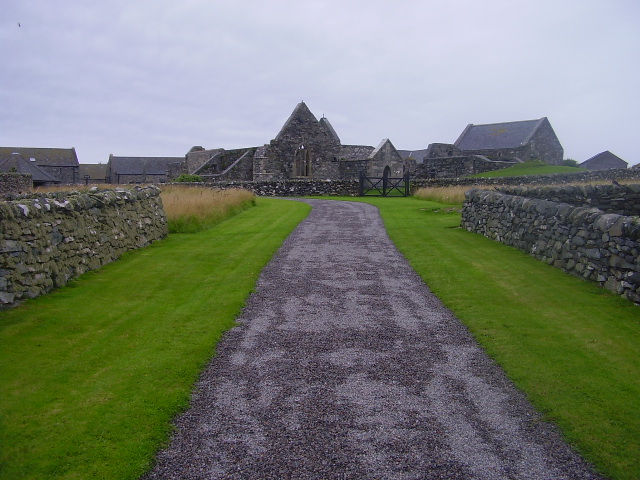
Building or ruin · Medieval
Oronsay Priory
Argyll and Bute
A tidal island monastery so remote that its own priors barely surface in the record, yet it left one of the finest carved crosses in the Hebrides s…
- Near Oronsay
- Rough ground
The setting
Track towards Loch Gorm; the castle is not visible.
Photo: Barbara Carr / Wikimedia Commons / CC BY-SA 2.0
Moorland descending towards Loch Gorm; the castle is not visible.
Photo: Trevor Littlewood / Wikimedia Commons / CC BY-SA 2.0
Questions people ask
- What is Loch Gorm Castle?
- A ruined fifteenth-century castle on Eilean Mòr, an island in Loch Gorm on Islay, built as a stronghold of Clan Donald.
- When was Loch Gorm Castle built?
- It was built in the early fifteenth century, generally dated to around the 1430s.
- What happened to the castle in 1608?
- Royal forces led by Andrew Stuart, 3rd Lord Ochiltree, demolished it, having found it ruinous since 1586.
- Who controlled Loch Gorm Castle after it was repaired?
- Ranald MacDonald of Smerby commanded its garrison until surrendering it to Sir John Campbell of Cawdor on 28 January 1615.
- Why do the ruins look so faint today?
- The remaining stonework is heavily overgrown and reduced to a low level, making the island appear almost featureless from the shore.
Sources
- Wikipedia: Loch Gorm Castle
- Historic Environment Scotland — Canmore
- Wikidata: Loch Gorm Castle
Explore more: Fortified places · Medieval · Argyll and Bute
The Ancient Codex, in your pocket
Get the Pocket Codex app
Carry the directory with you — Loch Gorm Castle and thousands of ancient places across Britain and Ireland, offline, wherever you roam.