In the first half of the 7th century a monastic community was established on Eilean Mor, the largest of the three islands in Loch Finlaggan — either dedicated to or possibly founded by St Findlugan…
A monastic community was founded on Eilean Mor in the first half of the 7th century, dedicated to or possibly founded by St Findlugan, an Irish monk contemporary with St Columba. Centuries later, from the 13th to the 15th, the same island and its neighbour Eilean na Comhairle became the administrative heart of the Lordship of the Isles.
What follows is drawn from published sources, with each claim labelled by how firmly it is established.
The name
Finlaggan's Scottish Gaelic name is Port an Eilein ('Port of the Island'); the castle on Eilean Mor is likewise known as Port an Eilein or Eilean Mor Castle. The site and its chapel are associated with St Findlugan, the Irish monk after whom the place is named.
History
In the first half of the 7th century a monastic community was established on Eilean Mor, the largest of the three islands in Loch Finlaggan — either dedicated to or possibly founded by St Findlugan, an Irish monk and contemporary of St Columba. An early, likely timber, fortification was raised on Eilean Mor in 1138 by Somerled, Lord of Argyll, Kintyre and Lorne — the first 'Lord of the Isles' — possibly on the remains of an earlier Iron Age fort. The masonry castle whose ruins survive today was built in the 13th century.
From the 13th to 15th centuries, Eilean Mor and the neighbouring Eilean na Comhairle ('Isle of the Council') were the administrative centre of the Lordship of the Isles and seat of Clan Donald, used by the Lords of the Isles as their principal court and meeting place of the clan chiefs. Iain Mor MacDonald, 3rd of Dunnyveg, and his son Iain Cathanach MacDonald were taken prisoner at Finlaggan Castle through the deception of MacIain of Ardnamurchan, and were later tried and hanged on the Burgh Muir at Edinburgh.
In 1493 the Lordship of the Isles fell to James IV of Scotland, who thereafter administered the territory through a tenant-in-chief; in 1541 Finlaggan was held from the Crown by Donald MacGilleasbuig. The castle appears to have been demolished in the 15th-16th centuries.
People
-
St Findlugan
Irish monk, contemporary of St Columba, after whom the site is named and to whom the chapel is dedicated; venerated as a saint
-
Somerled, Lord of Argyll, Kintyre and Lorne
First 'Lord of the Isles'; raised an early (likely timber) fortification on Eilean Mor in 1138
-
The Lords of the Isles / Clan Donald
Used Finlaggan as their seat, principal court and council place during the 13th-15th centuries
-
James IV of Scotland
Crown to whom the Lordship of the Isles fell in 1493
Cultural influences
-
Lordship of the Isles — Finlaggan was the political and administrative heart of a maritime Gaelic lordship that governed the western seaboard until it fell to the Scottish Crown in 1493.
-
Early Gaelic Christianity — the 7th-century monastic foundation linked to St Findlugan, a contemporary of St Columba, ties the island into the early Christian network of the Irish Sea and western Scotland.
Connections
-
Photo: Rob Farrow / Wikimedia Commons / CC BY-SA 2.0 Eilean na Comhairle ('Isle of the Council')
Neighbouring island in Loch Finlaggan that, with Eilean Mor, formed the administrative centre of the Lordship of the Isles
-
Clan Donald
The Lordship of the Isles, held by Clan Donald, used Finlaggan as its administrative seat.
-
Port Askaig, Islay
Ferry terminal about 4 km east of the site
Discovery & excavation
Finlaggan has been the subject of recent archaeological investigation and was the site of a 1995 episode of Channel 4's 'Time Team'. The Finlaggan Trust maintains the site and has converted a derelict cottage into a museum holding finds from the excavations, from a quilted woollen aketon (worn under armour) to a cross associated with the Lords. The medieval chapel dedicated to St Findlugan on Eilean Mor has had its stone walls stabilised, and several 16th-century graves are displayed under glass panels. In May 2019 researchers at the University of St Andrews, with the Finlaggan Trust and the National Museum of Scotland, announced a virtual-reality reconstruction of the early-15th-century settlement.
Finds now held at: Finlaggan visitor centre / museum (Finlaggan Trust).
In culture
-
Finlaggan featured in a 1995 episode of Channel 4's archaeological television programme 'Time Team'.
-
A virtual-reality reconstruction of the settlement as it stood in the early 15th century, announced in 2019 and built from archaeological data, is shown at the visitor centre.
What to look for
-
The castle on Eilean Mor
The ruined masonry castle on Eilean Mor — a 13th-century fortified house, also called Port an Eilein or Eilean Mor Castle, once the stronghold of the Lords of the Isles.
-
The chapel of St Findlugan
The stabilised stone walls of the medieval chapel dedicated to St Findlugan.
-
The glass-covered grave slabs
Several 16th-century graves on Eilean Mor, displayed and protected under large glass panels.
-
Eilean na Comhairle, the Council Isle
The setting in Loch Finlaggan, with the neighbouring Eilean na Comhairle, the 'Isle of the Council', the second island of the lordship's administrative heart.
-
The museum finds
The visitor centre and museum, with finds from the excavations including a quilted woollen aketon and a cross associated with the Lords.
Plan your visit
- Location
- 55.8353°N · 6.1727°W
- Nearest settlement
- Port Askaig
- Access
- Open access
- Terrain
- Moderate walking
- Parking
- Park at the Finlaggan Trust visitor centre car park and follow the boardwalk down to Eilean Mor.
- Time needed
- About 90 minutes
- Best time
- During daylight hours, allowing time for the boardwalk and island visit.
- What survives
- The site includes a museum, medieval chapel ruins, and 16th-century graves under glass covers on Eilean Mor.
- Facilities
- The Finlaggan Trust visitor centre includes a museum and an information board beside the car park.
- Start point
- Finlaggan Visitor Centre car park — Park at the Finlaggan Trust visitor centre and follow the boardwalk down to Eilean Mor (the council island).
Opening & admission
There is a visitor centre with a museum on site; check the Finlaggan Trust's website for current opening and admission details.
- Reachable from Port Askaig on Islay, around 4 km to the west.
- Site includes a museum, medieval chapel ruins, and 16th century graves under glass covers.
- Situated on Eilean Mòr in Loch Finlaggan.
Nearby places
Fortified place · Prehistoric
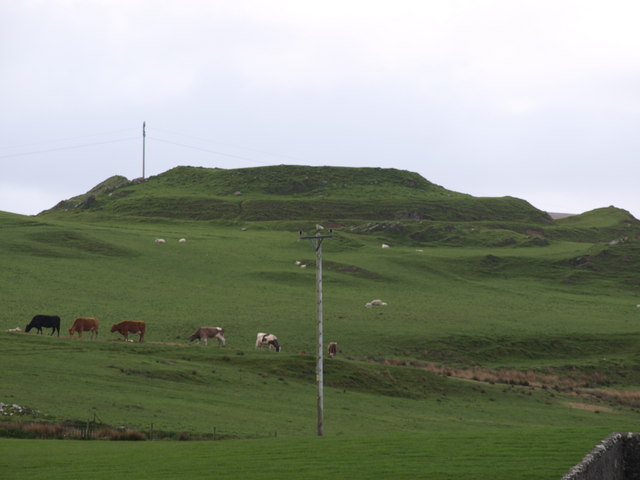
Dun Guaidhre
Argyll and Bute
A small Iron Age (the period from roughly 800 BC to the Roman conquest) stronghold on Islay whose very name is entangled with a Norse-Gaelic king w…
- Near Kilmeny
- Rough ground
Fortified place · Medieval
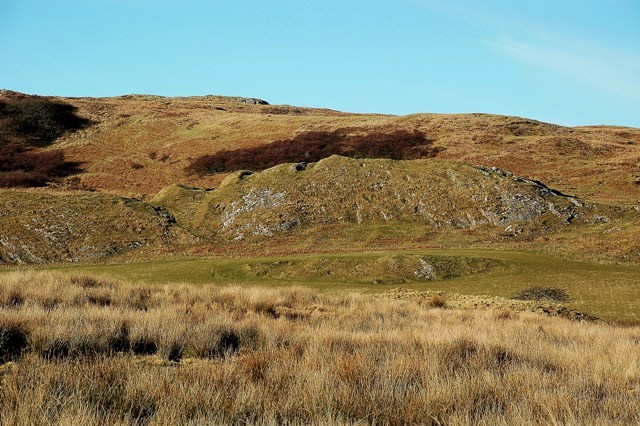
Dun Nosebridge
Argyll and Bute
Its name fuses Gaelic and Norse in one word: a fort whose very label records the island passing from Gaelic to Viking hands and back again.
- Near Bridgend
- Some walking
Fortified place · Medieval
Loch Gorm Castle
Argyll and Bute
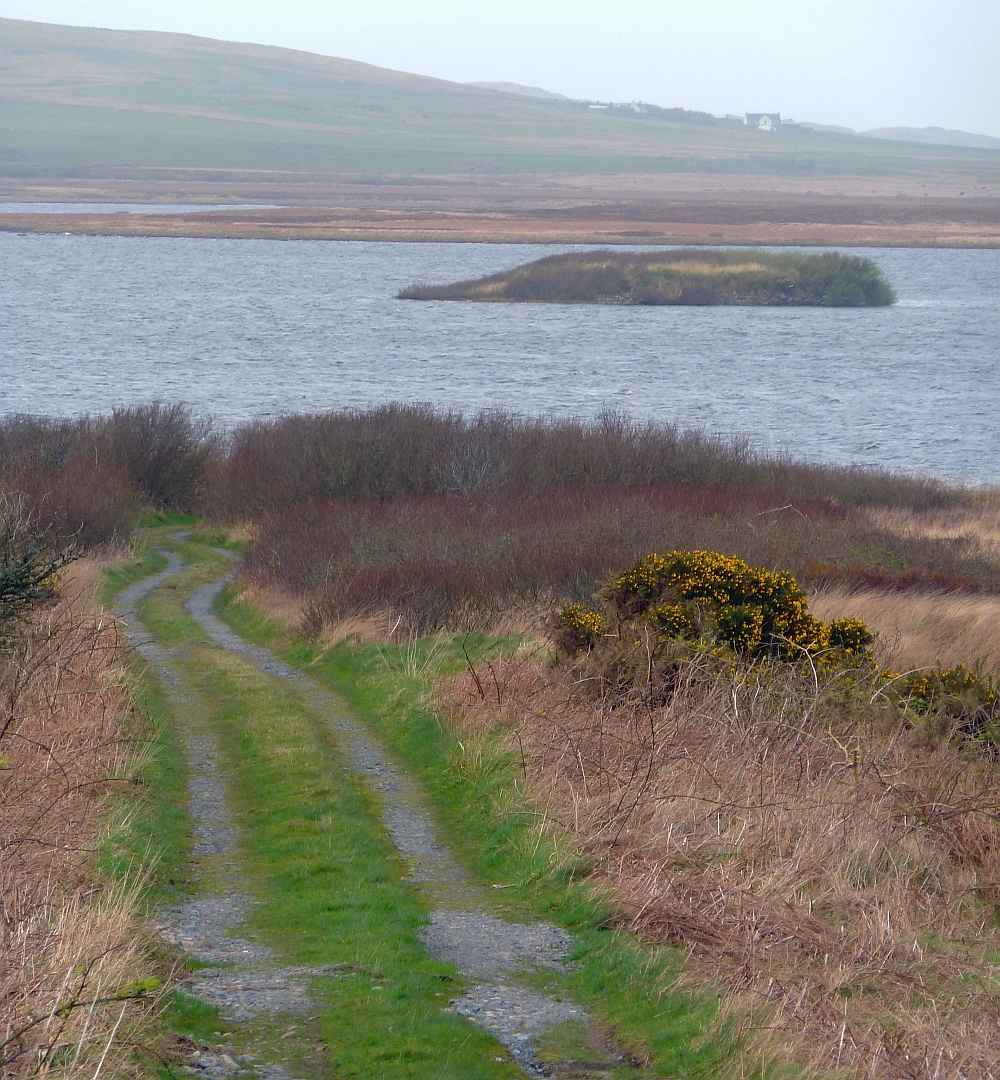
A Clan Donald stronghold so thoroughly reduced that its island now looks bare from the shore, yet its walls changed hands four times in fewer than…
- Rough ground
Tomb or burial place · Pictish & early medieval
Kildalton Cross and Chapel
Argyll and Bute
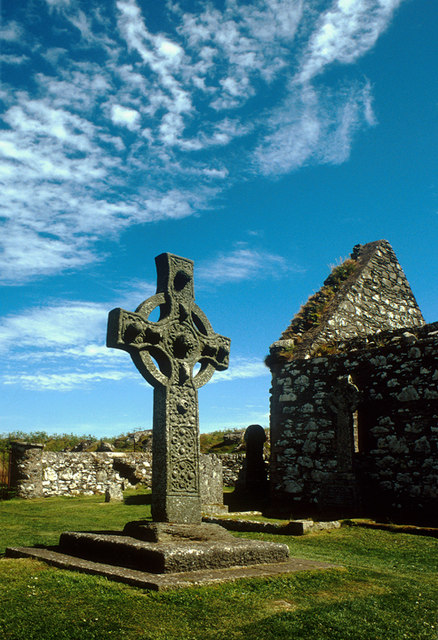
A single carved slab from around the 8th century, still standing almost undamaged in its churchyard: widely judged the finest surviving Celtic high…
- Near Port Ellen
- 1 min walk from car park
- Easy path
Questions people ask
- What is Finlaggan?
- It is a group of islands in Loch Finlaggan, Islay, that served as the seat of the Lords of the Isles and Clan Donald from the 13th to 15th centuries.
- Which islands make up the site?
- Eilean Mor, the largest island, holds the castle and chapel ruins; the neighbouring Eilean na Comhairle, the "Isle of the Council", was the administrative meeting place.
- Who maintains Finlaggan today?
- The Finlaggan Trust maintains the site and runs a visitor centre and museum, holding finds from the archaeological excavations.
- What can visitors see there?
- The stabilised chapel walls, glass-covered 16th-century graves, the ruined masonry castle, and museum finds including a quilted aketon and a cross associated with the Lords.
Sources
- Canmore site record 37708 (accessed 2026-06-13)
- Trove (HES) record (accessed 2026-06-13)
- Wikipedia: Finlaggan (accessed 2026-06-13)
- Wikidata Q5450440 (accessed 2026-06-13)
- Finlaggan Trust (accessed 2026-06-13)
Explore more: Building or ruins · Medieval · Argyll and Bute
The Ancient Codex, in your pocket
Get the Pocket Codex app
Carry the directory with you — Finlaggan, Eilean Mor and thousands of ancient places across Britain and Ireland, offline, wherever you roam.