
A galley stronghold on Lagavulin Bay that anchored the Lord of the Isles' fleet and was fought over in five separate sieges within a single decade.
Lagavulin Bay reaches around Dunyvaig’s low rocky promontory on Islay’s south coast. The broken walls face the anchorage behind the Gaelic name Dùn Naomhaig, usually rendered as Fort of the Galleys, a base for launching, sheltering and defending warships.
The site had been fortified long before any stone was laid, as a dún, an Iron Age or early-medieval fort, already occupied the promontory. It was on top of this earlier stronghold that a castle was raised, and for four centuries afterwards the low headland at Lagavulin changed hands between kings, clan chiefs and crown officials, each one drawn by the same asset: a sheltered bay that could hold a fleet of galleys within sight of the open sea routes to Ireland and the Isles.
What survives today is mostly the fabric of a sixteenth-century castle raised on thirteenth-century foundations, with a fifteenth-century keep still standing among the ruin. The site was recognised as a scheduled monument in 1989, protecting what remains of a place that was, for a large part of its working life, less a residence than a naval headquarters.
What follows is drawn from published sources, with each claim labelled by how firmly it is established.
The name
The Gaelic name Dùn Naomhaig is anglicised as Dunnyveg or Dunyvaig and is generally translated as the Fort of the Galleys, a name that reflects the site's role as an anchorage and base for a war fleet rather than simply a residence.
History
In the twelfth century Somerled, King of the Isles, had a castle built on a rocky promontory at Lagavulin Bay on the south coast of Islay, raising it directly on top of an earlier dún, a fort that had already occupied the headland. The choice of site gave any later garrison command of the bay itself, a natural anchorage sheltered enough to hold a fleet at rest.
Through the thirteenth and fourteenth centuries the castle remained in the hands of Somerled's descendants, the Macdonalds who held the title Lord of the Isles. Angus Mor Macdonald and his sons Alexander Og and Angus Og used Lagavulin Bay as an anchorage for their fleet of galleys, and the stronghold above the water functioned as the operational base for a seaborne power that could move fighting men across the Hebrides and into Ireland.
The MacDonald hold on Dunyvaig broke in 1493, when the lordship was forfeited to the crown and the castle passed to the MacIans of Ardnamurchan, a family descended from John Macdonald, younger brother of Angus Og and a friend of Robert the Bruce. When the MacIans were punished for their part in the 1501 to 1506 insurrection led by Black Donald, the castle was transferred again, this time to a branch of the Campbells, before the MacDonald holdings in Islay and Jura were restored to the family in 1545. The castle's political weight was still felt at the highest level of Scottish court life: in 1563, as Mary, Queen of Scots planned a journey to Argyll, Lady Agnes Campbell, wife of James MacDonald of Dunyvaig, presented the queen with a set of Highland dress described as marvellous fair, and by 1598 the castle was being kept on the crown's behalf by John Stewart of Arskok, paid £3000 Scots a year for its upkeep.
On 2 August 1608 Angus MacDonald, 8th of Dunnyveg, surrendered the castle by negotiation to the king's lieutenant, the 3rd Lord Ochiltree, and to Andrew Knox, Bishop of the Isles, who arrived with a royal naval force of 1,000 men. Three days later Angus MacDonald and others were invited aboard the ship Advantage to mark Gowrie day, the anniversary of James VI's rescue at Perth in 1600, and a garrison loyal to the crown was installed in the castle.
The peace did not hold. In 1614 the castle was seized by Ranald Og Macdonald, then retaken by Angus Og MacDonald, who tried to negotiate its surrender. When Bishop Knox attempted to retake it himself in September 1614 he was defeated and forced to retreat, leaving his own son and nephew behind as hostages for his good faith. Knox later wrote to the lawyer Thomas Hamilton defending his conduct, describing how he had struggled to raise boats and men during the harvest season, how the Clan Donald of Islay had cut him off from his ships and destroyed them, and how he had been told to surrender his hostages or see his men executed; the two prisoners were eventually freed through the efforts of George Graham, acting on no more than a verbal promise of reward from the Earl of Dunfermline.
The castle changed hands twice more within a year. On 6 January 1615 Sir John Campbell of Calder, aided by Sir Oliver Lambart's artillery and men brought in aboard the Phoenix, retook Dunyvaig, capturing 22 men while another 22, including Coll Ciotach, escaped by postern gate to a longboat. In June 1615 Sir James MacDonald and Coll Ciotach seized the castle yet again, killing its captain and part of the garrison, prompting the Privy Council of Scotland to send a pinnace armed with cannon. James MacDonald fled before the guns could be landed, and on 13 October 1615 Coll Ciotach surrendered the castle to the Earl of Argyll.
The Covenanters seized Dunyvaig in 1647, after which it passed into the hands of the Campbells of Cawdor. They held the castle until 1677, when Sir Hugh Campbell had it pulled down and relocated the family seat to Islay House nearby. The ruined promontory site was designated a scheduled monument in 1989, protecting the surviving thirteenth-century courtyard, fifteenth-century keep and sixteenth-century castle fabric that remain today.
People
-
Somerled, King of the Isles
Built the original castle on the site of an earlier dún in the twelfth century.
-
Angus Mor Macdonald
Lord of the Isles who, with his sons, used Lagavulin Bay as a galley fleet anchorage in the thirteenth century.
-
Angus MacDonald, 8th of Dunnyveg
Surrendered the castle to the crown's forces in 1608.
-
Andrew Knox, Bishop of the Isles
Led the royal force that took the surrender in 1608 and later failed to retake the castle in 1614.
-
Coll Ciotach
Escaped capture in 1615 and later took part in retaking, then surrendering, the castle that same year.
-
Sir Hugh Campbell of Cawdor
Demolished the castle in 1677 and moved the Campbell seat to Islay House.
Cultural influences
-
Lagavulin Bay anchorage
The sheltered bay beneath the castle made the promontory a natural naval base, shaping its long role in the power of the Lords of the Isles.
Connections
-
Islay House
Became the new seat of the Campbells of Cawdor after Sir Hugh Campbell demolished Dunyvaig Castle in 1677.
-
Clan Donald of Islay (MacDonalds of Dunnyveg)
Held Dunyvaig as their principal naval base and seat for most of its working life, from Somerled's descendants through to the seventeenth-century sieges.
-
Campbells of Cawdor
Took possession of the castle after the Covenanters seized it in 1647 and held it until its demolition in 1677.
-
MacIans of Ardnamurchan
Received the forfeited castle in 1493, being descended from a younger brother of Angus Og Macdonald, Lord of the Isles.
What to look for
-
The rocky promontory
The castle stands on a low rocky headland jutting into Lagavulin Bay, the same promontory that carried an earlier dún before Somerled's castle was built on it.
-
The surviving keep and courtyard
Among the ruins, a thirteenth-century courtyard and a fifteenth-century keep can still be traced within the mostly sixteenth-century castle fabric.
-
Lagavulin Bay anchorage
The sheltered water below the castle is the anchorage the Macdonald Lords of the Isles used to shelter their fleet of galleys.
-
The spelling on the statutory record
Historic Environment Scotland scheduled the site on 4 September 1989 and amended the entry in December 1992, in the parish of Kildalton. It appears on the schedule as "Dunivaig Castle" rather than Dunyvaig — one of several competing anglicisations of the Gaelic name. The protected area covers roughly 5,570 square metres.
Plan your visit
- Location
- 55.6336°N · 6.1231°W
- Nearest settlement
- Lagavulin
- Access
- Open access
- Terrain
- Rough ground — reasonable boots advised
- Time needed
- About 45 minutes
- Best time
- Daylight in dry, calm weather, when the rocky promontory and surviving masonry can be viewed safely.
- What survives
- A ruined castle with a traceable courtyard and keep amid mainly sixteenth-century fabric.
- Facilities
- No dedicated visitor facilities are recorded at the ruins.
Opening & admission
Free to visit — check the managing body's site before travelling for any current access restrictions.
- A scheduled monument since 1989, sited on a rocky promontory into Lagavulin Bay
- Only ruins remain of the castle's sixteenth-century structure, with an earlier courtyard and keep
Nearby places
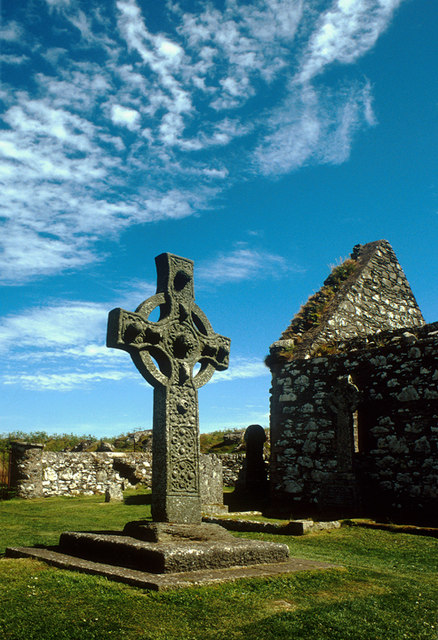
Tomb or burial place · Pictish & early medieval
Kildalton Cross and Chapel
Argyll and Bute
A single carved slab from around the 8th century, still standing almost undamaged in its churchyard: widely judged the finest surviving Celtic high…
- Near Port Ellen
- 1 min walk from car park
- Easy path
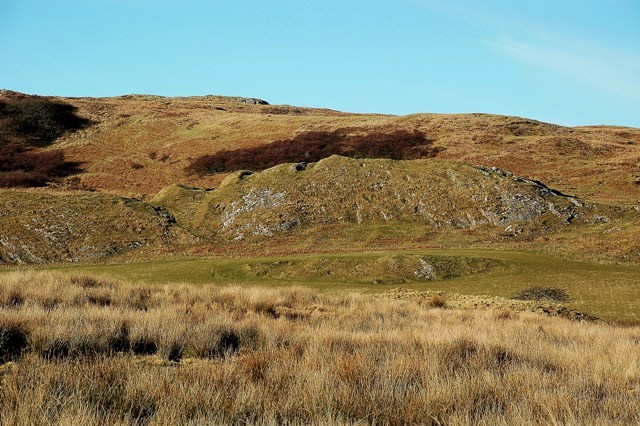
Fortified place · Medieval
Dun Nosebridge
Argyll and Bute
Its name fuses Gaelic and Norse in one word: a fort whose very label records the island passing from Gaelic to Viking hands and back again.
- Near Bridgend
- Some walking
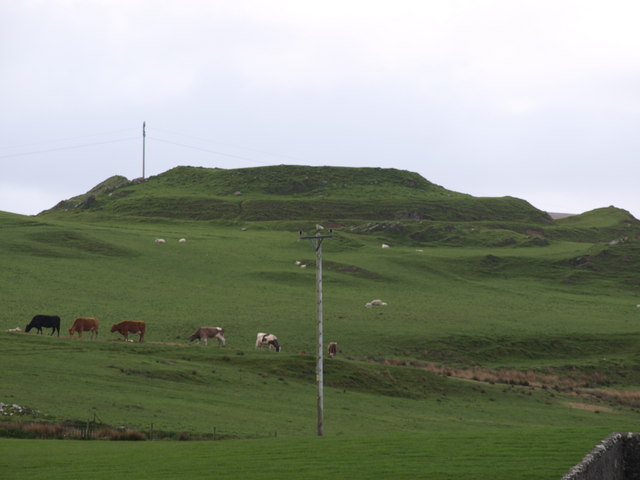
Fortified place · Prehistoric
Dun Guaidhre
Argyll and Bute
A small Iron Age (the period from roughly 800 BC to the Roman conquest) stronghold on Islay whose very name is entangled with a Norse-Gaelic king w…
- Near Kilmeny
- Rough ground
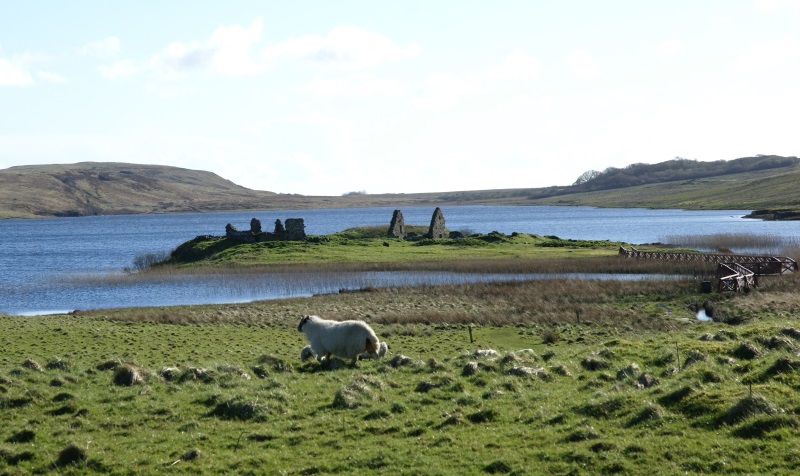
Building or ruin · Medieval
Finlaggan, Eilean Mor
Argyll and Bute
In the first half of the 7th century a monastic community was established on Eilean Mor, the largest of the three islands in Loch Finlaggan: either…
- Near Port Askaig
- 520 metres from car park
- Some walking
Questions people ask
- Who built Dunyvaig Castle?
- Somerled, King of the Isles, had it built in the twelfth century on top of an earlier fort, or dún, on a rocky promontory at Lagavulin Bay.
- What does the name Dunyvaig mean?
- It comes from the Gaelic Dùn Naomhaig, usually translated as the Fort of the Galleys, reflecting its role as a naval anchorage.
- Why was the castle fought over so many times in 1614 and 1615?
- Rival Macdonald factions and crown forces under Bishop Knox and Campbell of Calder repeatedly seized and retook it during a wider crown campaign against Clan Donald's Islay powerbase.
- When was Dunyvaig Castle demolished?
- Sir Hugh Campbell of Cawdor pulled the castle down in 1677 and moved his household to nearby Islay House.
- What remains of the castle today?
- Mainly the ruins of the sixteenth-century castle, along with a thirteenth-century courtyard and a fifteenth-century keep, protected as a scheduled monument since 1989.
Sources
The Ancient Codex, in your pocket
Get the Pocket Codex app
Carry the directory with you — Dunyvaig Castle and thousands of ancient places across Britain and Ireland, offline, wherever you roam.