
Dunchraigaig is an Early Bronze Age round cairn, about 30 m across, set a little apart to the south-east of the famous 2 km linear cemetery of cairns that runs down Kilmartin Glen from Glebe Cairn to…
A pair of antlered stags is carved into the underside of Dunchraigaig Cairn’s capstone. Their discovery in 2021 added an unexpected scene to the Early Bronze Age round cairn, which lies south-east of Kilmartin Glen’s linear cemetery.
What follows is drawn from published sources, with each claim labelled by how firmly it is established.
The name
Dunchraigaig is a Gaelic name combining 'dun' (a fort or fortified mound/hill) with a 'craig/creag' (rock) element — broadly 'fort of the rock' or 'rocky stronghold'. This is a topographic place-name reading of the locality rather than evidence of a fort on the cairn itself.
History
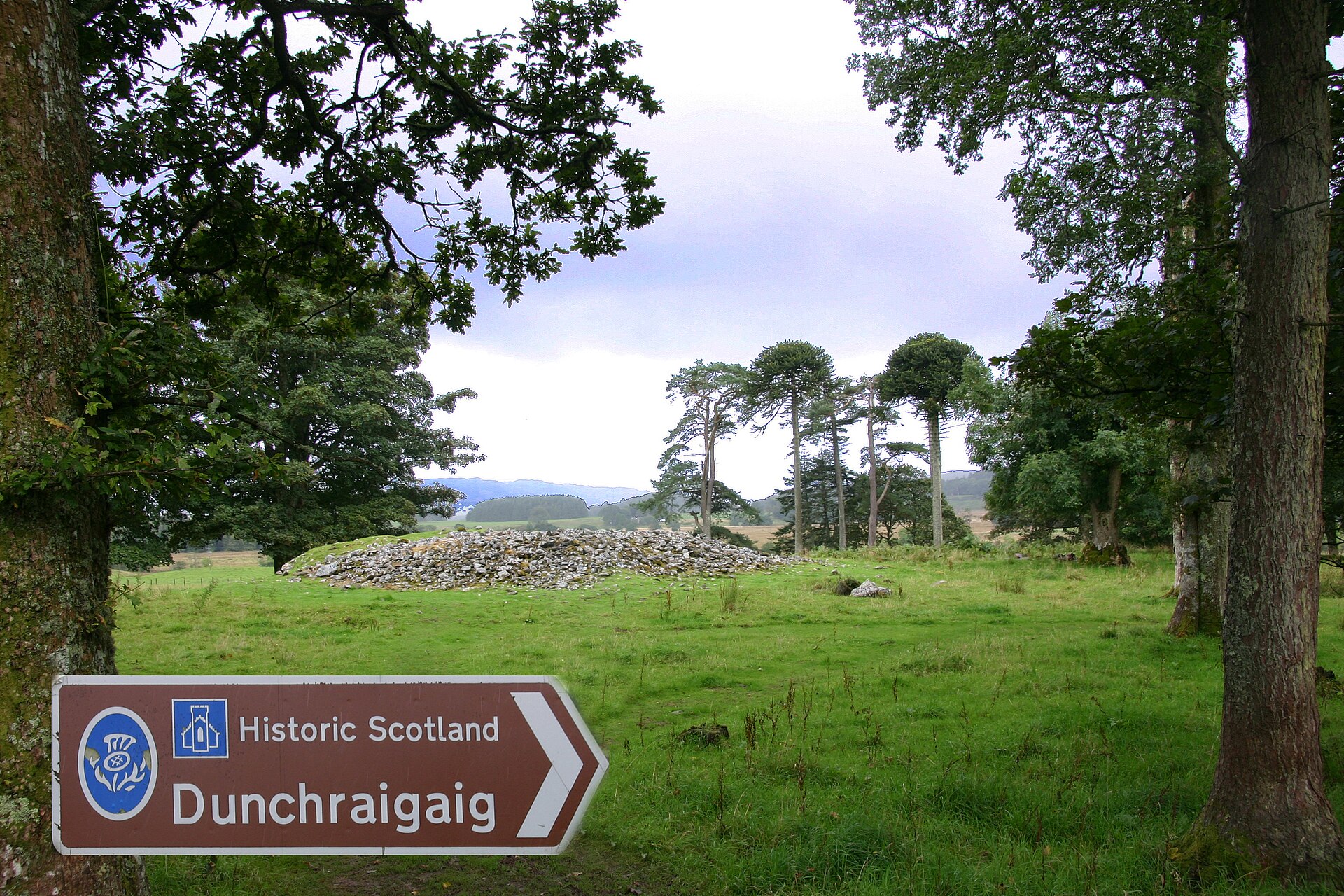
Dunchraigaig is an Early Bronze Age round cairn, about 30 m across, set a little apart to the south-east of the famous 2 km linear cemetery of cairns that runs down Kilmartin Glen from Glebe Cairn to Ri Cruin.
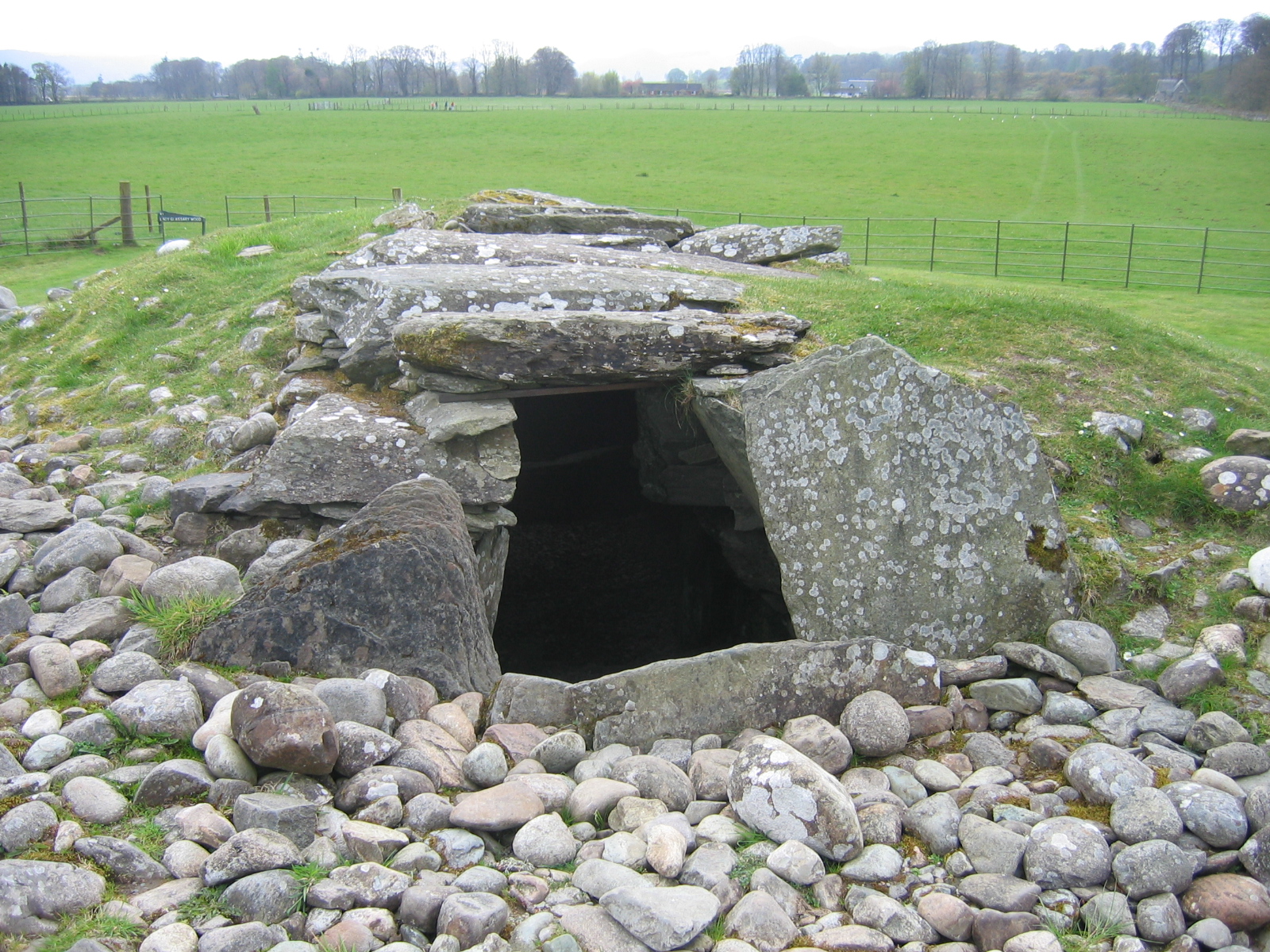
The cairn was excavated by R. J. Mapleton and William Greenwell in 1864, who found three cists. Most remarkable was the large south-east cist — dug into the ground, lined with drystone cobbled walls and capped by a massive stone — which held the remains of up to 10 individuals, some cremated and some not, together with a whetstone, a greenstone axe and a flint knife. Multiple burials in a single cist are very unusual for the Bronze Age, when cists were normally reserved for one person.
In May 2021 prehistoric deer carvings were discovered on the underside of the massive capstone of one of the cists — the earliest known animal carvings in Scotland and the first clear deer carvings of the Neolithic to Early Bronze Age in the whole of the UK, thought to be 4,000–5,000 years old. The find overturned the assumption that British prehistoric rock art was mainly geometric and non-figurative.
People
-
William Greenwell
Antiquarian who (with R. J. Mapleton) excavated the cairn in 1864 and published the account of the cists and finds
-
R. J. Mapleton
Co-excavator in 1864; reported on the prehistoric remains around the Crinan Canal
-
Hamish Fenton
Discovered the prehistoric deer carvings by chance in 2021, noticing them by torchlight on the underside of a cist capstone
-
Dr Tertia Barnett
Principal Investigator of Scotland's Rock Art Project, who confirmed and contextualised the deer carvings
-
A. S. Henshall
Archaeologist (The Chambered Tombs of Scotland, 1972) who reassessed the large south cist, concluding it could not properly be classed as a chamber
Cultural influences
-
The 2021 deer carvings have reshaped understanding of British prehistoric rock art, showing that recognisable, anatomically detailed figurative animal art existed alongside the region's better-known cup-and-ring (geometric) tradition.
-
Kilmartin Glen gathers an unusually rich sequence of Neolithic and Bronze Age monuments and carved rock surfaces in mainland Scotland; Dunchraigaig belongs to this exceptional ritual and funerary landscape.
Connections
-
Kilmartin Glen linear cairn cemetery
Dunchraigaig sits just south-east of the line of five cairns (Glebe, Nether Largie North, Mid and South, Ri Cruin) that runs down the glen
-
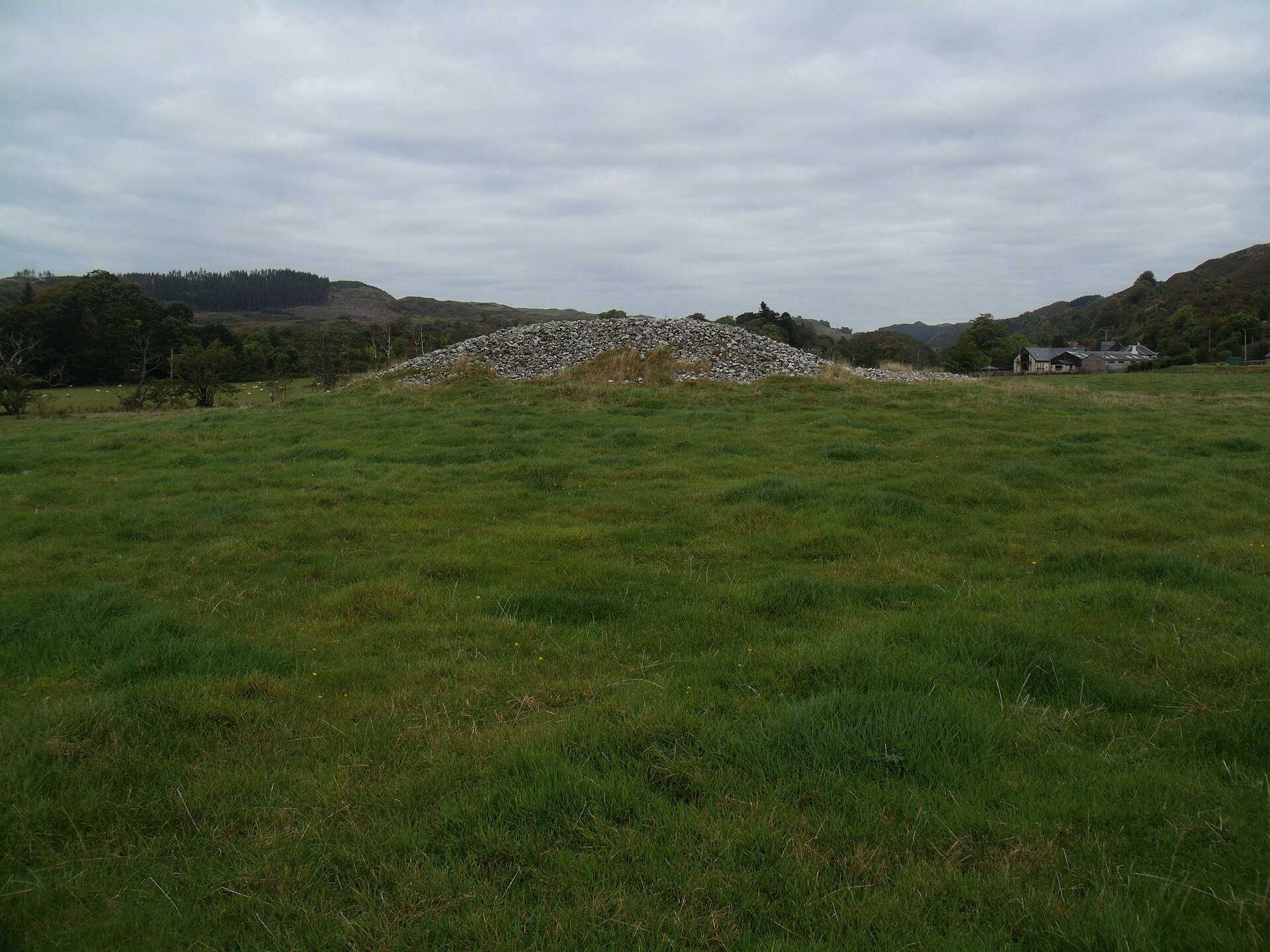
Photo: Euan Nelson / Wikimedia Commons / CC BY-SA 2.0 Its large boulder-walled cist was noted as closely similar to the south cist at Dunchraigaig
-
Baluachraig and other Kilmartin rock art
Nearby cup-and-ring carved outcrops; Dunchraigaig's figurative deer carvings contrast with this geometric tradition
-
National Museum of Antiquities of Scotland (now National Museums Scotland)
Holds the two bowl food vessels recovered from the central and east cists (accession HPO 11 and HPO 12)
-
Scotland's Rock Art Project (HES, with Edinburgh & Glasgow School of Art)
Recorded and confirmed the deer carvings using structured-light scanning and photogrammetry
Discovery & excavation
The cairn was opened by Mapleton and Greenwell in 1864, revealing three cists: a large drystone-lined south-east cist with the remains of up to ten people plus a whetstone, greenstone axe and flint knife; a central cist with a bowl food vessel (NMAS HPO 12), an inhumation in clay, burnt bone and flint; and a smaller east cist with a second bowl food vessel (NMAS HPO 11), burnt bone and flint. The whetstone, flint knife, pottery fragments and greenstone axe found among the cairn stones are now lost. The food vessels survive in the national collection. In 2021 Hamish Fenton's chance discovery of figurative deer carvings on a cist capstone added an entirely new dimension to the monument.
Finds now held at: National Museums Scotland (food vessels NMAS HPO 11 and HPO 12).
In culture
-
The 2021 deer-carving discovery drew international press coverage and an academic publication ('Revealing the Earliest Animal Engravings in Scotland: The Dunchraigaig Deer, Kilmartin', Cambridge Archaeological Journal), turning a long-known cairn into a touchstone for the study of British figurative rock art.
What to look for
-
The south-east cist
The large south-east cist — dug into the ground, walled with drystone cobbling and capped by a massive stone; the burial place of up to ten individuals.
-
The deer carvings
The deer carvings on the underside of a cist capstone — two antlered red deer and further (juvenile) animals; faint, and best seen with raking torchlight, as their discoverer did.
-
The robbed round cairn
The broad, low round cairn (about 30 m across, 2.5 m high), heavily robbed on the south and east, with possible kerb boulders on the north edge.
-
Its place off the cairn line
The cairn's position set apart to the south-east of the main Kilmartin cairn line — a deliberate exception to the linear cemetery.
Plan your visit
- Location
- 56.1146°N · 5.4872°W
- Nearest settlement
- Kilmartin
- Access
- Open access
- Terrain
- Easy going
- Parking
- Parking available nearby — see the official getting-here page.
- Start point
- Kilmartin Glen · 1.25m south of Kilmartin off the A816.
- Time needed
- About 45 minutes
- Best time
- Open year-round.
- What survives
- The prehistoric cairn survives as a visible chambered burial monument within Kilmartin Glen.
- Facilities
- Check the official visitor page for current facilities and access arrangements.
- Start point
- Kilmartin Glen roadside parking (A816, by Dunchraigaig Cairn) — Off-road parking immediately beside the cairn on the A816 in Kilmartin Glen, about 1.25 miles south of Kilmartin village.
- Sat-nav
- PA31 8RG
Opening & admission
Free entry
- Open year-round.
Nearby places
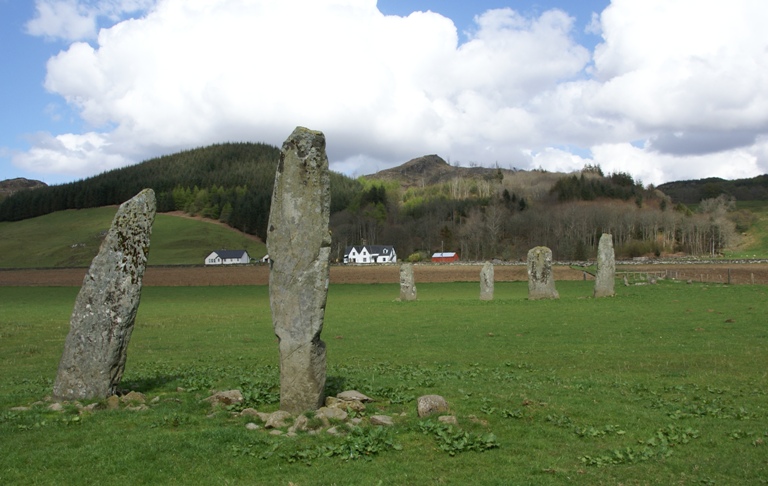
Sacred place · Prehistoric
Ballymeanoch Standing Stones and Henge
Argyll and Bute
One of the few places in Kilmartin Glen where a stone avenue, a circle and a henge: a circular enclosure from before any written account of Britain…
- Near Kilmartin
- 6 min walk from car park
- Some walking
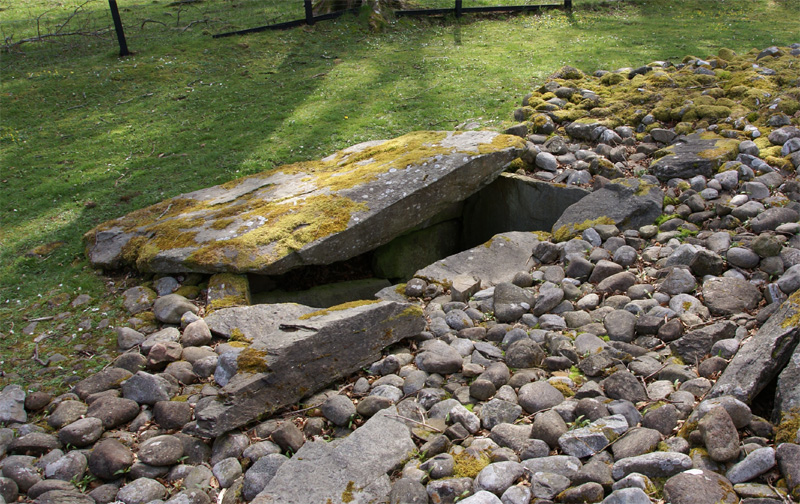
Tomb or burial place · Prehistoric
Ri Cruin Cairn
Argyll and Bute
The southernmost cairn (a mound of piled stones, often covering a burial) in Kilmartin Glen's five-mile chain of Bronze Age (roughly 2500–800 BC) b…
- Near Kilmartin
- 8 min walk from car park
- Easy path
Tomb or burial place · Prehistoric
Nether Largie South Chambered Cairn
Argyll and Bute
Nether Largie South is a Neolithic Clyde-type chambered cairn, a mound of piled stones often covering a burial, and the earliest monument in the Ki…
- Near Kilmartin
- 7 min walk from car park
- Easy path
Sacred place · Prehistoric
Temple Wood Stone Circles
Argyll and Bute
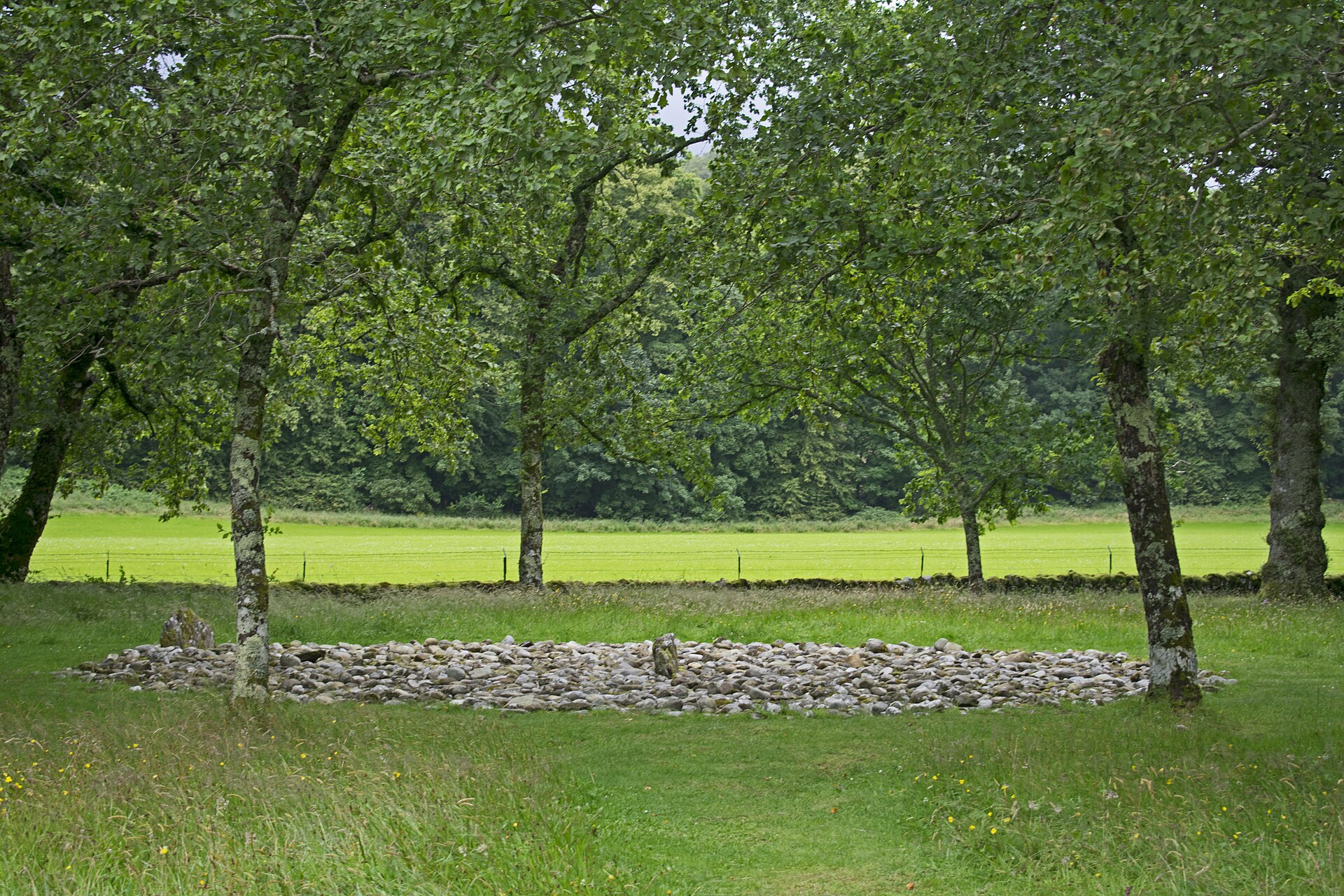
At the centre of the southern circle at Temple Wood lies a burial cist (a grave lined and capped with stone slabs), ringed by a smaller circle of s…
- Near Kilmartin
- 8 min walk from car park
- Easy path
Questions people ask
- Why is Dunchraigaig Cairn important?
- The cairn held unusual multiple burials and, in 2021, prehistoric deer engravings were identified on a cist capstone.
Sources
- Canmore site record 39455 (accessed 2026-06-13)
- Trove (HES) record (accessed 2026-06-13)
- HES designation SM90111 (accessed 2026-06-13)
- Wikidata Q2255918 (accessed 2026-06-13)
- Wikipedia article
Explore more: Tomb or burial places · Prehistoric · Argyll and Bute
The Ancient Codex, in your pocket
Get the Pocket Codex app
Carry the directory with you — Dunchraigaig Cairn and thousands of ancient places across Britain and Ireland, offline, wherever you roam.