One of the few Pictish (of the Picts, the people of northern and eastern Scotland from about AD 300 to 900) stones datable to a precise reign, its Roman-letter inscription names three men whose identities scholars still debate.
Cut into a slab now kept at St Vigeans near Arbroath, the line DROSTEN:IPEUORET[E]TTFORCUS names three individuals whose relationship remains disputed. Unlike stones carrying only symbols or ogham, this Class 2 cross-slab uses Roman lettering for actual words.
The stone itself is what archaeologists call a Class 2 cross-slab — a flat, rectangular block carved with a cross on one face and the symbols typical of Pictish art on the other. Sometimes referred to in academic writing as St Vigeans 1, it belongs to a period when Pictish carvers were beginning to fuse their older symbolic tradition with the new imagery of Christianity.
What sets it apart is the inscription. Thomas Owen Clancy’s influential 1993 reading treats it as Goidelic, an early form of Gaelic, and translates it roughly as ‘Drosten, in the time of Uoret, and Forcus’. That reading, and the identity of the three men it names, has made the Drosten Stone one of the most discussed of all Pictish inscribed monuments.
What follows is drawn from published sources, with each claim labelled by how firmly it is established.
History
Thomas Owen Clancy has argued that the stone was carved during the reign of the Pictish king Uurad, who ruled from 839 to 842, reading the inscription's word Uoret as a form of the king's own name. If this is correct, the Drosten Stone becomes one of the very few Pictish monuments that can be tied to a specific reign, a precision that is almost unknown among stones of this period.
In 1993 Clancy published a new reading of the inscription in the Proceedings of the Society of Antiquaries of Scotland, transcribing the words as Drosten, i ré Uoret ett Forcus, meaning Drosten, in the time of Uoret, and Forcus. He set out three explanations: a memorial to a noble or churchman called Drosten who died during the reigns of Uoret and Fergus; a dedication to the Pictish Saint Drostan, perhaps alongside Saint Fergus; or a record that Drosten and Fergus had the stone made.
Clancy also observed that Drosten was itself a common Pictish name, related to Tristan, which broadens the field of who the stone might commemorate beyond a single identifiable figure. That ambiguity, combined with the rarity of any Pictish inscription naming historical individuals at all, is a large part of why scholars have never settled on one reading over the others.
Later scholarship complicated the picture further. Guto Rhys suggested that Uoret need not be a king's name at all, proposing it could instead be a Pictish form of the Old Welsh word guoret, meaning protection, turning what many had read as a historical anchor into a possible common noun.
People
-
Drosten
The name inscribed first on the stone, possibly a Pictish noble or churchman, or a reference to the Pictish Saint Drostan.
-
Uurad (Uoret)
Pictish king who reigned 839–842, whose name Thomas Owen Clancy identifies in the inscription as the basis for dating the stone.
-
Forcus (Fergus)
The third individual named in the inscription alongside Drosten and Uoret.
-
Thomas Owen Clancy
Scholar who published the widely cited 1993 reading and dating of the Drosten Stone inscription in the Proceedings of the Society of Antiquaries of Scotland.
-
Guto Rhys
Scholar who proposed that Uoret may be a common Pictish/Old Welsh word for 'protection' rather than a king's name.
Connections
-
St Vigeans Museum
The Drosten Stone is held and displayed at St Vigeans Museum, near Arbroath, close to its original findspot.
-
Society of Antiquaries of Scotland
Thomas Owen Clancy's influential 1993 reading of the inscription was published in the Society's Proceedings.
-
Celtic Inscribed Stones Project (CISP)
The stone is catalogued in the CISP database, which records Britain's early medieval inscribed stones.
What to look for
-
The inscription
A single line of lettering cut in Roman script reads DROSTEN:IPEUORET[E]TTFORCUS — unusual among Pictish stones, which normally carry either symbols alone or an ogham inscription rather than words in Roman letters.
-
The cross face
One broad face of the slab is carved with a cross, marking the stone as a Christian monument as well as a Pictish one.
-
The symbol face
The opposite face carries incised symbols of the kind used across many Pictish stones in eastern Scotland.
-
Class 2 classification
Scholars classify the stone as a Class 2 cross-slab: a flat rectangular stone combining a cross on one face with symbols on the other, a form that marks a transition between purely symbol-bearing stones and later Christian monuments.
Plan your visit
- Location
- 56.5766°N · 2.5900°W
- Nearest settlement
- St Vigeans
- Access
- Paid entry — managed visitor site
- Terrain
- Easy going
- Time needed
- About 30 minutes
- Best time
- Visit during the published museum or visitor-venue opening hours, since the original stone is preserved indoors.
- What survives
- The carved Class II cross-slab is preserved and displayed indoors at St Vigeans Sculptured Stones Museum.
- Facilities
- The relevant museum or visitor venue provides the facilities; check the official page for current opening arrangements.
Opening & admission
Housed at St Vigeans Museum; check Historic Environment Scotland for current admission and opening details.
- Displayed indoors at St Vigeans Museum with other Pictish carved stones
Nearby places
Carved stone · Pictish & early medieval
St Vigeans Sculptured Stones Museum
Angus
Two plain sandstone cottages beside an Angus church hold 38 carved Pictish (of the Picts, the people of northern and eastern Scotland from about AD…
- Near St Vigeans
- Easy path
Sacred place · Medieval
Arbroath Abbey
Angus
In 1320 the Declaration of Scottish Independence: the Declaration of Arbroath: is believed to have been drafted here by Abbot Bernard, Chancellor o…
- Near Arbroath
- Easy path
Fortified place · Medieval
Ethie Castle
Angus
A working seat still lived in by a clan chief, Ethie carries the Trafalgar arms of an admiral earl and the murdered cardinal who once held it.
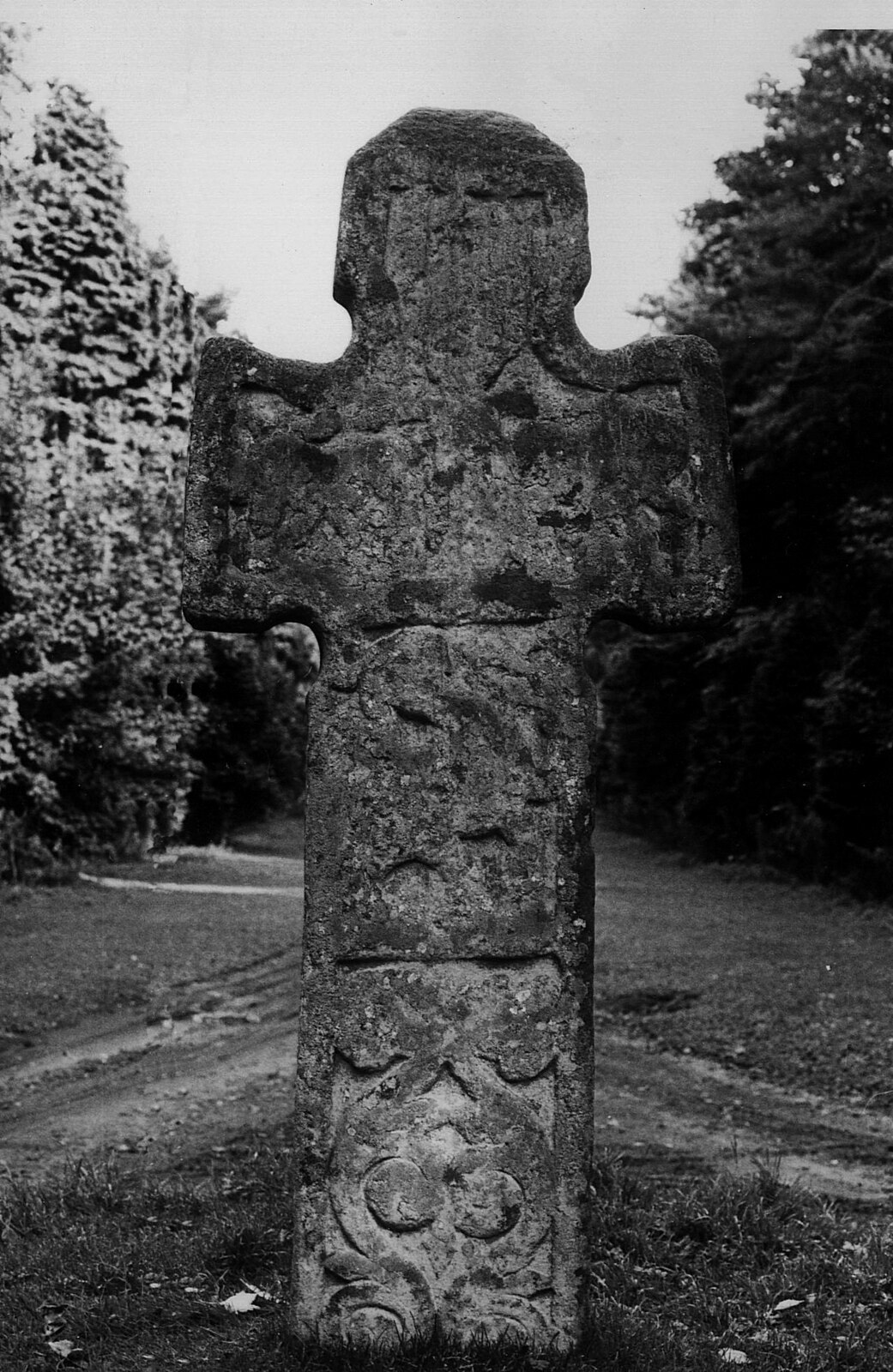
Carved stone · Pictish & early medieval
Camus Cross
Angus
One of only two intact freestanding crosses surviving in eastern Scotland, its carving points to Irish monastic influence rather than the Viking le…
- Easy path
The setting
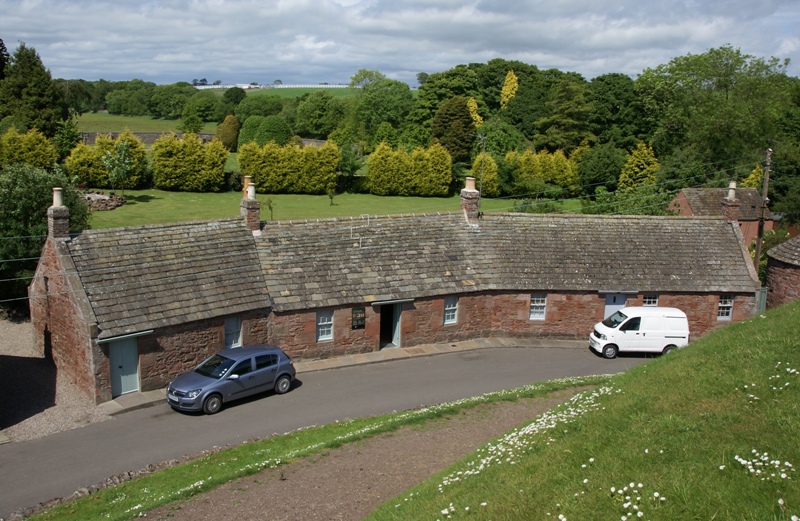
The cottages housing St Vigeans Museum, where the Drosten Stone is displayed.
Photo: Scott Cormie / Wikimedia Commons / CC BY-SA 2.0
Questions people ask
- What does the inscription on the Drosten Stone say?
- It reads DROSTEN:IPEUORET[E]TTFORCUS, read by Thomas Owen Clancy as Goidelic for 'Drosten, in the time of Uoret, and Forcus' — naming three individuals whose relationship to each other is still uncertain.
- How old is the Drosten Stone?
- Thomas Owen Clancy dates it to the reign of the Pictish king Uurad, 839 to 842, based on his reading of the name Uoret — an unusually precise date for a Pictish stone.
- Where can the Drosten Stone be seen?
- It is held at St Vigeans Museum, near Arbroath in Angus, close to where it was originally sited.
- Why is the Drosten Stone unusual among Pictish stones?
- Most Pictish stones carry only carved symbols or an ogham inscription; the Drosten Stone is one of the few bearing an inscription in actual words, cut in Roman letters.
- Is Uoret definitely the name of a king?
- Not certainly. Guto Rhys has suggested Uoret could instead be a Pictish form of the Old Welsh word for 'protection', rather than a king's name, leaving the reading open to debate.
Sources
- Wikipedia: Drosten Stone
- Clancy, T.O. (1993), 'The Drosten Stone: a new reading', Proceedings of the Society of Antiquaries of Scotland
- St Vigeans Museum — Historic Scotland
- CISP database (Celtic Inscribed Stones Project)
Explore more: Carved stones · Pictish & early medieval · Angus
The Ancient Codex, in your pocket
Get the Pocket Codex app
Carry the directory with you — Drosten Stone and thousands of ancient places across Britain and Ireland, offline, wherever you roam.