
Seat of the Hay Earls of Erroll for over three centuries, its ruined halls hosted Jacobite plots, Samuel Johnson's uneasy night, and the octagonal room Bram Stoker may have echoed in Dracula.
In 1773 a Scottish lawyer named James Boswell spent an uneasy night in an elegant room whose windows looked straight out onto the North Sea. A fire blazed, the sea roared below the cliff, and the feather pillows smelled unpleasantly of seabirds, so sleep did not come easily; he later admitted to imagining the ghost of a beheaded earl before finally drifting off. His hosts that night were the brothers James and Charles Hay, and the room belonged to New Slains Castle, a cliff-top ruin that still stands a kilometre east of Cruden Bay in Aberdeenshire.
What Boswell slept in was the product of two centuries of rebuilding. The core dates to around 1600, when Francis Hay, 9th Earl of Erroll, raised a courtyard and square tower after his previous stronghold was destroyed on the king’s orders; later generations extended it, and in the 1830s an Aberdeen architect refaced much of it in smooth granite in the fashionable Scots Baronial style. The result, even in ruin, is a patchwork of masonry: rough mortared granite and medieval brick standing beside newer, crisper stonework, with the sea cliffs and a deep ravine doing the work of a moat.
The castle’s later reputation owes as much to fiction as to history. Bram Stoker, a regular visitor to nearby Cruden Bay, set scenes of two of his own novels here and is thought to have drawn on the castle’s distinctive octagonal hall when he wrote Dracula, even though the claim that the castle itself inspired the novel is a myth. By the time restoration plans stalled in 2009, the building had already passed through royal guests, a demolition contractor, and decades as a roofless shell above the water.
What follows is drawn from published sources, with each claim labelled by how firmly it is established.
The name
The first house on the site was named Bowness, after a double rock arch at the north end of the peninsula thought to resemble a bow. It was renamed New Slains Castle after further building in 1664, to distinguish it from the family's original stronghold, Old Slains Castle, near Collieston.
History
In 1453 King James II made Sir William Hay the first Earl of Erroll, launching a dynasty that would dominate the parishes of Slains and Cruden for centuries from their seat at Old Slains Castle near Collieston. That power carried risk: Francis Hay, the 9th Earl, converted to Roman Catholicism and joined a rebellion with the Earl of Huntly in 1589. Declared a traitor in 1594, he watched King James VI order Old Slains destroyed that October.
After time abroad, Erroll abjured Catholicism in 1597 and returned to royal favour, abandoning the shattered Old Slains for a new site on a sea cliff near what became Cruden Bay. Around 1600 he built a courtyard and square tower there, naming it Bowness after a double rock arch nearby thought to resemble a bow. In 1664 the wings were extended with a new gallery and the property was renamed New Slains Castle, with the entrance front renewed again in 1707.
New Slains became entangled in the Jacobite cause through its Countesses of Erroll. Lady Catherine Carnegie smuggled letters in and out of Edinburgh Castle during its 1689 siege for the exiled King James and was arrested twice before fleeing to France. In 1705 the French agent Nathaniel Hooke landed at the castle to plot with Lady Anne Drummond, returning in 1707 to gather intelligence that helped persuade Louis XIV to launch an invasion fleet the following year, turned back from the Forth.
Mary Hay, 14th Countess of Erroll, recruited men from Aberdeenshire for the 1745 Jacobite rising; when she died childless in 1758 the earldom passed through her great-nephew James, Lord Boyd. In 1773 the writer Samuel Johnson and his companion James Boswell stayed at the castle as guests of James and his brother Charles, unaware the two brothers had fought on opposite sides at Culloden. Boswell later described a fitful night in a room where the sea roared beneath his window.
In 1820 William Hay, 18th Earl of Erroll, married Lady Elizabeth FitzClarence, an illegitimate daughter of King William IV, and in the 1830s commissioned Aberdeen architect John Smith to remodel the ageing tower house. The work of 1836 to 1837 amounted to a virtual rebuilding in the Scots Baronial style, adding smoother granite facings that still contrast with the older, rougher masonry beneath. Landscape architect T. H. Mawson later laid out gardens there in the late 1890s.
Guests at New Slains around the turn of the century included Robert Baden-Powell in 1900 and Prime Minister H. H. Asquith, who hosted Winston Churchill there for two nights in 1908. Debt, an agricultural slump, and inheritance taxes forced the 20th Earl of Erroll to sell the castle in 1916, ending over three centuries of Hay occupation; it later passed to the Dundee demolition firm Charles Brand Ltd, whose crews stripped the roof slates and lead for resale in the summer of 1925.
In 2004 the Slains Partnership drew up plans to restore the ruin and convert it into 35 holiday apartments, winning outline planning permission from Aberdeenshire Council in August 2007. The scheme stalled in 2009 amid the Great Recession and has remained on hold since, leaving New Slains Castle a roofless Category B listed ruin on its cliff above Cruden Bay.
People
-
Francis Hay, 9th Earl of Erroll
Abandoned the destroyed Old Slains Castle and built the original tower and courtyard of New Slains around 1600, after his Catholic conspiracies had been forgiven.
-
Lady Catherine Carnegie
Jacobite Countess of Erroll who smuggled letters during the 1689 siege of Edinburgh Castle and was twice arrested before escaping to France.
-
Nathaniel Hooke
French secret agent who used New Slains Castle as his base in 1705 and 1707 to gather intelligence for a planned Franco-Jacobite invasion of Scotland.
-
Mary Hay, 14th Countess of Erroll
Recruited Aberdeenshire men for the 1745 Jacobite rising and was the last of her line to die in possession of the castle, in 1758.
-
Bram Stoker
Regular visitor to nearby Cruden Bay between 1892 and 1910 whose novels reference the castle and whose octagonal hall may have shaped a scene in Dracula.
-
John Smith
Aberdeen architect commissioned by the 18th Earl of Erroll to remodel New Slains Castle in the Scots Baronial style during 1836 and 1837.
-
Charles Hay, 20th Earl of Erroll
Sold New Slains Castle in 1916, ending more than three centuries of the Hay family's occupation of the site.
Cultural influences
-
A changing country-house style
New Slains preserves a layered response to changing architectural fashions: the late sixteenth- and seventeenth-century tower and brick courtyard galleries were retained when John Smith remodelled the exterior in 1836–37. His neo-Tudor detailing and pink-granite facings transformed the residence into a nineteenth-century country house without erasing the earlier plan.
Connections
-
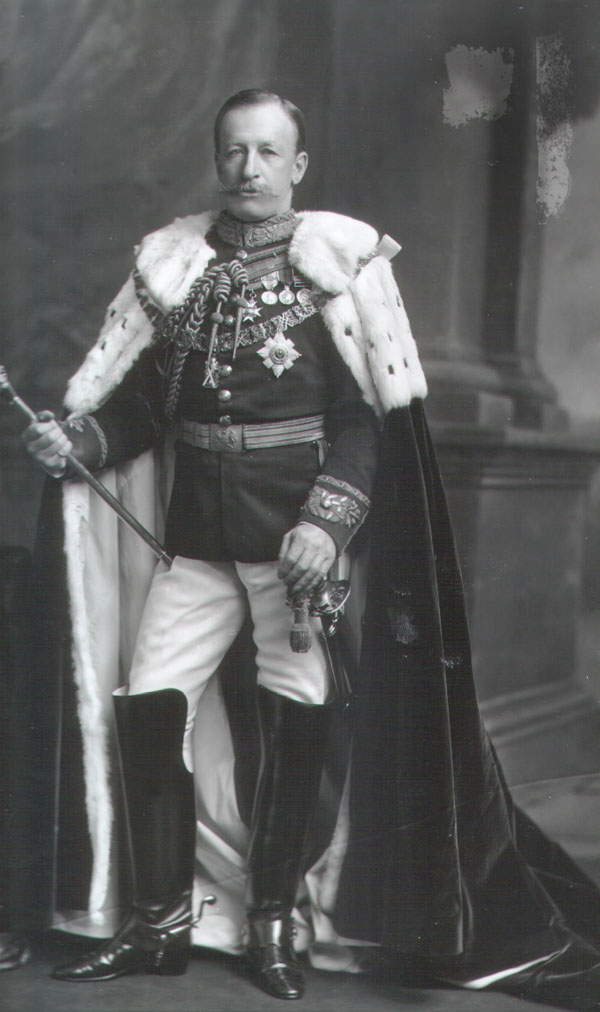
Portrait: Lafayette studio, London / Wikimedia Commons / CC BY-SA 4.0 Old Slains Castle, Collieston
The Hay family's earlier stronghold, destroyed on King James VI's orders in 1594, prompting Francis Hay to build New Slains Castle on its present site.
-
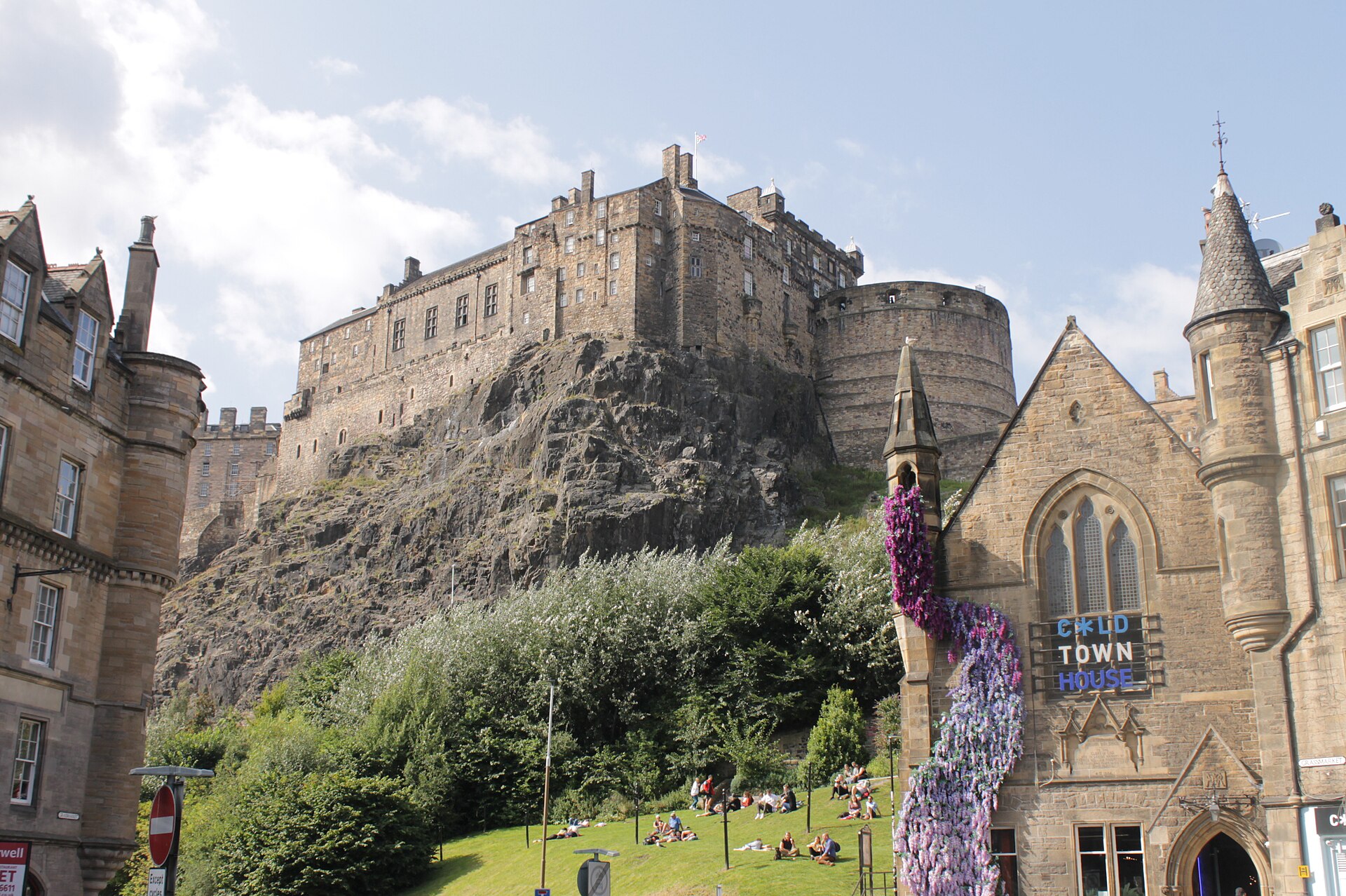
Photo: Stephencdickson / Wikimedia Commons / CC BY-SA 4.0 Site of the 1689 siege during which Lady Catherine Carnegie of New Slains smuggled letters in and out on behalf of the exiled King James.
-
Palace of Versailles
Where Nathaniel Hooke's intelligence report, gathered while based at New Slains Castle, was read to Louis XIV before he authorised the 1708 invasion fleet.
-
Panmure House, Angus
One of around twenty major Scottish properties demolished by Charles Brand Ltd, the same Dundee firm that demolished New Slains Castle in 1925.
In culture
-
The Watter's Mou' and The Mystery of the Sea
Bram Stoker set scenes of both novels near Cruden Bay and described the castle directly, evoking its cliffs, coves, and the 'wide bay' beside 'the new castle of Slains'.
-
The Jewel of Seven Stars
The clifftop mansion Kyllion Castle in this Stoker novel may have been modelled on New Slains Castle.
-
Dracula
Stoker's earliest notes for Dracula predate his first visit to Cruden Bay by two years, so the castle did not inspire the novel's plot, but its distinctive octagonal hall is thought to have suggested the octagonal room in which Dracula receives Jonathan Harker.
What to look for
-
The octagonal hall
A distinctive eight-sided room within the ruin, thought by some to have influenced the octagonal chamber described in Dracula.
-
Mixed masonry
Older mortared rough granite and medieval red brick from the 1597-1664 building phase sit alongside smoother, well-faced granite added during the 1836-37 remodelling.
-
Clifftop defences
The North Sea cliffs form one line of defence, with a deep, impassable ravine to the west acting as a natural moat and a ruined rampart marking the former main entrance to the south.
-
Basement kitchens
Well-preserved kitchen basements survive with numerous fire pits and masonry storage recesses, along with wooden-lintel doorways and sandstone and brick archways.
What is said
Folklore and tradition, recorded as what is said — not as established fact.
-
The ghost of Victor Hay
New Slains Castle is said by some to be haunted by the spirit of Victor Hay, 21st Earl of Erroll, though this is generally understood to be a misunderstanding, since Hay himself wrote a novel, Ferelith, featuring a ghost at a castle resembling Slains.
Plan your visit
- Location
- 57.4154°N · 1.8323°W
- Access
- Open access
- Terrain
- Rough ground — reasonable boots advised
- Time needed
- About 90 minutes
Opening & admission
Free to view from outside; check the managing site for any current access restrictions before visiting.
- A roofless ruin on a cliff-top site, with an unfenced cliff edge (deep drop) to the west
- Uneven, ruined masonry underfoot
Nearby places
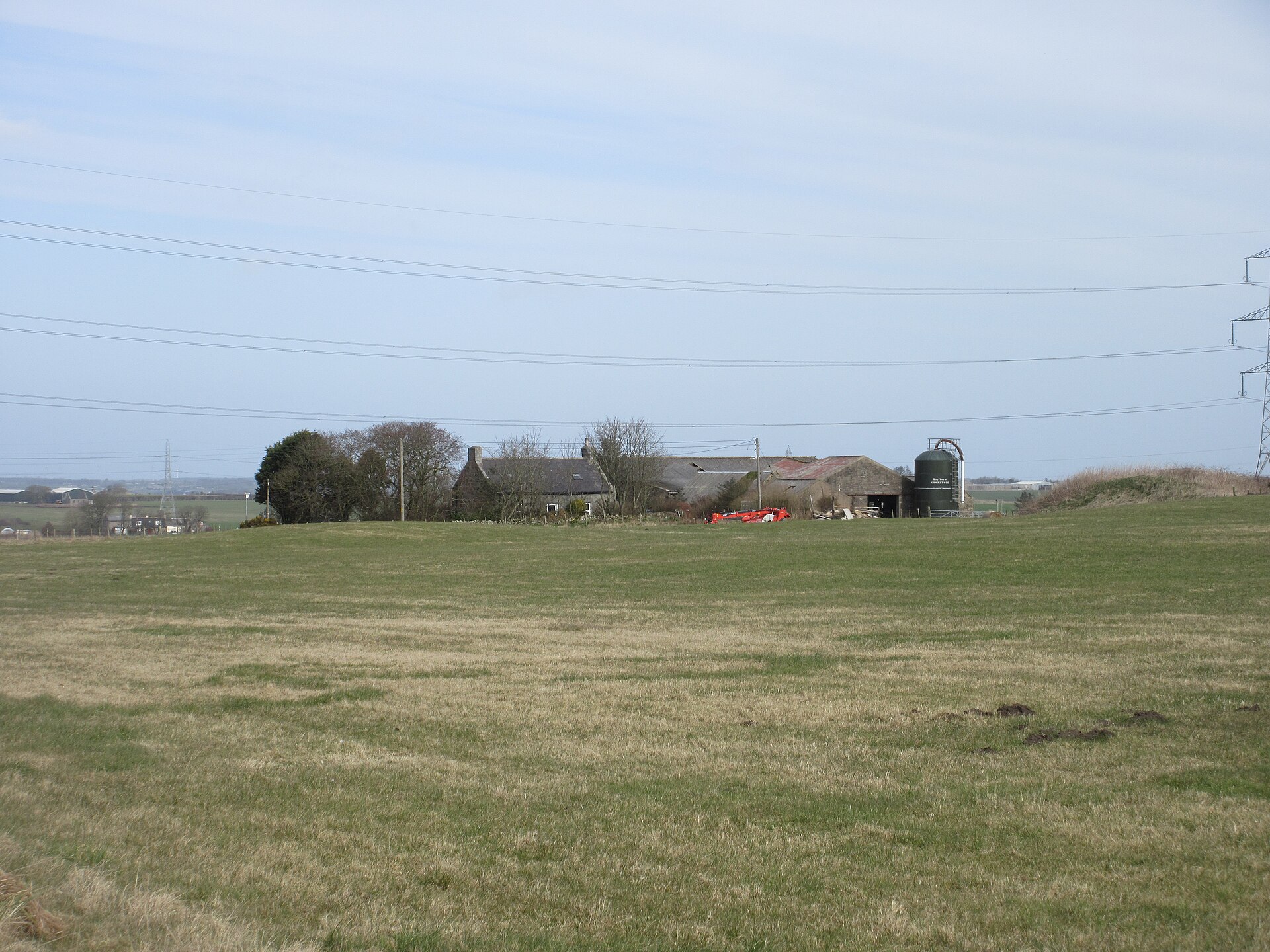
Tomb or burial place · Prehistoric
Cairn Catto
Aberdeenshire
A near-48-metre wedge of pink granite boulders on a Buchan ridge, one of north-east Scotland's longer Neolithic (the first farming age, roughly 400…
- Near Longside
- Some walking
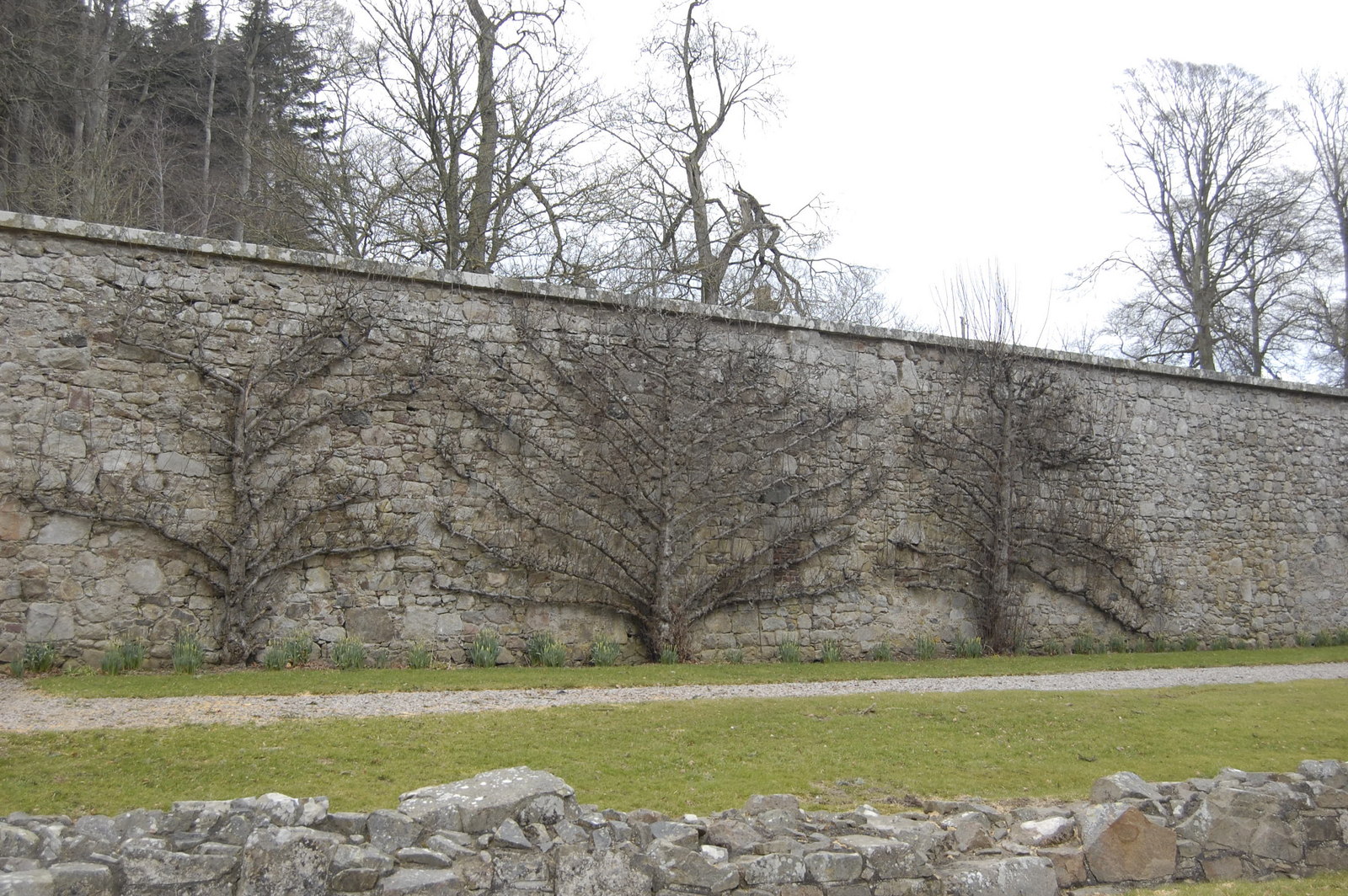
Building or ruin · Medieval
Deer Abbey
Aberdeenshire
Its earlier community is the one recorded in the margins of the Book of Deer, one of Scotland's oldest surviving manuscripts, making this ruin a ra…
- Easy path
Sacred place · Prehistoric
Aikey Brae stone circle
Aberdeenshire
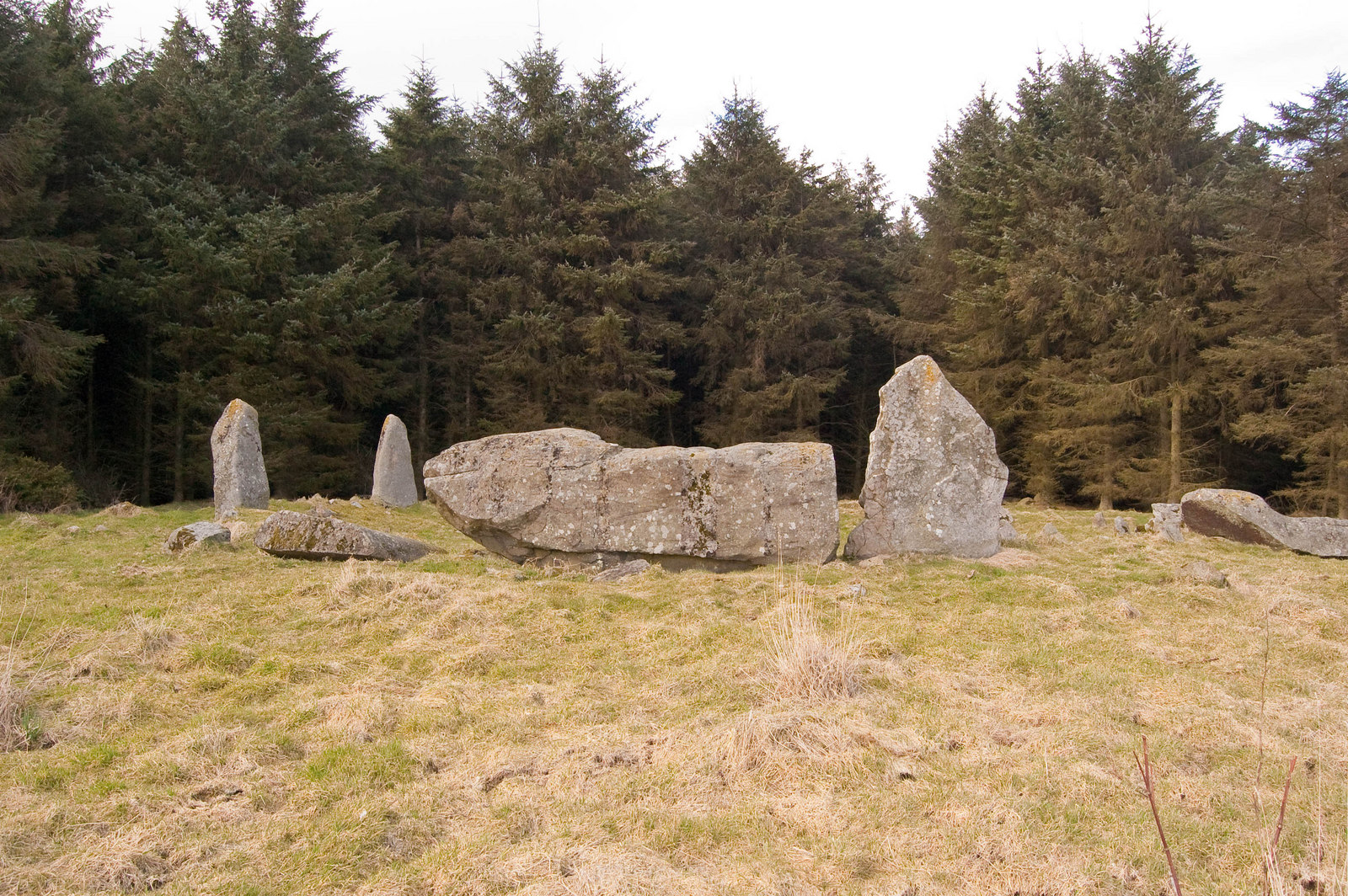
Its 21.5-tonne recumbent stone ranks among the heaviest in Aberdeenshire, yet a 2001 dig returned a puzzling late radiocarbon date that unsettles t…
- Near Old Deer
- Some walking
Sacred place · Prehistoric
Hill of Fiddes stone circle
Aberdeenshire
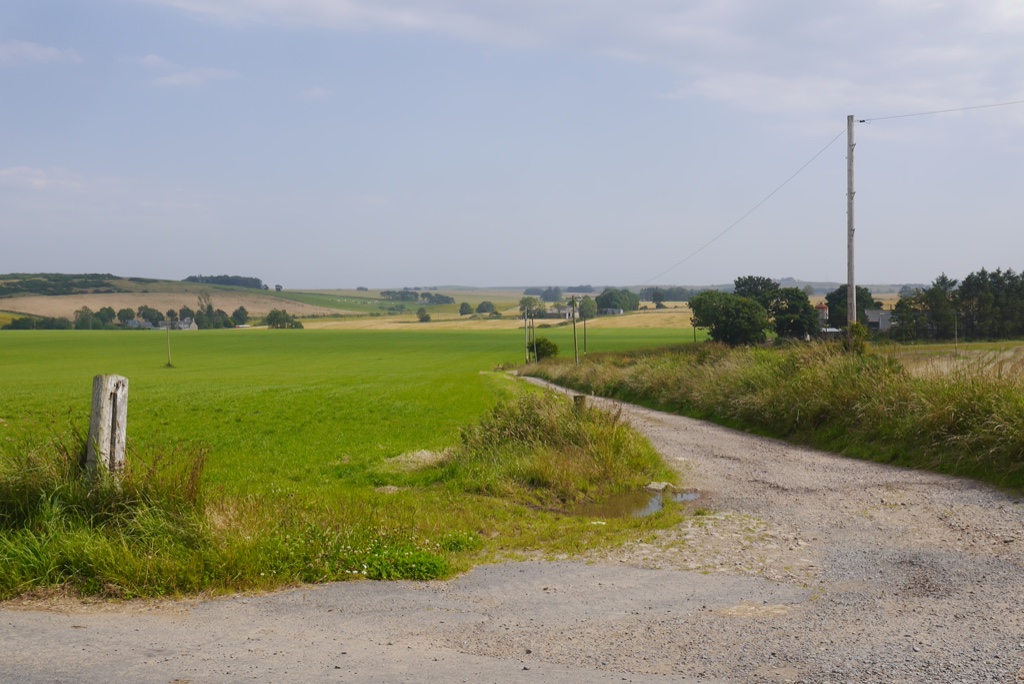
Reduced from a full stone circle to two boundary stones in a field wall, the site nonetheless carries the same legal protection as much larger monu…
- Near Ellon
- Easy path
Questions people ask
- Why is New Slains Castle linked to Dracula?
- Bram Stoker set two novels near the castle and its octagonal hall may have shaped a scene in Dracula, but the claim that seeing the castle inspired the novel itself is a myth.
- Who built New Slains Castle?
- Francis Hay, 9th Earl of Erroll, built a courtyard and square tower on the site around 1600, after King James VI ordered the family's previous castle destroyed.
- Why did New Slains Castle become a ruin?
- The Earl of Erroll sold it in 1916, and a demolition firm bought it in 1925, stripping the roof, slates, and fittings for resale.
- Is New Slains Castle really haunted?
- A widely repeated claim says the ghost of the 21st Earl haunts the castle, but this likely stems from confusion with his own ghost novel, Ferelith.
- What period does most of the surviving structure date from?
- Most of the ruin derives from building work between 1597 and 1664, with granite facing added during an 1836-37 remodelling in Scots Baronial style.
Sources
- Wikipedia: New Slains Castle
- Historic Environment Scotland — Category B Listed Building record
- Aberdeen Press and Journal, 5 September 1925
- Boswell, James — Boswell's Journal of a Tour of the Hebrides with Samuel Johnson (1785)
Explore more: Fortified places · Medieval · Aberdeenshire
The Ancient Codex, in your pocket
Get the Pocket Codex app
Carry the directory with you — New Slains Castle and thousands of ancient places across Britain and Ireland, offline, wherever you roam.