
The largest Neolithic (the late Stone Age, roughly 4000–2500 BC in Britain) long house ever excavated in Britain, its scale rivalling only a handful of similar timber halls known anywhere in Europe.
The Dee valley near Banchory gave up Balbridie’s outline only in the dry summer of 1976, when aerial photography caught a huge rectangle scorched into a farmer’s field. Excavation then mapped massive postholes — sockets for the timber uprights — showing that a roofed hall once occupied a scale far beyond an ordinary Neolithic dwelling in Aberdeenshire predating the written record in Britain.
The building these postholes described was a long house, raised on the south bank of the river by a farming community living there between roughly 4000 and 3400 BC. It ranks among the earliest known permanent Neolithic settlements in Scotland, and it remains the largest Neolithic long house yet excavated anywhere in Britain. Comparable halls of this size are rare finds even across the whole of Europe; the archaeologist Alasdair Whittle grouped it with only a hall in Cambridgeshire and the site at Fengate as the handful of timber structures on this scale known from the period.
The area around the hall turns out to be unusually rich in early remains: the nearby Neolithic site at Bucharn, the ancient river-crossing route of the Elsick Mounth reaching inland through the Grampian foothills, and a later excavation at Dreghorn that uncovered a comparable rectangular structure all point to a landscape that drew in early farming communities well before most of Scotland was settled. A 2022 scientific study of grain recovered from the site added a further layer of detail, suggesting that its Neolithic farmers worked soil good enough that they saw no need to manure their fields.
What follows is drawn from published sources, with each claim labelled by how firmly it is established.
History
Between roughly 4000 and 3400 BC, a farming community on the south bank of the River Dee built and occupied a vast timber long house, one of the earliest known permanent Neolithic settlements in Scotland. Its scale marks it out: it remains the largest Neolithic long house yet excavated in Britain, and the archaeologist Alasdair Whittle counted it among only a handful of comparably large timber halls known across Europe, alongside a hall in Cambridgeshire and the site at Fengate.
The building lay hidden for millennia until the dry summer of 1976, when Scotland's national body for recording ancient and historic monuments flew a routine aerial survey over the Dee valley. Parched ground revealed cropmarks that had never before shown through the grass, tracing the outline of an enormous structure. Excavation that followed uncovered large timber postholes, allowing archaeologists to reconstruct, on paper, the form of the vanished hall.
Confirmation that Balbridie was not a freak survival came later, when excavation at Dreghorn uncovered its own set of post holes marking out a large rectangular building comparable in form to the Dee-side hall. Taken together with Watt's observation that the surrounding area attracted an unusually dense cluster of very early settlement, the finds suggest that substantial timber halls were a recognised, if rare, feature of Neolithic life in this part of Scotland rather than a single anomaly.
In 2022, researchers from the University of Stavanger and Durham University published a study in the journal Antiquity examining nitrogen levels in ancient grain recovered from the site. Their analysis pointed to Neolithic farming methods that did not rely on manuring, apparently because the quality of the local soil made it unnecessary. Nearly half a century after its discovery, the site was still yielding new evidence about how its first farmers actually worked the land.
People
-
Whittle
Archaeologist who identified Balbridie as one of only a handful of comparably large Neolithic timber halls known in Europe.
-
Watt
Researcher who highlighted the unusually dense concentration of very early settlement found in the area around Balbridie.
Connections
-

Photo: Stanley Howe / Wikimedia Commons / CC BY-SA 2.0 Bucharn
A neighbouring Neolithic site whose proximity to Balbridie is cited as evidence of an unusually dense concentration of very early settlement in the district.
-
Elsick Mounth
An ancient trackway running inland through the lower Grampian Mountains, passing close to Balbridie alongside the River Dee as one of the routes shaping where its Neolithic community settled.
-
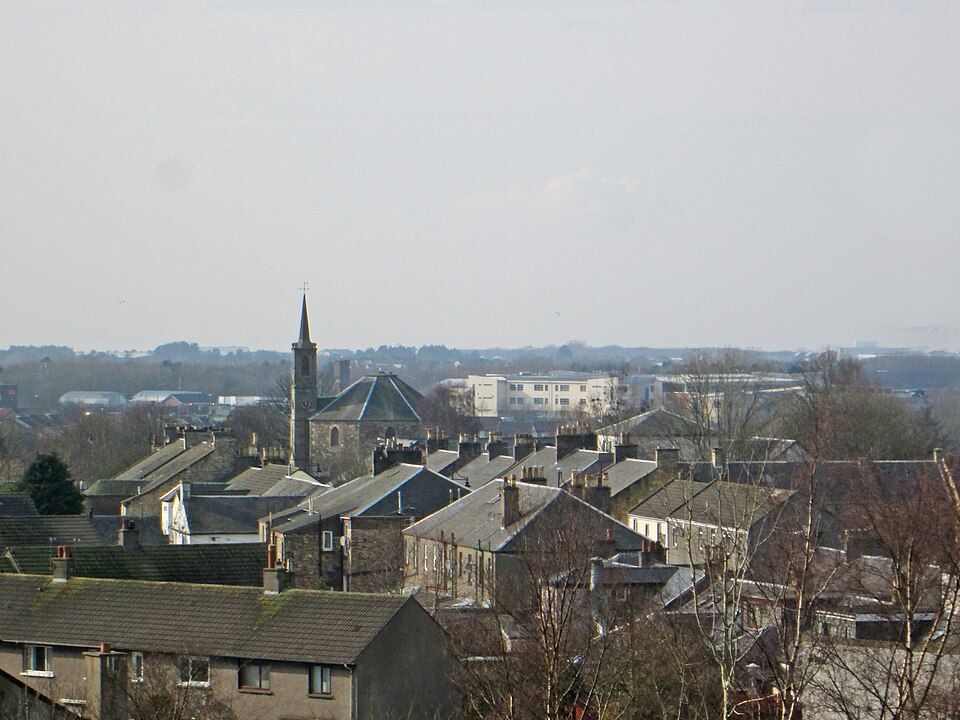
Photo: dave souza / Wikimedia Commons / CC BY-SA 4.0 Dreghorn
The site of a later excavation elsewhere in Scotland that uncovered post holes indicating a large rectangular structure comparable to the long house at Balbridie.
-
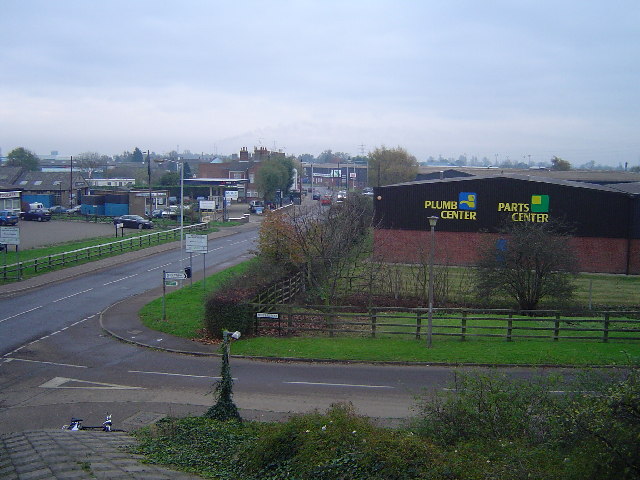
Photo: Julian Dowse / Wikimedia Commons / CC BY-SA 2.0 Fengate
One of only a small number of Neolithic sites elsewhere in Europe identified by the archaeologist Whittle as having a comparably large timber hall.
Discovery & excavation
The site was discovered in 1976 during aerial photography carried out by Scotland's national ancient-monuments survey. An unusually dry summer had baked cropmarks into the ground that were normally invisible, revealing the outline of a very large structure. Subsequent excavation identified large timber postholes and allowed archaeologists to build a conceptual reconstruction of the enormous timber building that had once stood there.
What to look for
-
The site today
Balbridie is a working field rather than a visible ruin: the outline of the great timber hall was recovered entirely through aerial photography and excavation, and no above-ground structure remains to be seen. The nearby course of the River Dee and the route of the Elsick Mounth trackway give a sense of the wider landscape that drew early farmers to this stretch of Aberdeenshire.
Plan your visit
- Location
- 57.0535°N · 2.4415°W
- Nearest settlement
- Banchory
- Time needed
- About 10 minutes
- Best time
- Daylight is the most useful time to see the monument and assess the approach.
- What survives
- No above-ground remains survive: the hall is known from cropmarks and excavated timber postholes in a working field.
- Facilities
- No visitor facilities are provided at the archaeological field site; plan for rural conditions and do not assume public access.
Opening & admission
No visitor or admission details are recorded — check locally before travelling.
- No public access route is documented; the site is an archaeological cropmark/excavation location rather than a visitor attraction.
Nearby places
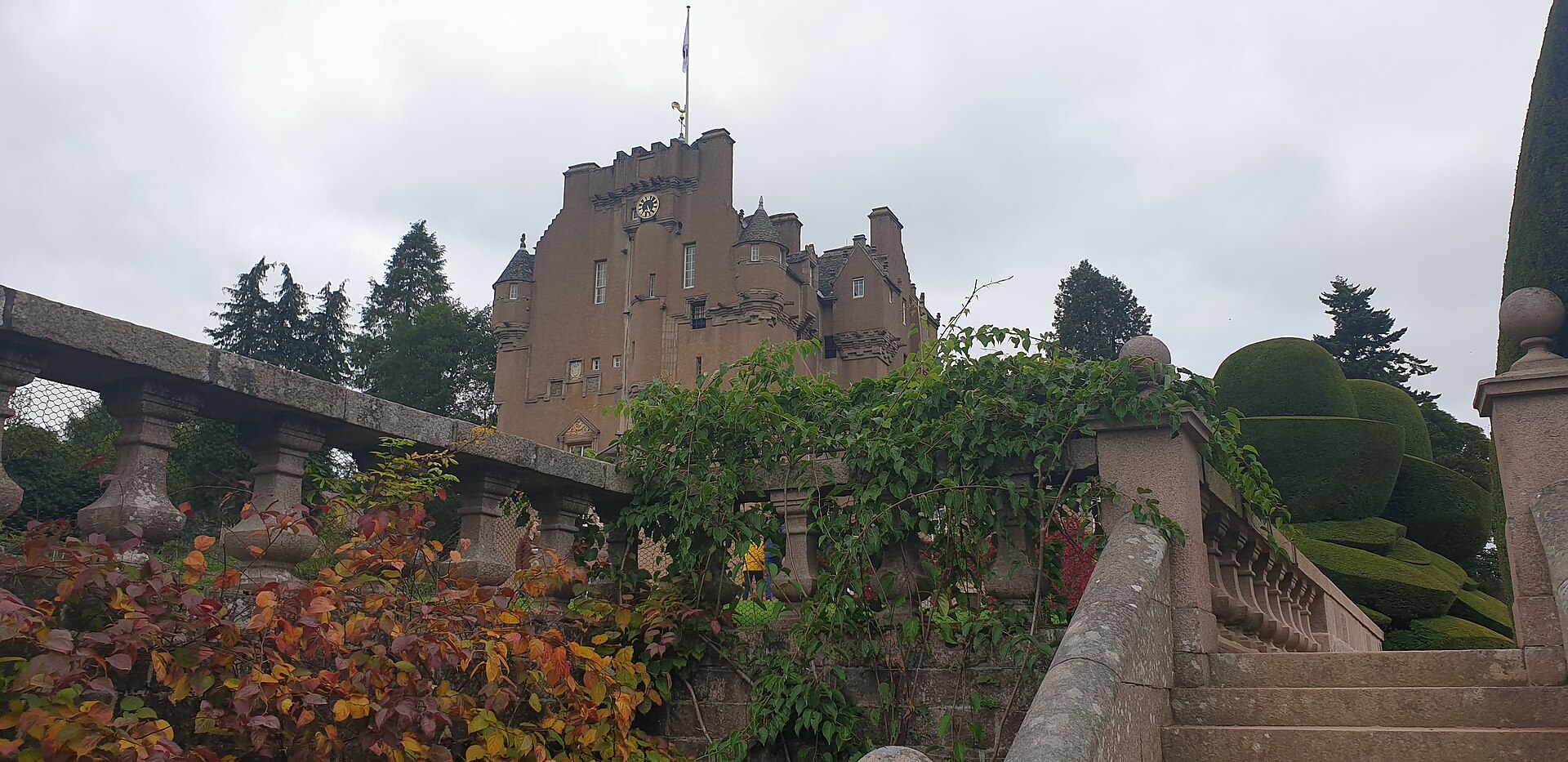
Fortified place · Medieval
Crathes Castle
Aberdeenshire
Beneath a 16th-century Burnett tower house lies Warren Field, where pits dug some 10,000 years ago form what analysis in 2013 identified as the wor…
- Easy path
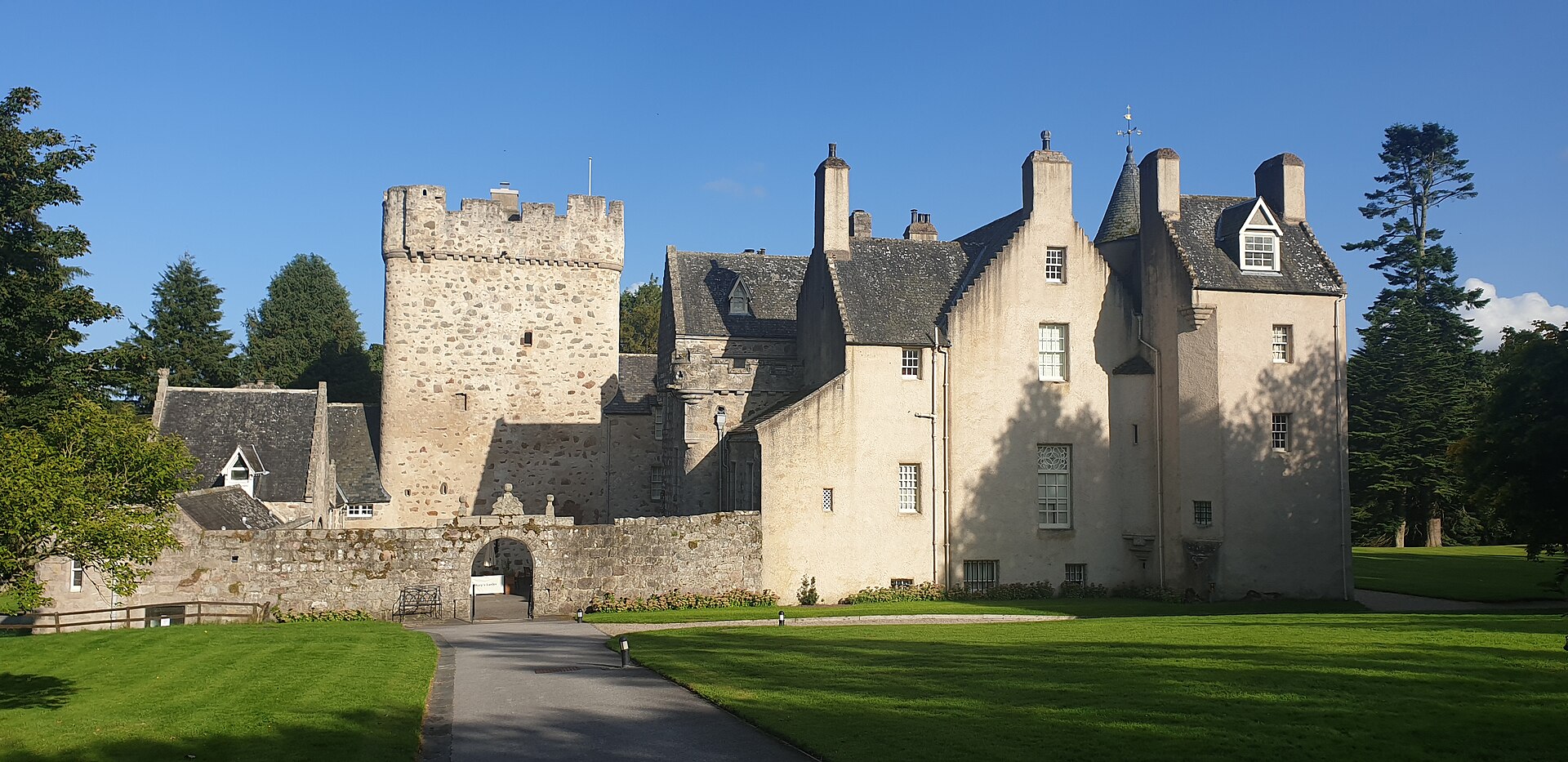
Fortified place · Medieval
Drum Castle
Aberdeenshire
One of only three 13th-century tower houses in Scotland to survive largely unaltered, and held unbroken by one family, the Irvines, for roughly 650…
- Easy path
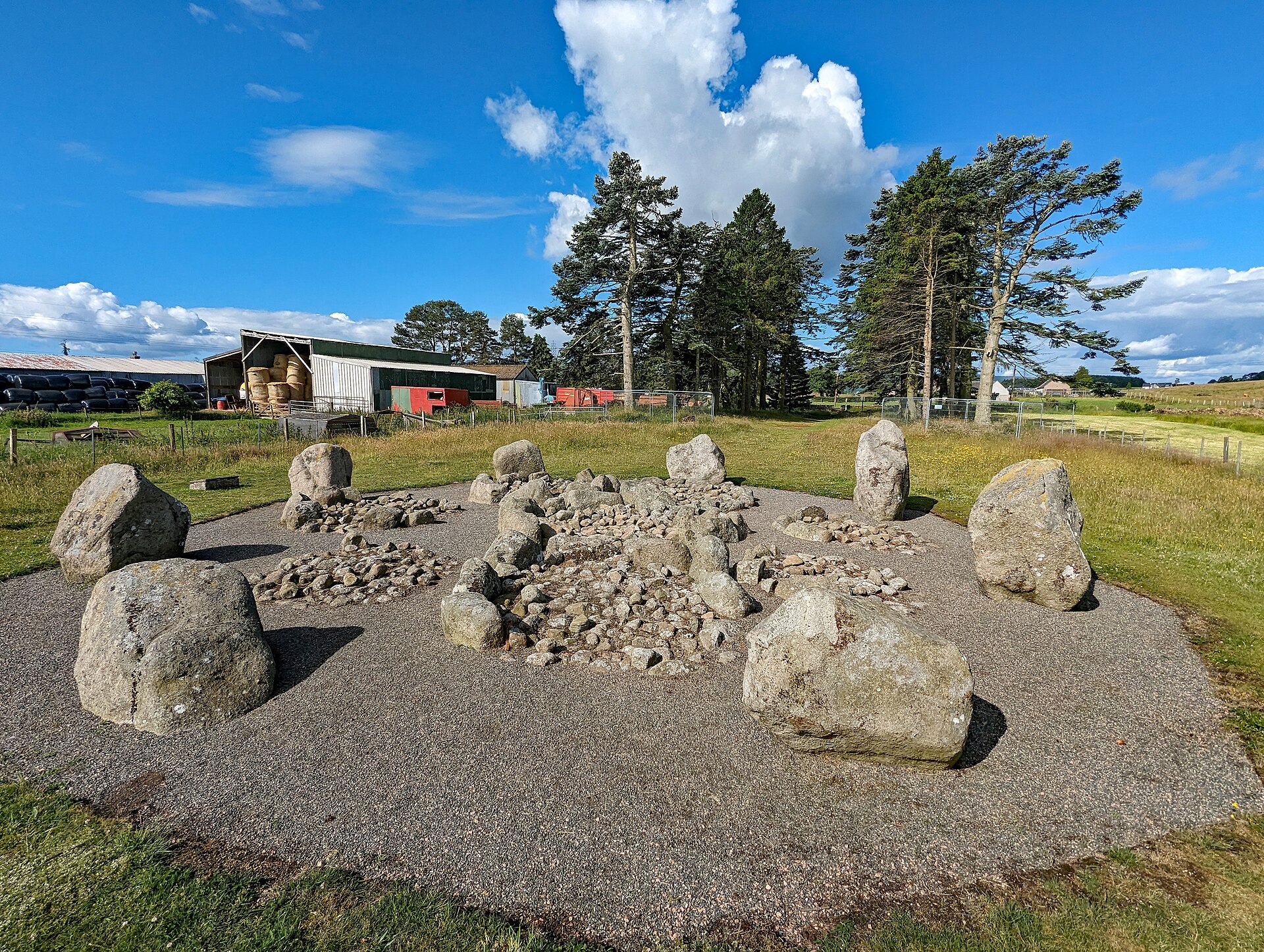
Sacred place · Prehistoric
Cullerlie stone circle
Aberdeenshire
Each of its eight cairns is fenced by its own ring of kerbstones and holds cremated remains, making the circle a burial ground built inside a ring…
- Near Echt
- Easy path
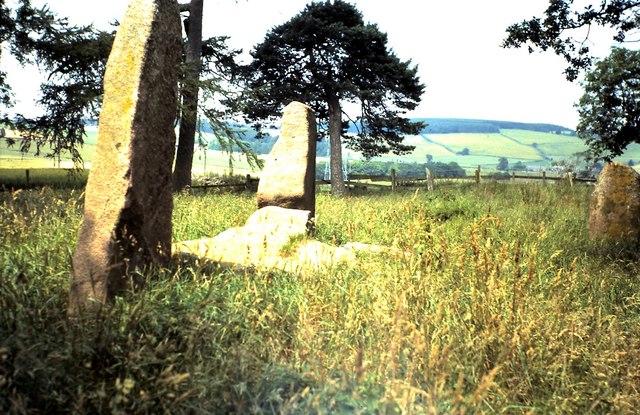
Sacred place · Prehistoric
Sunhoney
Aberdeenshire
A cup-marked recumbent stone facing a specific hill has drawn five generations of archaeoastronomers to this circle, from Norman Lockyer to Clive R…
- Easy path
Questions people ask
- What is Balbridie?
- Site of a Neolithic long house near Banchory, Aberdeenshire — the largest such long house excavated in Britain, dated to roughly 4000–3400 BC.
- How was Balbridie discovered?
- A 1976 aerial survey, flown during an unusually dry summer, revealed cropmarks tracing the outline of a huge timber structure.
- Are there visible remains at Balbridie today?
- No above-ground structure survives; the hall's form is known only from postholes and cropmarks recovered through excavation and aerial survey.
- What did the 2022 study reveal about Balbridie?
- Nitrogen analysis of ancient grain by the University of Stavanger and Durham University suggested Neolithic farmers here did not manure their fields, likely because the soil was already good enough.
- Is Balbridie a unique find, or are there comparable sites?
- It is very rare: archaeologist Whittle links it to only a hall in Cambridgeshire and the site at Fengate, while a later excavation at Dreghorn found a comparable structure.
Sources
- Wikipedia: Balbridie
- Antiquity — University of Stavanger and Durham University nitrogen study, 2022
Explore more: Settlements · Prehistoric · Aberdeenshire
The Ancient Codex, in your pocket
Get the Pocket Codex app
Carry the directory with you — Balbridie and thousands of ancient places across Britain and Ireland, offline, wherever you roam.