
One of four stone burial mounds sharing Tullos Hill, raised in the Bronze Age — roughly 2500 to 800 BC, when metal tools first spread — and still outlasting the docks, roads and industrial estates that now surround it.
Four names recur in the monument record for Tullos Hill: Tullos, Baron’s, Cat and Crab’s. Tullos Cairn, a stone burial mound, is the northern member, set above Aberdeen’s harbour and industrial ground.
Its stones belong to Bronze Age burial practice, when communities across north-east Scotland raised cairns over the dead rather than banks of soil, roughly 2500 to 800 BC. The three neighbouring names show that Tullos Hill was used repeatedly for burials rather than chosen for one isolated grave.
During the nineteenth and twentieth centuries, docks, roads and industrial estates filled the low ground beneath the hill. The four scheduled monuments therefore sit in a sharply changed setting: a named burial group above the working edge of Aberdeen.
What follows is drawn from published sources, with each claim labelled by how firmly it is established.
History
During the Bronze Age, roughly 2500 to 800 BC, communities across north-east Scotland marked significant burials by heaping stone into cairns on prominent hillsides. Tullos Cairn belongs to this widespread tradition, its mound raised on the north side of Tullos Hill where it would have been visible for some distance across the surrounding land.
Tullos Cairn was not raised in isolation. Three further cairns, known as Baron's, Cat and Crab's, stand elsewhere on the same hill, suggesting that its summit and slopes were used repeatedly as a burial ground over an extended span of the Bronze Age, rather than being chosen for a single, isolated burial. Comparable cairns elsewhere in the region, including Memsie Cairn to the north in Aberdeenshire, follow the same basic pattern of a stone mound raised over a burial. Their survival across so many centuries owes less to any special protection than to the simple durability of a large heap of stone against weather and erosion.
As Aberdeen expanded through the nineteenth and twentieth centuries, docklands, roads and industrial estates spread across the low ground beneath Tullos Hill, transforming the landscape the cairn had originally overlooked. Despite this growth, Tullos Cairn escaped the clearance and levelling that removed many lesser-known prehistoric monuments from around the city.
In recognition of its age and rarity, Tullos Cairn was placed on Scotland's schedule of monuments, a legal designation that protects nationally important archaeological sites from disturbance or unauthorised development. The other three cairns on Tullos Hill, Baron's, Cat and Crab's, received the same protection, formally recognising the hill as a group of related Bronze Age burial sites.
Connections
-
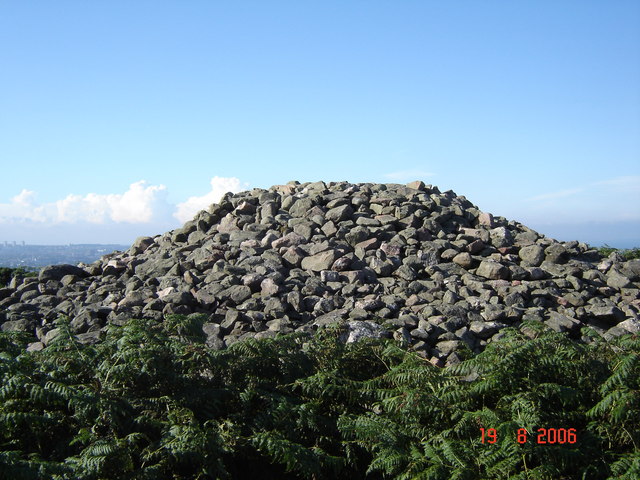
Photo: George Wilson / Wikimedia Commons / CC BY-SA 2.0 Baron's Cairn
One of the three other scheduled Bronze Age cairns sharing Tullos Hill with Tullos Cairn.
-

Photo: George Wilson / Wikimedia Commons / CC BY-SA 2.0 Cat Cairn
Another of the four scheduled cairns on Tullos Hill, part of the same hillside burial group.
-
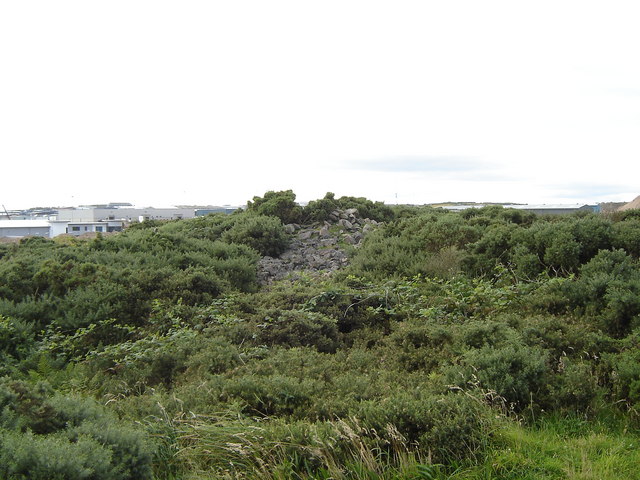
Photo: George Wilson / Wikimedia Commons / CC BY-SA 2.0 Crab's Cairn
The fourth scheduled cairn on Tullos Hill, completing the group alongside Tullos, Baron's and Cat Cairns.
-
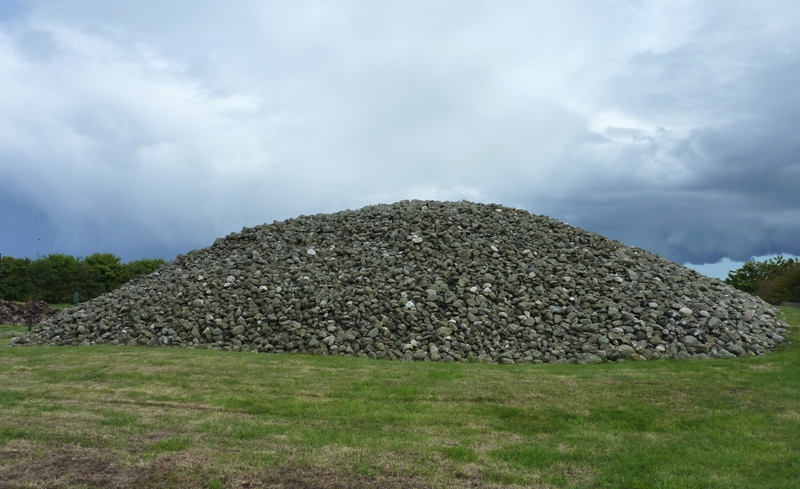
Photo: Otter / Wikimedia Commons / CC BY-SA 3.0 A comparable Bronze Age burial cairn in Aberdeenshire cited alongside Tullos Cairn as an example of the same type of monument.
Discovery & excavation
The cairn was recorded on Ordnance Survey mapping and inspected by Ordnance Survey staff in 1952; RCAHMS recorded its disturbed condition again during a 1996 field visit.
What to look for
-
The stone mound
A low, rounded heap of stones on the north face of Tullos Hill, now grown over with grass and vegetation.
-
Hillside setting
Its position on Tullos Hill gives views across the surrounding land, including the docks and industrial estates that now spread out below.
-
The wider cairn group
Baron's, Cat and Crab's Cairns stand elsewhere on Tullos Hill, together forming a group of four scheduled Bronze Age monuments.
Plan your visit
- Location
- 57.1278°N · 2.0695°W
- Nearest settlement
- Aberdeen
- Access
- Open access
- Terrain
- Easy going
- Time needed
- About 45 minutes
- What survives
- A low, rounded stone mound on the north face of Tullos Hill, now grassed over.
Opening & admission
No current admission details are recorded — check the managing body's site before travelling.
Nearby places
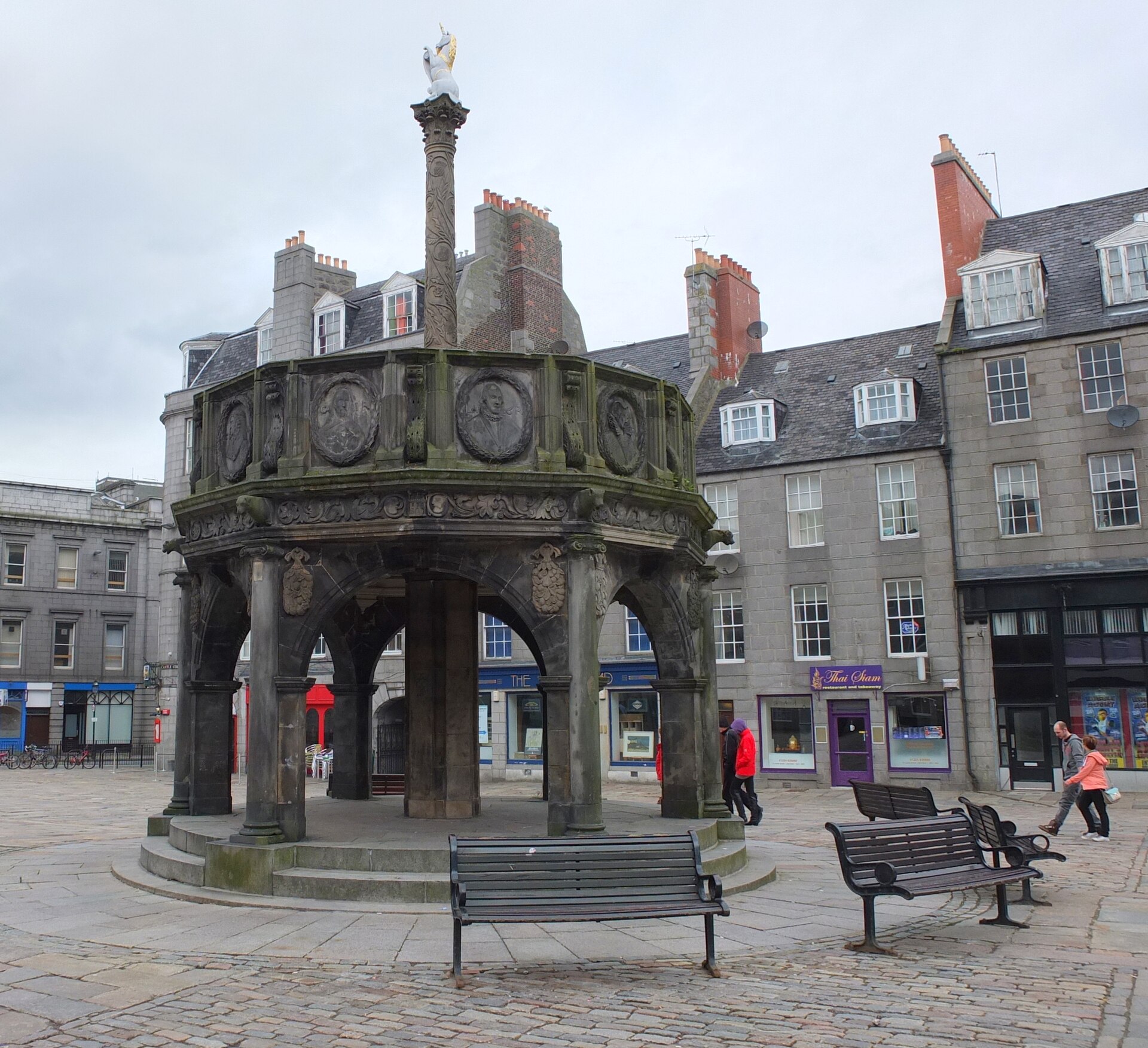
Minor monument · Medieval
Market Cross, Castle Street, Aberdeen
Aberdeen City
Aberdeen’s 1686 market cross combines royal and civic carving with a gilt unicorn, preserving the burgh’s public trading and ceremonial centre thro…
- Near Aberdeen
- Easy path
Sacred place · Prehistoric
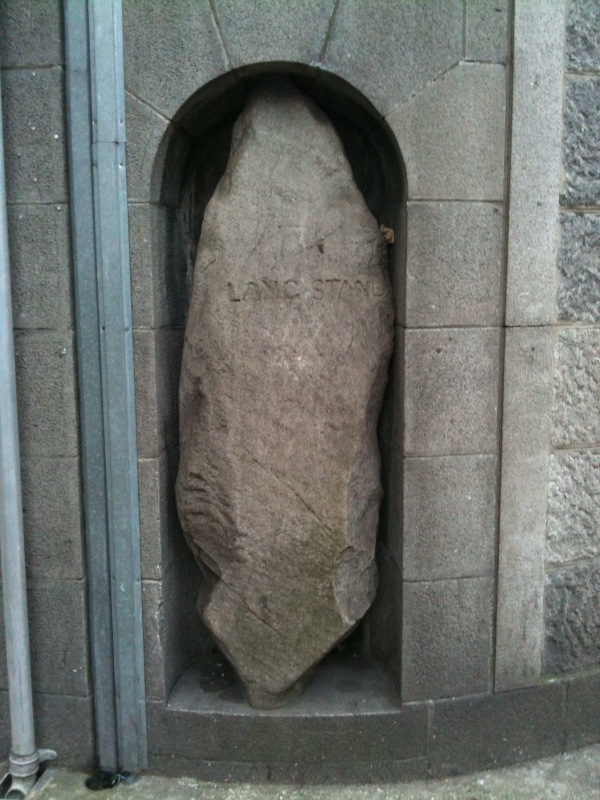
Lang Stane, Aberdeen
Aberdeen City
A keel-shaped base ties this Union Street stone to Aberdeenshire's recumbent circles: raised around 3000 BC, before writing reached Britain: long b…
- Near Aberdeen
- Step-free
Building or ruin · Medieval
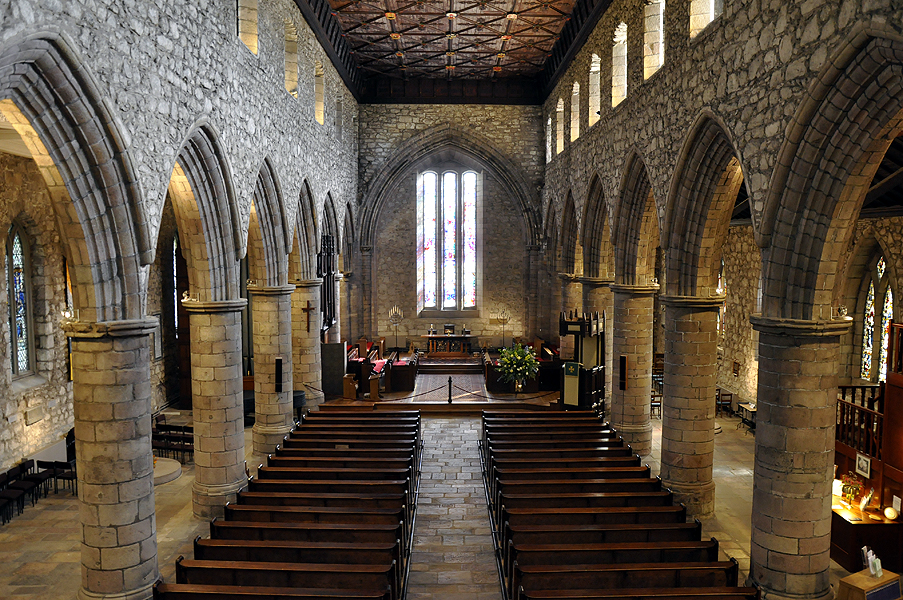
St Machar's Cathedral
Aberdeen City
A working Church of Scotland kirk that still keeps William Wallace's quartered remains in its walls and a ceiling of 48 royal and episcopal coats o…
- Easy path
Sacred place · Prehistoric
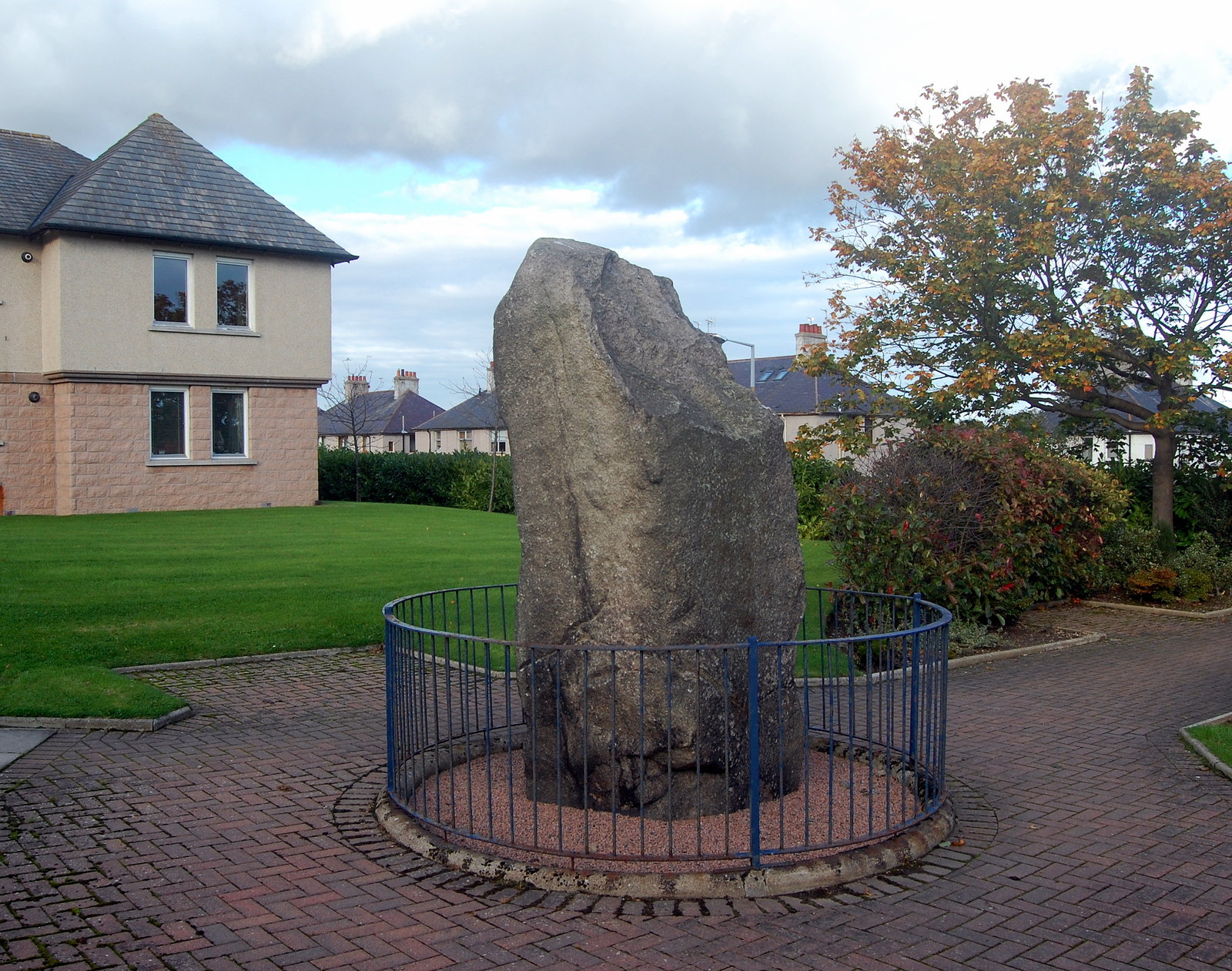
Lang Stane of Hilton
Aberdeen City
A granite monolith nearly three metres tall standing in Hilton, one of several Aberdeen stones sharing the name Lang Stane: Scots for long stone.
- Near Aberdeen
- Easy path
Questions people ask
- What is Tullos Cairn?
- A Bronze Age burial cairn - a mound of stones raised over a burial - on the north side of Tullos Hill in Aberdeen.
- How old is Tullos Cairn?
- It dates to the Bronze Age, a period spanning roughly 2500 to 800 BC in Scotland.
- Is Tullos Cairn the only cairn on Tullos Hill?
- No, it is one of four scheduled cairns on the hill, alongside Baron's, Cat and Crab's Cairns.
- Is Tullos Cairn a protected site?
- Yes. It is included on Scotland's schedule of nationally important archaeological monuments, so the site has statutory protection from disturbance.
- Are there similar cairns nearby?
- Memsie Cairn in Aberdeenshire is a comparable Bronze Age burial cairn often mentioned alongside Tullos Cairn.
Sources
- Wikipedia: Tullos Cairn
- Historic Environment Scotland — Scheduled Monument designation
- Wikidata: Tullos Cairn
Explore more: Tomb or burial places · Prehistoric · Aberdeen City
The Ancient Codex, in your pocket
Get the Pocket Codex app
Carry the directory with you — Tullos Cairn and thousands of ancient places across Britain and Ireland, offline, wherever you roam.